 Back
BackMicrobial Genetics: Structure, Function, and Regulation of Genetic Material
Study Guide - Smart Notes
 Tailored notes based on your materials, expanded with key definitions, examples, and context.
Structure and Function of the Genetic Material
Genetic Organization in Prokaryotes and Eukaryotes
Genetics is the study of genes, how they carry information, how this information is expressed, and how genes are replicated. Chromosomes are structures containing DNA that physically carry hereditary information; each chromosome contains many genes. In bacteria, there is typically one circular chromosome that is not membrane-bound, while eukaryotes have multiple chromosomes enclosed within a nucleus. Genes are segments of DNA that encode functional products, usually proteins, and contain the information necessary for protein synthesis. The genome encompasses all the genetic information in a cell.
Nucleoid: In bacteria, the chromosome is suspended in the cytoplasm, allowing direct access to cellular components.
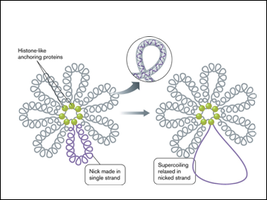
Supercoiling: Bacterial DNA is highly supercoiled and organized by histone-like proteins. Supercoiling compacts the DNA to fit within the small bacterial cell.
Genome Organization: Genes may be clustered in operons, increasing regulatory efficiency and reducing energy consumption.
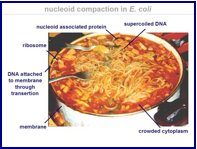
Additional info: The absence of introns in prokaryotic genes allows for rapid protein synthesis, contributing to the fast growth rates of bacteria.
Genetic Map of E. coli
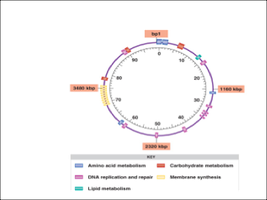
The genetic map of E. coli illustrates the arrangement of genes involved in various metabolic pathways, such as amino acid and carbohydrate metabolism, DNA replication, and membrane synthesis. About 30% of the genome is organized in clusters, each involved in specific biochemical pathways.
Gene Expression and the Central Dogma
Central Dogma of Molecular Biology
The central dogma explains how genetic information flows from DNA to RNA to protein. The sequence of nucleotides in DNA is transcribed into mRNA, which is then translated into a specific sequence of amino acids to form proteins.
Transcription: Synthesis of a complementary mRNA strand from a DNA template by RNA polymerase, which binds to the promoter region and uses the antisense strand as a template.
Translation: The process by which ribosomes use mRNA to assemble amino acids into proteins, guided by the genetic code.
Genetic Code: A set of rules that determines how nucleotide sequences are converted into amino acid sequences.
Regulation of Gene Expression
General Principles
Gene expression is tightly regulated to ensure efficient use of energy and resources. Some genes, called constitutive genes, are expressed at a fixed rate (e.g., housekeeping genes), while others are regulated and expressed only as needed.
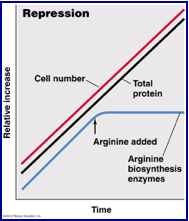
Repression: Mechanisms that turn off gene expression, often in response to the presence of specific substances (e.g., anabolic enzymes).
Induction: Mechanisms that turn on gene expression in response to specific substrates (e.g., catabolic enzymes).
Operon Model
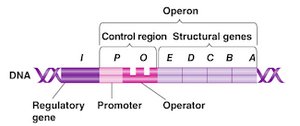
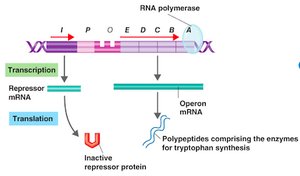
An operon is a cluster of genes under the control of a single promoter and operator, allowing coordinated regulation. The control region includes the promoter, operator, and sometimes activator-binding sites (ABS). Structural genes within the operon are transcribed together as polycistronic mRNA.
Negative Control: The Tryptophan (trp) Operon
Repression of Anabolic Pathways
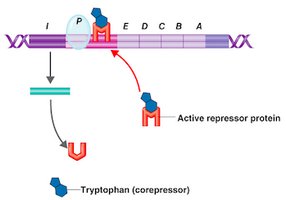
The trp operon in E. coli is a classic example of negative control. It encodes enzymes for tryptophan biosynthesis. When tryptophan is absent, the operon is transcribed, and enzymes are produced. When tryptophan is present, it acts as a corepressor, activating the repressor protein, which binds to the operator and blocks transcription.
Regulatory gene (I): Encodes the repressor protein, which is inactive without tryptophan.
Corepressor: Tryptophan binds to the repressor, activating it.
Negative control: Active repressor blocks RNA polymerase, preventing transcription.
Induction: The Lactose (lac) Operon
Inducible Catabolic Pathways
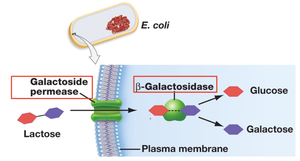
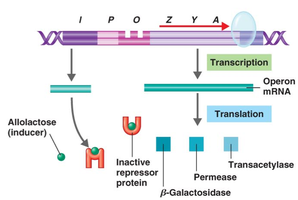
The lac operon controls the metabolism of lactose in E. coli. It is induced in the presence of lactose, which is converted to allolactose (the inducer). Allolactose inactivates the repressor, allowing transcription of genes encoding β-galactosidase, permease, and transacetylase.
lacZ: Encodes β-galactosidase, which cleaves lactose into glucose and galactose.
lacY: Encodes permease, which transports lactose into the cell.
lacA: Encodes transacetylase (function less directly related to lactose metabolism).
Negative and Positive Control in the lac Operon
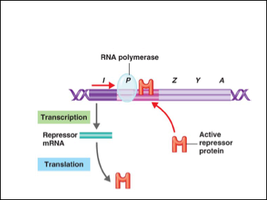
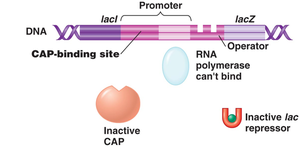
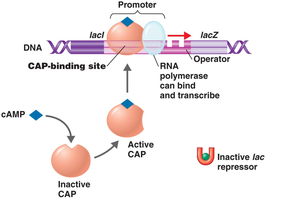
In the absence of lactose, the repressor binds to the operator, blocking transcription (negative control). In the presence of lactose, allolactose inactivates the repressor, allowing transcription. However, efficient transcription also requires positive control by the catabolite activator protein (CAP), which is activated by cAMP when glucose is scarce.
CAP-binding site: Upstream of the promoter; binding of active CAP enhances RNA polymerase binding.
Catabolite repression: When glucose is present, cAMP levels are low, CAP is inactive, and lac operon transcription is minimal even if lactose is present.
Diauxic Growth and Catabolite Repression
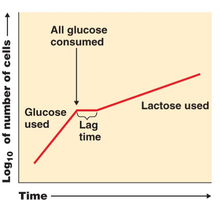
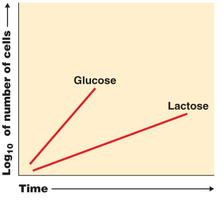
When both glucose and lactose are present, E. coli preferentially uses glucose. Only after glucose is depleted does the cell induce the lac operon to metabolize lactose, resulting in diauxic growth (two exponential phases separated by a lag phase).
Quorum Sensing in Prokaryotes
Cell Density-Dependent Gene Regulation
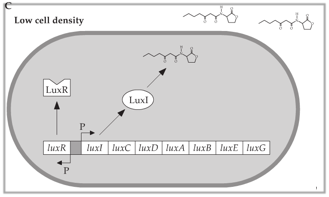
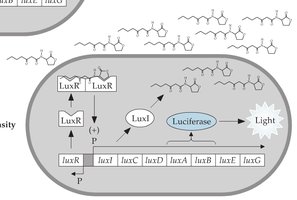
Quorum sensing is a mechanism by which bacteria assess their population density and coordinate gene expression accordingly. Each species produces a specific autoinducer molecule (e.g., acyl homoserine lactone, AHL) that diffuses freely across the cell envelope. When a threshold concentration is reached, the autoinducer binds to a regulatory protein, activating transcription of target genes.
Lux operon: In Vibrio fischeri, the lux operon encodes enzymes for bioluminescence. At low cell density, autoinducer concentration is low, and the operon is not activated. At high cell density, autoinducer accumulates, binds to LuxR, and activates transcription of luciferase genes, resulting in light production.
Summary Table: Key Features of trp and lac Operons
Feature | trp Operon | lac Operon |
|---|---|---|
Type of Pathway | Anabolic (biosynthesis of tryptophan) | Catabolic (breakdown of lactose) |
Regulation | Repression (negative control) | Induction (negative and positive control) |
Regulatory Molecule | Repressor (activated by tryptophan) | Repressor (inactivated by allolactose), CAP (activated by cAMP) |
Inducer/Corepressor | Tryptophan (corepressor) | Allolactose (inducer), cAMP (activator for CAP) |
Gene Expression | Off when tryptophan is present | On when lactose is present and glucose is absent |
