 Back
BackMicrobial Genetics: Structure, Function, and Regulation
Study Guide - Smart Notes
 Tailored notes based on your materials, expanded with key definitions, examples, and context.
Microbial Genetics: Big Picture
Overview of Genetics in Microbiology
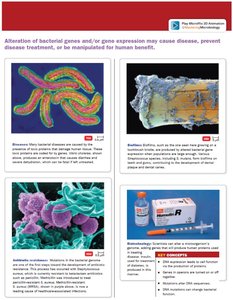
Genetics is the science of heredity, focusing on how genetic information is stored, expressed, and altered in microorganisms. The central dogma of molecular biology describes the flow of genetic information from DNA to RNA to protein, which ultimately determines cellular function. Alterations in bacterial genes or gene expression can cause disease, prevent disease treatment, or be manipulated for human benefit, such as in recombinant DNA technology.
Genetics: Study of genes, their functions, and inheritance.
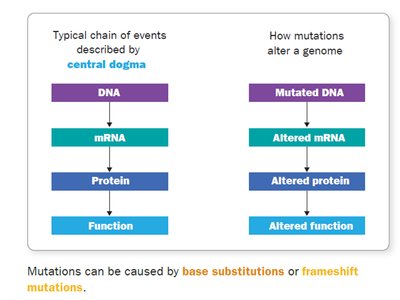
Central Dogma: DNA → RNA → Protein → Function
Mutations: Changes in DNA sequence that can affect gene expression and function.
Operons: Regulatory units controlling gene expression in bacteria.
Structure and Function of the Genetic Material
Key Genetic Concepts
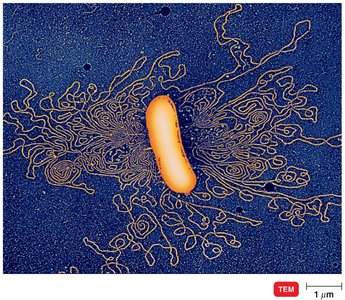
The genetic material of microorganisms is organized into chromosomes, which contain genes encoding functional products, usually proteins. The genome encompasses all genetic information in a cell.
Chromosomes: Structures containing DNA and associated proteins.
Genes: Segments of DNA encoding functional products.
Genome: All genetic information in a cell.
Genotype: Genetic makeup of an organism.
Phenotype: Expression of the genes.
Genetic Code and Central Dogma
The genetic code is a set of rules for converting nucleotide sequences into amino acid sequences of proteins. The central dogma describes the typical chain of events: DNA is transcribed to mRNA, which is translated to protein, resulting in cellular function. 
DNA and Chromosomes
Bacterial Chromosome Structure
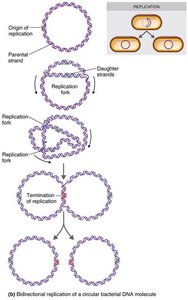
Most bacteria possess a single circular chromosome made of DNA and associated proteins. Chromosomes contain genes and short tandem repeats (STRs), which are noncoding DNA sequences.
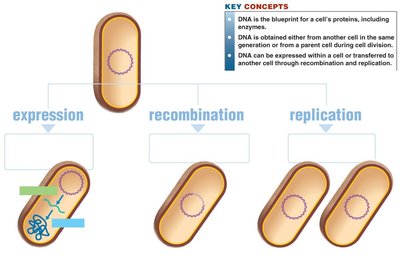
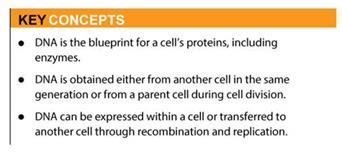
Vertical gene transfer: Transmission of genetic information from one generation to the next via chromosomes and plasmids.
DNA Replication
Mechanism of DNA Replication
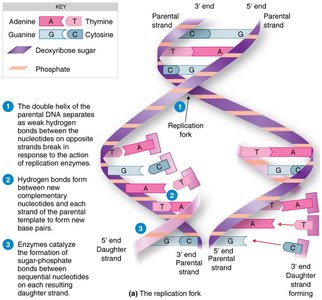
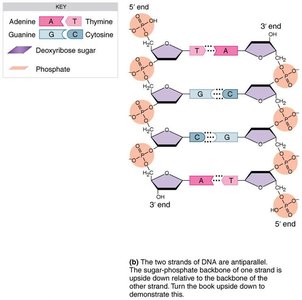
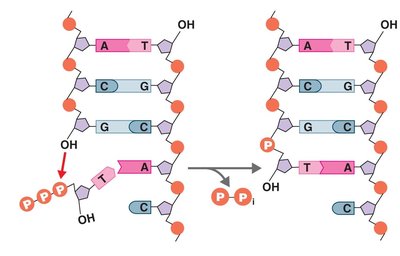
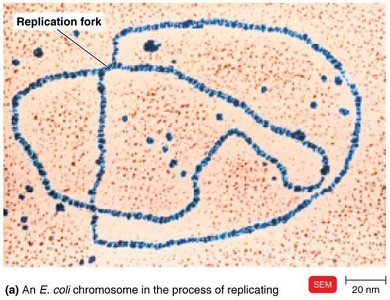
DNA replication is a highly accurate process, ensuring each offspring cell receives a copy of the DNA molecule. The double helix separates, and each strand serves as a template for synthesis of a new strand.
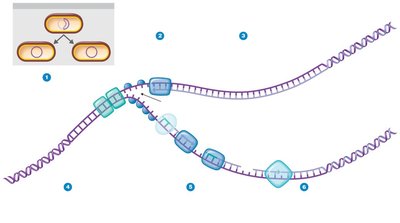
Enzymes involved: Topoisomerase, gyrase, helicase, DNA polymerase, primase, DNA ligase.
Replication fork: Site where DNA is unwound and new strands are synthesized.
Bidirectional replication: Most bacterial DNA replication proceeds in both directions from the origin.
RNA and Protein Synthesis
Types of RNA
Ribonucleic acid (RNA): Single-stranded nucleotide with ribose sugar and uracil instead of thymine.
rRNA: Integral part of ribosomes.
tRNA: Transports amino acids during protein synthesis.
mRNA: Carries coded information from DNA to ribosomes.
Transcription
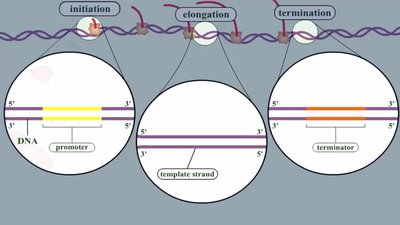
Transcription is the synthesis of a complementary mRNA strand from a DNA template. RNA polymerase binds to the promoter sequence, proceeds in the 5' → 3' direction, and stops at the terminator sequence. 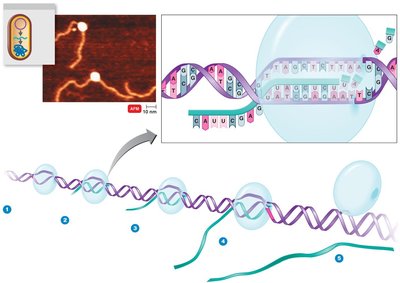
Translation
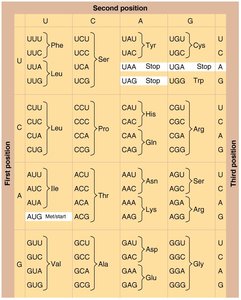
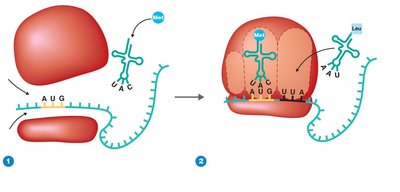
Translation converts mRNA into the language of proteins. Codons (three mRNA nucleotides) code for specific amino acids. The genetic code is degenerate, meaning multiple codons can code for the same amino acid. Translation begins at the start codon (AUG) and ends at stop codons (UAA, UAG, UGA).
tRNA: Transports amino acids and has an anticodon that pairs with the mRNA codon.
Peptide bonds: Join amino acids during translation.
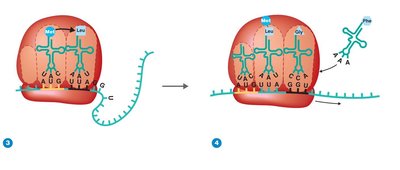
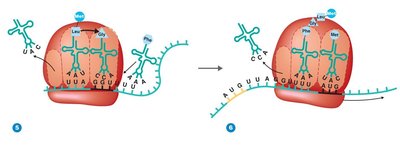
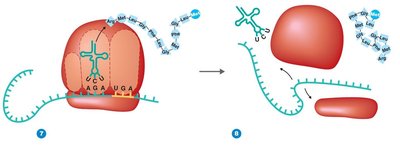
Transcription and Translation in Prokaryotes and Eukaryotes
In prokaryotes, translation can begin before transcription is complete.
In eukaryotes, transcription occurs in the nucleus and translation in the cytoplasm.
Eukaryotes have exons (coding regions) and introns (noncoding regions); snRNPs remove introns and splice exons together.
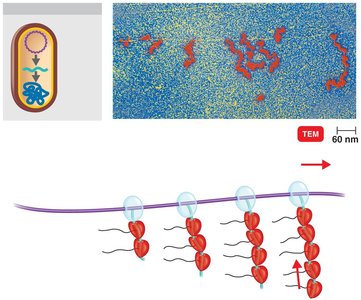
The Regulation of Bacterial Gene Expression
Gene Expression Control
Bacterial gene expression is regulated at multiple levels.
Constitutive genes: Expressed at a fixed rate (housekeeping genes).
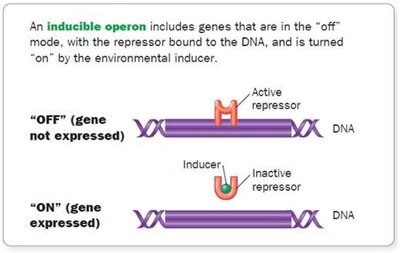
Inducible genes: Expressed only when needed; default position is off.
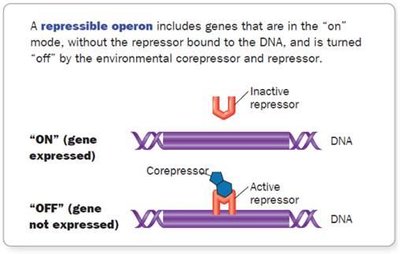
Repressible genes: Expressed until turned off; default position is on.
Catabolite repression: Inhibits use of carbon sources other than glucose.
Operon Model
Promoter: DNA segment where RNA polymerase binds.
Operator: DNA segment controlling transcription.
Operon: Set of operator and promoter sites and the genes they control.
Changes in Genetic Material
Mutations
Mutations are permanent changes in the DNA sequence. They may be neutral, beneficial, or harmful.
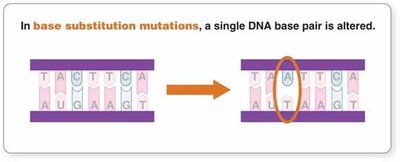
Base substitution (point mutation): Change in one base in DNA.
Missense mutation: Base substitution results in a change in an amino acid.
Nonsense mutation: Base substitution results in a stop codon.
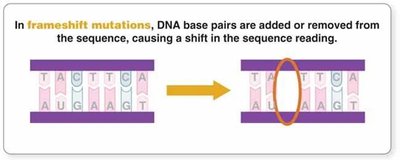
Frameshift mutation: Insertion or deletion of one or more nucleotide pairs, shifting the reading frame.
Gene Transfer and Recombination
Genetic Recombination
Genetic recombination is the exchange of genes between two DNA molecules, creating genetic diversity.
Vertical gene transfer: Transfer of genes from parent to offspring.
Horizontal gene transfer: Transfer of genes between cells of the same generation.
Plasmids and Transposons
Plasmids: Self-replicating circular DNA, often carrying genes for antibiotic resistance or pathogenicity.
Transposons: Mobile genetic elements that can move within and between DNA molecules.
Mechanisms of Gene Transfer
Transformation: Uptake of "naked" DNA from the environment.
Conjugation: Transfer of plasmids via cell-to-cell contact (sex pili).
Transduction: Transfer of DNA via bacteriophage viruses.
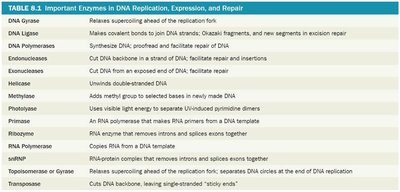
Summary Table: Important Enzymes in DNA Replication, Expression, and Repair
Enzyme | Function |
|---|---|
DNA Gyrase | Relaxes supercoiling ahead of the replication fork |
DNA Ligase | Makes covalent bonds to join DNA strands; Okazaki fragments; excision repair |
DNA Polymerase | Synthesizes DNA; proofreads and facilitates repair |
Endonucleases | Cut DNA backbone in a strand; facilitate repair and insertions |
Exonucleases | Cut DNA from exposed ends; facilitate repair |
Helicase | Unwinds double-stranded DNA |
Methylase | Adds methyl groups to selected bases; makes DNA |
Photolyase | Uses visible light energy to separate UV-induced pyrimidine dimers |
Primase | RNA polymerase that makes RNA primers from a DNA template |
Ribozymes | RNA enzyme that removes introns and splices exons together |
RNA Polymerase | Copies RNA from a DNA template |
snRNP | Removes introns and splices exons together |
Topoisomerase or Gyrase | Relaxes supercoiling ahead of the replication fork; separates DNA circles at the end of replication |
Transposase | Cuts DNA backbone, leaving single-stranded "sticky ends" |
Conclusion
Microbial genetics encompasses the structure, function, and regulation of genetic material in microorganisms. Understanding these processes is essential for studying microbial physiology, pathogenesis, and biotechnology applications.
