 Back
Microbial Genetics: Structure, Function, and Regulation
Study Guide - Smart Notes
 Tailored notes based on your materials, expanded with key definitions, examples, and context.
Microbial Genetics
Genetic Material and Chromosomes
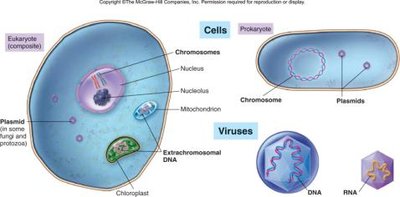
Microbial genetics is the study of heredity in microorganisms, focusing on the synthesis of nucleic acids and proteins. The genetic information necessary for life is stored in DNA (or RNA for some viruses), organized into chromosomes and plasmids.
Chromosome: Circular in prokaryotes, linear in eukaryotes; contains essential genetic information.
Plasmid: Small, circular DNA molecules carrying non-essential but often beneficial genes (e.g., antibiotic resistance).
Gene: Linear sequence of nucleotides forming a functional unit.
Locus: Specific location of a gene on a chromosome.
Allele: Different versions of a gene at the same locus.
Mutation: Permanent alteration in DNA sequence, potentially causing heritable variation.
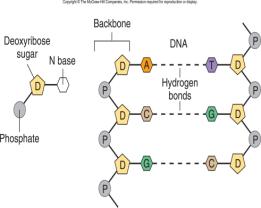
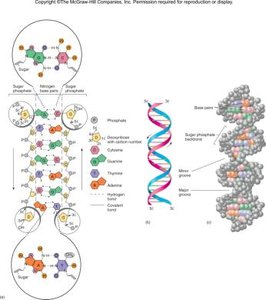
Structure of DNA
DNA is a double-stranded nucleic acid composed of nucleotide building blocks. Each nucleotide consists of a phosphate group, a deoxyribose sugar, and a nitrogenous base. The strands are held together by hydrogen bonds between complementary bases (A-T, C-G) and are antiparallel.
Antiparallel: Strands run in opposite directions (5' to 3' and 3' to 5').
Base Pairing: Adenine pairs with Thymine; Cytosine pairs with Guanine.
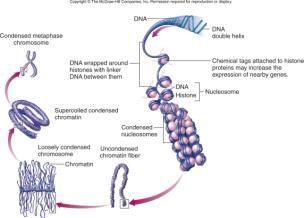
Eukaryotic Chromosome Organization
Eukaryotic chromosomes are linear and located in the nucleus, wrapped around histone proteins. Chromatin structure varies from loosely to highly condensed, affecting gene expression.
Histones: Proteins that package and order DNA into nucleosomes.
Chromatin: DNA-protein complex; can be condensed or uncondensed.
DNA Replication
Semiconservative Replication
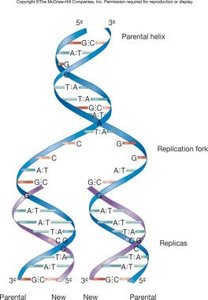
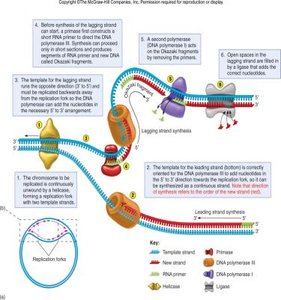
DNA replication is the process by which a cell duplicates its DNA, ensuring genetic continuity. It begins at the origin and proceeds bidirectionally, creating replication forks. Each new DNA molecule contains one old and one new strand (semiconservative).
Replication Fork: Site where DNA strands separate for replication.
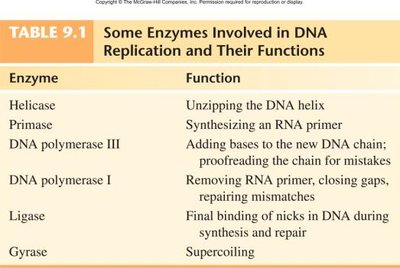
Helicase: Unwinds DNA helix.
DNA Polymerase: Synthesizes new DNA and proofreads for errors.
Ligase: Joins DNA fragments.
Gyrase: Introduces supercoiling in prokaryotic DNA.
Central Dogma: Gene Expression
Transcription and Translation
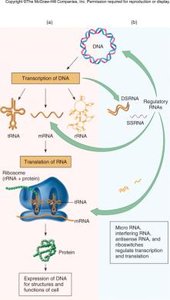
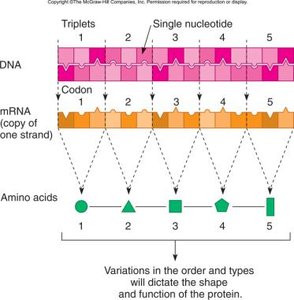
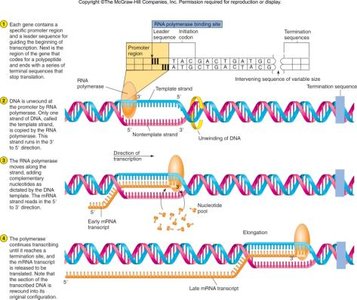
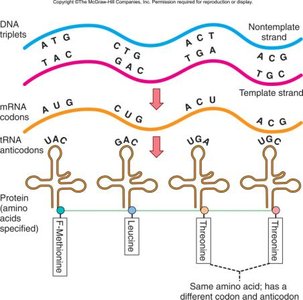
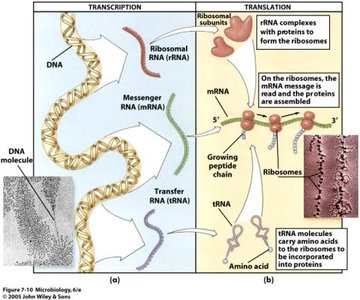
The central dogma describes the flow of genetic information: DNA is transcribed into RNA, which is then translated into protein. Transcription produces messenger RNA (mRNA) from a DNA template, and translation synthesizes proteins based on mRNA codons.
Transcription: Synthesis of RNA from DNA template.
Translation: Synthesis of protein from mRNA template.
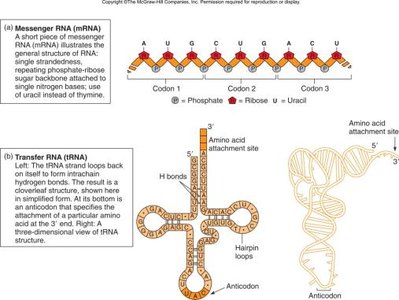
Codon: Three-base sequence in mRNA specifying an amino acid.
Post-Transcriptional Modification (Eukaryotes)
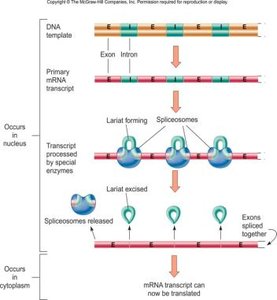
Eukaryotic mRNA undergoes processing before translation. Introns (noncoding regions) are removed, and exons (coding regions) are spliced together. This mature mRNA is then exported to the cytoplasm.
Introns: Noncoding regions removed from mRNA.
Exons: Coding regions joined together.
Spliceosome: Enzyme complex responsible for splicing.
Types of RNA and Their Functions
Major Types of RNA
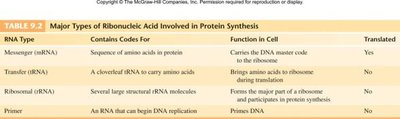
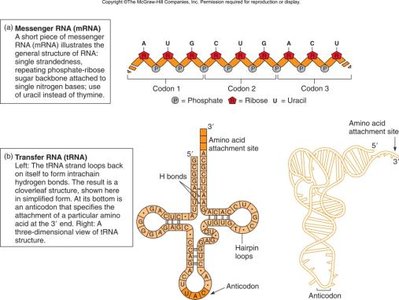
There are four main types of RNA, three of which are directly involved in protein synthesis: messenger RNA (mRNA), transfer RNA (tRNA), and ribosomal RNA (rRNA). Primer RNA is involved in DNA replication.
mRNA: Carries genetic code from DNA to ribosome; translated into protein.
tRNA: Brings amino acids to ribosome during translation.
rRNA: Forms major part of ribosome structure and catalyzes protein synthesis.
Primer RNA: Initiates DNA replication.
Genetic Code and Codons
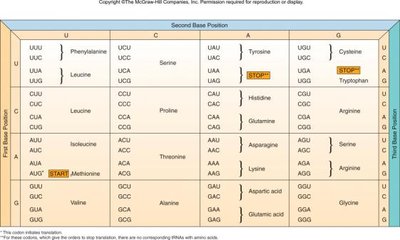
The genetic code consists of codons, each specifying an amino acid or a stop signal. The code is universal and redundant, with multiple codons for some amino acids.
Start Codon: AUG (methionine).
Stop Codons: UAA, UAG, UGA.
Redundancy: Multiple codons for most amino acids.
Protein Synthesis: Translation
Ribosome Structure and Function
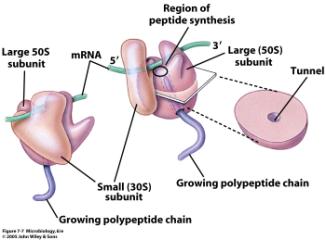
Ribosomes are the site of protein synthesis, composed of two subunits (30S and 50S in prokaryotes). They assemble around mRNA and facilitate the addition of amino acids to the growing polypeptide chain.
Ribosomal Subunits: 30S (small) and 50S (large) in prokaryotes.
Polypeptide Tunnel: Newly synthesized protein exits through the tunnel in the large subunit.
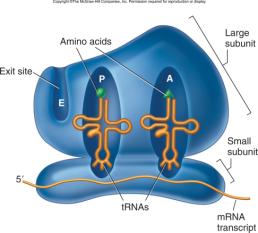
Translation Steps: Initiation, Elongation, Termination
Translation occurs in three main steps: initiation (assembly of ribosome and mRNA), elongation (addition of amino acids), and termination (release of completed protein).
Initiation: Ribosome assembles at start codon; first tRNA delivers methionine.
Elongation: tRNAs bring amino acids; peptide bonds form; ribosome shifts (translocation).
Termination: Stop codon signals release of polypeptide.
Regulation of Gene Expression
Enzyme Regulation
Bacteria regulate metabolism by controlling enzyme activity and synthesis. This ensures efficient use of resources and prevents wasteful overproduction.
Feedback Inhibition: End product inhibits enzyme activity.
Inducible Enzymes: Synthesized only when substrate is present.
Repressible Enzymes: Synthesis inhibited by repressor molecules.
Constitutive Enzymes: Always produced at a constant rate.
Mutations and Their Effects
Types and Causes of Mutations
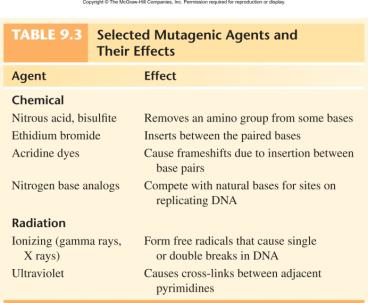
Mutations are heritable changes in DNA sequence, leading to genetic diversity and evolution. They can be spontaneous (random errors) or induced (caused by mutagens).
Spontaneous Mutations: Occur during DNA replication.
Induced Mutations: Caused by mutagens (chemical or radiation).
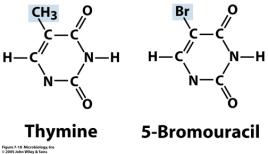
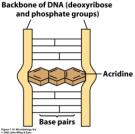
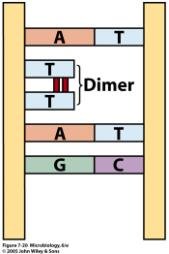
Classification of Mutations
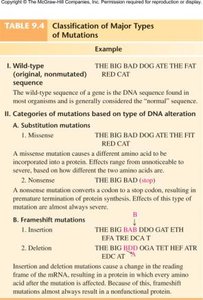
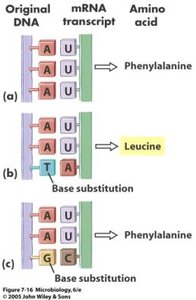
Mutations are classified based on their effect on DNA sequence: substitution (point mutation), insertion, and deletion. Frameshift mutations result from insertions or deletions, altering the reading frame.
Substitution: One base replaced by another; may change amino acid or be silent.
Frameshift: Insertion or deletion alters reading frame, often causing premature stop codons.
DNA Repair Mechanisms
Repair of DNA Damage
Bacteria possess enzymes to repair DNA damage, including light repair (photoreactivation) and dark repair (enzyme-mediated excision and replacement).
Light Repair: Enzyme activated by visible light breaks pyrimidine dimers.
Dark Repair: Enzymes excise damaged DNA and replace it using the undamaged strand as a template.
Gene Transfer and Recombination
Types of Gene Transfer
Gene transfer refers to the movement of genetic information between organisms. In bacteria, gene transfer can be vertical (parent to offspring) or horizontal (between cells of the same generation).
Vertical Transfer: Parent to offspring (binary fission, sexual reproduction).
Horizontal Transfer: Between cells of same generation; includes conjugation, transformation, and transduction.
Plasmids and Their Functions
Plasmids are extrachromosomal DNA elements that carry genes for antibiotic resistance, virulence, and other traits. Resistance plasmids (R plasmids) can transfer rapidly between bacteria, spreading resistance.
F Plasmids: Direct synthesis of conjugation pili.
R Plasmids: Carry antibiotic resistance genes.
Bacteriocinogen: Directs production of bacteriocins (growth-inhibiting proteins).
Mechanisms of Horizontal Gene Transfer
Conjugation: Direct transfer of plasmids between cells via pili.
Transformation: Uptake of naked DNA from environment; requires competence factors.
Transduction: Transfer of DNA via bacteriophages; can be generalized (any gene) or specialized (specific genes).
Example: The Ames test uses Salmonella to screen for mutagenic and potentially carcinogenic substances.
