 Back
Microbial Genetics: Structure, Function, and Regulation of Genetic Material
Study Guide - Smart Notes
 Tailored notes based on your materials, expanded with key definitions, examples, and context.
Microbial Genetics
Genetic Material: DNA and Genome Organization
The genetic material of all organisms and many viruses is DNA, which encodes the instructions for cellular function and inheritance. The genome is the entire genetic complement of an organism, including all nucleotide sequences and genes. Genes carry instructions for the synthesis of RNA and proteins, which are essential for cellular processes.
Genotype: The complete set of genes in the genome.
Phenotype: The physical features and functional traits resulting from gene expression.
Nucleotide Structure
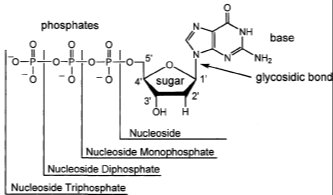
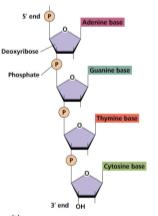
Nucleotides are the monomers of nucleic acids, composed of three parts: a phosphate group, a pentose sugar (deoxyribose in DNA, ribose in RNA), and a nitrogenous base (Adenine, Guanine, Cytosine, Thymine, or Uracil).
Phosphate group: Provides negative charge.
Pentose sugar: Deoxyribose (DNA) lacks an OH group at the 2' carbon; ribose (RNA) has it.
Nitrogenous bases: Adenine (A), Guanine (G), Cytosine (C), Thymine (T, DNA only), Uracil (U, RNA only).
Nucleic Acid Structure
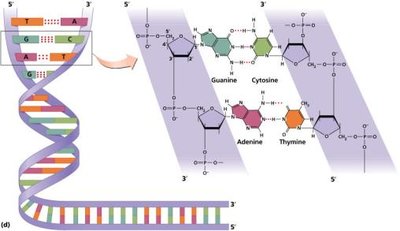
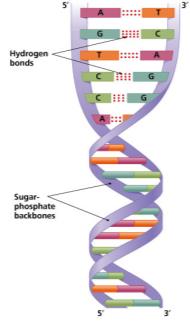
Nucleotides are linked in a 5' to 3' manner, forming the backbone of nucleic acids. The energy for polymerization comes from tri/diphosphate building blocks. In most cells and viruses, two DNA strands wind together into a double helix, stabilized by hydrogen bonds between complementary bases (A-T, C-G).
Double helix: Two strands are antiparallel and complementary.
Base pairing: A-T and C-G in DNA; A-U in RNA.
Prokaryotic vs. Eukaryotic Genomes
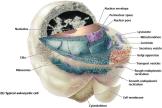
Prokaryotic genomes are typically contained in circular chromosomes and plasmids, while eukaryotic genomes are found in linear nuclear chromosomes and extranuclear DNA (mitochondria and chloroplasts).
Prokaryotes: One circular chromosome, nucleoid region, plasmids (non-essential traits).
Eukaryotes: Multiple linear chromosomes in nucleus, circular DNA in organelles.
DNA Replication
Overview and Semiconservative Replication
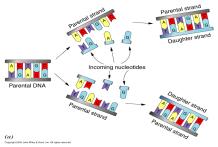
DNA replication is an anabolic polymerization process requiring nucleotide monomers and energy. It begins with a double-stranded parental DNA helix, and each strand serves as a template for the synthesis of a new, complementary daughter strand. Replication is semiconservative: each new helix contains one original and one daughter strand.
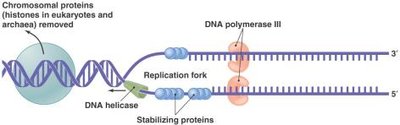
Key steps: Remove DNA-associated proteins, unwind and separate strands, synthesize RNA primers, extend primers with DNA polymerase III, degrade primers and fill gaps with DNA polymerase I, rewind new strands.
Leading vs. Lagging Strand Synthesis
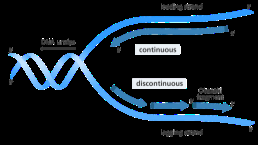
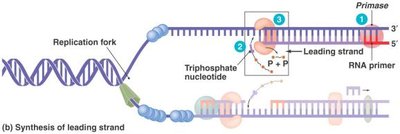
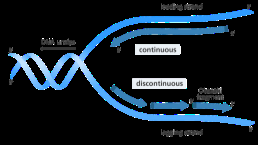
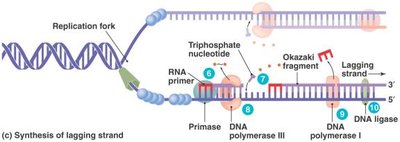
DNA polymerase III synthesizes new DNA only in the 5' to 3' direction. Due to antiparallel strands, the leading strand is synthesized continuously toward the replication fork, while the lagging strand is synthesized discontinuously away from the fork in short fragments (Okazaki fragments).
Leading strand: Continuous synthesis.
Lagging strand: Discontinuous synthesis, Okazaki fragments.
Replication of Circular Chromosomes
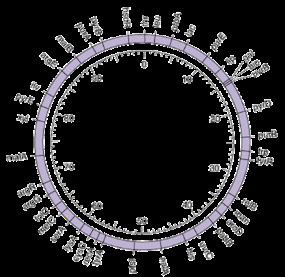
In prokaryotes, replication begins at the origin of replication (ori) and proceeds bidirectionally around the circular chromosome. Topoisomerases relieve torsional strain during replication.
Gene Expression: Transcription and Translation
Transcription
Transcription is the process of copying DNA information within a gene into RNA nucleotide sequences. It occurs in three steps: initiation, elongation, and termination. Three types of RNA are produced: messenger RNA (mRNA), ribosomal RNA (rRNA), and transfer RNA (tRNA).
Initiation: RNA polymerase binds to promoter with sigma factor.
Elongation: RNA polymerase extends transcript using triphosphate ribonucleotides.
Termination: RNA polymerase releases transcript at terminator sequence.
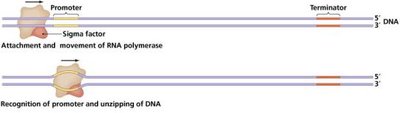
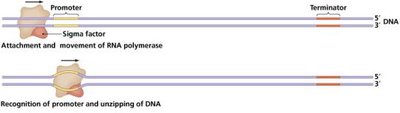
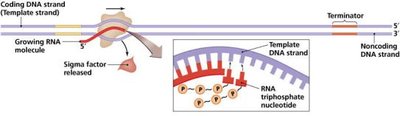

Key Comparisons: Transcription vs. DNA Replication
Transcription: Forms RNA from genes, starts at promoters.
Replication: Forms DNA from chromosomes/plasmids, starts at origins.
RNA polymerase: Unwinds DNA, synthesizes RNA 5'→3'.
DNA polymerase III: Synthesizes DNA 5'→3'.
DNA polymerase I: Removes RNA primer, synthesizes DNA 5'→3'.
Translation
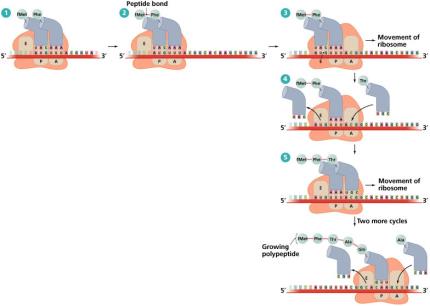
Translation is the synthesis of polypeptides (proteins) through interpretation of mRNA nucleotide sequences. It occurs in three steps: initiation, elongation, and termination. The process involves mRNA, tRNA, and rRNA.
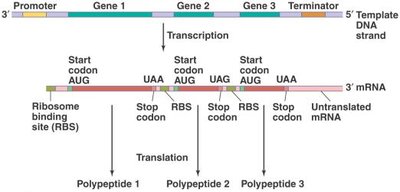
Codon: Three-nucleotide unit in mRNA coding for a specific amino acid.
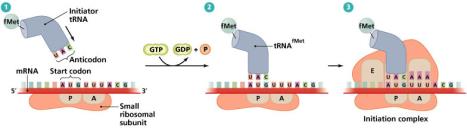
Start codon: AUG (methionine).
Stop codons: UAA, UAG, UGA.
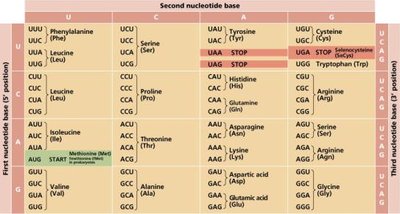
Transfer RNA (tRNA)
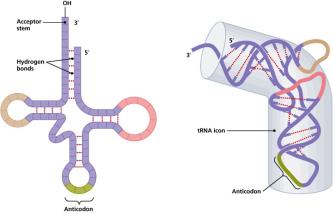
tRNA carries specific amino acids and recognizes mRNA codons via its anticodon.
Ribosomal RNA (rRNA) & Ribosomes
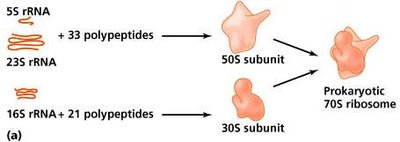
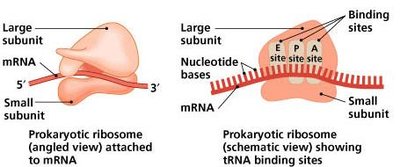
rRNA forms complexes with proteins to create ribosomes, which are the platform for protein synthesis.
Translation Steps
Initiation: Ribosomal subunits assemble on mRNA at the ribosomal binding site, recruiting initiator tRNA.
Elongation: Ribosome recruits amino acid-bound tRNAs according to mRNA sequence, moves 3 nucleotides at a time.
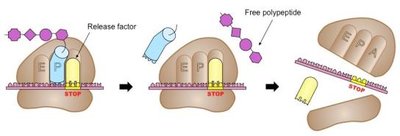
Termination: Release factors recognize stop codons, sever polypeptide, ribosome dissociates.
Coupled Transcription and Translation in Prokaryotes
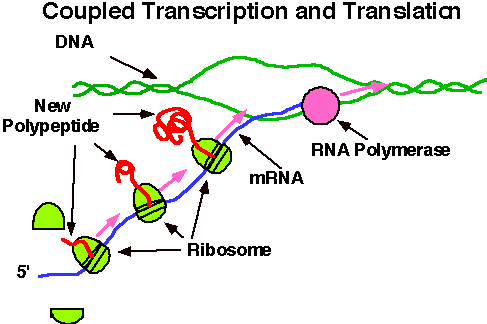
In prokaryotes, transcription and translation are often coupled, allowing rapid protein synthesis from newly transcribed mRNA.
Regulation of Gene Expression
Gene Regulation and Operons
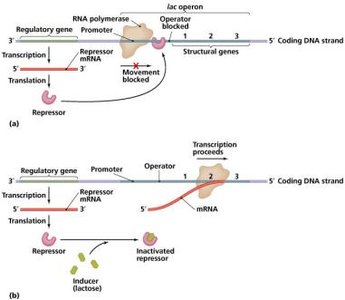
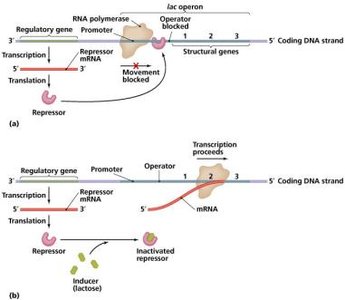
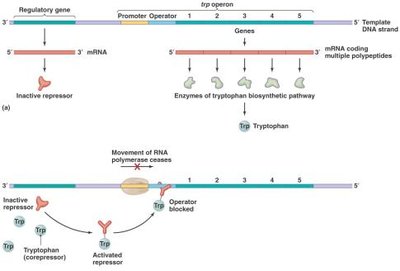
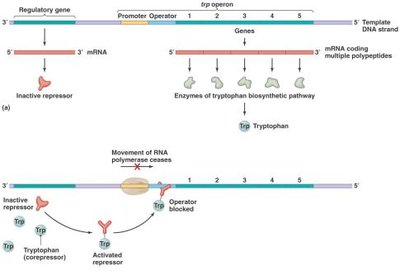
Most genes are expressed at all times (housekeeping genes), but others are regulated to conserve energy and resources. In prokaryotes, genes with similar functions are grouped into operons, which are regulated by promoters and operators.
Inducible operons: Activated by inducers (e.g., lactose operon).
Repressible operons: Transcribed continually until deactivated by repressors (e.g., tryptophan operon).
Mutations and DNA Repair
Types of Mutations
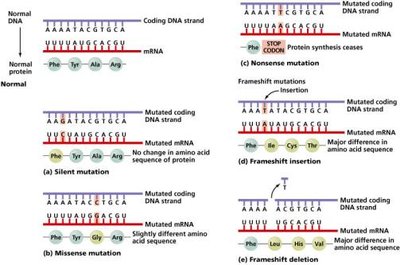
Mutations are changes in the nucleotide base sequence of an organism's genome. They are rare due to DNA repair mechanisms and are usually deleterious, but can occasionally confer beneficial traits.
Point mutations: Affect one or a few base pairs.
Frameshift mutations: Displace nucleotide triplets, altering the reading frame.
Mutagens and DNA Repair
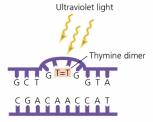
Mutagens such as radiation and chemicals can induce mutations. Cells have several DNA repair mechanisms, including direct repair, excision repair, postreplication repair, SOS response, and error-prone repair.
Genetic Recombination and Horizontal Gene Transfer
Genetic Recombination
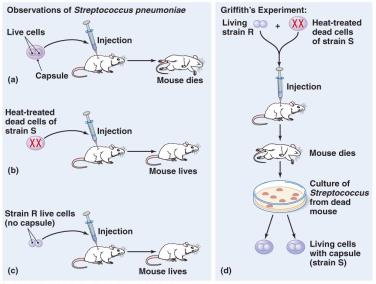
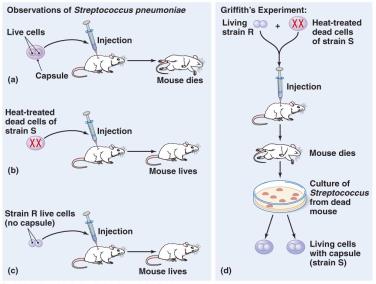
Genetic recombination is the exchange of DNA segments with homologous sequences, resulting in recombinant cells. Vertical gene transfer passes genes to descendants, while horizontal gene transfer involves the transfer of genetic material between cells.
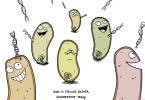
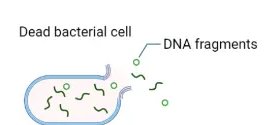
Transformation: Uptake of DNA from the environment by competent cells.
Transduction: Transfer of DNA via bacteriophage (virus).
Conjugation: Transfer of DNA between cells in physical contact, mediated by conjugation pili.
Summary Table: Key Genetic Processes
Process | Enzyme(s) | Direction | Product |
|---|---|---|---|
Replication | DNA polymerase III, I | 5' → 3' | DNA |
Transcription | RNA polymerase | 5' → 3' | RNA |
Translation | Ribosome (rRNA + proteins) | N/A | Polypeptide |
Additional info: This guide expands on brief lecture points to provide a comprehensive overview of microbial genetics, including definitions, examples, and visual aids for key processes.
