 Back
BackMicrobial Genetics: Structure, Function, and Regulation
Study Guide - Smart Notes
 Tailored notes based on your materials, expanded with key definitions, examples, and context.
Microbial Genetics
Genome, Genes, Genotype, and Phenotype
The genome is the complete set of genetic material in an organism, including chromosomes and plasmids. A gene is a segment of DNA that encodes a functional product, usually a protein. The genotype refers to the genetic makeup of an organism, while the phenotype is the observable characteristics resulting from gene expression.
Genome: All genetic material (chromosomes, plasmids, organelle DNA)
Gene: DNA segment coding for a product
Genotype: DNA sequence of an organism
Phenotype: Physical and biochemical traits
Structure of Prokaryotic Genomes
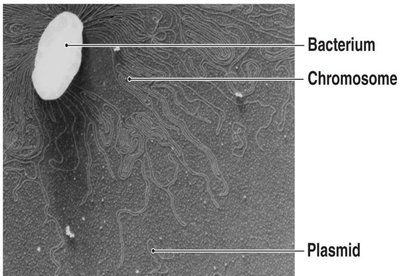
Prokaryotic cells are typically haploid, possessing a single, circular chromosome located in the nucleoid. Chromosomes are looped, folded, and supercoiled to fit within the cell. Plasmids are small, circular DNA molecules that replicate independently and often carry useful traits such as antibiotic resistance.
Chromosome: Circular, supercoiled DNA
Plasmid: Small, circular DNA, not essential for survival
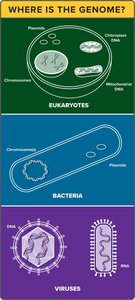
Locations and Forms of Genome in Cells and Viruses
The genome can be found in different locations depending on the organism. In eukaryotes, it is mainly in chromosomes, but also in mitochondria and chloroplasts. In bacteria, it is in the chromosome and plasmids. Viruses may have DNA or RNA genomes.
Eukaryotes: Chromosomes, mitochondria, chloroplasts
Bacteria: Chromosome, plasmids
Viruses: DNA or RNA
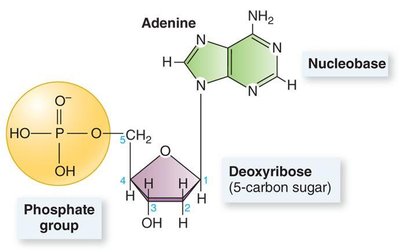
DNA Structure and Base Pairing
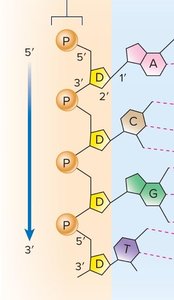
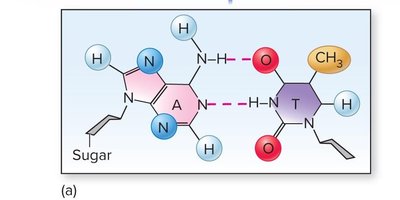
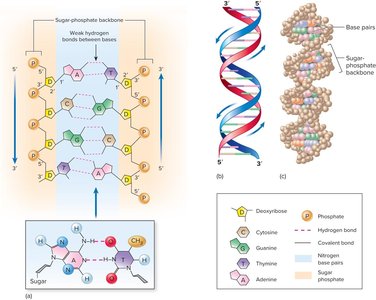
DNA is composed of nucleotides, each containing a phosphate group, deoxyribose sugar, and a nitrogenous base. The backbone is formed by sugar-phosphate linkages. Base pairing occurs via hydrogen bonds: Adenine (A) pairs with Thymine (T), and Guanine (G) pairs with Cytosine (C).
Nucleotide: Phosphate, deoxyribose, nitrogenous base
Base pairs: A-T, G-C
Antiparallel strands: Strands run in opposite directions
The Flow of Genetic Information: Central Dogma
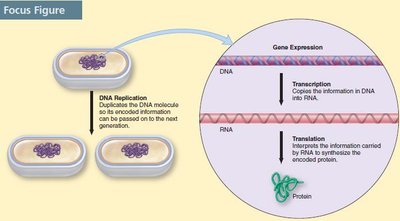
Genetic information flows from DNA to RNA to protein. DNA replication duplicates the DNA. Transcription copies DNA into RNA. Translation interprets RNA to synthesize proteins.
Replication: DNA → DNA
Transcription: DNA → RNA
Translation: RNA → Protein
Bacterial DNA Replication
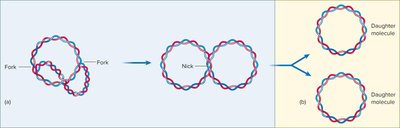
Bacterial chromosome replication is semiconservative and bidirectional. At completion, two identical daughter chromosomes are produced. Key enzymes include DNA polymerase, helicase, primase, and topoisomerase. Replication is highly accurate.
Semiconservative: Each new DNA has one old and one new strand
Bidirectional: Replication proceeds in both directions
Topoisomerase: Separates completed chromosomes
Relationship Among DNA, RNA, and Proteins
DNA encodes genes, which are transcribed into RNA. RNA is translated into proteins, which perform cellular functions. This process is known as the central dogma of molecular biology.
DNA: Genetic blueprint
RNA: Messenger and functional molecules
Protein: Functional products
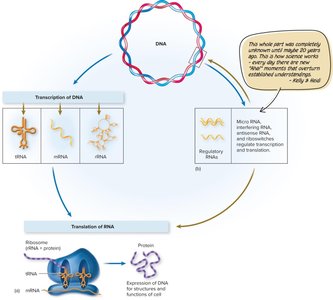
Transcription and Translation: Prokaryotes vs. Eukaryotes
In prokaryotes, transcription and translation occur simultaneously in the cytoplasm. In eukaryotes, transcription occurs in the nucleus, and translation in the cytoplasm. Eukaryotic genes contain introns (noncoding regions) that are spliced out.
Prokaryotes: Simultaneous transcription and translation
Eukaryotes: Transcription in nucleus, translation in cytoplasm; introns and exons
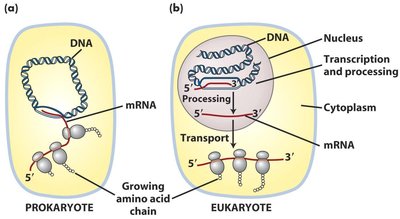
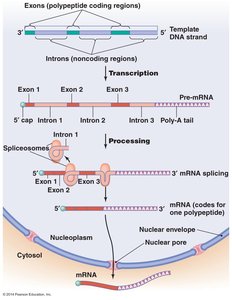
Genetic Recombination and Horizontal Gene Transfer
Genetic recombination involves the exchange of DNA between organisms, resulting in new gene combinations. Horizontal gene transfer allows bacteria to acquire genes from other cells, not just from parent organisms. Three main mechanisms are transformation, conjugation, and transduction.
Transformation: Uptake of naked DNA
Conjugation: DNA transfer via pilus between cells
Transduction: DNA transfer via bacteriophage
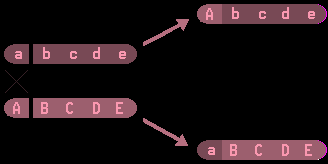
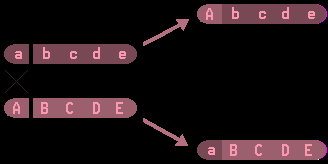
Mechanisms of Horizontal Gene Transfer
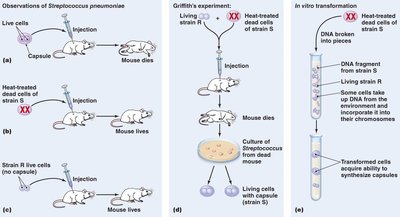
Transformation
Transformation is the uptake of free DNA from the environment by a competent recipient cell. No direct contact is required.
Conjugation
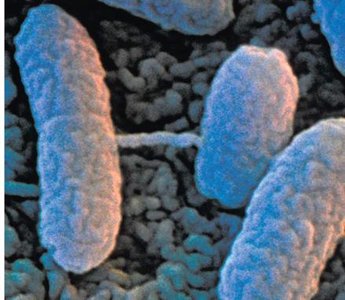
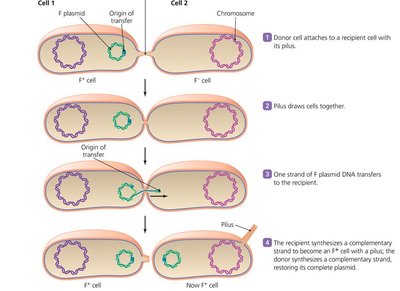
Conjugation requires direct contact between donor and recipient cells via a pilus. The F plasmid encodes the pilus.
Transduction
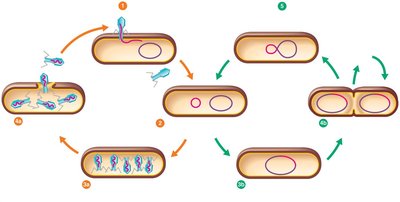
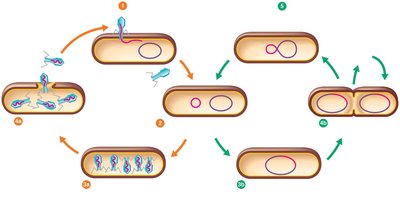
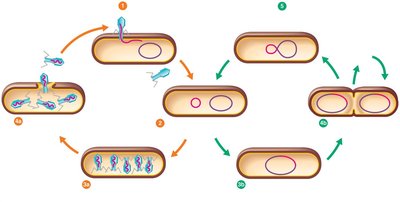
Transduction involves the transfer of DNA from one bacterium to another via a bacteriophage. The phage injects DNA, which may integrate into the bacterial chromosome (lysogenic cycle) or cause cell lysis (lytic cycle).
Types of Horizontal Gene Transfer in Bacteria
Mode | Factors Involved | Direct/Indirect | Genes Commonly Transferred |
|---|---|---|---|
Conjugation | Donor cell with pilus, F plasmid | Direct | Drug resistance, toxin production, enzymes |
Transformation | Free donor DNA, competent recipient | Indirect | Polysaccharide capsule |
Transduction | Bacteriophage, lysed donor cell | Indirect | Toxins, drug resistance |
Mutations: Types and Effects
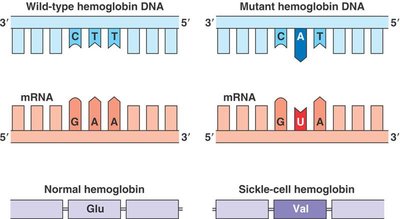
A mutation is a change in the nucleotide sequence of the genome. Mutations can be spontaneous or induced by mutagens. They may be deleterious, neutral, or beneficial.
Base substitution (point mutation): Single base change
Silent mutation: No change in protein
Missense mutation: Amino acid substitution
Nonsense mutation: Premature stop codon
Frameshift mutation: Insertion/deletion shifts reading frame


Identification of Mutants in the Laboratory
Bacteria are ideal for studying mutations due to rapid division and haploid genomes. Mutants can be identified by positive or negative selection.
Positive selection: Mutant cells survive (e.g., drug resistance)
Negative selection: Mutant cells die (e.g., loss of function)
Regulation of Bacterial Gene Expression
Gene expression can be constitutive (always on) or regulated (turned on/off as needed). Regulation occurs via repression (turning off) or induction (turning on).
Constitutive genes: Always expressed (e.g., ribosomal proteins)
Regulated genes: Expressed in response to environmental signals
Repression: Inhibits gene expression
Induction: Stimulates gene expression
The Lactose Operon: Inducible Operon Model
The lac operon is an example of an inducible operon. It contains genes for lactose metabolism, which are expressed only when lactose is present. The operon includes structural genes (lacZ, lacY, lacA), a promoter, operator, and regulatory gene (lacI).
Inducer: Lactose or IPTG
Repressor: Protein encoded by lacI
The Tryptophan Operon: Repressible Operon Model
The trp operon is a repressible operon. It contains genes for tryptophan synthesis, which are repressed when tryptophan is abundant.
Structural genes: trpE, trpD, trpC, trpB, trpA
Repressor: Activated by tryptophan
Summary Table: Types of Mutations
Type | Description | Effect |
|---|---|---|
Silent | Codon codes for same amino acid | No change in protein |
Missense | Codon codes for different amino acid | Altered protein function |
Nonsense | Codon becomes stop codon | Truncated protein |
Frameshift | Insertion/deletion shifts reading frame | Major disruption of protein |
Concept Checks
DNA replication produces two brand-new daughter strands: True
Transduction involves transfer of bacterial DNA through a bacteriophage.
Frameshift mutations have the most devastating effect on a cell.
