 Back
BackMicrobial Genetics: Structure, Function, and Transfer of Genetic Information
Study Guide - Smart Notes
 Tailored notes based on your materials, expanded with key definitions, examples, and context.
Microbial Genetics and Genetic Information
Key Definitions in Genetics
Genetics is the science of heredity, focusing on how genetic information is carried, replicated, and expressed in organisms. Understanding these terms is foundational for studying microbial genetics:
Genome: The complete genetic information within a cell.
Chromosome: Structures containing DNA that carry hereditary information.
Gene: Segments of DNA that code for functional products, typically proteins.
Genetic code: The set of rules by which nucleotide sequences are translated into amino acid sequences of proteins.
Genotype: The genetic makeup of an organism, representing its potential properties.
Phenotype: The actual expressed properties of an organism, determined by the genotype.
Genomics: The sequencing and molecular characterization of genomes.
DNA as Genetic Information
Structure and Function of DNA
DNA serves as the blueprint for all cellular proteins. Its linear sequence of bases encodes genetic information, and its complementary structure allows for precise duplication during cell division. Each offspring cell receives one original strand from the parent, ensuring genetic continuity.
DNA Replication
Mechanism of DNA Replication
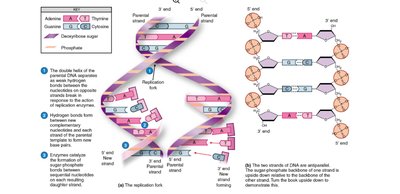
DNA replication is the process by which one parental double-stranded DNA molecule is converted into two identical DNA molecules. The process involves several key steps:
Relaxation of supercoiling by topoisomerase or gyrase.
Unwinding of DNA strands by helicase.
Complementary base pairing (A-T, G-C) and joining by DNA polymerase.
Initiation from an RNA primer, which is later removed.
Continuous synthesis of the leading strand (5’→3’) and discontinuous synthesis of the lagging strand (3’→5’) in Okazaki fragments.
Energy for DNA synthesis is provided by the hydrolysis of nucleoside triphosphates.
Protein Synthesis: Transcription and Translation
Transcription in Prokaryotes
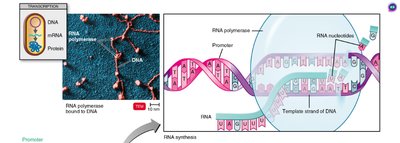
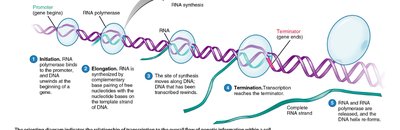
Transcription is the synthesis of a complementary strand of mRNA from a DNA template. This process allows cells to produce short-term copies of genes for protein synthesis. The main steps are:
Initiation: RNA polymerase binds to the promoter region and unwinds DNA.
Elongation: RNA is synthesized in the 5’→3’ direction by complementary base pairing.
Termination: Transcription ends when RNA polymerase reaches a terminator sequence, releasing the mRNA transcript.
Translation: Decoding mRNA into Protein
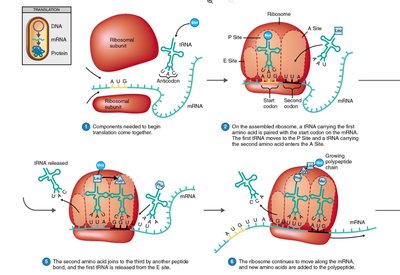
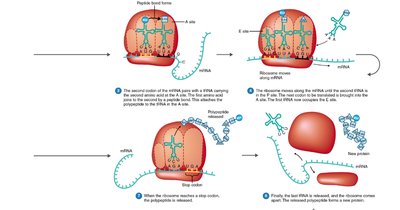
Translation is the process of decoding the language of nucleic acids into the language of proteins. It involves:
Codons: Groups of three nucleotides on mRNA that specify amino acids.
Ribosomes: The site of protein synthesis, composed of rRNA and proteins.
tRNA: Molecules that bring amino acids to the ribosome and match them to the mRNA codons via their anticodons.
The process proceeds through initiation, elongation, and termination, resulting in the formation of a polypeptide chain.
Protein Synthesis in Prokaryotes vs. Eukaryotes
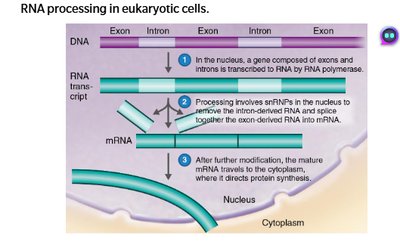
In prokaryotes, translation can begin before transcription is complete because both processes occur in the cytoplasm. In eukaryotes, transcription occurs in the nucleus, and mRNA must be processed and transported to the cytoplasm before translation. RNA processing in eukaryotes involves the removal of introns and splicing of exons by snRNPs.
Regulation of Gene Expression
Operons: Inducible and Repressible Systems
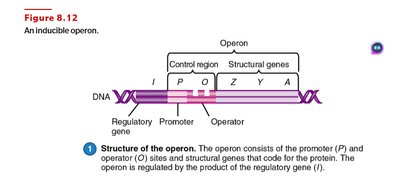
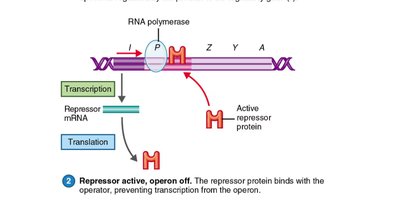
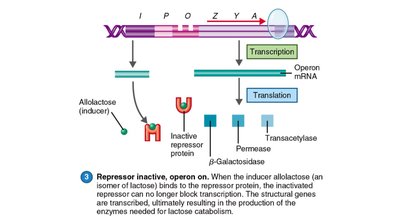
An operon is a group of genes transcribed together and controlled by a single promoter. Operons can be inducible (turned on by an inducer) or repressible (normally on but can be turned off by a repressor).
Promoter: Site where RNA polymerase initiates transcription.
Operator: Acts as a regulatory switch.
Regulatory gene: Encodes a repressor protein that can switch the operon on or off.
Positive Regulation and the lac Operon
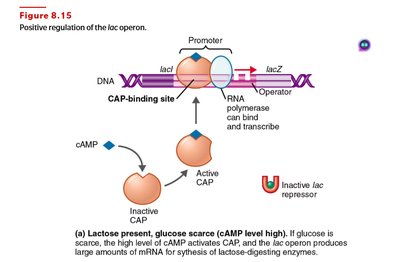
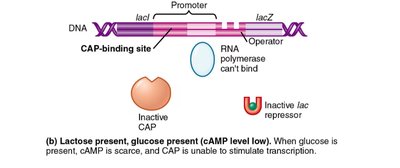
Positive regulation involves the use of cAMP as a cellular alarm signal. When glucose is scarce, cAMP accumulates and binds to the catabolic activator protein (CAP), which then binds to the lac promoter to initiate transcription. The lac operon is transcribed only when lactose is present and glucose is absent.
Epigenetic Control
Epigenetic control involves the methylation of certain nucleotides, which can turn genes off. This modification can be inherited and reversed in later generations, a phenomenon known as epigenetic inheritance.
Mutations and Genetic Variation
Types of Mutations
Mutations are permanent changes in the DNA sequence. They can be classified as:
Silent (neutral) mutations: No change in protein function.
Base substitution (point mutation): One base is replaced by another, possibly altering the protein.
Missense mutation: Base substitution results in an amino acid change (e.g., sickle cell anemia).
Nonsense mutation: Introduces a stop codon, leading to incomplete proteins.
Frameshift mutation: Insertion or deletion shifts the reading frame, often producing nonfunctional proteins.
Spontaneous mutations: Occur without external mutagens.
DNA Repair Mechanisms
Cells have enzymes to repair mutations, especially those caused by UV light:
Photolyases: Use visible light to repair thymine dimers.
Nucleotide excision repair: Enzymes cut out incorrect bases and fill the gap with new DNA.
Mutagens and Mutation Rate
Mutagens increase the mutation rate above the spontaneous rate (typically per gene per generation). In the presence of mutagens, the rate can rise to to per gene per generation.
Selection of Mutants
Direct and Indirect Selection
Positive selection: Directly detects mutant cells (e.g., antibiotic resistance).
Negative selection: Indirectly detects mutants that have lost a function (e.g., inability to synthesize histidine using replica plating).
Auxotroph: A mutant microorganism with a nutritional requirement absent in the parent.
Plasmids and Transposons
Functions and Importance
Plasmids: Small, circular DNA molecules that can carry genes for antibiotic resistance, virulence factors, and metabolic enzymes. They can be transferred between cells by conjugation.
Transposons: Segments of DNA that can move from one location to another, facilitating genetic diversity and evolution.
Gene Transfer in Bacteria
Vertical vs. Horizontal Gene Transfer
Vertical gene transfer: Genes are passed from parent to offspring.
Horizontal gene transfer: Genes are transferred between cells of the same generation, increasing genetic diversity.
Mechanisms of Genetic Recombination
Genetic recombination involves the exchange of genes between two DNA molecules, creating new gene combinations. This process is crucial for microbial evolution and diversity.
Transformation: Uptake of naked DNA from the environment by a recipient cell.
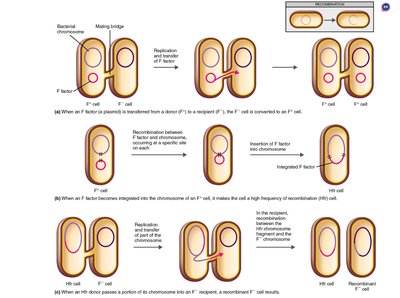
Conjugation: Direct transfer of DNA between bacterial cells via cell-to-cell contact, often involving plasmids.
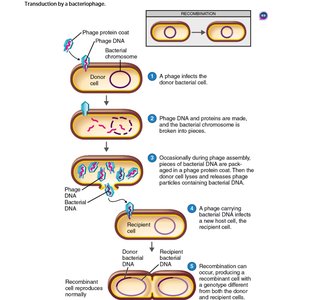
Transduction: Transfer of DNA from one bacterium to another via a bacteriophage (virus).
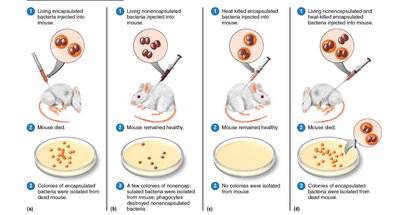
Transformation Example: Griffith's Experiment
Frederick Griffith demonstrated transformation using Streptococcus pneumoniae. Non-encapsulated bacteria acquired the ability to form capsules and become virulent after exposure to heat-killed encapsulated bacteria.
Conjugation in Bacteria
Conjugation requires direct contact between donor and recipient cells. The F factor (fertility plasmid) is a well-known example, enabling the transfer of genetic material.
Transduction in Bacteria
During transduction, a bacteriophage transfers DNA from a donor to a recipient cell. This process can result in genetic recombination and increased diversity.
Genetic Recombination by Crossing Over
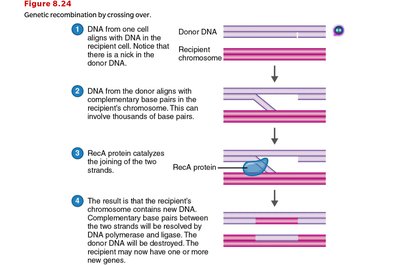
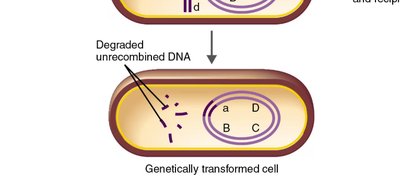
Crossing over involves the exchange of DNA segments between donor and recipient chromosomes, catalyzed by RecA protein. This process increases genetic diversity without the need for mutation.
Additional info: These mechanisms—mutation, transposition, and recombination—provide the raw material for evolution, with natural selection acting on diverse populations to ensure survival in changing environments.
