 Back
BackMicrobial Genetics: Structure, Function, and Transfer of Genetic Material
Study Guide - Smart Notes
 Tailored notes based on your materials, expanded with key definitions, examples, and context.
Microbial Genetics
Introduction to Genetics
Genetics is the science of heredity, focusing on how genetic information is stored, replicated, and expressed in living organisms. In microbiology, understanding genetics is crucial for studying how microorganisms inherit traits, adapt, and evolve. Molecular biology, a related field, deals with the molecular mechanisms of DNA and protein synthesis.
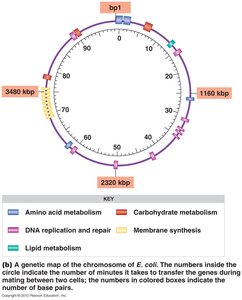
Genome: The total DNA content within a cell, including chromosomes and plasmids.
Genes: Segments of DNA that code for functional products, typically proteins.
DNA: The hereditary macromolecule composed of nucleotides.
Structure of DNA
DNA is a double-helical molecule made up of nucleotides. Each nucleotide consists of a nitrogenous base, a deoxyribose sugar, and a phosphate group. The four nitrogenous bases in DNA are adenine (A), guanine (G), thymine (T), and cytosine (C).
Base Pairing: Adenine pairs with thymine (A::T) via two hydrogen bonds; guanine pairs with cytosine (G:::C) via three hydrogen bonds.
Complementarity: The sequence of one DNA strand determines the sequence of the other.
Phosphodiester Bonds: Adjacent nucleotides are linked by bonds between the 5' carbon of one sugar and the 3' carbon of the next.
Directionality: DNA strands run from 5' to 3'.
The Flow of Genetic Information
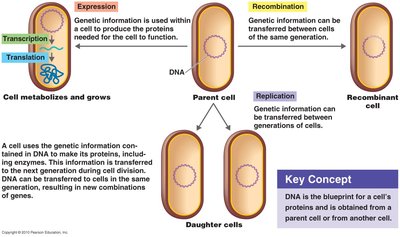
Genetic information in cells flows from DNA to RNA to protein, a process known as the central dogma. DNA can also be transferred between cells, leading to genetic diversity.
Replication: DNA is copied before cell division so each offspring receives a complete genome.
Gene Expression: DNA is used to synthesize proteins via transcription and translation.
Recombination: DNA can be exchanged between cells, introducing new genetic combinations.
DNA Replication
Mechanism of DNA Replication
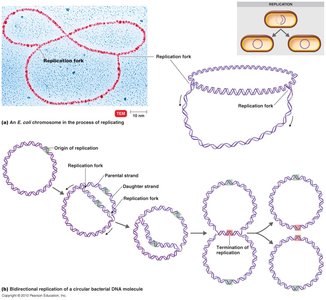
DNA replication is the process by which a cell duplicates its DNA, ensuring genetic continuity. It is semiconservative, meaning each new DNA molecule contains one parental and one newly synthesized strand.
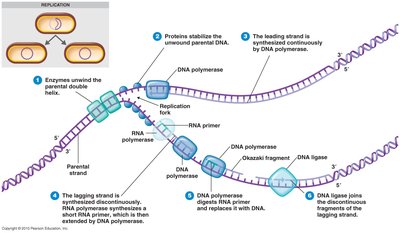
Replication Fork: The region where the DNA double helix unwinds and new strands are synthesized.
Key Enzymes:
DNA gyrase and helicase: Unwind and separate DNA strands (gyrase is a bacterial antibiotic target).
Primase: Synthesizes short RNA primers for DNA polymerase attachment.
DNA polymerase: Synthesizes new DNA strands by adding nucleotides in the 5' to 3' direction.
DNA ligase: Joins Okazaki fragments on the lagging strand.
Leading Strand: Synthesized continuously in the 5' to 3' direction.
Lagging Strand: Synthesized discontinuously as Okazaki fragments, later joined by DNA ligase.
RNA and Protein Synthesis
RNA Structure and Types
RNA is a nucleic acid similar to DNA but contains ribose sugar and uracil (U) instead of thymine (T). RNA plays several roles in gene expression.
Messenger RNA (mRNA): Carries genetic information from DNA to ribosomes for protein synthesis.
Ribosomal RNA (rRNA): Forms part of the ribosome structure and catalyzes protein synthesis.
Transfer RNA (tRNA): Brings specific amino acids to the ribosome during translation.
Transcription
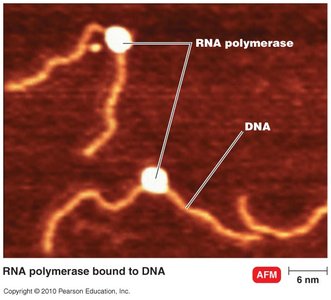
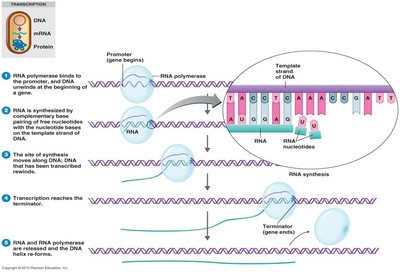
Transcription is the synthesis of a complementary RNA strand from a DNA template. It is the first step in gene expression.
Initiation: RNA polymerase binds to the promoter region of DNA.
Elongation: RNA polymerase synthesizes RNA by adding nucleotides complementary to the DNA template.
Termination: RNA polymerase reaches a terminator sequence and releases the newly formed RNA.
Translation
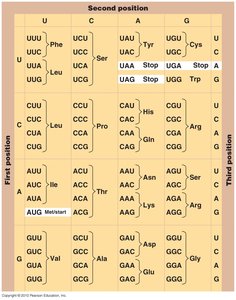
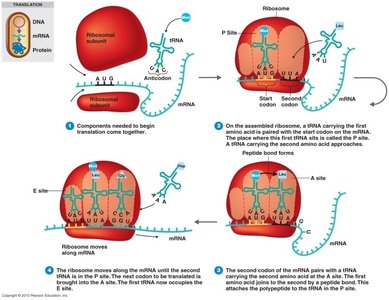
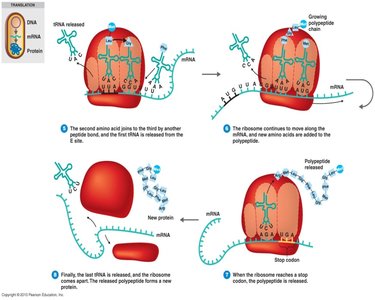
Translation is the process by which the information in mRNA is decoded to synthesize proteins. The genetic code is read in sets of three nucleotides (codons), each specifying an amino acid.
Codons: Triplets of nucleotides in mRNA that specify amino acids.
Start Codon: AUG (methionine) signals the start of translation.
Stop Codons: UAA, UAG, UGA signal the end of translation.
Ribosome: The site of protein synthesis, where mRNA and tRNA interact.
Mutations
Types of Mutations
Mutations are changes in the nucleotide sequence of DNA. They can affect protein structure and function, with varying consequences.
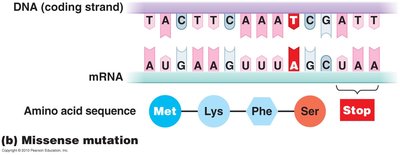
Point Mutation (Substitution): A single nucleotide is replaced, possibly resulting in a missense mutation (different amino acid), silent mutation (no change in protein), or nonsense mutation (premature stop codon).
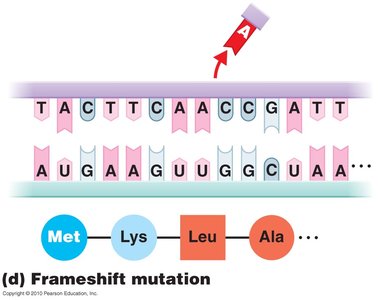
Frameshift Mutation: Insertion or deletion of nucleotides shifts the reading frame, altering downstream amino acid sequence and often resulting in nonfunctional proteins.
Causes of Mutations
Spontaneous Mutations: Occur naturally during DNA replication.
Induced Mutations: Caused by mutagens such as UV light, radiation, or chemicals.
Plasmids and Horizontal Gene Transfer
Plasmids
Plasmids are small, self-replicating DNA molecules found in bacteria. They often carry genes that confer advantageous traits, such as antibiotic resistance or virulence factors.
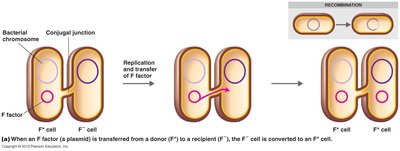
F Plasmids (Fertility): Carry genes for F pili, enabling bacterial conjugation.
R Plasmids (Resistance): Carry antibiotic resistance genes.
Vir Plasmids (Virulence): Carry genes for toxin production.
Horizontal Gene Transfer Mechanisms
Genetic material can be transferred between bacteria by several mechanisms, increasing genetic diversity and adaptability.
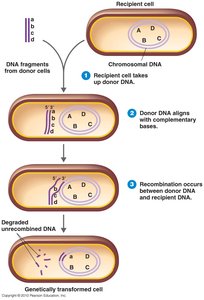
Transformation: Uptake of naked DNA fragments from the environment by a bacterial cell, which may integrate into the chromosome by recombination.
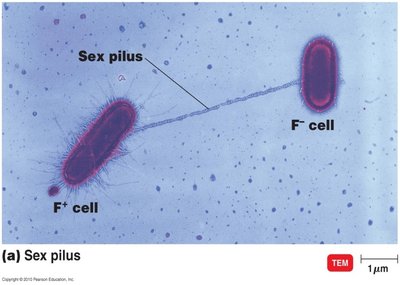
Conjugation: Direct transfer of DNA (usually plasmids) from one bacterium (F+) to another (F-) via a sex pilus.
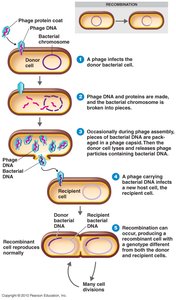
Transduction: Transfer of bacterial DNA by bacteriophages (viruses that infect bacteria). DNA from one bacterium is packaged into a phage and delivered to another bacterium.
Summary Table: Types of Horizontal Gene Transfer
Mechanism | Description | Key Features |
|---|---|---|
Transformation | Uptake of naked DNA from the environment | Requires competent cells; DNA may integrate into chromosome |
Conjugation | Direct transfer of DNA via cell-to-cell contact | Involves F plasmid and sex pilus; donor (F+) to recipient (F-) |
Transduction | Transfer of DNA by bacteriophage | Phage accidentally packages bacterial DNA; delivers to new host |
