 Back
BackMicrobial Genetics: Structure, Function, and Variation
Study Guide - Smart Notes
 Tailored notes based on your materials, expanded with key definitions, examples, and context.
Genetics: The Foundation of Microbial Life
Heredity Basics
Genetics is the study of genes, their structure, function, regulation, and variation. The genome encompasses all the genetic material in a cell or virus, determining its potential traits. The genotype is the genetic makeup, while the phenotype is the observable physical and physiological traits, determined by gene expression. Not all genes are expressed at all times; gene expression is dynamic and responsive to environmental and cellular conditions.
Gene: Heritable unit of genetic material determining a trait.
Genome: All genetic material in a cell or virus.
Genotype: Genetic composition of an organism.
Phenotype: Observable traits resulting from gene expression.
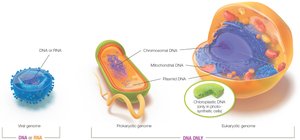
Organization of Genetic Material
Genomes are organized into chromosomes, which are DNA strands associated with proteins. The complexity of an organism generally correlates with the number of genes, not the number of chromosomes. Eukaryotic and prokaryotic cells differ in genome organization:
Eukaryotic cells: Multiple linear chromosomes in the nucleus, associated with histone proteins.
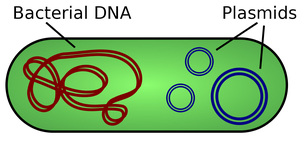
Prokaryotic cells: Usually a single circular chromosome in the nucleoid region, associated with histone-like proteins.
Plasmids: Small, circular, extrachromosomal DNA common in bacteria, often carrying genes for antibiotic resistance or toxins.
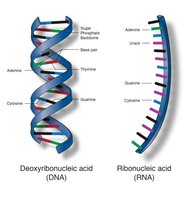
Nucleic Acids: DNA and RNA
Structure of DNA and RNA
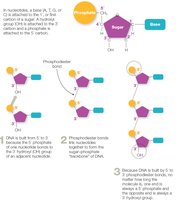
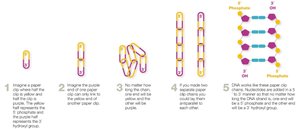
DNA and RNA are nucleic acids that govern all aspects of cell life. Both are polymers of nucleotides, each consisting of a phosphate group, a sugar, and a nitrogenous base.
DNA: Double-stranded helix, deoxyribose sugar, bases A, T, G, C.
RNA: Usually single-stranded, ribose sugar, bases A, U, G, C (uracil replaces thymine).
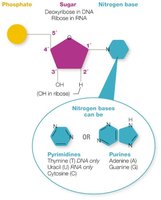
Nucleotide Structure
Each nucleotide contains a phosphate, a five-carbon sugar (deoxyribose in DNA, ribose in RNA), and a nitrogenous base.
Nitrogenous bases are classified as purines (adenine, guanine) or pyrimidines (cytosine, thymine, uracil).
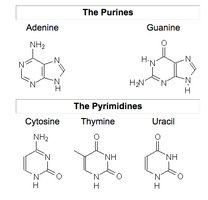
DNA Double Helix
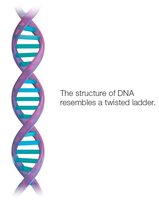
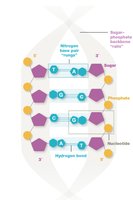
DNA is a double-stranded molecule forming a helix, with complementary base pairing (A with T, C with G) via hydrogen bonds.
The "side rails" are alternating sugar and phosphate groups, connected by phosphodiester bonds.
DNA strands are antiparallel: one runs 5’ to 3’, the other 3’ to 5’.
RNA Structure
RNA nucleotides (ribonucleotides) have ribose sugar and uracil instead of thymine.
RNA is usually single-stranded but can form secondary structures by folding.
Central Dogma of Molecular Biology
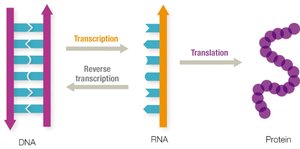
The central dogma describes the flow of genetic information: DNA is transcribed into RNA, which is then translated into protein. Some viruses (retroviruses) can reverse transcribe RNA into DNA.
DNA Replication
Mechanism and Enzymes
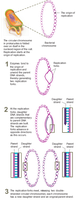
DNA replication is the process by which cells copy their genome before division. It is highly accurate and involves several key enzymes:
Helicase: Unwinds the DNA helix.
Primase: Synthesizes RNA primers.
DNA polymerase III: Main enzyme for DNA synthesis (requires a 3’ OH group).
DNA polymerase I: Replaces RNA primers with DNA.
Ligase: Seals gaps between DNA fragments.
Gyrase/Topoisomerase: Relieves supercoiling tension.
Leading vs. Lagging Strand Synthesis
Leading strand: Synthesized continuously in the direction of the replication fork.
Lagging strand: Synthesized discontinuously in Okazaki fragments, away from the fork.
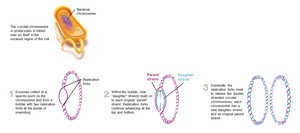
Replication is semiconservative: each new DNA molecule contains one parent and one daughter strand.
Prokaryotic vs. Eukaryotic Replication
Eukaryotic replication is slower, involves more proteins, and has multiple origins of replication per chromosome.
Protein Synthesis (Gene Expression)
Transcription and Translation
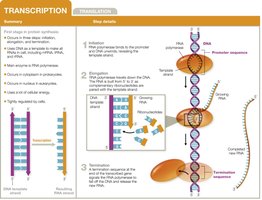
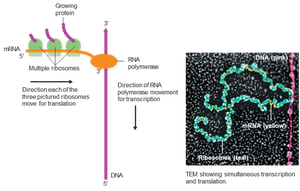
Protein synthesis involves two main steps: transcription (DNA to RNA) and translation (RNA to protein). This process determines phenotype by producing functional proteins.
Transcription: RNA polymerase synthesizes RNA from a DNA template.
Translation: Ribosomes use mRNA to assemble amino acids into proteins.
Types of RNA
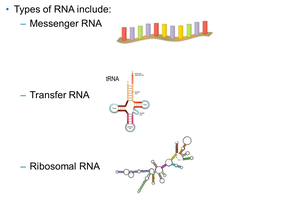
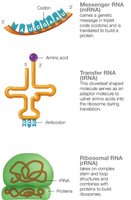
mRNA (messenger RNA): Carries codons for protein synthesis.
tRNA (transfer RNA): Brings amino acids to the ribosome, matching codons with anticodons.
rRNA (ribosomal RNA): Forms the core of ribosome structure and catalyzes protein synthesis.
Ribosomes and the Genetic Code
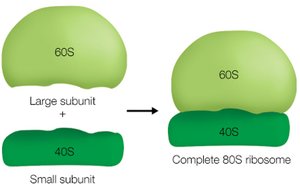
Ribosomes consist of large and small subunits that assemble during translation.
The genetic code is composed of 64 codons (triplets of nucleotides), coding for 20 amino acids and stop signals. The code is redundant (degenerate), meaning multiple codons can specify the same amino acid.
Translation Steps
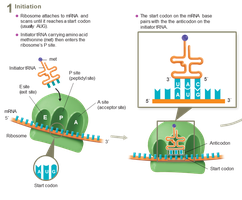
Initiation: Ribosome assembles on mRNA and the first tRNA binds the start codon.
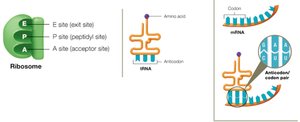
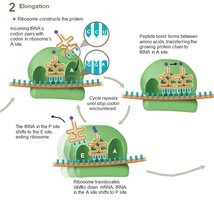
Elongation: tRNAs bring amino acids, which are joined by peptide bonds as the ribosome moves along the mRNA.
Termination: The ribosome encounters a stop codon, releases the completed protein, and disassembles.
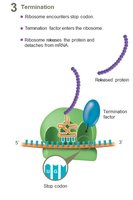
Proteins often undergo post-translational modifications, such as trimming or addition of chemical groups, to become fully functional.
Regulation of Protein Synthesis
Gene Regulation Mechanisms
Constitutive genes: Continuously expressed (housekeeping genes).
Facultative genes: Expressed only under certain conditions.
Gene expression can be regulated at multiple levels:
Pre-transcriptional regulation: Controls RNA production via transcription factors, epigenetic modifications (e.g., DNA methylation), quorum sensing, and operons.
Post-transcriptional regulation: Affects mRNA stability, alternative splicing, small noncoding RNAs, and riboswitches.
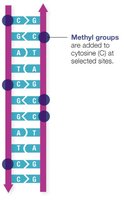
Operons
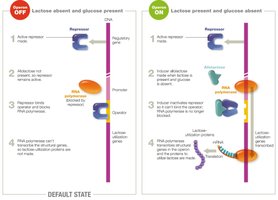
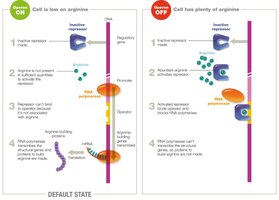
Operon: Cluster of genes under common regulatory control, common in bacteria.
Inducible operons: Default OFF, activated when needed (e.g., lac operon).
Repressible operons: Default ON, repressed when not needed (e.g., arg operon).
Mutations and Genetic Variation
Types and Effects of Mutations
Mutations are changes in genetic material and can be classified as:
Substitutions: One base is replaced by another.
Insertions: Addition of one or more bases.
Deletions: Removal of one or more bases.
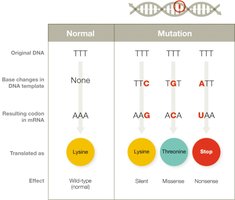
Mutation effects include:
Silent mutations: No change in amino acid sequence.
Missense mutations: Change one amino acid.
Nonsense mutations: Introduce a stop codon, truncating the protein.
Frameshift mutations: Insertions or deletions not in multiples of three, altering the reading frame.
Sources of Mutation
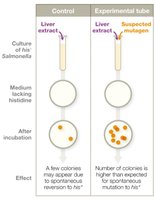
Spontaneous mutations: Occur naturally during DNA replication.
Induced mutations: Caused by mutagens (chemical, physical, or biological agents).
Mutagens can be identified using the Ames test, which screens for increased mutation rates in bacteria.
DNA Repair Mechanisms
Proofreading: DNA polymerases correct errors during replication.
Excision repair: Removes and replaces damaged DNA, especially thymine dimers caused by UV light.
Genetic Variation Without Sexual Reproduction
Horizontal vs. Vertical Gene Transfer
Vertical gene transfer: Genetic information passed to offspring during cell division.
Horizontal gene transfer: Genetic information exchanged between co-existing cells, increasing genetic diversity.
Mechanisms of Horizontal Gene Transfer
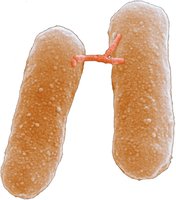
Conjugation: Transfer of plasmids via a pilus (F factor), often spreading antibiotic resistance.
Transformation: Uptake of naked DNA from the environment (demonstrated by Griffith's experiments).
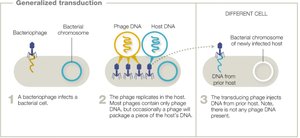
Transduction: Transfer of DNA by bacteriophages (viruses). Includes generalized and specialized transduction.
Transposons: "Jumping genes" that move within and between DNA molecules, altering genetic landscapes.
Additional info: These mechanisms are crucial for microbial evolution, adaptation, and the spread of traits such as antibiotic resistance.
