Back
BackMicrobial Genetics: Structure, Function, and Variation
Study Guide - Smart Notes
 Tailored notes based on your materials, expanded with key definitions, examples, and context.
Microbial Genetics
Introduction to Genetics in Microbiology
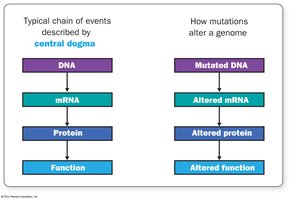
Genetics is the study of genes, how they carry information, how information is expressed, and how genes are replicated. In microbiology, understanding genetics is crucial for exploring how microorganisms inherit traits, adapt, and evolve. The central dogma of molecular biology describes the flow of genetic information from DNA to RNA to protein, which ultimately determines cellular function.
Genetics: Study of heredity and gene function.
Genome: All genetic material in a cell.
Genotype: Genetic makeup of an organism.
Phenotype: Observable characteristics resulting from gene expression.
Structure and Function of Genetic Material
DNA, Chromosomes, and Genes
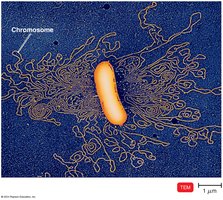
DNA is the hereditary material in all cells. In bacteria, DNA is typically organized as a single circular chromosome, which contains both protein-coding genes and noncoding regions. Genes are specific segments of DNA that encode functional products, usually proteins.
Chromosomes: Structures containing DNA that carry hereditary information.
Short Tandem Repeats (STRs): Noncoding, repeating sequences in DNA.
The Genetic Code and Central Dogma
The genetic code is a set of rules that determines how nucleotide sequences are converted into amino acid sequences in proteins. The central dogma describes the process by which genetic information flows from DNA to RNA to protein.
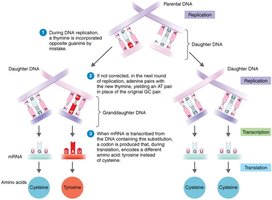
Transcription: DNA is copied into messenger RNA (mRNA).
Translation: mRNA is decoded to synthesize proteins.

The Flow of Genetic Information
Vertical and Horizontal Gene Transfer
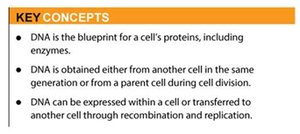
Genetic information can be transferred vertically (from parent to offspring) or horizontally (between cells of the same generation). Horizontal gene transfer is a major source of genetic diversity in bacteria.
Vertical gene transfer: Parent to offspring.
Horizontal gene transfer: Between cells of the same generation, leading to new gene combinations.
DNA Replication
Mechanism of DNA Replication
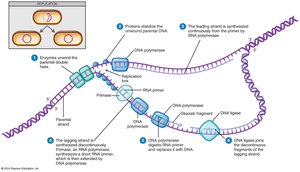
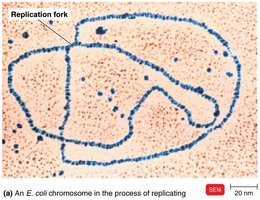
DNA replication is the process by which a cell duplicates its DNA before cell division. The double helix unwinds, and each strand serves as a template for the synthesis of a new complementary strand. Replication is highly accurate due to the proofreading activity of DNA polymerase.
Enzymes involved: Topoisomerase, gyrase, helicase, DNA polymerase, primase, ligase.
Leading strand: Synthesized continuously.
Lagging strand: Synthesized discontinuously as Okazaki fragments.
Bidirectional replication: Most bacterial DNA replication proceeds in both directions from the origin.
RNA and Protein Synthesis
Types of RNA
RNA is a single-stranded nucleic acid that plays several roles in gene expression:
mRNA (messenger RNA): Carries genetic code from DNA to ribosomes.
tRNA (transfer RNA): Brings amino acids to the ribosome during translation.
rRNA (ribosomal RNA): Structural and functional component of ribosomes.
Transcription in Prokaryotes
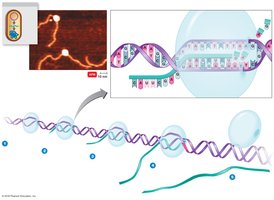
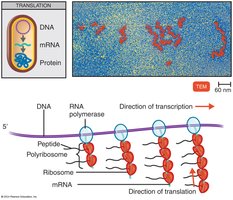
Transcription is the synthesis of a complementary mRNA strand from a DNA template. It involves three main steps: initiation, elongation, and termination.
Initiation: RNA polymerase binds to the promoter region.
Elongation: RNA polymerase synthesizes RNA in the 5' to 3' direction.
Termination: Transcription ends at the terminator sequence.
Translation and the Genetic Code
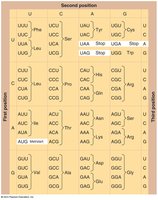
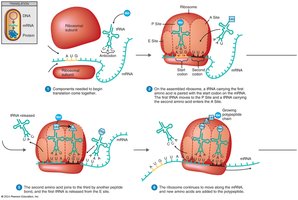
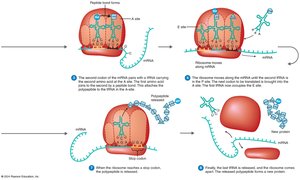
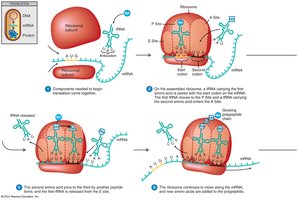
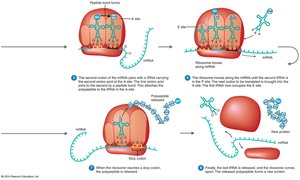
Translation is the process by which ribosomes synthesize proteins using the sequence of codons in mRNA. Each codon (three nucleotides) specifies an amino acid. The genetic code is degenerate, meaning multiple codons can code for the same amino acid.
Start codon: AUG (methionine)
Stop codons: UAA, UAG, UGA
tRNA anticodon: Base-pairs with mRNA codon to ensure correct amino acid incorporation.
Simultaneous Transcription and Translation in Bacteria
In prokaryotes, translation can begin before transcription is complete because both processes occur in the cytoplasm.
Regulation of Bacterial Gene Expression
Constitutive, Inducible, and Repressible Genes
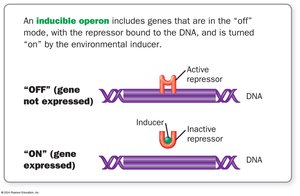
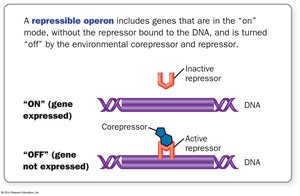
Gene expression in bacteria can be regulated at the transcriptional level. Some genes are always expressed (constitutive), while others are regulated and expressed only as needed (inducible or repressible).
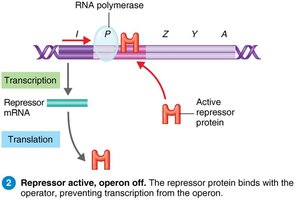
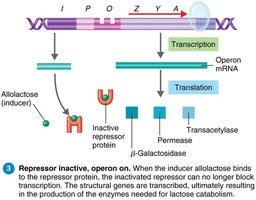
Inducible genes: Turned on by an inducer (e.g., lac operon).
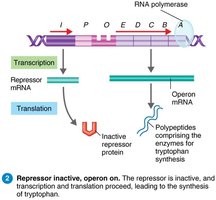
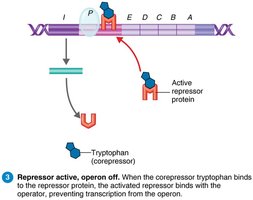
Repressible genes: Turned off by a corepressor (e.g., trp operon).
The Operon Model
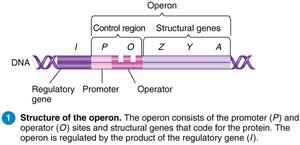
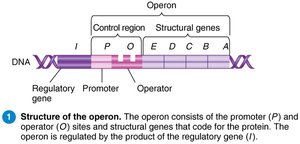
An operon is a cluster of genes under the control of a single promoter and operator. The lac operon (inducible) and trp operon (repressible) are classic examples.
Promoter: Site where RNA polymerase binds to initiate transcription.
Operator: DNA segment that controls access of RNA polymerase to the genes.
Regulatory gene: Encodes a repressor protein.
Mutations and Genetic Variation
Types of Mutations
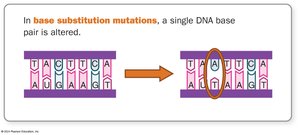
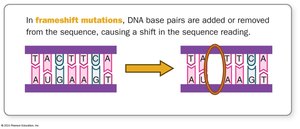
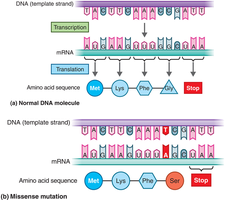
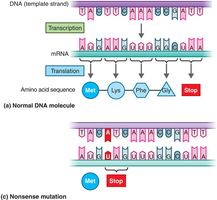
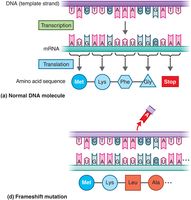
Mutations are permanent changes in the DNA sequence. They can be neutral, beneficial, or harmful, and are a source of genetic diversity.
Base substitution (point mutation): One base is replaced by another.
Missense mutation: Results in a different amino acid.
Nonsense mutation: Results in a stop codon.
Frameshift mutation: Insertion or deletion shifts the reading frame.
Mutagens and Carcinogens
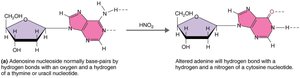
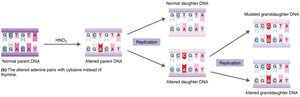
Mutagens are agents that cause mutations. They can be chemical (e.g., nitrous acid, nucleoside analogs, aflatoxin) or physical (e.g., ionizing radiation, UV light). Many mutagens are also carcinogens, substances that cause cancer.
Genetic Transfer and Recombination
Mechanisms of Genetic Transfer
Bacteria can exchange genetic material through several mechanisms, contributing to genetic diversity and evolution.
Transformation: Uptake of naked DNA from the environment.
Conjugation: Direct transfer of DNA via cell-to-cell contact, often involving plasmids.
Transduction: Transfer of DNA by a bacteriophage (virus).
Plasmids and Transposons
Plasmids are small, self-replicating DNA molecules that can carry genes for antibiotic resistance or toxin production. Transposons are DNA segments that can move within and between DNA molecules, sometimes carrying additional genes.
Summary Table: Types of Mutations and Their Effects
Type of Mutation | Description | Effect on Protein |
|---|---|---|
Silent | Base change does not alter amino acid | No effect |
Missense | Base change results in different amino acid | Altered protein function |
Nonsense | Base change creates stop codon | Truncated, usually nonfunctional protein |
Frameshift | Insertion/deletion shifts reading frame | Multiple amino acid changes, often nonfunctional protein |
Key Equations and Concepts
Central Dogma:
Mutation Rate:
Applications and Importance
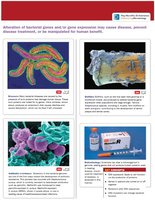
Alteration of bacterial genes and gene expression can cause disease, prevent disease, or be manipulated for human benefit (e.g., biotechnology, antibiotic resistance, vaccine development).