 Back
BackMicrobial Genetics: Structure, Replication, and Expression of Genomes
Study Guide - Smart Notes
 Tailored notes based on your materials, expanded with key definitions, examples, and context.
Microbial Genetics
Genetics and Genomes
Genetics is the study of inheritance and inheritable traits as expressed in an organism’s genetic material. The genome is the entire genetic complement of an organism, including its genes and nucleotide sequences.
Genetics: Focuses on how traits are passed from one generation to the next.
Genome: Includes all DNA, both coding (genes) and non-coding regions.
The Structure of Nucleic Acids
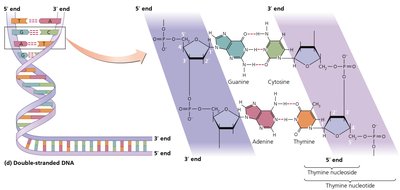
Nucleic acids are polymers of nucleotides, each consisting of a phosphate group, a pentose sugar, and a nitrogenous base. The length of DNA is measured in base pairs.
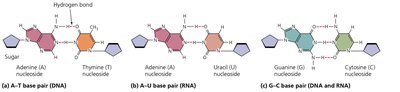
Nucleotide: Basic unit of DNA and RNA, composed of a phosphate, sugar (deoxyribose in DNA, ribose in RNA), and a nitrogenous base (A, T, G, C for DNA; A, U, G, C for RNA).
Base Pairing: Adenine pairs with Thymine (DNA) or Uracil (RNA), Guanine pairs with Cytosine.
Prokaryotic Genomes
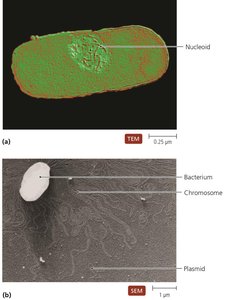
Prokaryotic chromosomes are typically circular DNA molecules located in the nucleoid. Prokaryotic cells are haploid, meaning they have a single chromosome copy. Plasmids are small, independently replicating DNA molecules that can confer survival advantages.
Chromosome: Main DNA molecule, circular in most bacteria.
Plasmids: Types include fertility, resistance, bacteriocin, and virulence plasmids.
Eukaryotic Genomes
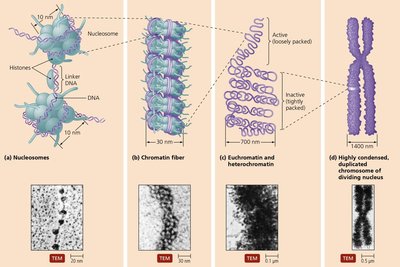
Eukaryotic nuclear chromosomes are linear and sequestered within the nucleus. Eukaryotic cells are often diploid, with two chromosome copies. Extranuclear chromosomes are found in mitochondria and chloroplasts and resemble prokaryotic chromosomes.
Nuclear Chromosomes: Linear, multiple per cell.
Extranuclear DNA: Found in mitochondria and chloroplasts, codes for a small fraction of cellular proteins.
Comparison of Microbial Genomes
The following table summarizes key differences among Bacteria, Archaea, and Eukarya:
Characteristic | Bacteria | Archaea | Eukarya |
|---|---|---|---|
Number of Chromosomes | Single (haploid) or more | One (haploid) | Two or more, typically diploid |
Plasmids Present? | In some cells; often multiple | In some cells | In some fungi, algae, protozoa |
Type of Nucleic Acid | Circular/linear dsDNA | Circular dsDNA | Linear dsDNA in nucleus; circular dsDNA in mitochondria/plasmids |
Location of DNA | Nucleoid and plasmids | Nucleoid and plasmids | Nucleus, mitochondria, chloroplasts, plasmids |
Histones Present? | No (some nonhistone proteins) | Yes | Yes (nuclear chromosomes) |
DNA Replication
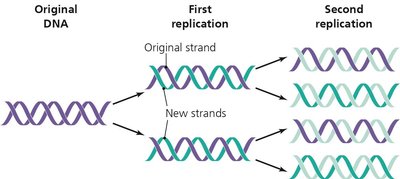
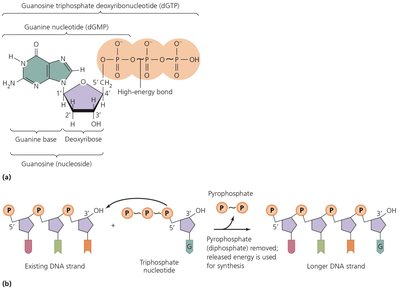
DNA replication is semiconservative, meaning each new DNA molecule consists of one original and one daughter strand. The process requires monomers and energy, provided by triphosphate deoxyribonucleotides.
Semiconservative Replication: Each daughter DNA contains one parental strand.
Energy Source: Triphosphate nucleotides provide both building blocks and energy.
Mechanism of DNA Replication in Bacteria
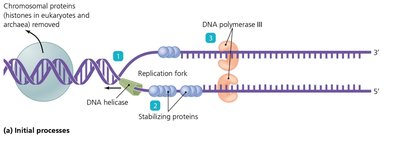
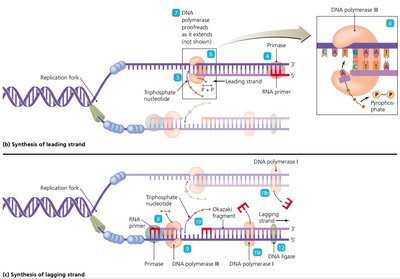
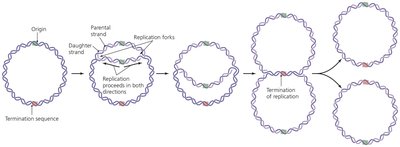
Bacterial DNA replication begins at the origin. DNA polymerase synthesizes DNA only in the 5′ to 3′ direction. The leading strand is synthesized continuously, while the lagging strand is synthesized discontinuously.
Replication Fork: Site where DNA is unwound and new strands are synthesized.
Leading Strand: Synthesized continuously.
Lagging Strand: Synthesized in Okazaki fragments.
Bidirectional Replication and DNA Methylation
Bacterial DNA replication is bidirectional, proceeding from the origin in both directions. Gyrases and topoisomerases remove supercoils. DNA methylation regulates gene expression, replication initiation, and protects against viral infection.
Replication in Eukaryotes
Eukaryotic DNA replication is similar to bacterial replication but involves four DNA polymerases, thousands of replication origins, and shorter Okazaki fragments. Plant and animal cells methylate only cytosine bases.
Genotype and Phenotype
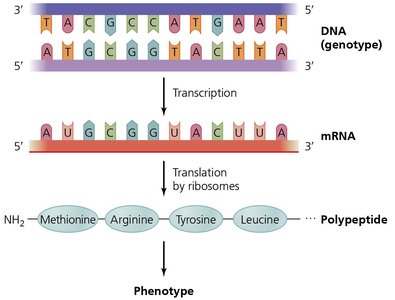
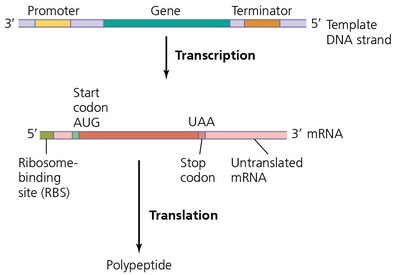
The genotype is the set of genes in the genome, while the phenotype is the physical and functional traits of the organism. The central dogma of genetics describes the flow of information: DNA is transcribed to RNA, which is translated to form polypeptides.
Transcription
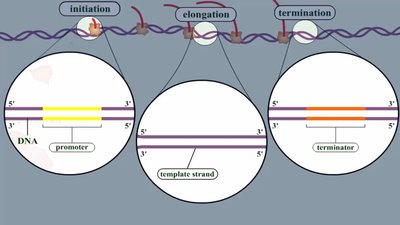
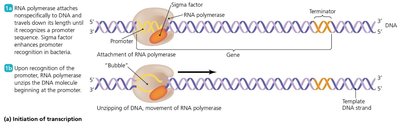
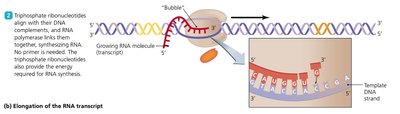
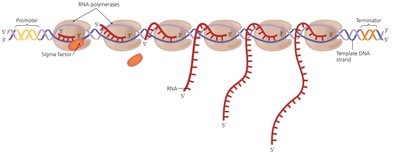
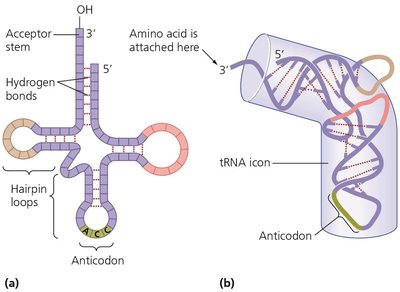
Transcription is the process by which information in DNA is copied as RNA. Six types of RNA are transcribed: RNA primers, messenger RNA (mRNA), ribosomal RNA (rRNA), transfer RNA (tRNA), regulatory RNA, and ribozymes. In prokaryotes, transcription occurs in the nucleoid and involves initiation, elongation, and termination.
Initiation: RNA polymerase binds to promoter.
Elongation: RNA polymerase synthesizes RNA.
Termination: RNA polymerase releases RNA transcript.
Transcription in Eukaryotes
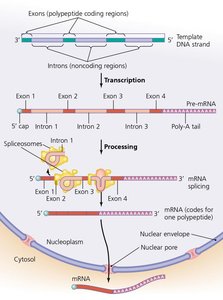
In eukaryotes, transcription occurs in the nucleus, mitochondria, and chloroplasts. There are three types of nuclear RNA polymerases and numerous transcription factors. mRNA is processed before translation by capping, polyadenylation, and splicing.
Translation
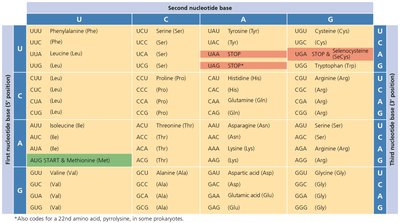
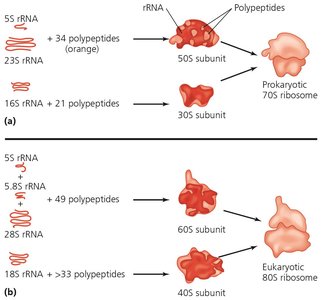
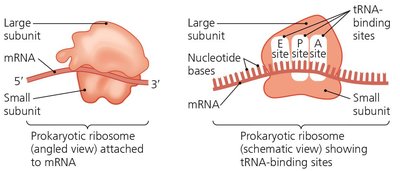
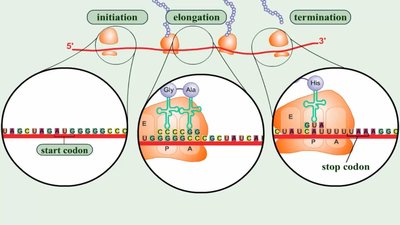
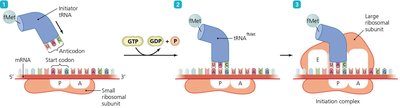
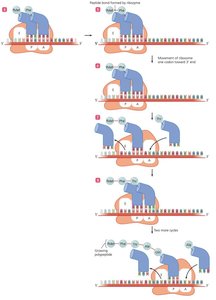
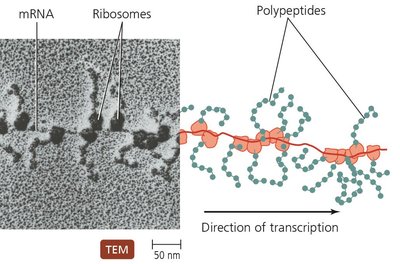
Translation is the process in which ribosomes use genetic information in mRNA to synthesize polypeptides. The genetic code specifies which codons correspond to which amino acids.
Participants: mRNA, tRNA, ribosomes, rRNA.
Stages: Initiation, elongation, termination.
Energy: GTP is required for initiation and elongation.
Regulation of Genetic Expression
Most genes are expressed at all times, but some are regulated to conserve energy. Regulation typically halts transcription or stops translation directly. In prokaryotes, operons (promoter, operator, and genes) are key regulatory elements.
Inducible Operons: Activated by inducers (e.g., lactose operon).
Repressible Operons: Transcribed until deactivated by repressors (e.g., tryptophan operon).
Mutations
A mutation is a change in the nucleotide base sequence of a genome. Mutations are rare and usually deleterious, but occasionally beneficial. Types include point mutations (substitutions, frameshift) and gross mutations (inversions, duplications, transpositions).
Type of Point Mutation | Description | Effects |
|---|---|---|
Substitution | Replacement of one base pair | Silent, missense, or nonsense mutation |
Frameshift (insertion) | Addition of nucleotide pairs | Missense and nonsense mutations |
Frameshift (deletion) | Removal of nucleotide pairs | Missense and nonsense mutations |
Mutagens and DNA Repair
Mutagens such as radiation and chemicals increase mutation rates. Cells have direct, single-strand, and error-prone repair mechanisms. The SOS response is a last-resort repair system in E. coli.
Identifying Mutants, Mutagens, and Carcinogens
Mutants are descendants of cells that do not repair mutations. Methods to recognize mutants include positive selection, negative (indirect) selection, and the Ames test.
Horizontal Gene Transfer in Prokaryotes
Horizontal gene transfer involves the movement of genetic material between cells. Three types are transformation, transduction, and conjugation.
Mechanism | Requirements |
|---|---|
Transformation | Free DNA and competent recipient |
Transduction | Bacteriophage |
Conjugation | Cell-to-cell contact and F plasmid |
Transposons and Transposition
Transposons are DNA segments that move within or between DNA molecules, causing frameshift insertions. Insertion sequences are simple transposons, while complex transposons carry additional genes.
Additional info: These notes expand on brief points with academic context, definitions, and examples to ensure completeness and clarity for exam preparation.
