 Back
BackMicrobial Genetics: Structure, Replication, and Expression of Genomes
Study Guide - Smart Notes
 Tailored notes based on your materials, expanded with key definitions, examples, and context.
Microbial Genetics
Introduction to Genetics and Genomes
Genetics is the study of inheritance and inheritable traits as expressed in an organism’s genetic material. The genome is the entire genetic complement of an organism, including its genes and nucleotide sequences.
The Structure and Replication of Genomes
The Structure of Nucleic Acids
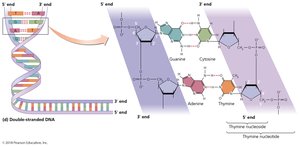
Nucleic acids are polymers of nucleotides, each composed of a phosphate group, a pentose sugar, and a nitrogenous base. The length of DNA is typically expressed in base pairs (bp). The specific pairing of nitrogenous bases is fundamental to the structure and function of DNA and RNA.
Adenine (A) pairs with Thymine (T) in DNA via two hydrogen bonds.
Adenine (A) pairs with Uracil (U) in RNA.
Guanine (G) pairs with Cytosine (C) in both DNA and RNA via three hydrogen bonds.
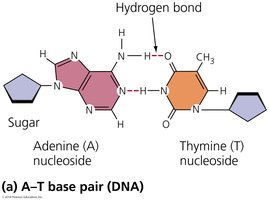
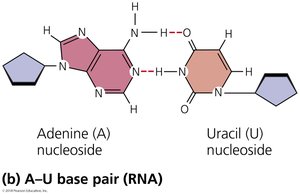
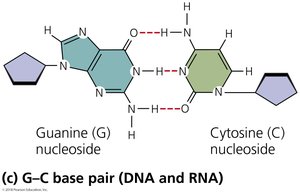
The double-stranded structure of DNA is stabilized by these base pairs, forming the classic double helix.
The Structure of Prokaryotic Genomes
Prokaryotic genomes are typically organized as a single, circular chromosome located in a region called the nucleoid. Prokaryotic cells are haploid, meaning they possess only one chromosome copy. In addition to the main chromosome, prokaryotes may contain plasmids—small, independently replicating DNA molecules that can confer survival advantages such as antibiotic resistance or virulence factors.
Fertility factors: Enable conjugation (gene transfer between cells).
Resistance factors: Confer resistance to antibiotics or toxins.
Bacteriocin factors: Encode proteins that kill other bacteria.
Virulence plasmids: Carry genes for pathogenicity.
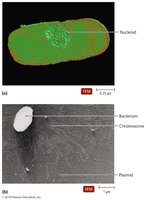
The Structure of Eukaryotic Genomes
Eukaryotic genomes are more complex, typically consisting of multiple linear chromosomes sequestered within a nucleus. Eukaryotic cells are often diploid, containing two copies of each chromosome. In addition to nuclear DNA, eukaryotes possess extranuclear DNA in mitochondria and chloroplasts, which resemble prokaryotic chromosomes and code for a small fraction of cellular proteins.
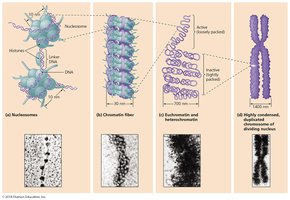
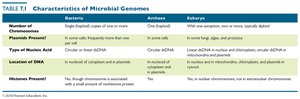
Table: Characteristics of Microbial Genomes
Bacteria | Archaea | Eukarya | |
|---|---|---|---|
Number of Chromosomes | Single (haploid) copies of one or more | One (haploid) | Two or more (typically diploid) |
Plasmids Present? | In some cells; frequently more than one per cell | In some cells | In some fungi, algae, and protozoa |
Type of Nucleic Acid | Circular or linear dsDNA | Circular dsDNA | Linear dsDNA in nucleus; circular DNA in mitochondria, chloroplasts, and plasmids |
Location of DNA | In nucleoid and plasmids | In nucleoid and plasmids | In nucleus and mitochondria, chloroplasts, and plasmids in cytosol |
Histones Present? | No, though chromosome is associated with a small amount of nonhistone protein | Yes | Yes in nuclear chromosomes; not in extranuclear chromosomes |
DNA Replication
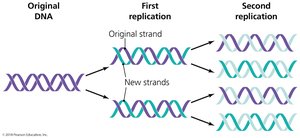
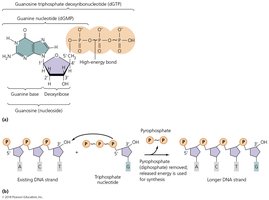
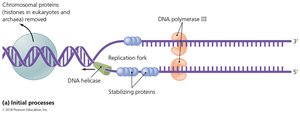
DNA replication is the process by which a cell duplicates its genome. The key to replication is the complementary structure of the two DNA strands. Replication is semiconservative, meaning each new DNA molecule consists of one original (parental) strand and one newly synthesized (daughter) strand.
Replication requires monomers (triphosphate deoxyribonucleotides) and energy.
DNA polymerase synthesizes DNA only in the 5′ to 3′ direction.
Because DNA strands are antiparallel, the leading strand is synthesized continuously, while the lagging strand is synthesized discontinuously in Okazaki fragments.
Additional info:
Gyrases and topoisomerases are enzymes that remove supercoils in DNA during replication. DNA methylation plays roles in gene expression, initiation of replication, protection against viral infection, and DNA repair.
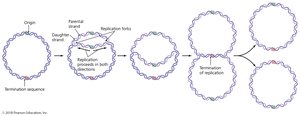
Replication of Eukaryotic DNA
Eukaryotic DNA replication is similar to that in bacteria but involves multiple origins of replication, four types of DNA polymerases, and shorter Okazaki fragments. Plant and animal cells methylate only cytosine bases.
Gene Function
The Relationship Between Genotype and Phenotype
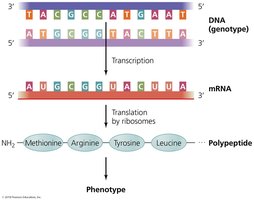
The genotype is the set of genes in the genome, while the phenotype refers to the physical features and functional traits of the organism. The flow of genetic information follows the central dogma: DNA is transcribed into RNA, which is then translated into polypeptides (proteins).
Transcription
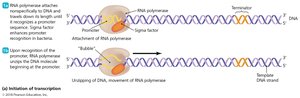
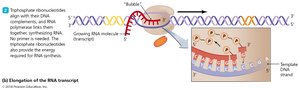
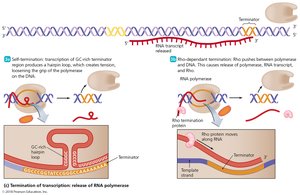
Transcription is the process by which information in DNA is copied as RNA. In prokaryotes, transcription occurs in the nucleoid and involves three main steps: initiation, elongation, and termination. Six types of RNA are transcribed from DNA: RNA primers, messenger RNA (mRNA), ribosomal RNA (rRNA), transfer RNA (tRNA), regulatory RNA, and ribozymes.
Transcriptional Differences in Eukaryotes
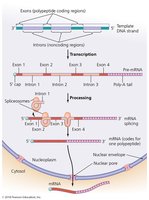
Occurs in the nucleus, mitochondria, and chloroplasts.
Three types of nuclear RNA polymerases and numerous transcription factors are involved.
mRNA is processed before translation: capping, polyadenylation, and splicing remove introns and join exons.
Translation
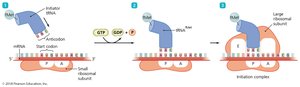
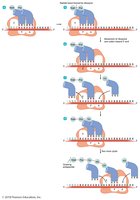
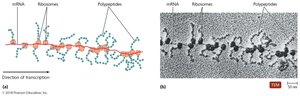
Translation is the process in which ribosomes use the genetic information of nucleotide sequences in mRNA to synthesize polypeptides. The genetic code is read in sets of three nucleotides (codons), each specifying an amino acid.
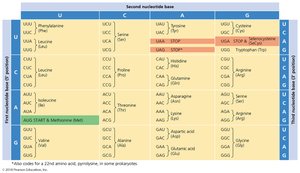
Participants: mRNA, tRNA, ribosomes, and rRNA.
Three stages: initiation, elongation, and termination.
Initiation and elongation require energy in the form of GTP.
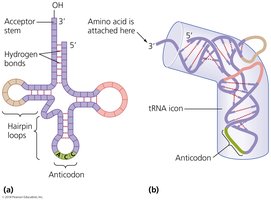
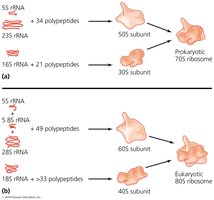
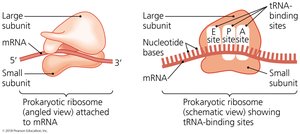
Translation Differences in Eukaryotes
Initiation occurs when the ribosomal subunit binds to the 5′ guanine cap.
The first amino acid is methionine (not formyl-methionine as in prokaryotes).
Ribosomes can synthesize polypeptides into the rough endoplasmic reticulum.
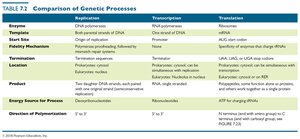
Table: Comparison of Genetic Processes
Replication | Transcription | Translation | |
|---|---|---|---|
Enzyme | DNA polymerase | RNA polymerase | Ribosome |
Template | Both parental strands of DNA | One strand of DNA | mRNA |
Start Site | Origin of replication | Promoter | AUG start codon |
Fidelity Mechanism | Proofreading by DNA polymerase | None | None |
Termination | Termination sequences | Terminator | UAA, UAG, or UGA stop codons |
Product | Two daughter DNA strands, each paired with one original strand | RNA transcript | Polypeptides |
Energy Source for Process | dNTPs | NTPs | GTP for charging tRNAs |
Direction of Polymerization | 5′ → 3′ | 5′ → 3′ | N-terminus to C-terminus |
Regulation of Genetic Expression
Regulation in Prokaryotes: Operons
Most genes are expressed at all times, but some are regulated to conserve energy. In prokaryotes, genes are often organized into operons, which consist of a promoter, operator, and a series of genes. Operons are controlled by regulatory elements and can be inducible or repressible.
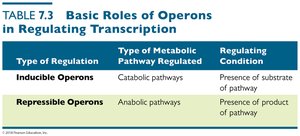
Inducible operons (e.g., lac operon): Must be activated by inducers; regulate catabolic pathways.
Repressible operons (e.g., trp operon): Transcribed continually until deactivated by repressors; regulate anabolic pathways.

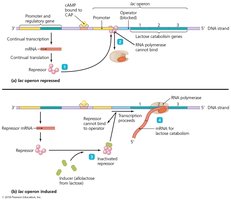
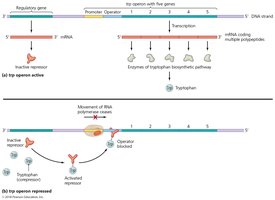
Table: Basic Roles of Operons in Regulating Transcription
Type of Regulation | Type of Metabolic Pathway Regulated | Regulating Condition |
|---|---|---|
Inducible Operons | Catabolic pathways | Presence of substrate of pathway |
Repressible Operons | Anabolic pathways | Presence of product of pathway |
Regulation by RNA Molecules
Regulatory RNAs, such as microRNAs (miRNAs), small interfering RNAs (siRNAs), and riboswitches, can control translation by binding to mRNA and inhibiting its translation or altering its stability.
Mutations of Genes
Types of Mutations
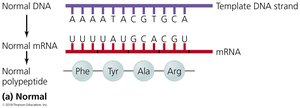
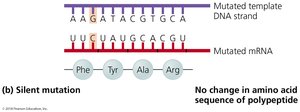
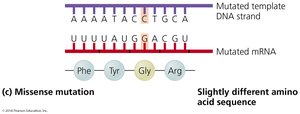
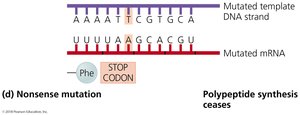
A mutation is a change in the nucleotide base sequence of a genome. Mutations are rare and usually deleterious, but occasionally they can confer an advantage. Types of mutations include:
Point mutations: Affect a single base pair (substitutions, insertions, deletions).
Frameshift mutations: Insertions or deletions that shift the reading frame.
Gross mutations: Large-scale changes such as inversions, duplications, and transpositions.
Mutagens
Mutagens are agents that increase the mutation rate. They include:
Radiation: Ionizing (e.g., X-rays) and nonionizing (e.g., UV light).
Chemical mutagens: Nucleotide analogs, nucleotide-altering chemicals, and frameshift mutagens.
DNA Repair Mechanisms
Cells possess several mechanisms to repair damaged DNA:
Direct repair: Reverses damage directly.
Single-strand repair: Removes and replaces damaged DNA segments.
Error-prone repair: Last-resort mechanism, such as the SOS response in E. coli.
Identifying Mutants, Mutagens, and Carcinogens
Mutants are cells that do not repair a mutation. Methods to recognize mutants include positive selection, negative (indirect) selection, and the Ames test.
Genetic Recombination and Transfer
Genetic Recombination
Genetic recombination involves the exchange of nucleotide sequences between homologous DNA molecules, resulting in recombinants with new genetic combinations.
Horizontal Gene Transfer Among Prokaryotes
Horizontal gene transfer is the movement of genetic material between organisms other than by descent. Three main mechanisms are:
Transformation: Uptake of naked DNA from the environment by competent cells.
Transduction: Transfer of DNA via bacteriophages (viruses that infect bacteria).
Bacterial conjugation: Direct transfer of DNA between cells via a pilus.
Transposons and Transposition
Transposons are segments of DNA that can move from one location to another within a genome, causing frameshift insertions. They contain palindromic sequences at each end and may carry additional genes (complex transposons).
Additional info:
Insertion sequences are the simplest transposons, containing only the genes necessary for transposition. Complex transposons may carry antibiotic resistance or other genes.
