 Back
Microbial Genetics: Structure, Replication, and Gene Function
Study Guide - Smart Notes
 Tailored notes based on your materials, expanded with key definitions, examples, and context.
Microbial Genetics
Genetics and Genomes
Genetics is the study of inheritance and inheritable traits as expressed in an organism’s genetic material. The genome is the entire genetic complement of an organism, including its genes and nucleotide sequences.
Genome: All genetic material in a cell, including chromosomes and plasmids.
Gene: A segment of DNA that codes for a functional product, usually a protein.
Nucleotide: The basic unit of nucleic acids, composed of a phosphate, pentose sugar, and nitrogenous base.
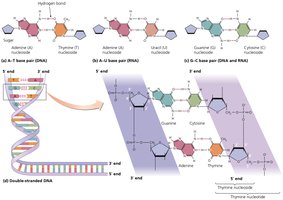
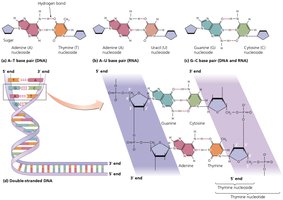
Structure of Nucleic Acids
Nucleic acids are polymers of nucleotides. DNA and RNA differ in their sugars and bases. DNA is double-stranded and features complementary base pairing (A-T, G-C), while RNA is usually single-stranded and uses uracil instead of thymine.
Antiparallel: DNA strands run in opposite directions (5’ to 3’ and 3’ to 5’).
Base Pairing: Adenine pairs with thymine (or uracil in RNA), guanine pairs with cytosine.
Backbone: Sugar-phosphate backbone with nitrogenous bases projecting inward.
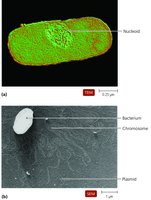
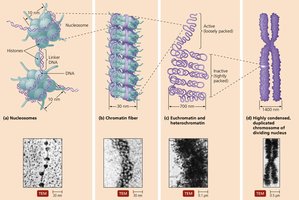
Prokaryotic and Eukaryotic Genomes
Prokaryotic genomes typically consist of a single, circular chromosome located in the nucleoid. Eukaryotic genomes are more complex, with multiple linear chromosomes sequestered within a nucleus, and additional DNA in mitochondria and chloroplasts.
Prokaryotes: Haploid, circular chromosomes, may contain plasmids.
Eukaryotes: Diploid, linear chromosomes, chromatin packaging (euchromatin vs. heterochromatin).
Plasmids: Small, circular DNA molecules that replicate independently and may confer advantages (e.g., resistance, virulence).
DNA Replication
Semiconservative Replication
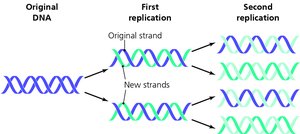
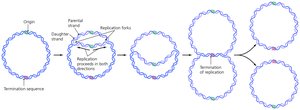
DNA replication is semiconservative: each new DNA molecule consists of one original strand and one newly synthesized strand. The process relies on the complementary structure of DNA.
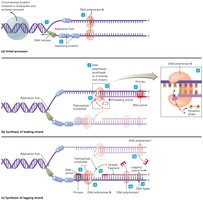
Key Enzymes: DNA polymerase, helicase, primase, ligase, gyrase, topoisomerase.
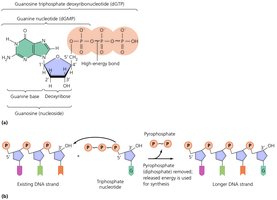
Directionality: DNA polymerase synthesizes DNA only in the 5’ to 3’ direction.
Leading Strand: Synthesized continuously toward the replication fork.
Lagging Strand: Synthesized discontinuously away from the fork, forming Okazaki fragments.
Okazaki Fragments
Okazaki fragments are short DNA segments synthesized on the lagging strand. They are initiated by RNA primers and later joined by DNA ligase to form a continuous strand.
Reason: DNA polymerase can only add nucleotides in the 5’ to 3’ direction.
Processing: DNA polymerase I replaces RNA primers; DNA ligase seals nicks.
Bidirectional Replication and Methylation
Bacterial DNA replication is bidirectional from a single origin. DNA methylation plays roles in gene expression, replication initiation, protection, and repair.
Gene Function
Genotype and Phenotype
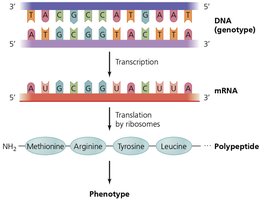
The genotype is the set of genes in the genome, while the phenotype is the physical and functional expression of those genes.
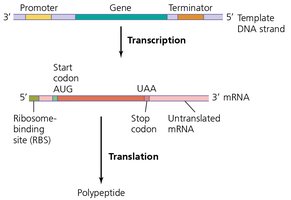
Central Dogma: DNA is transcribed to RNA, which is translated to form polypeptides.
Transcription
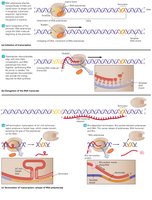
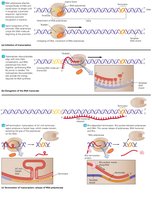
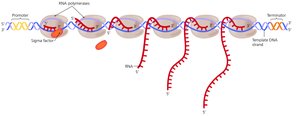
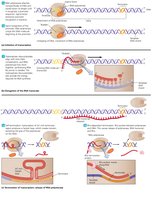
Transcription is the process by which information in DNA is copied as RNA. In prokaryotes, it occurs in the nucleoid; in eukaryotes, in the nucleus, mitochondria, and chloroplasts.
Types of RNA: mRNA, rRNA, tRNA, regulatory RNA, ribozymes, RNA primers.
Steps: Initiation, elongation, termination.
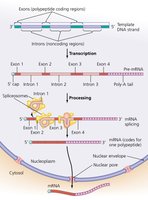
Eukaryotic Processing: Capping, polyadenylation, splicing (removal of introns).
Translation
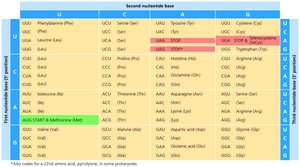
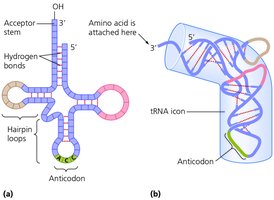
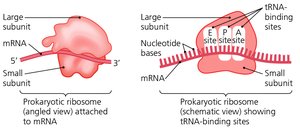
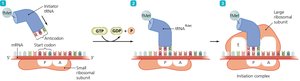
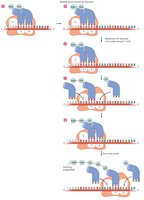
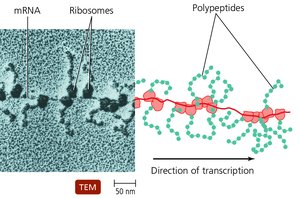
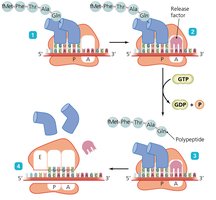
Translation is the process in which ribosomes use genetic information in mRNA to synthesize polypeptides. The accuracy of translation depends on correct pairing between mRNA codons and tRNA anticodons.
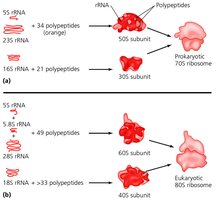
Participants: mRNA, tRNA, ribosomes, rRNA.
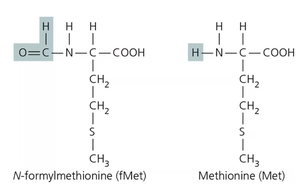
Start Codon: AUG (codes for N-formylmethionine in prokaryotes, methionine in eukaryotes).
Stages: Initiation, elongation, termination.
Ribosome Sites: A (arrival), P (peptide), E (exit).
Regulation of Genetic Expression
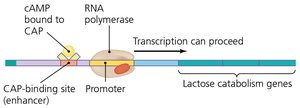
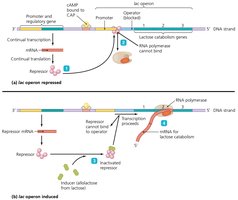
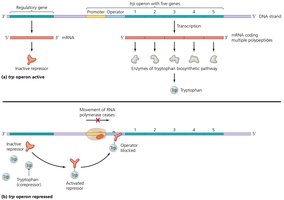
Gene expression is regulated to conserve energy. Most genes are expressed at all times, but others are transcribed and translated only when needed. Regulation typically halts transcription or translation.
Operon: A cluster of genes under control of a single promoter and operator.
Inducible Operon: Activated by inducers (e.g., lac operon for lactose catabolism).
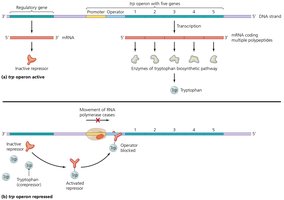
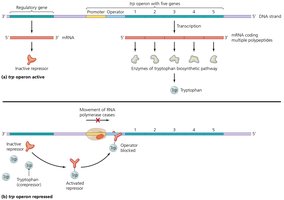
Repressible Operon: Continuously transcribed until deactivated by repressors (e.g., trp operon for tryptophan synthesis).

Regulatory RNA
RNA molecules such as microRNAs (miRNAs), small interfering RNAs (siRNAs), and riboswitches can regulate translation by binding to mRNA or changing shape.
Mutations
Types and Effects of Mutations
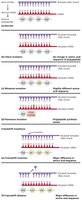
A mutation is a change in the nucleotide base sequence of a genome. Most mutations are deleterious, but some may confer advantages. Mutations can be point (affecting one base pair) or gross (involving larger changes).
Point Mutations: Substitutions, insertions, deletions.
Gross Mutations: Inversions, duplications, transpositions.
Mutagens
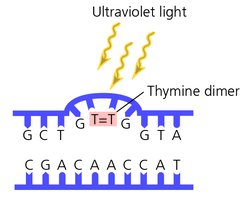
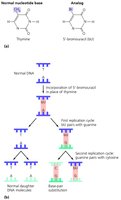
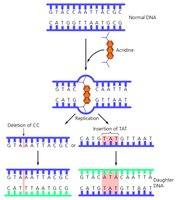
Mutagens are agents that increase the mutation rate. They include radiation (ionizing and nonionizing) and chemical mutagens (nucleotide analogs, nucleotide-altering chemicals, frameshift mutagens).
DNA Repair Mechanisms
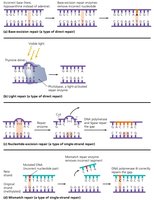
Cells have several methods for repairing damaged DNA, including direct repair, single-strand repair, and error-prone repair (SOS response).
Identifying Mutants, Mutagens, and Carcinogens
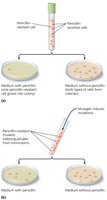
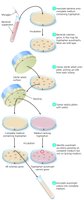
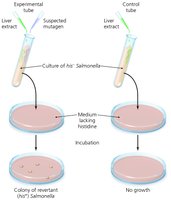
Mutants are cells that do not repair a mutation. Wild-type cells are those normally found in nature. Methods to recognize mutants include positive selection, negative (indirect) selection, and the Ames test.
Genetic Recombination and Transfer
Genetic Recombination
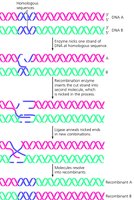
Exchange of nucleotide sequences often occurs between homologous sequences, resulting in recombinants—cells with new DNA sequences.
Horizontal Gene Transfer in Prokaryotes
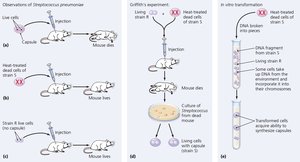
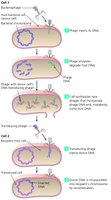
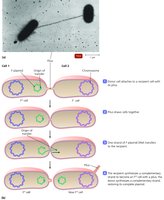
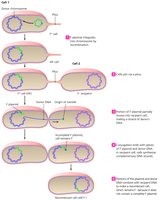
Horizontal gene transfer involves the movement of genetic material between cells, not from parent to offspring. Three main types are transformation, transduction, and conjugation.
Transformation: Uptake of DNA from the environment by competent cells.
Transduction: Transfer of DNA via a bacteriophage (virus).
Conjugation: Transfer of DNA requiring cell-to-cell contact, often mediated by pili.
Transposons and Transposition
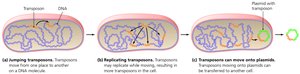
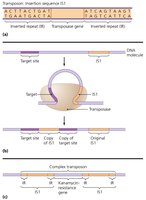
Transposons are segments of DNA that move from one location to another, causing frameshift insertions. Insertion sequences are the simplest transposons, while complex transposons carry additional genes.
Summary Table: Types of Horizontal Gene Transfer
Type | Mechanism | Key Features |
|---|---|---|
Transformation | Uptake of naked DNA | Requires competence |
Transduction | DNA transfer via bacteriophage | Generalized or specialized |
Conjugation | Direct cell-to-cell transfer | Requires pili, F plasmid |
Additional info: These notes expand on brief points with academic context, definitions, and examples to ensure completeness and clarity for exam preparation.
