 Back
BackMicrobial Growth and Control: Dynamics, Measurement, and Environmental Factors
Study Guide - Smart Notes
 Tailored notes based on your materials, expanded with key definitions, examples, and context.
Microbial Growth and Its Control
Binary Fission
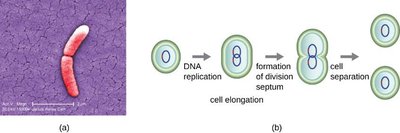
Binary fission is the primary method by which prokaryotic cells, such as bacteria, reproduce. This process ensures that each daughter cell receives a complete copy of the parental genome and an equal share of the cytoplasm.
DNA Replication: The bacterial chromosome is duplicated.
Cell Elongation: The mother cell elongates as the chromosomes move to opposite ends.
Septum Formation: A division septum forms at the center of the cell.
Cell Separation: The cell splits into two genetically identical daughter cells.
Equal Cytoplasmic Division: Both daughter cells receive equal portions of cytoplasm.
Generation Time
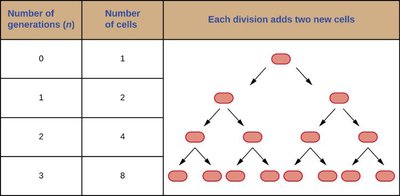
Generation time, or doubling time, is the period required for a microbial population to double in number through one round of binary fission. This time varies widely among species, ranging from 20 minutes to several weeks.
Exponential Growth: Each division cycle doubles the number of cells, leading to rapid population increases.
Calculation: The number of cells after n generations is given by where is the initial number of cells.
The Microbial Growth Curve
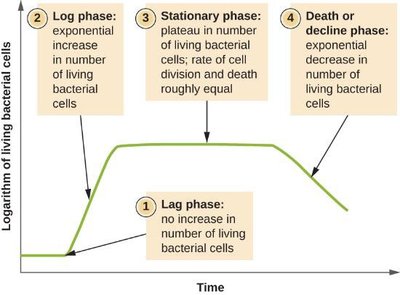
The growth of a bacterial culture in a closed system (batch culture) follows a predictable pattern, represented as a growth curve with four distinct phases:
Lag Phase: Cells adapt to new conditions; little or no cell division occurs.
Log (Exponential) Phase: Cells divide at a constant, rapid rate; population increases exponentially.
Stationary Phase: Growth rate slows as nutrients are depleted and waste accumulates; cell division equals cell death.
Death (Decline) Phase: Cells die at an exponential rate due to harsh conditions.
Batch Culture vs. Continuous Culture
Microbial cultures can be maintained in two main ways:
Batch Culture: No new nutrients are added, and waste accumulates. Growth is limited to a short period.
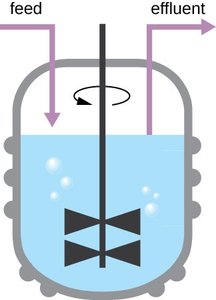
Continuous Culture: Nutrients are continuously supplied, and waste is removed, maintaining cells in the log phase. A chemostat is used for this purpose.
Measuring Bacterial Growth
Direct Cell Counts
Direct methods involve counting individual cells:
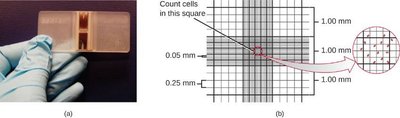
Direct Microscopic Cell Count: Uses a Petroff-Hausser chamber, a special slide with a grid to count cells in a known volume.
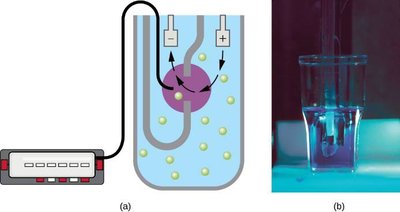
Coulter Counter: An electronic device that counts cells by detecting changes in electrical resistance as cells pass through a small aperture.
Plate Count: Involves serial dilution and plating to count colony-forming units (CFU).
Most Probable Number (MPN): Estimates viable cell numbers in dilute samples by statistical analysis of growth in liquid media.
Indirect Cell Counts
Indirect methods estimate cell numbers without counting individual cells:
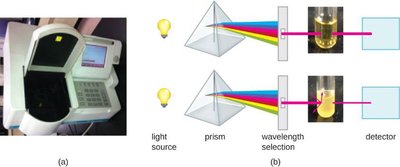
Turbidity: Measured using a spectrophotometer; increased cloudiness indicates higher cell density.
Dry Weight: Cells are filtered, dried, and weighed; increased mass indicates growth.
Environmental Factors Affecting Microbial Growth
Oxygen Requirements
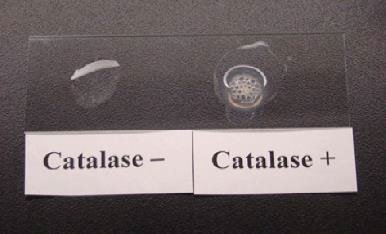
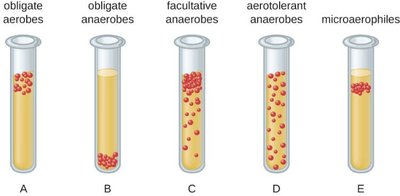
Microbes vary in their oxygen requirements due to the production of reactive oxygen species (ROS) during aerobic respiration. Enzymes such as superoxide dismutase and catalase detoxify ROS.
Aerobe: Utilizes and detoxifies oxygen.
Obligate Aerobe: Requires oxygen for growth.
Facultative Anaerobe: Can grow with or without oxygen.
Microaerophile: Requires low levels of oxygen.
Anaerobe: Does not use oxygen.
Obligate Anaerobe: Cannot survive in oxygen.
Aerotolerant Anaerobe: Tolerates but does not use oxygen.
Anaerobic Pathogens
Some pathogens, such as Clostridium perfringens, thrive in anaerobic environments, such as necrotic tissue in wounds, leading to diseases like gas gangrene.
pH Requirements
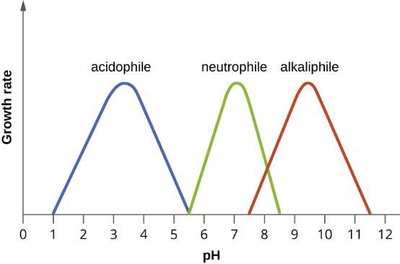
Microorganisms have specific pH ranges for optimal growth:
Neutrophiles: Grow best at pH 6–8.
Acidophiles: Thrive at low pH (acidic conditions).
Alkalinophiles: Prefer high pH (alkaline conditions).

Helicobacter pylori and Gastric Ulcers
Helicobacter pylori is a gastric pathogen that colonizes the stomach lining, causing ulcers and increasing the risk of stomach cancer.
Temperature Requirements
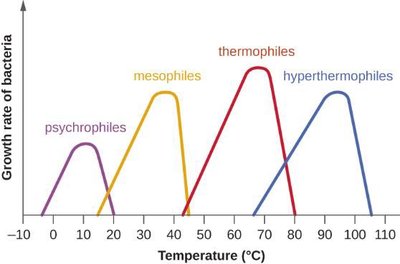
Bacteria are classified based on their optimal temperature ranges:
Psychrophiles: Grow below 15°C; can grow at 0°C.
Mesophiles: Grow best at 20–40°C; most human pathogens.
Thermophiles: Grow above 45°C.
Hyperthermophiles: Grow at 70–105°C.
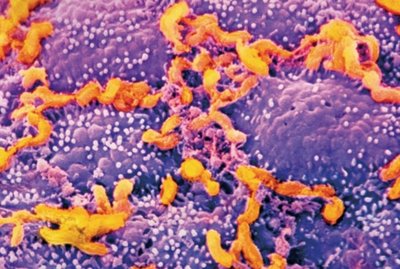
Listeria monocytogenes
Listeria monocytogenes is a Gram-positive rod that can grow at refrigeration temperatures and cause severe infections, especially in neonates, the elderly, and pregnant women.
Other Environmental Conditions
Osmotic Pressure: Most microbes prefer hypotonic or isotonic environments. High osmotic pressure causes plasmolysis and cell death.
Halophiles: Require high salt concentrations.
Osmotolerant (Facultative Halophiles): Tolerate high solute concentrations.
Barophiles: Require high atmospheric pressure for growth.
Culture Media and Laboratory Safety
Types of Culture Media
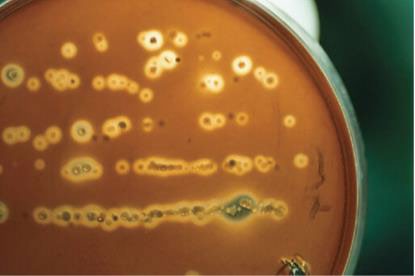
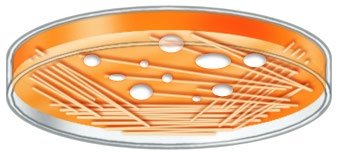
Enriched Media: Contains growth factors and nutrients for fastidious organisms.
Selective Media: Inhibits growth of some microbes while encouraging others.
Differential Media: Allows growth of multiple microbes and distinguishes them by visible differences.
Some media can be both selective and differential, such as MacConkey agar.
Biosafety Levels
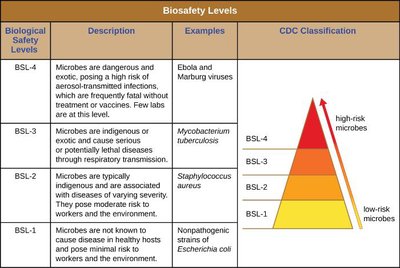
Infectious agents are classified into four biosafety levels (BSL-1 to BSL-4) based on their risk to laboratory personnel and the community. Each level requires specific safety precautions.
Controlling Microbial Growth
Key Terminology
Sterilization: Destroys all viable microbes, including endospores and viruses.
Disinfection: Destroys vegetative pathogens on inanimate objects.
Antiseptic: Disinfectants safe for use on living tissues.
Sanitization: Mechanically removes microbes to safe levels.
Degerming: Reduces microbial numbers by gentle scrubbing of living tissues.
Microbial Death
Microbial death is defined as the permanent loss of reproductive capability, even under optimal conditions. The effectiveness of antimicrobial agents depends on several factors, including the number and nature of microbes, environmental conditions, agent concentration, and presence of organic matter.
Aseptic Technique
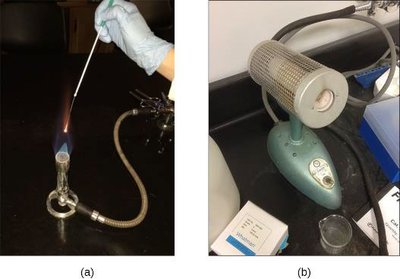
Aseptic technique is essential in medical practice to prevent contamination of sterile fields and protect patients from infection and sepsis.
Physical Methods of Microbial Control
Heat: Dry heat (incineration, oven) and moist heat (autoclave) are used for sterilization. Moist heat is more effective at penetrating cells.
Pasteurization: Reduces pathogens and spoilage organisms in food without sterilizing. HTST (72°C, 15 sec) and UHT (138°C, 2+ sec) are common methods.
Cold Temperatures: Refrigeration slows metabolism (microbiostatic); freezing can stop growth or kill microbes.
Desiccation: Drying removes water, halting metabolism but not necessarily killing all microbes.
Radiation: UV (nonionizing) causes DNA mutations; ionizing radiation breaks DNA and sterilizes medical supplies and food.
Filtration: Physically removes microbes from air or liquids using filters with small pore sizes (e.g., HEPA filters).
Chemical Methods of Microbial Control
Phenolics: Denature proteins and disrupt membranes (e.g., Lysol, triclosan).
Heavy Metals: Bind to proteins, inhibiting enzymes (e.g., silver, copper, zinc).
Halogens: Destabilize molecules (e.g., iodine, chlorine, fluoride).
Alcohols: Denature proteins and disrupt membranes (e.g., ethanol, isopropanol).
Surfactants: Soaps and detergents emulsify lipids and mechanically remove microbes.
Aldehydes: Alkylate proteins and DNA (e.g., glutaraldehyde, formaldehyde).
Hydrogen Peroxide: Strong oxidizer; catalase breaks it down into water and oxygen.
Disk-Diffusion Method: Used to test the effectiveness of chemical agents against microbes by measuring zones of inhibition on agar plates.
*Additional info: Where original content was brief, academic context and definitions were expanded for clarity and completeness.*
