 Back
BackMicrobial Growth and Cultivation: Physical and Chemical Requirements
Study Guide - Smart Notes
 Tailored notes based on your materials, expanded with key definitions, examples, and context.
Microbial Growth: Fundamentals and Dynamics
Definition and Overview
Microbial growth refers to the increase in the number of cells in a microbial population, primarily through cell division. Most of our understanding of microbial growth comes from laboratory studies, though in nature, microbes often exist in complex communities.
Cell Division: Microbial growth is the result of cell division, producing new daughter cells and increasing the total population.
Laboratory Cultures: Most laboratory studies use pure, single-species cultures, but in nature, microbes interact with other bacteria, archaea, and eukaryotes.
Biofilms and Microbial Communities
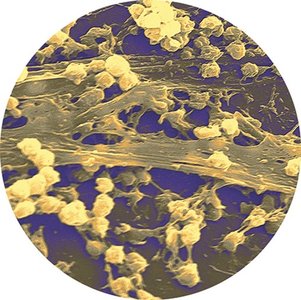
In natural environments, microbes often form biofilms, which are structured communities of cells adhering to surfaces and embedded in a self-produced matrix.
Biofilm Formation: Begins when planktonic (free-floating) bacteria adhere to a surface, such as medical devices.
Clinical Relevance: Biofilms are difficult to treat and contribute to persistent infections.
Microbial Interactions: Cells in biofilms communicate and collaborate for survival.
Mechanisms of Bacterial Cell Division
Binary Fission
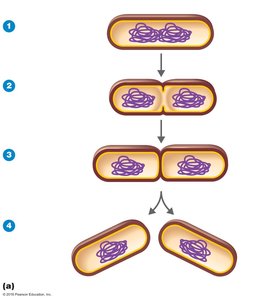
Most bacteria reproduce by binary fission, an asexual process where a single cell divides into two identical daughter cells.
Steps of Binary Fission:
Cell elongates and DNA is replicated.
Cell wall and plasma membrane begin to constrict.
A cross-wall forms, completely separating the two DNA copies.
Cells separate into two daughter cells.
Generation Time and Exponential Growth
Generation time is the time required for a cell to divide. Bacterial populations grow exponentially under optimal conditions.
Formula:
Examples: Escherichia coli has a generation time of about 20 minutes; Mycobacterium tuberculosis has a much slower generation time (15–20 hours).
Phases of Bacterial Growth in Batch Culture
Growth Curve Phases
When bacteria are grown in a closed system (batch culture), they exhibit four distinct growth phases:
Lag Phase: Cells adjust to their environment; little to no cell division occurs.
Log (Exponential) Phase: Rapid cell division and population growth.
Stationary Phase: Nutrient depletion and waste accumulation slow growth; the rate of cell division equals the rate of cell death.
Death Phase: Cells die at an exponential rate due to toxic waste and lack of nutrients.
Industrial Applications
In industrial microbiology, maintaining cultures at a specific growth phase (often log phase) is essential for optimal production. This is achieved using a chemostat, which continuously supplies fresh medium and removes waste.
Physical Requirements for Microbial Growth
Temperature
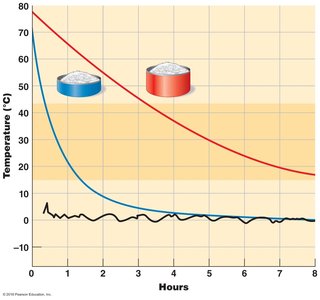
Temperature significantly affects microbial metabolism and growth rates. Microbes are classified based on their temperature preferences:
Psychrophiles: Thrive at 0–20°C; found in cold environments.
Psychrotrophs: Grow at 0–30°C; associated with food spoilage.
Mesophiles: Grow best at 20–45°C; most human pathogens.
Thermophiles: Grow at 50–60°C; found in hot springs and compost.
Extreme Thermophiles (Hyperthermophiles): Grow at 80°C and above; found in volcanic vents.
pH
Microbes have specific pH ranges for optimal growth:
Acidophiles: Grow at pH 1–5; found in acidic environments.
Neutralophiles: Grow best at pH 5–8; most bacteria.
Alkaliphiles: Grow at pH 9–11; found in alkaline lakes.
Osmotic Pressure
Osmotic pressure affects water availability and cell integrity:
Halophiles: Thrive in high-salt environments (up to 35%).
Facultative Halophiles: Tolerate high salt but do not require it.
Plasmolysis: Occurs when cells lose water in hypertonic environments, inhibiting growth.
Chemical Requirements for Microbial Growth
Major Elements and Nutrients
Microbes require various elements for cellular structure and metabolism:
Macronutrients: Carbon, hydrogen, oxygen, nitrogen, sulfur, phosphorus, potassium, calcium, magnesium, iron.
Micronutrients (Trace Elements): Zinc, copper, molybdenum, etc., usually as enzyme cofactors.
Carbon and Energy Sources
Heterotrophs: Require organic carbon sources (e.g., sugars, proteins).
Autotrophs: Use inorganic carbon (CO2) via carbon fixation.
Phototrophs: Obtain energy from sunlight.
Chemotrophs: Obtain energy from chemical compounds.
Type | Energy Source | Carbon Source | Example |
|---|---|---|---|
Photoautotroph | Light | CO2 | Cyanobacteria |
Photoheterotroph | Light | Organic compounds | Heliobacillus mobilis |
Chemoautotroph | Chemicals | CO2 | Thiobacillus denitrificans |
Chemoheterotroph | Chemicals | Organic compounds | Escherichia coli |
Growth Factors
Some microbes cannot synthesize all necessary organic compounds and must obtain them from the environment. These are called growth factors (e.g., amino acids, vitamins, nitrogenous bases). Organisms requiring many growth factors are termed fastidious.
Oxygen Requirements and Tolerance
Oxygen and Reactive Oxygen Species (ROS)
Oxygen is essential for some microbes but toxic to others due to the formation of reactive oxygen species (ROS), which can damage cellular components. Microbes have evolved enzymes to detoxify ROS:
Superoxide Dismutase (SOD): Converts superoxide radicals to hydrogen peroxide.
Catalase: Converts hydrogen peroxide to water and oxygen.
Classification by Oxygen Requirement
Type | Oxygen Use | ROS Management | Growth Pattern in Thioglycolate Medium |
|---|---|---|---|
Obligate Aerobe | Requires O2 | Yes | Growth at top |
Obligate Anaerobe | Cannot use O2 | No | Growth at bottom |
Microaerophile | Low O2 | Yes (low) | Growth in middle |
Aerotolerant Anaerobe | Does not use O2 | Yes | Growth throughout |
Facultative Anaerobe | Uses O2 if present | Yes | Growth throughout, more at top |
Culture Media and Laboratory Cultivation
Types of Culture Media
Physical State: Liquid (broth), solid (agar plates), semisolid (motility testing).
Chemical Composition: Defined (synthetic) media have known quantities of all ingredients; complex media contain extracts with unknown exact composition.
Function: Selective media suppress unwanted microbes; differential media distinguish between species based on biochemical properties.
Examples of Media
Blood Agar: Differential; distinguishes hemolytic activity.
Mannitol Salt Agar (MSA): Selective for salt-tolerant bacteria; differential for mannitol fermentation.
Eosin Methylene Blue (EMB) Agar: Selective for Gram-negative bacteria; differential for lactose fermentation.
Anaerobic Cultivation
Special techniques are required to culture anaerobes, including reducing agents (e.g., thioglycolate), anaerobic jars, and chambers to remove oxygen.
Summary Table: Physical and Chemical Requirements for Microbial Growth
Requirement | Examples/Notes |
|---|---|
Temperature | Psychrophiles, mesophiles, thermophiles |
pH | Acidophiles, neutralophiles, alkaliphiles |
Osmotic Pressure | Halophiles, plasmolysis in hypertonic solutions |
Oxygen | Obligate aerobe/anaerobe, facultative anaerobe, etc. |
Carbon, Nitrogen, Sulfur, Phosphorus | Macronutrients for cell structure and metabolism |
Trace Elements | Iron, copper, zinc (enzyme cofactors) |
Growth Factors | Amino acids, vitamins, nucleotides |
