 Back
BackMicrobial Growth and Decontamination: Study Notes
Study Guide - Smart Notes
 Tailored notes based on your materials, expanded with key definitions, examples, and context.
Microbial Growth and Decontamination
Microbial Growth Basics
Microbial growth refers to the increase in the number of cells in a microbial population. Understanding the mechanisms and requirements for microbial growth is essential for culturing, controlling, and eliminating microbes in clinical and laboratory settings.
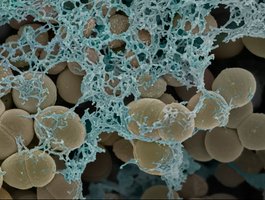
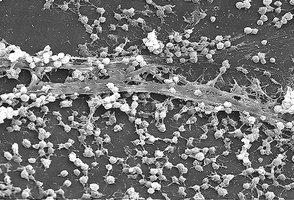
Biofilms: Biofilms are structured communities of microorganisms attached to a surface and embedded in a self-produced extracellular matrix. They allow for nutrient flow and waste removal, but cells deep within the biofilm are protected from environmental threats, making them difficult to eradicate.
Examples: Methicillin-resistant Staphylococcus aureus (MRSA), Vancomycin-resistant Enterococcus species, Clostridium difficile, Pseudomonas aeruginosa.
Microbial Cell Division
Microbes reproduce primarily by asexual means, allowing for rapid population growth under favorable conditions.
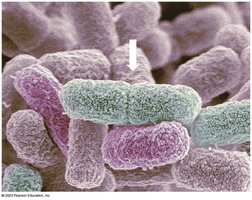
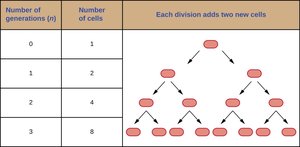
Binary Fission: The most common form of bacterial division, where one cell divides into two identical daughter cells.
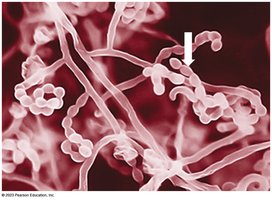
Budding: Asexual reproduction seen in some bacteria and fungi, where a new organism grows from a bud due to cell elongation and chromosome replication.
Spore Formation: Some bacteria (e.g., Streptomyces) and fungi form spores for reproduction and survival under adverse conditions.
Generation Time
Generation time is the period required for a microbial population to double in number. It varies widely among species and depends on environmental conditions.
Examples: Escherichia coli divides every 20 minutes under optimal conditions, while Mycobacterium tuberculosis may take 15–20 hours.
Equation: The number of cells after n generations is given by where is the initial number of cells.
Growth Phases in Culture
Bacterial populations in batch culture exhibit distinct growth phases:
Lag Phase: Cells adapt to new environment; metabolic activity without division.
Log (Exponential) Phase: Rapid cell division; generation time is shortest and can be calculated.
Stationary Phase: Nutrient depletion and waste accumulation slow growth; cell division equals cell death.
Death Phase: Exponential cell death due to harsh conditions.
Prokaryotic Adaptations
Temperature Adaptations
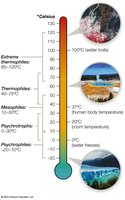
Microbes are classified based on their optimal temperature ranges for growth:
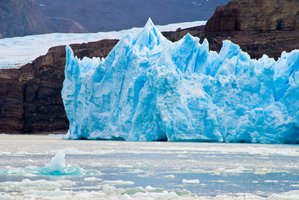
Psychrophiles: Grow at 0–20°C (cold-loving).
Mesophiles: Grow at 20–40°C (human body temperature).
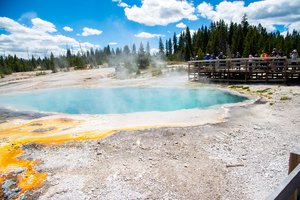
Thermophiles: Grow at 40–70°C (hot environments).
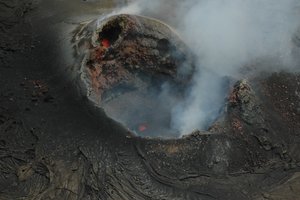
Extreme Thermophiles: Grow at 65–120°C (boiling water, hydrothermal vents).
pH Adaptations
Microbes are also classified by their preferred pH range:
Acidophiles: Thrive at pH 1–5 (e.g., sulfur hot springs).
Neutralophiles: Thrive at pH 5–8 (most pathogens, e.g., E. coli).
Alkaliphiles: Thrive at pH 9–11 (e.g., soda lakes).
Salt Adaptations
Halophiles: Require high salt concentrations (up to 35%).
Facultative Halophiles: Tolerate high salt but do not require it (e.g., S. aureus on skin).
Oxygen Requirements
Microbes differ in their oxygen requirements and tolerance:
Obligate Aerobes: Require oxygen for growth.
Microaerophiles: Require low levels of oxygen.
Aerotolerant Anaerobes: Tolerate oxygen but do not use it.
Obligate Anaerobes: Cannot survive in the presence of oxygen.
Facultative Anaerobes: Can use oxygen or switch to fermentation in its absence.
Growth Requirements
Nutrients
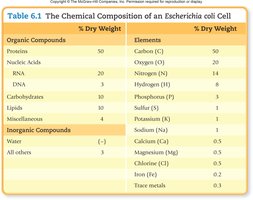
Microbes require various nutrients for growth, classified as macronutrients and micronutrients.
Macronutrients: Needed in large amounts for cell structure and metabolism (e.g., carbon, nitrogen, oxygen).
Micronutrients: Needed in trace amounts for enzyme function and protein structure (e.g., iron, zinc).
Classification by Carbon and Energy Source
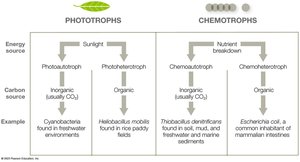
Heterotrophs: Obtain carbon from organic sources (e.g., sugars, proteins).
Autotrophs: Use carbon fixation to convert inorganic carbon (CO2) into organic molecules.
Phototrophs: Use light as an energy source.
Chemotrophs: Obtain energy from chemical compounds.
Growth Factors
Growth factors are essential organic compounds that microbes cannot synthesize and must obtain from their environment (e.g., amino acids, vitamins).
Fastidious Organisms: Require multiple growth factors and are difficult to culture (e.g., Bordetella pertussis).
Culturing Microbes
Types of Media
Liquid (Broth) Media: Used for growing large batches and studying metabolism.
Solid Media: Used for isolating colonies and observing characteristics.
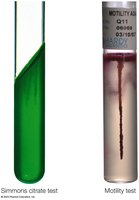
Semi-solid Media: Used for motility testing.
Chemical Composition of Media
Defined Media: All components are known and quantified; used for specific studies.
Complex Media: Contains unknown mixtures (e.g., yeast extract, blood); supports fastidious organisms.
Differential and Selective Media
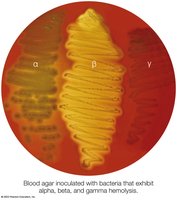
Differential Media: Distinguish between organisms based on biochemical reactions (e.g., blood agar for hemolysis).
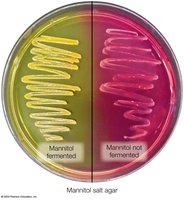
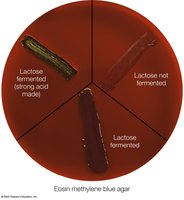
Selective Media: Promote growth of specific microbes while inhibiting others (e.g., mannitol salt agar, eosin methylene blue agar).
Anaerobic Media
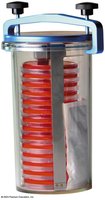
Anaerobic microbes must be cultured in oxygen-free environments. Thioglycolate and special chambers are used to remove oxygen and maintain anaerobic conditions.
Counting Microbes
Direct Methods: Microscopic cell counts, colony counts, Coulter counter, flow cytometry.
Indirect Methods: Turbidity (spectrophotometer), dry weight, biochemical activity.
Microbial Growth Reduction and Decontamination
Definitions
Decontamination: Removal or reduction of microbial populations to safe levels.
Sterilization: Complete elimination of all microbes, including endospores.
Disinfection: Reduction of microbial numbers to safe levels.
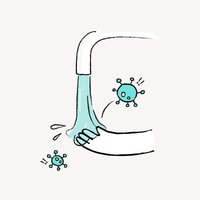
Physical Methods: Temperature
Autoclaving: Uses steam and pressure to sterilize materials; effective against endospores.
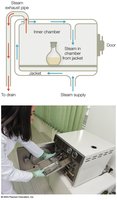
Boiling: Kills most pathogens but not all endospores; used for decontamination.
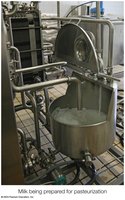
Pasteurization: Uses moderate heat to reduce pathogens in food and beverages.
Dry Heat: Used for sterilizing materials that cannot withstand moisture.
Physical Methods: Radiation
Ionizing Radiation: Gamma rays and X-rays; cause DNA damage and microbial death.
Non-ionizing Radiation: UV light; causes DNA mutations and cell death.
Physical Methods: Filtration
Filtration physically removes microbes from liquids and air using filters with defined pore sizes.
Chemical Methods: Germicides
Disinfectants: Used on inanimate objects.
Antiseptics: Used on living tissue.
Detergents: Low-level disinfectants; amphipathic molecules that disrupt membranes and remove dirt. Includes anionic (soaps) and cationic (quaternary ammonium compounds) detergents.



Alcohols and Phenols: Intermediate-level disinfectants; denature proteins and disrupt membranes. Alcohols (ethanol, isopropanol) are used for skin and small objects. Phenols are used in hygiene products and surface cleaning.
Aldehydes: High- or intermediate-level disinfectants; react with proteins and nucleic acids. Examples: formaldehyde, glutaraldehyde.
Halogens: High-level disinfectants; oxidize cell components. Examples: chlorine (water treatment), iodine (antiseptics).


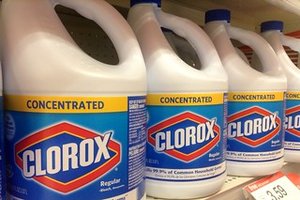
Peroxygens: High-level disinfectants; strong oxidizers (e.g., hydrogen peroxide, peracetic acid).
Ethylene Oxide: High-level gaseous disinfectant; used for sterilizing heat-sensitive medical equipment.
