 Back
Microbial Growth and Environmental Adaptations: Study Notes for Microbiology
Study Guide - Smart Notes
 Tailored notes based on your materials, expanded with key definitions, examples, and context.
MICROBIAL GROWTH
Introduction to Microbial Growth
Microbial growth refers to the increase in the number of cells in a population, primarily through cell division. Understanding microbial growth is essential for studying pathogenicity, environmental adaptation, and industrial microbiology.
Binary fission is the primary mode of reproduction in bacteria.
Most prokaryotes have never been grown in culture medium, highlighting the diversity and adaptability of microbes.
Microbes are found in a wide range of environments due to their ability to adapt to various physical and chemical conditions.
Binary Fission: Mechanism of Cell Division
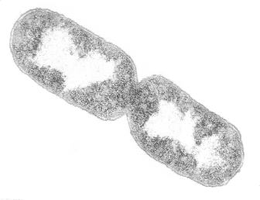
Binary fission is a process by which a single bacterial cell divides into two identical daughter cells.
Cell growth: Increase in cell size and mass.
DNA duplication: Replication of the bacterial chromosome.
Cell division: Formation of a septum or cross wall.
DNA separation: Distribution of genetic material to daughter cells.
Mathematics of Growth
Microbial growth can be quantified using generation time and growth rate.
Generation time (doubling time): The time required for a population to double in number.
Growth rate: Number of doublings per hour.
Generation time varies among species and environmental conditions.
Bacterial Growth Curve
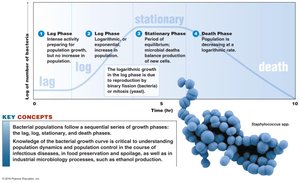
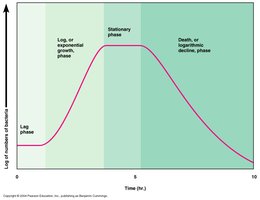
Bacterial populations in batch culture exhibit four distinct phases: lag, log (exponential), stationary, and death.
Lag phase: Adaptation and synthesis of new components; no immediate increase in cell number.
Log (exponential) phase: Maximum growth rate; shortest generation time; cells are most sensitive to drugs targeting cell wall synthesis.
Stationary phase: No net increase in cell number; balance between cell division and cell death; formation of persister cells and endospores.
Death phase: Decline in viable cell number; some cells lyse, others become viable but nonculturable (VBNC).
Persister Cells and VBNC Forms
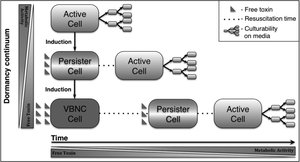
Persister cells and VBNC (viable but nonculturable) cells represent dormant states that allow bacteria to survive environmental stress.
Persister cells: Temporarily dormant, antibiotic-resistant, can revive when conditions improve.
VBNC cells: Low metabolic activity, division arrest, do not readily grow on routine lab media, may require environmental triggers to revive.
Endospores: Survival Structures
Endospores are highly resistant structures produced by certain bacteria during the stationary phase.
Produced by Bacillus and Clostridium species.
Resistant to heat, UV, chemicals, and dehydration.
Contain small acid soluble proteins (SASPs) that protect DNA.
Sporulation is triggered by nutrient depletion; germination occurs when nutrients are available.
ENVIRONMENTAL FACTORS AFFECTING MICROBIAL GROWTH
Temperature
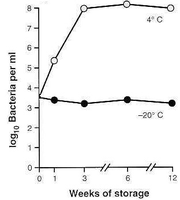
Temperature profoundly affects microbial growth, with different microbes adapted to specific ranges.
Minimum temperature: Below this, cells are dormant but not dead.
Optimum temperature: Maximum growth rate; shortest generation time.
Maximum temperature: Above this, no growth occurs.
Psychrophiles: Optimum < 20°C; adapted to cold environments.
Mesophiles: Optimum 20–45°C; most human pathogens.
Thermophiles: Optimum > 45°C; extreme thermophiles > 80°C.
Psychrotrophs: Grow at 0°C, optimum > 20°C; can spoil refrigerated food.
pH
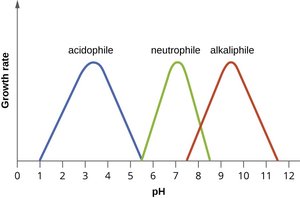
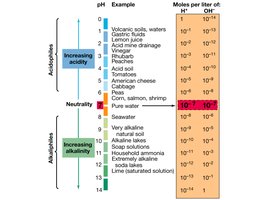
Microbes are adapted to specific pH ranges, affecting their growth and survival.
Acidophiles: Optimum pH 0–5.5; require hydrogen ions for membrane integrity.
Neutralophiles: Optimum pH 5.5–8.5; most bacteria.
Alkaliphiles: Optimum pH 8.5–11.5; pump in protons to maintain internal pH.
Helicobacter pylori: Adaptation to Acidic Environments
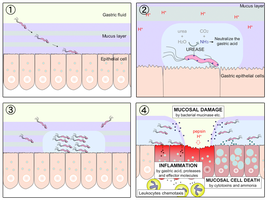
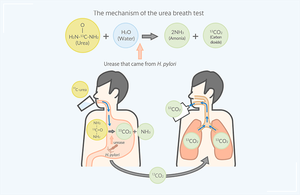
Helicobacter pylori can survive in the acidic environment of the stomach by producing urease, which converts urea to ammonia and bicarbonate, neutralizing local acidity.
Lower limit for growth is pH 5.
Settles in gastric mucus, creating a neutral microenvironment.
Water Activity and Osmotic Environment
Water is essential for microbial activities; its availability is determined by solute concentration.
Most microbes require water activity (>0.9) to grow.
Low water activity leads to dehydration and preservation.
High water activity causes water influx and cell stretching.
Halophiles and Halotolerance
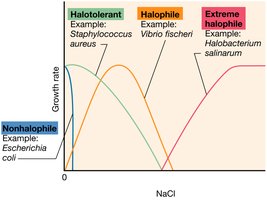
Microbes are classified based on their ability to grow in saline environments:
Halophiles: Require sodium; thrive in high salt concentrations (15–30%).
Halotolerant: Can grow in salt but prefer less than 9%.
Nonhalophiles: Grow in 0–1.5% salt.
Extreme halophiles: Survive in very high salt concentrations.
Adaptation to Low Water Activity
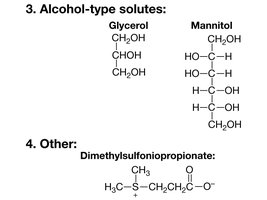
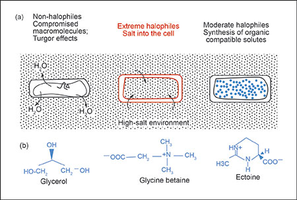
Microbes adapt by importing or synthesizing compatible solutes (e.g., sugars, amino acids, ions) to maintain internal osmotic balance.
Compatible solutes do not harm the host and help retain water within the cell.
Examples include glycerol, mannitol, glycine betaine, and ectoine.
Oxygen Requirements
Microbes differ in their oxygen requirements and tolerance:
Strict aerobes: Require oxygen for growth.
Obligate/strict anaerobes: Cannot tolerate oxygen.
Aerotolerant anaerobes: Can survive in oxygen but do not use it.
Facultative anaerobes: Can grow with or without oxygen.
Microaerophiles: Require low levels of oxygen.
Oxygen Toxicity and Enzymatic Defense
Oxygen can be toxic due to the production of reactive oxygen species (ROS) such as hydrogen peroxide and superoxide.
Aerobes possess catalase, peroxidase, and superoxide dismutase (SOD) to detoxify ROS.
Aerotolerant anaerobes have SOD and peroxidase.
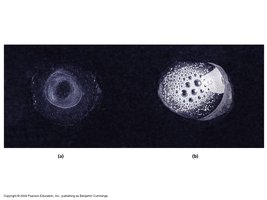
Growing Anaerobes in the Laboratory
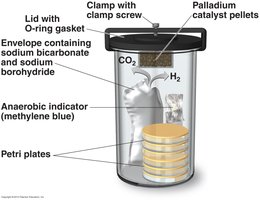
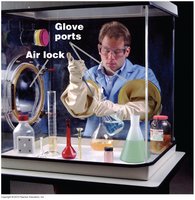
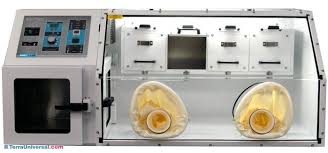
Anaerobic conditions are maintained using specialized equipment such as anaerobic jars and glove boxes.
Anaerobic jars use chemical reactions to remove oxygen.
Glove boxes allow manipulation of cultures in an oxygen-free environment.
Radiation Resistance
Some microbes, such as Deinococcus radiodurans, exhibit extreme resistance to ionizing and ultraviolet radiation.
Ionizing radiation causes DNA breaks; UV light induces abnormal DNA bonds.
Endospores are protected by SASPs.
Deinococcus radiodurans has multiple DNA repair systems and a rigid DNA structure.
MICROBIAL GROWTH IN DISEASE AND ENVIRONMENT
Gas Gangrene and Clostridium perfringens
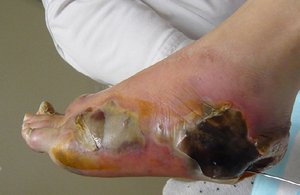
Clostridium perfringens is a strict anaerobe that causes gas gangrene, particularly in dead tissue such as diabetic ulcers.
Dead tissue provides an anaerobic environment suitable for growth.
Gas gangrene is characterized by tissue necrosis and gas production.
Microbial Survival in Extreme Environments
Microbes can survive in extreme environments, including Mars-like conditions and lunar niches, due to their adaptability.
Implications for planetary protection and space exploration.
QUORUM SENSING
Bacterial Communication and Population Density
Quorum sensing is the ability of bacteria to sense their population density via signal molecules.
Signal molecules accumulate and trigger gene expression changes at high concentrations.
Quorum sensing regulates processes such as biofilm formation, virulence, and antibiotic resistance.
KEY TERMS AND VOCABULARY
Binary fission
Generation/doubling time
Lag phase
Log/exponential phase
Stationary phase
Death phase
Quorum sensing
Persister cells
Viable but nonculturable cells (VBNC)
Endospores
Small acid soluble proteins (SASPs)
Sporulation
Germination
Growth rate
Growth yield
Psychrophiles/mesophiles/thermophiles/psychotrophs
Minimum/optimum/maximum growth temperature
Acidophile/alkaliphile/neutralophile
Microenvironment
Halophile/halotolerant
Compatible solute
Aerobes
Facultative anaerobes
Obligate anaerobes
Aerotolerant anaerobes
Microaerophiles
Catalase/peroxidase/superoxide dismutase
SUMMARY TABLES
Microbial Growth Phases
Phase | Description |
|---|---|
Lag | Adaptation, synthesis, repair; no increase in cell number |
Log (Exponential) | Maximum growth rate; sensitive to drugs |
Stationary | No net increase; balance between division and death; persister cells, endospores |
Death | Decline in viable cells; lysis or VBNC forms |
Microbial Adaptations to Environmental Factors
Factor | Category | Adaptation |
|---|---|---|
Temperature | Psychrophile | Cold-adapted proteins, antifreeze molecules |
Temperature | Mesophile | Optimal for human pathogens |
Temperature | Thermophile | Heat-stable proteins, lipids |
pH | Acidophile | Membrane integrity, proton pumps |
pH | Neutralophile | Internal pH maintenance |
pH | Alkaliphile | Proton import, pH homeostasis |
Osmotic | Halophile | Sodium requirement, cell wall stability |
Osmotic | Halotolerant | Compatible solute synthesis |
Osmotic | Nonhalophile | Low salt tolerance |
KEY EQUATIONS
Generation Time Equation
Generation time (): , where is time and is number of generations.
Exponential growth: , where is final cell number, is initial cell number, and is number of generations.
*Additional info: Academic context and explanations were expanded for clarity and completeness. Tables were recreated and equations provided in LaTeX format as required.*
