Back
BackMicrobial Growth and Its Control: Structured Study Notes
Study Guide - Smart Notes
 Tailored notes based on your materials, expanded with key definitions, examples, and context.
Microbial Growth and Its Control
Cell Division and Population Growth
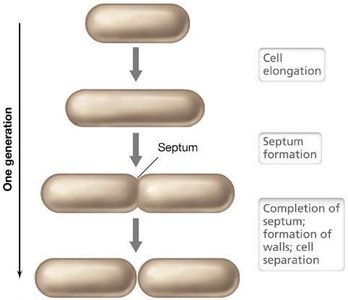
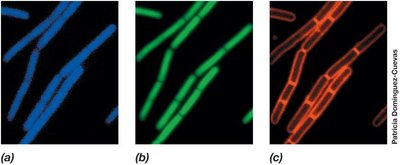
Microbial growth refers to the increase in the number of cells within a population. The primary mode of cell division in bacteria is binary fission, a process where a single cell enlarges, forms a septum, and divides into two daughter cells. Each daughter cell receives a chromosome and sufficient cellular constituents to function independently.
Binary Fission: Cell doubles in size, forms a septum, and separates into two cells.
Septum: Partition formed between dividing cells, composed of cytoplasmic membrane and cell wall material.
Generation Time: The time required for a microbial population to double in number; varies by species and environmental conditions (e.g., Escherichia coli = 20 minutes).
The Microbial Growth Cycle
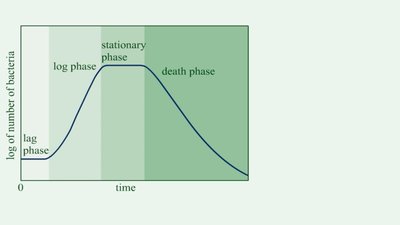
Microbial populations grown in batch culture (closed system) exhibit a characteristic growth curve with four distinct phases. Understanding these phases is essential for interpreting microbial behavior and optimizing culture conditions.
Lag Phase: Interval after inoculation; cells adapt to new conditions and synthesize necessary enzymes.
Exponential (Log) Phase: Cells divide at regular intervals; population doubles rapidly.
Stationary Phase: Growth rate drops to zero due to nutrient depletion or waste accumulation; metabolism slows.
Death Phase: Cell numbers decline as cells die.
Quantitative Aspects of Microbial Growth
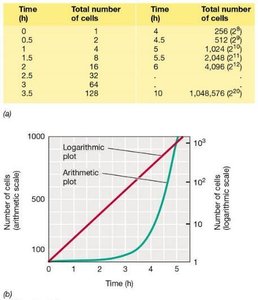
Exponential growth describes the doubling of cell numbers within a specific time interval. Mathematical relationships allow prediction of cell numbers over time.
Exponential Growth Equation: Where N is the final cell number, N_0 is the initial cell number, and n is the number of generations.
Generation Calculation:
Growth Data: Logarithmic and arithmetic plots illustrate population increase.
Continuous Culture
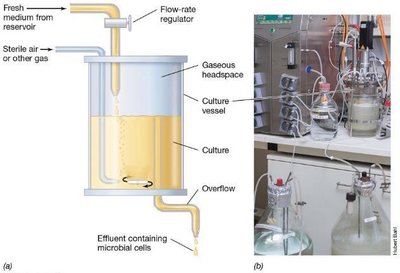
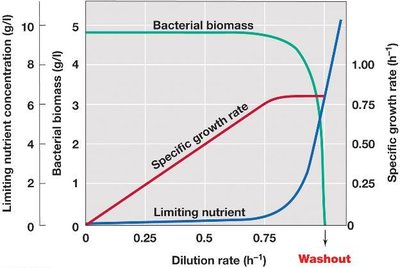
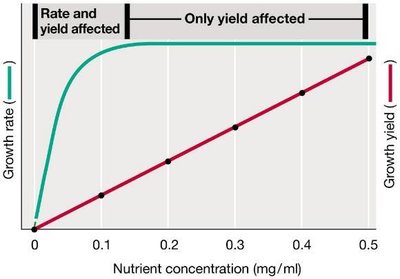
Continuous culture systems, such as the chemostat, maintain microbial populations in a steady state by continuously adding fresh medium and removing spent medium. This allows independent control of growth rate and cell density.
Chemostat: Device for continuous culture; population density controlled by limiting nutrient concentration, growth rate by dilution rate.
Dilution Rate: (flow rate/volume); determines growth rate.
Steady State: Cell density and substrate concentration remain constant over time.
Environmental Effects on Microbial Growth
Microbial growth is influenced by environmental factors such as temperature, pH, osmolarity, and oxygen availability. Understanding these factors is crucial for controlling microbial populations in laboratory and industrial settings.
Temperature
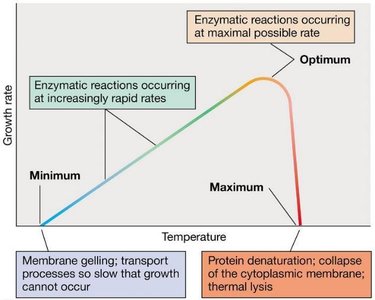
Temperature affects enzymatic activity and membrane fluidity, defining the cardinal temperatures (minimum, optimum, maximum) for each organism.
Cardinal Temperatures: Minimum, optimum, and maximum temperatures for growth.
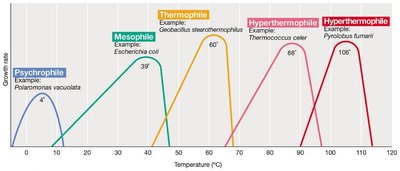
Temperature Classes:
Psychrophiles: Grow at low temperatures (e.g., Polaromonas vacuolata).
Mesophiles: Grow at midrange temperatures (e.g., Escherichia coli).
Thermophiles: Grow at high temperatures (e.g., Geobacillus stearothermophilus).
Hyperthermophiles: Grow at very high temperatures (e.g., Pyrolobus fumarii).
pH
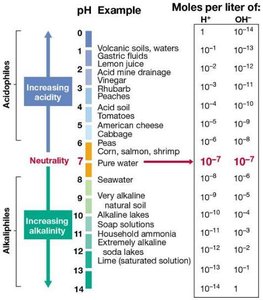
pH measures the acidity or alkalinity of a solution and affects microbial growth. Most microbes grow within a narrow pH range, and culture media often contain buffers to maintain constant pH.
pH Equation:
Neutrophiles: Optimal growth at pH 5.5–7.9 (most pathogens).
Acidophiles: Optimal growth at pH < 5.5.
Alkaliphiles: Optimal growth at pH ≥ 8.
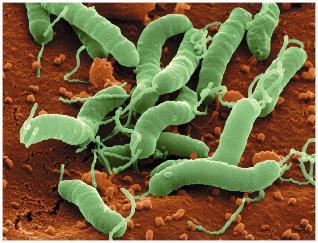
Example: Helicobacter pylori
Helicobacter pylori is a Gram-negative, spiral-shaped bacterium associated with gastritis, ulcers, and gastric cancers. It colonizes the stomach and neutralizes stomach acid using urease, which converts urea to ammonia and carbon dioxide.
Osmolarity
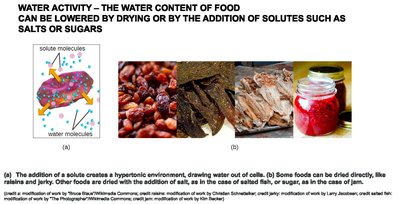
Osmolarity refers to solute concentration and water activity (aw). Microbes must maintain positive water balance to prevent dehydration or lysis.
Water Activity (aw): Ranges from 0 (no free water) to 1 (pure water).
Osmosis: Water moves from high to low concentration; cells in hypertonic environments lose water unless protective mechanisms exist.
Oxygen
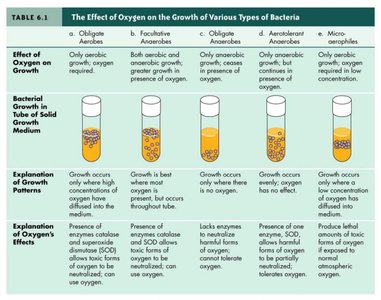
Microorganisms are classified by their oxygen requirements. Oxygen can be toxic due to reactive byproducts formed during metabolism.
Aerobes: Require oxygen for growth.
Microaerophiles: Grow at reduced oxygen levels.
Facultative Organisms: Can grow with or without oxygen.
Obligate Anaerobes: Cannot tolerate oxygen.
Type | Growth in Tube | Explanation |
|---|---|---|
Obligate Aerobes | Top of tube | Require oxygen |
Facultative Anaerobes | Throughout, more at top | Grow with or without oxygen |
Obligate Anaerobes | Bottom of tube | Cannot tolerate oxygen |
Aerotolerant Anaerobes | Evenly throughout | Do not use oxygen but tolerate it |
Microaerophiles | Just below surface | Grow at low oxygen concentrations |
Oxygen Toxicity
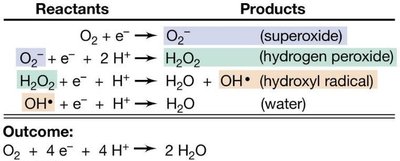
Oxygen itself is not toxic, but its metabolic byproducts are. These include superoxide anion (O2−), hydrogen peroxide (H2O2), and hydroxyl radical (·OH). Enzymes such as superoxide dismutase and catalase neutralize these species.
Four-electron reduction of O2 to H2O:
Physical Control Methods of Microbial Growth
Microbial growth can be controlled by physical methods such as heat, radiation, and filtration.
Heat Sterilization
Heat is the most widely used method for sterilization. Moist heat is more effective than dry heat, and endospores are more resistant than vegetative cells.
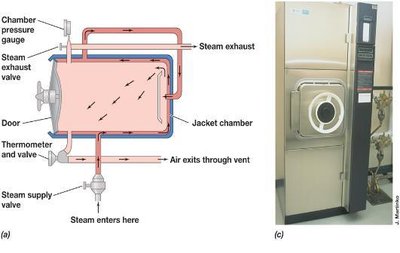
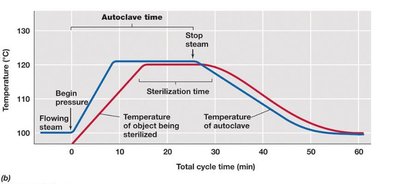
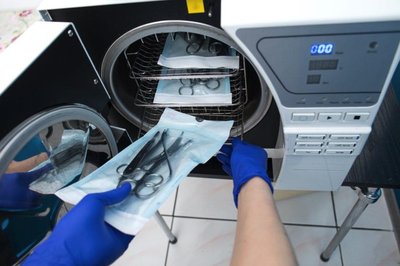
Autoclave: Uses steam under pressure (121°C) to kill endospores and sterilize materials.
Pasteurization: Uses heat to reduce microbial load in liquids; kills all known pathogens but does not sterilize.
Radiation
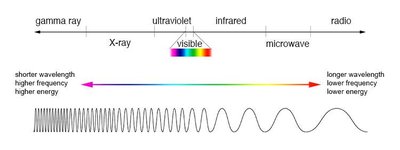
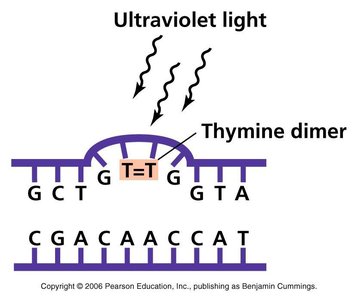
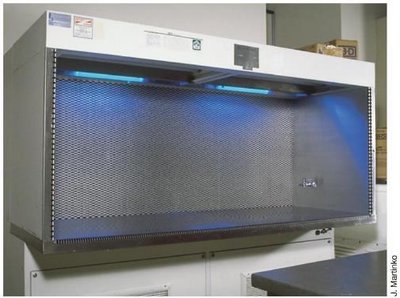
Ultraviolet (UV) radiation causes DNA damage (pyrimidine dimers) and is useful for decontaminating surfaces. Ionizing radiation produces ions and reactive molecules, sterilizing items such as surgical supplies and food.
UV Radiation: Non-ionizing, causes thymine dimers in DNA.
Ionizing Radiation: High-energy, penetrates deeper and is used for sterilizing bulk items.
Filtration
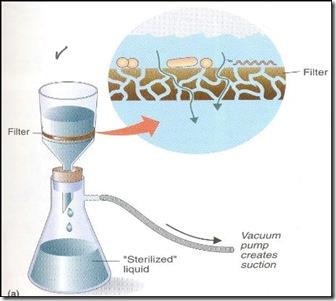
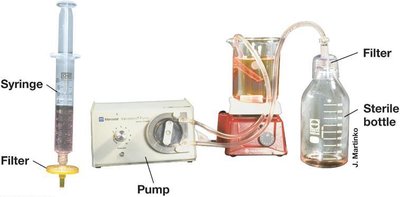
Filtration is used to sterilize heat-sensitive liquids and gases. Filters with pore sizes of 0.45 μm and 0.2 μm remove bacteria but not most viruses.
Membrane Filters: Disposable, presterilized units for small and large volumes.
Vacuum Filtration: Uses suction to pass liquid through a filter, trapping microbes.