 Back
BackMicrobial Growth and Its Control – Study Notes
Study Guide - Smart Notes
 Tailored notes based on your materials, expanded with key definitions, examples, and context.
Microbial Growth and Its Control
Overview of Microbial Growth
Microbial growth refers to the increase in the number of cells in a microbial population. Understanding the mechanisms and control of microbial growth is fundamental in microbiology, with applications in medicine, industry, and research.
Binary Fission and Cell Division
Most bacteria reproduce by binary fission, a process where a single cell divides into two identical daughter cells. Other forms of cell division include budding and polar growth, which are less common but important in certain microbial groups.
Binary Fission: The most common method of cell division in bacteria, resulting in equal products.
Budding: Unequal cell division, seen in some bacteria and yeasts.
Polar Growth: New cell wall material is added at one end of the cell.
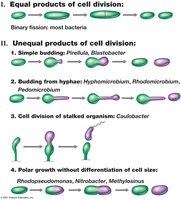
Generation time is the time required for a microbial population to double in number.
The Microbial Growth Cycle
When microbes are grown in a closed system (batch culture), their population follows a characteristic growth curve with four distinct phases:
Lag Phase: Cells adapt to new environment; little to no cell division occurs.
Exponential (Log) Phase: Cells divide at a constant and rapid rate; population increases logarithmically.
Stationary Phase: Growth rate slows as nutrients are depleted and waste accumulates; cell division equals cell death.
Death Phase: Cells die at an exponential rate due to lack of nutrients and toxic conditions.

Growth Media and Laboratory Culture
Microorganisms are cultivated in the laboratory using various types of media:
Defined Media: Exact chemical composition is known.
Complex Media: Contains extracts of natural sources; composition is not precisely known.
Selective Media: Inhibits growth of some microbes while allowing others to grow.
Differential Media: Contains indicators to distinguish between different metabolic reactions.
Biofilm Growth
Microbes can grow as free-floating (planktonic) cells or as attached communities called biofilms. Biofilms are structured microbial communities attached to surfaces and embedded in a self-produced extracellular matrix.
Stages of Biofilm Development: Attachment, colonization, development, and dispersal.
Importance: Biofilms are medically significant (e.g., infections on implants) and industrially relevant (e.g., pipe fouling).

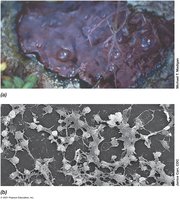
Microbial mats are multilayered biofilms with different organisms in each layer, found in environments like hot springs.
Growth Requirements
Microbial growth is influenced by several environmental factors:
Temperature: Microbes are classified by their optimal temperature ranges (psychrophiles, mesophiles, thermophiles, hyperthermophiles).
pH: Acidophiles (low pH), neutrophiles (neutral pH), alkaliphiles (high pH).
Water Activity: Halophiles (salt-loving), osmophiles (sugar-loving), xerophiles (dry environments).
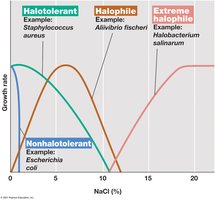
Lowest water activity for life is determined by physiochemical constraints on water availability.
Oxygen and Microbial Growth
Microorganisms vary in their oxygen requirements and tolerance:
Obligate aerobes: Require oxygen for growth.
Obligate anaerobes: Cannot tolerate oxygen.
Facultative anaerobes: Can grow with or without oxygen.
Microaerophiles: Require low levels of oxygen.
Aerotolerant anaerobes: Do not use oxygen but tolerate its presence.
Oxygen itself is not toxic, but its byproducts (superoxide anion, hydrogen peroxide, hydroxyl radical) are harmful to cells.
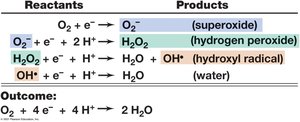
Physical and Chemical Control of Microbial Growth
Microbial growth can be controlled by physical and chemical means:
Sterile: Free of all living organisms.
Aseptic: Free of contamination by unwanted organisms.
Heat: Pasteurization (reduces microbes) vs. autoclaving (sterilizes).
Radiation: UV light (surface sterilization) vs. gamma radiation (penetrating sterilization).
Filtration: Removes microbes from liquids and air.
Chemical Control of Microbial Growth
Chemical agents are used to inhibit or kill microorganisms:
Bacteriostatic: Inhibit growth without killing cells.
Bactericidal: Kill cells without causing lysis.
Bacteriolytic: Kill cells by lysis (e.g., detergents).
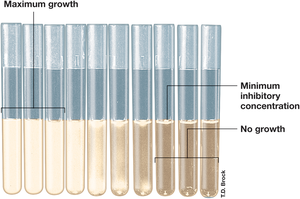
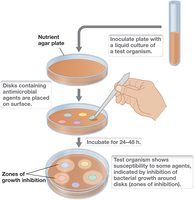
Assaying Antimicrobial Activity: The minimum inhibitory concentration (MIC) is the lowest concentration of an agent that inhibits visible growth. Disk diffusion assays are used to test susceptibility on solid media.
Chemical Antimicrobial Agents
Different types of chemical agents are used for microbial control:
Sterilants: Destroy all forms of microbial life, including spores.
Disinfectants: Kill most microbes on inanimate surfaces.
Sanitizers: Reduce microbial numbers to safe levels.
Antiseptics (germicides): Safe for use on living tissues.
Antibacterial Drugs
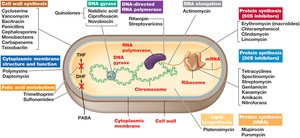
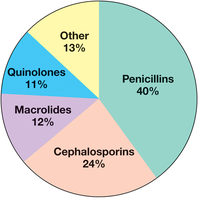
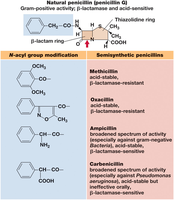
Antibiotics are natural or synthetic compounds that inhibit or kill bacteria. They must exhibit selective toxicity, targeting microbial processes without harming the host. Antibiotics are classified by their mechanism of action and spectrum of activity (broad-spectrum vs. narrow-spectrum).
Cell Wall Synthesis Inhibitors: Penicillins, cephalosporins (contain β-lactam ring).
Cell Membrane Disruptors: Polymyxin, daptomycin.
Protein Synthesis Inhibitors: Aminoglycosides, tetracyclines, macrolides.
Nucleic Acid Synthesis Inhibitors: Quinolones (DNA gyrase inhibitors), rifampin (RNA polymerase inhibitor).
Growth Factor Analogs: Isoniazid (mycolic acid synthesis), platensimycin (fatty acid synthesis).
Antiviral and Antifungal Drugs
Antiviral drugs often target viral enzymes or processes, but many also affect host cells, leading to toxicity. Common classes include nucleoside analogs (NRTIs), non-nucleoside reverse transcriptase inhibitors (NNRTIs), protease inhibitors, fusion inhibitors, and neuraminidase inhibitors (e.g., Tamiflu).
Antifungal drugs target unique features of fungi, such as ergosterol synthesis, chitin biosynthesis, folate biosynthesis, and microtubule function. Fungi are challenging to treat due to their eukaryotic nature, which is similar to host cells.
Antimicrobial Drug Resistance
Antimicrobial resistance is the acquired ability of microorganisms to withstand the effects of drugs that once could successfully treat them. Resistance can arise through mutation or horizontal gene transfer and is a major public health concern.
New Drugs and Treatment Strategies
Modern approaches to drug discovery include computer-aided design of molecules, screening of natural products, and combination therapies. For example, saquinavir was designed to inhibit HIV protease, and platensimycin was discovered from soil bacteria. Combining drugs with enzyme inhibitors (e.g., clavulanic acid with ampicillin) or using multi-drug regimens reduces the likelihood of resistance development.
