 Back
BackMicrobial Growth and Nutrition: Factors, Mechanisms, and Population Dynamics
Study Guide - Smart Notes
 Tailored notes based on your materials, expanded with key definitions, examples, and context.
Microbial Growth and Nutrition
Overview of Microbial Growth
Microbial growth refers to the increase in the number of cells in a population, not the size of individual cells. Growth and survival of bacteria are influenced by a variety of chemical and physical factors, including nutrient availability, temperature, pH, and osmotic conditions.
Nutrients are required for energy, synthesis of cellular components, and cellular structure maintenance.
Key elements include carbon, oxygen, nitrogen, hydrogen, phosphorus, and sulfur.
Microbes obtain nutrients from diverse sources, and their requirements can be used to classify them.
Classification of Microbes by Nutritional Type
Sources of Carbon, Energy, and Electrons
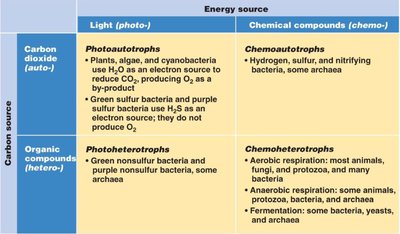
Microorganisms are classified based on their carbon and energy sources:
Autotrophs: Use carbon dioxide as their carbon source.
Heterotrophs: Use organic compounds as their carbon source.
Phototrophs: Use light as their energy source.
Chemotrophs: Use chemical compounds as their energy source.
Carbon Source | Energy Source | Type | Examples |
|---|---|---|---|
CO2 (auto-) | Light (photo-) | Photoautotrophs | Plants, algae, cyanobacteria, green and purple sulfur bacteria |
CO2 (auto-) | Chemical compounds (chemo-) | Chemoautotrophs | Hydrogen, sulfur, nitrifying bacteria, some archaea |
Organic compounds (hetero-) | Light (photo-) | Photoheterotrophs | Green and purple nonsulfur bacteria, some archaea |
Organic compounds (hetero-) | Chemical compounds (chemo-) | Chemoheterotrophs | Most animals, fungi, protozoa, many bacteria |
Oxygen Requirements and Toxicity
Oxygen and Microbial Growth
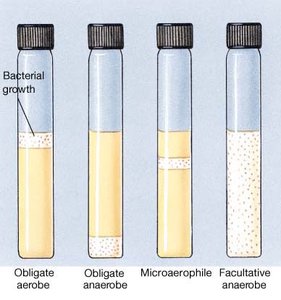
Oxygen can be essential, tolerated, or toxic to different bacteria. The presence or absence of oxygen determines the growth patterns of various microbial groups:
Obligate aerobes: Require oxygen for growth.
Obligate anaerobes: Oxygen is toxic; cannot grow in its presence.
Facultative anaerobes: Can grow with or without oxygen.
Microaerophiles: Require low levels of oxygen.
Aerotolerant anaerobes: Do not use oxygen but tolerate its presence.
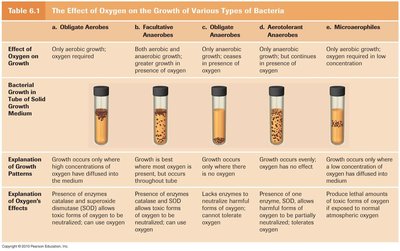
Type | Effect of Oxygen | Growth Pattern | Explanation |
|---|---|---|---|
Obligate Aerobes | Only aerobic growth; oxygen required | Growth at top of tube | Oxygen diffuses in; only top supports growth |
Facultative Anaerobes | Both aerobic and anaerobic growth; greater growth with oxygen | Growth throughout, more at top | Can use oxygen or switch to fermentation |
Obligate Anaerobes | Only anaerobic growth; oxygen kills | Growth at bottom | Lack enzymes to neutralize toxic oxygen |
Aerotolerant Anaerobes | Only anaerobic growth; but tolerates oxygen | Growth evenly throughout | Has enzymes to detoxify oxygen |
Microaerophiles | Only aerobic growth; low oxygen required | Growth just below surface | Require lower oxygen than atmosphere |
Toxic Forms of Oxygen and Enzymatic Defenses
Singlet oxygen (1O2): Highly reactive, strips electrons from molecules.
Superoxide (O2-): Detoxified by superoxide dismutase (SOD):
Peroxide anion (O22-): Detoxified by catalase or peroxidase:
Nitrogen, Phosphorus, Sulfur, and Growth Factors
Nitrogen Requirements
Nitrogen is essential for amino acids and nucleotides.
Acquired from organic and inorganic sources; all cells recycle nitrogen.
Nitrogen fixation by certain bacteria is crucial for life on Earth.
Other Chemical Requirements
Phosphorus: Needed for nucleic acids, ATP, and phospholipids.
Sulfur: Required for some amino acids and vitamins.
Trace elements: Required in small amounts (e.g., iron, copper, zinc).
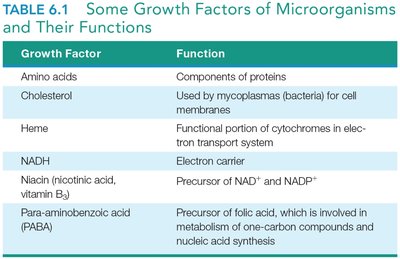
Growth factors: Organic compounds that some organisms cannot synthesize (e.g., vitamins, amino acids).
Growth Factor | Function |
|---|---|
Amino acids | Components of proteins |
Cholesterol | Membrane stability (mycoplasmas) |
Heme | Electron transport (cytochromes) |
NADH | Electron carrier |
Niacin (vitamin B3) | Precursor of NAD+ and NADP+ |
PABA | Precursor of folic acid |
Physical Requirements for Growth
Temperature
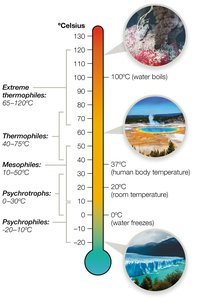
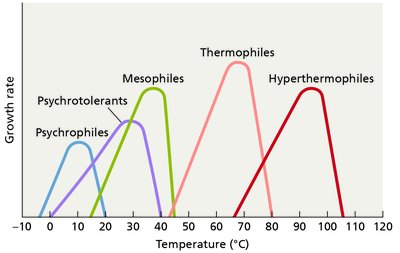
Temperature affects protein structure and membrane fluidity. Each microbe has a minimum, optimum, and maximum temperature for growth.
Psychrophiles: Grow at 0–20°C
Psychrotrophs/Psychrotolerants: Grow at 0–30°C
Mesophiles: Grow at 10–50°C (includes most human pathogens)
Thermophiles: Grow at 40–70°C
Hyperthermophiles: Grow at 65–120°C
pH
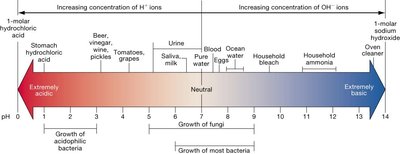
Most bacteria grow best at neutral pH (6.5–7.5).
Acidophiles: Grow at acidic pH (e.g., Lactobacillus in yogurt).
Fungi can tolerate more acidic environments than bacteria.
Osmotic Pressure and Salt Tolerance
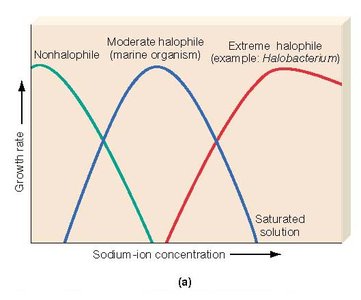
Halophiles: Grow optimally at high salt concentrations.
Halotolerant: Can tolerate some salt but grow best without it.
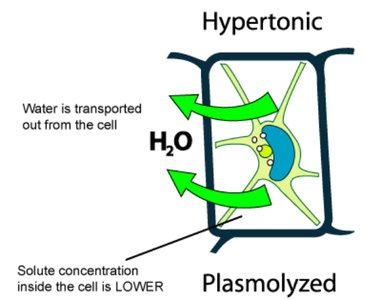
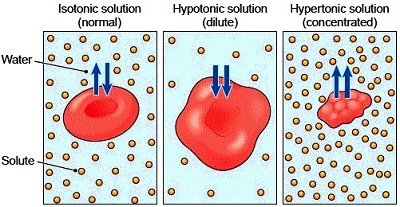
High salt (hypertonic) environments cause plasmolysis (cell shrinkage).
Extreme halophiles maintain high cytoplasmic solute concentrations to resist plasmolysis.
Bacterial Reproduction: Binary Fission
Process of Binary Fission
Bacteria reproduce asexually by binary fission, resulting in two genetically identical daughter cells.
Cell elongates and DNA is replicated.
Cell wall and plasma membrane begin to constrict.
Cross-wall forms, dividing the DNA.
Cells separate.
Population Growth and Generation Time
Generation Time
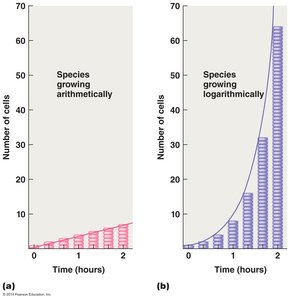
Generation time: Time required for a cell to divide (or for a population to double).
Growth rate is the reciprocal of generation time.
Population growth is typically exponential (logarithmic) under ideal conditions.
Equation for number of generations between two population measurements:
Where and are the initial and final population sizes, respectively.

Biofilm Formation
Stages of Biofilm Development
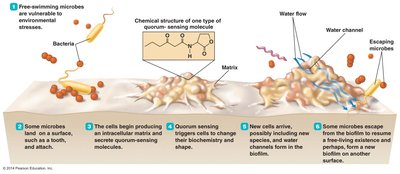
Biofilms are structured communities of microorganisms attached to a surface and embedded in a self-produced extracellular matrix.
Initial attachment
Irreversible attachment
Maturation
Dispersion
Quorum sensing: Cell-to-cell communication using signaling molecules to coordinate activity based on population density.
Dormancy: Persister Cells and Endospores
Persister Cells
Some bacteria can enter a metabolically inactive state (persister cells) under stress.
Persister cells can survive antibiotics and revive when conditions improve.
Endospore Formation
Endospores are highly resistant, dormant structures formed by Bacillus and Clostridium species in response to nutrient limitation.
Endospores are resistant to heat, desiccation, and chemicals.
Germination occurs when conditions become favorable.
Endospores are medically significant, causing diseases such as anthrax, tetanus, botulism, and antibiotic-resistant colitis.
Additional info: Endospore formation involves asymmetric cell division, DNA compaction, and formation of a thick spore coat. The mother cell eventually dies, releasing the mature spore.
