 Back
BackMicrobial Growth Conditions and Enzyme Regulation: Study Guide
Study Guide - Smart Notes
 Tailored notes based on your materials, expanded with key definitions, examples, and context.
Bacterial Environmental Preferences
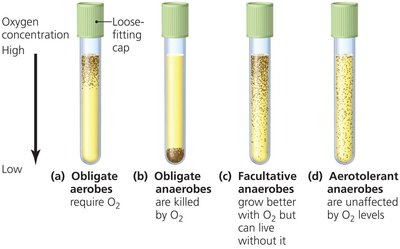
Oxygen Requirements
Microorganisms exhibit distinct preferences for oxygen, which directly impact their growth and survival. Understanding these preferences is essential for classifying bacteria and predicting their behavior in various environments.
Obligate aerobes: Require oxygen for growth; cannot survive without it.
Obligate anaerobes: Oxygen is toxic; require an oxygen-free environment.
Facultative anaerobes: Prefer oxygen but can grow without it.
Aerotolerant anaerobes: Can tolerate oxygen but do not use it for respiration.
Temperature Preferences
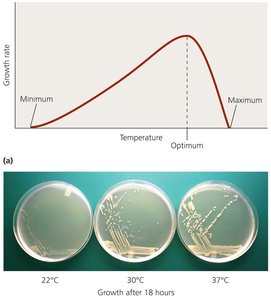
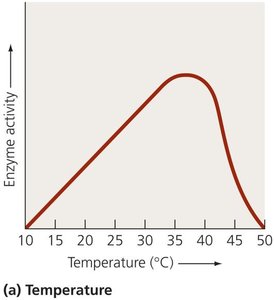
Temperature is a critical factor influencing microbial growth. Each organism has a minimum, optimum, and maximum growth temperature, which is determined by the stability of its proteins, DNA, and membranes.
Optimum temperature: Highest growth rate.
Minimum temperature: Below this, cellular processes slow or stop.
Maximum temperature: Above this, cellular structures denature and cells die.
Most organisms have a growth range of about 40°C.
Temperature Classes of Microorganisms
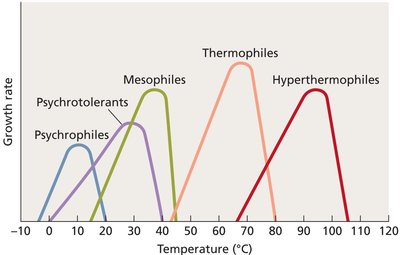
Microorganisms are classified based on their preferred temperature ranges, which reflect their adaptations to environmental conditions.
Psychrophiles: Grow best at low temperatures (0–20°C).
Mesophiles: Grow best at moderate temperatures (20–45°C); most human pathogens are mesophiles.
Thermophiles: Grow best at high temperatures (45–80°C).
Hyperthermophiles: Grow best at extremely high temperatures (>80°C), such as hot springs and hydrothermal vents.
Tolerance and Adaptation to Extreme Temperatures
Some organisms are adapted to extreme environments through genetic changes that modify their cellular components. Others can tolerate brief exposure to extremes and repair damage.
Adaptations include changes to membrane composition, protein structure, and DNA stability.
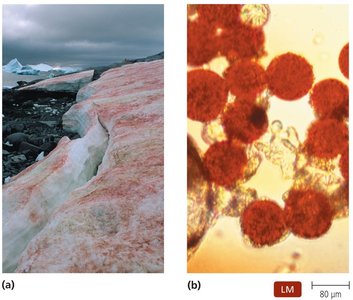
Examples: Psychrophiles in polar regions, thermophiles in hot springs.
pH Preferences
Microbial growth is influenced by environmental pH, which affects metabolism and cellular structures. Organisms are classified by their optimal pH range.
Acidophiles: Grow best at low pH (<5.5).
Neutrophiles: Grow best at neutral pH (5.5–7.9).
Alkaliphiles: Grow best at high pH (≥8).
Stability of the cytoplasmic membrane is critical for survival.
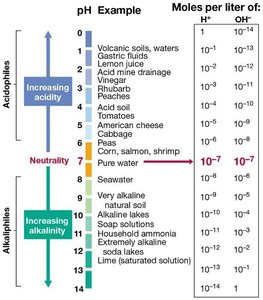
Salt Concentration Preferences
Salt concentration affects microbial growth by creating osmotic pressure on the cell membrane. Organisms are classified by their ability to tolerate or require salt.
Halotolerant: Can survive in high salt environments without dehydrating.
Halophilic: Require high salt concentrations for growth.
Extreme halophiles: Thrive in very high salt concentrations.
Nonhalophiles: Require low salt environments.
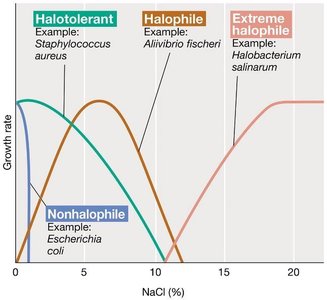
Interpreting Growth in Broth Tubes
Growth patterns in broth tubes can be used to determine oxygen requirements of bacteria.
Growth only at the top: Obligate aerobe.
Even growth throughout: Aerotolerant anaerobe.
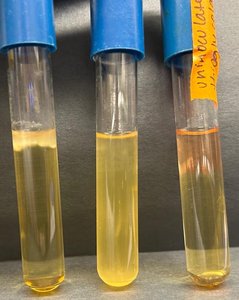
Pathogens and Environmental Adaptation
Environmental Factors Affecting Pathogen Survival
Pathogens must adapt to varied environments within the host to cause infection. This requires flexible energy conservation and usage, often regulated by enzymes sensitive to temperature, pH, oxygen, and salt.
Gene expression changes in response to environmental factors.
Enzyme activity is crucial for survival and reproduction.
Microbial Metabolism
Metabolism Overview
Metabolism encompasses all biochemical reactions in a cell, divided into catabolic and anabolic pathways.
Catabolic reactions: Break down molecules, release energy, and produce ATP.
Anabolic reactions: Use ATP to build macromolecules and cellular structures.
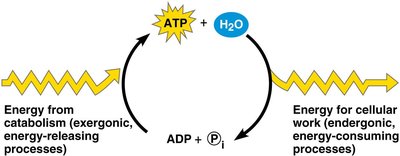
Catabolism is exergonic (energy-releasing); anabolism is endergonic (energy-consuming).
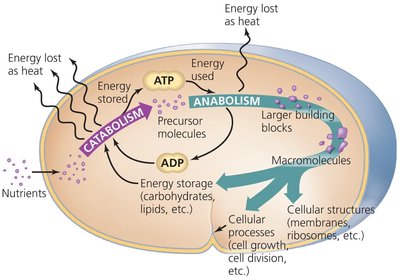
ATP: The Primary Energy Carrier
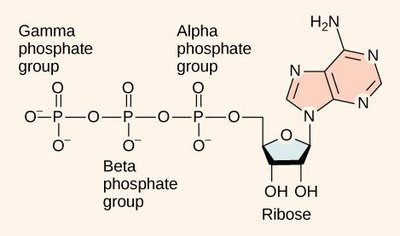
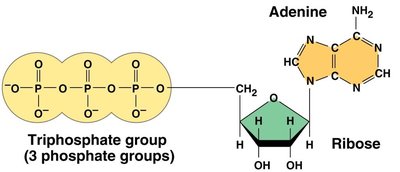
ATP (adenosine triphosphate) is the main energy currency in cells. It is formed through metabolic pathways and can be hydrolyzed to ADP (adenosine diphosphate) and inorganic phosphate (Pi), releasing energy.
ATP: High energy form.
ADP: Lower energy form.
ATP Hydrolysis and Regeneration
ATP hydrolysis releases energy for cellular work. ADP can be converted back to ATP by adding a phosphate group, storing energy for later use.
Cells store energy as ATP and use it for cellular processes.
ATP regeneration is essential for sustained metabolism.
Enzymes and Enzyme Regulation
Enzymes as Biological Catalysts
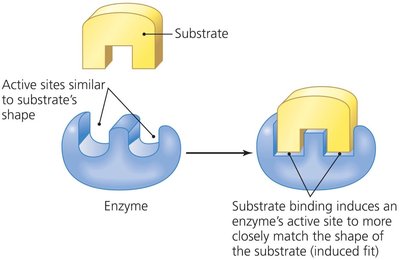
Enzymes are proteins that act as catalysts, speeding up chemical reactions without being consumed. They bind specific substrates at their active sites and convert them to products.
Enzyme-substrate interaction is highly specific due to the shape of the active site.
The induced fit model describes how substrate binding changes the enzyme's shape to facilitate the reaction.
Cofactors and Coenzymes
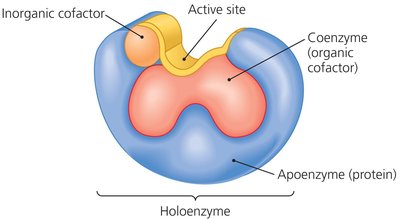
Many enzymes require additional molecules called cofactors to function optimally. Cofactors can be inorganic ions or organic molecules (coenzymes).
Inorganic cofactors: Metal ions (e.g., Mg2+, Fe2+).
Coenzymes: Organic molecules, often vitamin derivatives.
Holoenzyme: Complete, active enzyme with cofactors.
Enzymes and Activation Energy
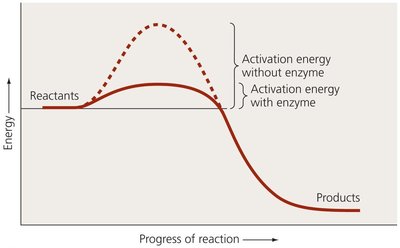
Enzymes lower the activation energy required for chemical reactions, making them occur more rapidly. Activation energy is the energy needed to start a reaction.
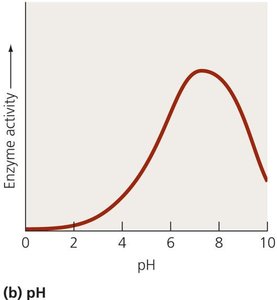
Enzyme function can be affected by temperature, pH, substrate concentration, and inhibitors.
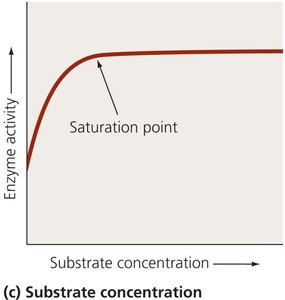
Enzyme Regulation Mechanisms
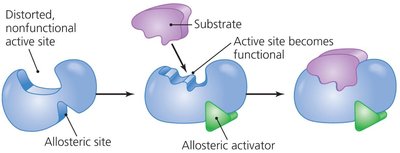
Enzyme activity can be regulated by various mechanisms, including cofactors, inhibitors, allosteric regulation, and feedback inhibition.
Allosteric regulation: Molecules bind to a site other than the active site, changing enzyme structure and activity. Can be inhibitory or activating.
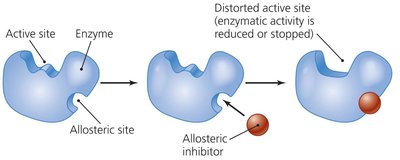
Allosteric inhibitors: Also called non-competitive inhibitors; reduce or stop enzyme activity.
Enzyme Inhibitors
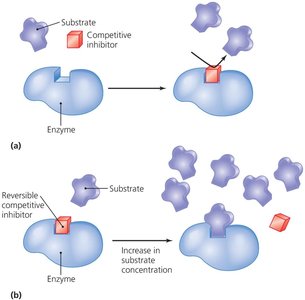
Inhibitors are molecules that block enzyme activity. They can be competitive (bind to the active site) or non-competitive (bind elsewhere).
Competitive inhibitors: Compete with substrate for active site binding; inhibition can be reversed by increasing substrate concentration.
Non-competitive inhibitors: Bind to a different site, changing enzyme shape and function.
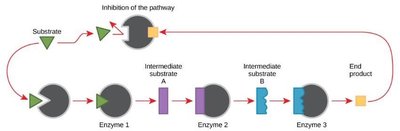
Feedback Inhibition
Feedback inhibition uses the product of a pathway to inhibit the activity of an enzyme earlier in the pathway, preventing excess production and conserving resources.
Common mechanism for regulating metabolic pathways and gene expression.
Summary Table: Environmental Preferences of Microorganisms
Factor | Preference | Example |
|---|---|---|
Oxygen | Obligate aerobe | Mycobacterium tuberculosis |
Oxygen | Obligate anaerobe | Clostridium botulinum |
Temperature | Mesophile | Escherichia coli |
pH | Acidophile | Acidithiobacillus ferrooxidans |
Salt | Halophile | Halobacterium salinarum |
Key Equations
ATP Hydrolysis:
Enzyme-Catalyzed Reaction: Where E = enzyme, S = substrate, ES = enzyme-substrate complex, P = product
Additional info: Academic context was added to clarify definitions, examples, and mechanisms for each topic, ensuring completeness and self-contained study notes.
