 Back
Microbial Growth: Culturing, Counting, and Environmental Effects
Study Guide - Smart Notes
 Tailored notes based on your materials, expanded with key definitions, examples, and context.
Microbial Growth and Measurement
Microscopic Counts of Microbial Cell Numbers
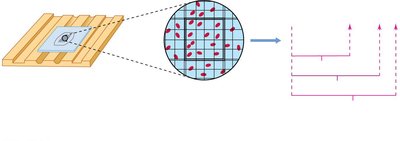
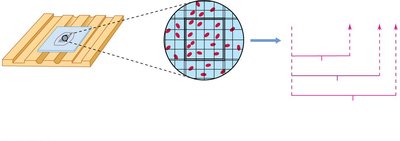
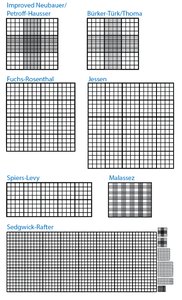
Microscopic counting is a direct method for enumerating microbial cells in a sample. It involves observing cells under a microscope using a specialized counting chamber, such as the Petroff-Hausser or Burker chamber, which allows for volumetric calculations.
Counting Chamber: A slide with a grid and a defined depth, used to count cells in a known volume.
Calculation: The number of cells per milliliter is determined by multiplying the average cell count per square by the number of squares, chamber depth, and conversion factors.
Limitations: Cannot distinguish live from dead cells without special stains; small cells may be overlooked; debris can be mistaken for cells; requires immobilization of motile cells.
Example Calculation: If 12 cells are counted in one large square (16 small squares), and the chamber has 25 large squares, with a depth of 0.02 mm, the total cell concentration can be calculated as follows:
Number per mm2: 3 x 10²
Number per mm3: 1.5 x 10⁴
Number per cm3 (ml): 1.5 x 10⁷
Viable Counting of Microbial Cell Numbers
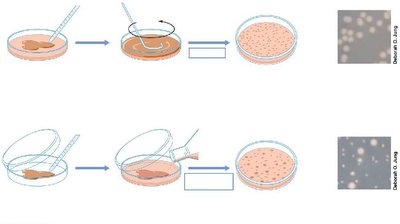
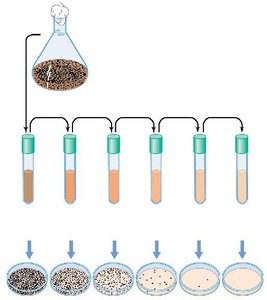
Viable cell counts, or plate counts, measure the number of living, reproducing cells in a sample. This is achieved by culturing microbes on agar plates and counting the resulting colonies.
Spread-Plate Method: Sample is spread evenly over the surface of an agar plate using a sterile spreader.
Pour-Plate Method: Sample is mixed with molten agar and poured into a plate, allowing colonies to form both on the surface and within the agar.
Colony Counting: Plates with 30–300 colonies are ideal for accurate counts. Samples must be diluted to achieve this range.
Colony-Forming Unit (CFU): Each colony is assumed to arise from a single cell or group of cells.
Growth Media and Laboratory Culture
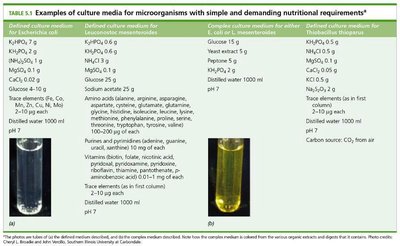
Microbes are cultured in media that provide essential nutrients. Media can be liquid or solidified with agar, and are typically sterilized before use.
Defined Media: Chemical composition is known and precise.
Complex Media: Contains digests of chemically undefined substances (e.g., yeast extract, meat extract).
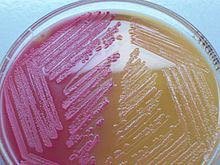
Selective Media: Contains compounds that inhibit growth of some microbes but not others.
Differential Media: Contains indicators (usually dyes) that detect particular chemical reactions during growth.
Turbidimetric Measures of Microbial Cell Numbers
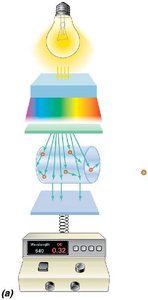
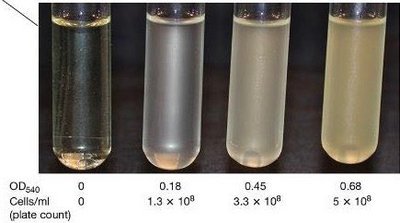
Turbidimetric measurement is an indirect method for estimating microbial cell numbers by measuring the turbidity (cloudiness) of a cell suspension using a spectrophotometer.
Optical Density (OD): Turbidity is measured as optical density, often at 600 nm (OD600).
Standard Curve: Relates OD to cell number; doubling OD generally indicates doubling cell number.
Advantages: Rapid and useful for monitoring growth.
Limitations: Clumping of cells can affect accuracy; does not distinguish live from dead cells.
Environmental Effects on Microbial Growth
Temperature Effects
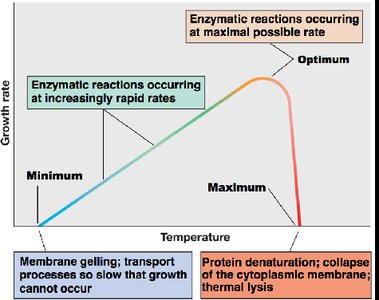
Temperature is a major environmental factor influencing microbial growth. Each microorganism has cardinal temperatures: minimum, optimum, and maximum for growth.
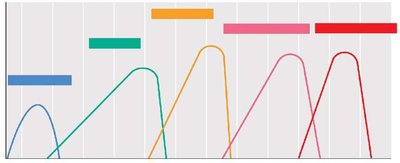
Psychrophiles: Grow optimally at ≤ 15°C; inhabit cold environments.
Psychrotolerant: Can grow at 0°C, but optimum is 20–40°C; more widely distributed.
Mesophiles: Optimum at midrange temperatures; common in warm-blooded animals and temperate environments.
Thermophiles: Require high temperatures (optimum > 45°C).
Hyperthermophiles: Optimum > 80°C; found in extreme environments.
Molecular Adaptations to Psychrophily
Psychrophilic organisms have adaptations that allow them to thrive in cold environments.
Cold-Active Enzymes: Enzymes function optimally at low temperatures.
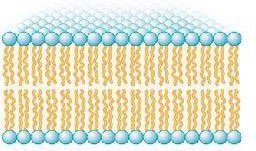
Membrane Adaptations: High levels of unsaturated fatty acids in cytoplasmic membranes maintain fluidity.
Transport Processes: Optimized for low temperatures.
Microbial Nutrition and Growth Requirements
Macronutrients and Micronutrients
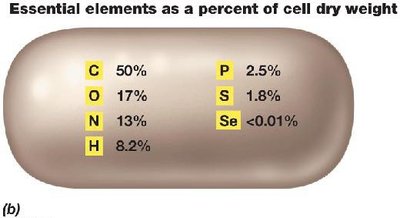
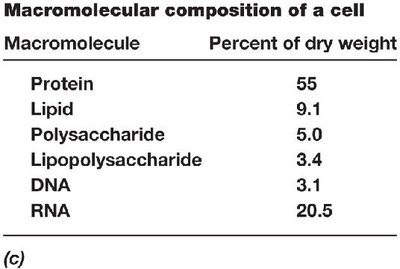
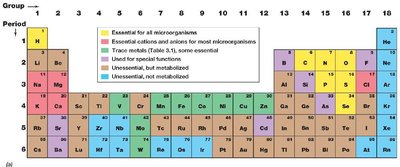
Microbial cells require various nutrients for growth, classified as macronutrients (needed in large amounts) and micronutrients (needed in trace amounts).
Macronutrients: Carbon, nitrogen, phosphorus, sulfur, potassium, magnesium, calcium, sodium, iron.
Micronutrients: Trace metals and growth factors (e.g., vitamins, amino acids).
Sources: Carbon and energy can be obtained from organic or inorganic sources; nitrogen is key for proteins and nucleic acids.
Algal Blooms and Eutrophication
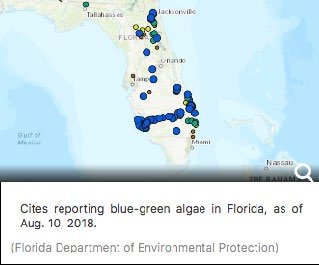
Algal blooms, often caused by cyanobacteria, occur when excess nutrients (phosphorus and nitrogen) enter aquatic environments, leading to rapid microbial growth and toxin production.
Cyanobacteria: Photosynthetic bacteria responsible for 'blue-green algae' blooms.
Eutrophication: Nutrient enrichment causes excessive microbial growth, impacting water quality and ecosystem health.
Important Definitions and Calculations
Definitions
Pure (Axenic) Culture: Contains only a single kind of microbe.
Contaminants: Unwanted organisms in a culture.
Aseptic Techniques: Practices to prevent contamination.
Growth Calculations
Microbial growth can be quantified using exponential equations:
Number of Generations:
Example: To form a colony with 107 cells from a single cell: generations.
Doubling Time: If doubling time is 30 minutes, 23.2 generations require 11.6 hours.
Exponential Growth: After 24 hours (48 generations): cells.
Summary Table: Methods for Measuring Microbial Growth
Method | Principle | Advantages | Limitations |
|---|---|---|---|
Microscopic Count | Direct cell counting in chamber | Rapid, direct | Cannot distinguish live/dead, tedious, debris interference |
Viable Count (Plate Count) | Colony formation on agar | Measures living cells | Requires dilution, not all cells grow |
Turbidimetric Measurement | Optical density of suspension | Rapid, non-destructive | Indirect, affected by clumping |
