 Back
BackMicrobial Growth: Environmental Factors, Nutritional Requirements, and Laboratory Techniques
Study Guide - Smart Notes
 Tailored notes based on your materials, expanded with key definitions, examples, and context.
Microbial Growth
Environmental Factors Affecting Microbial Growth
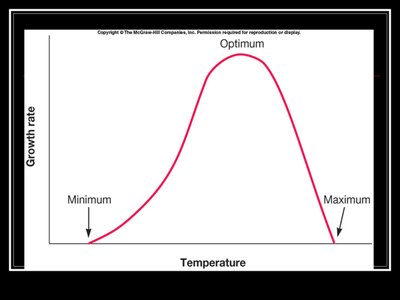
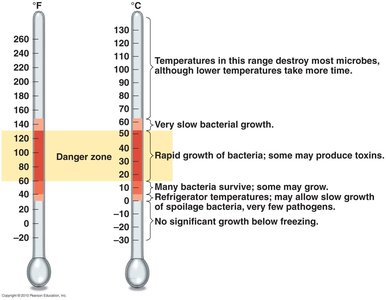
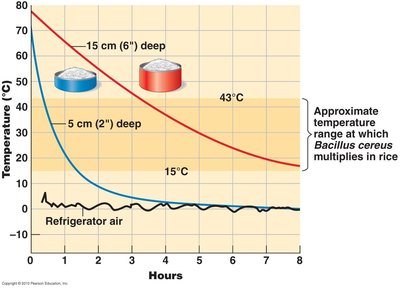
Microbial growth is influenced by several environmental factors, including pH, osmotic pressure, and temperature. These factors determine the optimal conditions for microbial proliferation and survival.
pH: Most bacteria grow best at neutral pH (6.5–7.5), but some thrive in acidic or alkaline environments.
Osmotic Pressure: The concentration of solutes, especially salt, affects water movement and cell integrity. Microbes are classified as nonhalophiles, halotolerant, moderate halophiles, or extreme halophiles based on their salt tolerance.
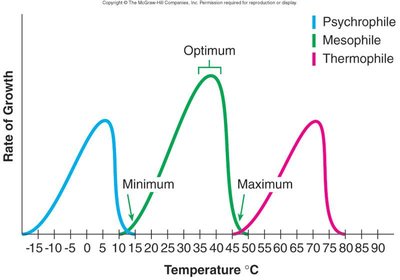
Temperature: Microbes are categorized by their preferred temperature ranges: psychrophiles (cold-loving), mesophiles (moderate temperature), and thermophiles (heat-loving).

Essential Nutrients for Microbial Growth
Microorganisms require a variety of nutrients for growth, which can be classified as macronutrients and micronutrients. The main elements include carbon, nitrogen, oxygen, hydrogen, phosphorus, sulfur, minerals, and growth factors.
Carbon: Used for cellular structures and energy. Heterotrophs obtain carbon from organic sources, while autotrophs use inorganic CO2.
Nitrogen: Essential for proteins and nucleic acids.
Oxygen: Required by aerobes; toxic to obligate anaerobes.
Hydrogen: Involved in energy transfer and biosynthesis.
Phosphorus: Needed for nucleic acids and ATP.
Sulfur: Component of amino acids and vitamins.
Minerals: Trace elements required for enzyme function.
Growth Factors: Organic compounds (e.g., vitamins) that some microbes cannot synthesize.
Nutritional Types of Microorganisms
Microbes are classified based on their energy and electron sources:
Chemotrophs: Obtain energy from chemical compounds.
Phototrophs: Use light as an energy source.
Lithotrophs: Use inorganic electron donors.
Heterotrophs: Use organic electron donors.
Oxygen Requirements and Microbial Classification
Microorganisms exhibit different oxygen requirements, which affect their growth and laboratory handling.
Obligate Aerobe: Requires oxygen for growth.
Microaerophile: Grows best in low oxygen concentrations.
Obligate Anaerobe: Cannot tolerate oxygen.
Aerotolerant Anaerobe: Does not use oxygen but can survive its presence.
Facultative Anaerobe: Can grow with or without oxygen.
Capnophile: Requires elevated CO2 levels.
Working with Anaerobes
Special techniques and equipment are used to cultivate anaerobic microbes, such as anaerobic chambers and anaerobic boxes.


Biofilms
Biofilms are complex microbial communities attached to surfaces and encased in a self-produced matrix. They exhibit unique properties, such as increased resistance to antibiotics and environmental stresses.
Formation: Involves cell attachment, signaling, matrix production, and growth.
Importance: Biofilms are found in natural, industrial, and clinical settings.

Culture Media
Culture media are used to grow and isolate microorganisms in the laboratory. They vary in physical nature, chemical composition, and functional type.
Physical Nature: Liquid, semisolid, or solid.
Chemical Composition: Defined (synthetic) or complex.
Functional Type: Supportive, enriched, selective, or differential.
Physical Nature | Chemical Composition | Functional Type |
|---|---|---|
Liquid | Defined (synthetic) | Supportive (general purpose) |
Semisolid | Complex | Enriched |
Solid | Selective, Differential |

Chemically Defined vs Complex Media
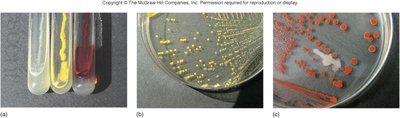
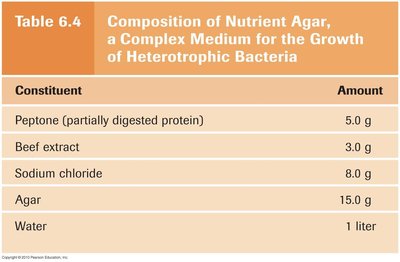
Chemically defined media have known quantities of all ingredients, while complex media contain extracts with unknown exact composition.
Constituent | Amount |
|---|---|
Glucose | 5.0 g |
Ammonium phosphate, monobasic | 1.0 g |
Sodium chloride | 5.0 g |
Magnesium sulfate | 0.2 g |
Potassium phosphate, dibasic | 1.0 g |
Water | 1 liter |
Constituent | Amount |
|---|---|
Peptone | 5.0 g |
Beef extract | 3.0 g |
Sodium chloride | 8.0 g |
Agar | 15.0 g |
Water | 1 liter |
Mixed Culture vs Pure Culture
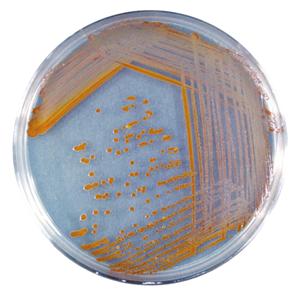
Microbiologists often need to isolate pure cultures from mixed populations. Pure cultures contain only one microbial species, while mixed cultures have multiple species.
Isolation Techniques
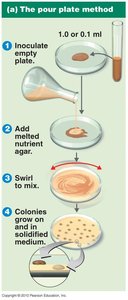
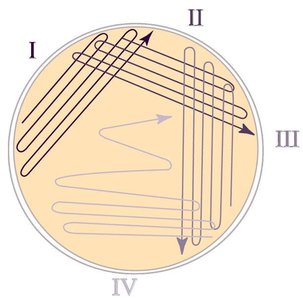
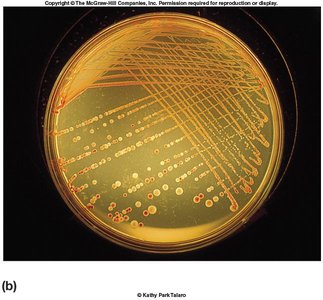
Isolation techniques are used to obtain single colonies for study. Common methods include pour plate, streak plate, and dilution.
Pour Plate: Involves mixing microbes with melted agar and pouring into a plate.
Streak Plate: Uses a loop to spread microbes across the surface of an agar plate.
Dilution: Reduces cell concentration to obtain isolated colonies.


Colony Morphology
Colony morphology is used to identify and characterize microbes based on form, elevation, and margin.


Microbial Growth Curve
The microbial growth curve describes the population changes over time in a closed system. It consists of four phases: lag, exponential (log), stationary, and death.
Lag Phase: Cells adapt to new environment; little growth.
Exponential (Log) Phase: Rapid cell division; population doubles at regular intervals.
Stationary Phase: Growth rate slows; nutrients deplete, waste accumulates.
Death Phase: Cells die due to adverse conditions.

Measuring Microbial Growth
Microbial growth can be measured by cell counts, plate counts, and turbidity. The number of cells after growth can be calculated using the formula:
Formula:
Plate Counts: Counting colonies on agar plates.
Cell Counts: Direct microscopic counting.
Turbidity: Measuring cloudiness of a culture.

Example: If you start with 100 cells and there are 5 generations, the final cell count is cells.
Additional info: These notes expand on brief points with academic context, definitions, and examples to provide a comprehensive overview of microbial growth for college-level microbiology students.
