 Back
BackMicrobial Growth: Mechanisms, Environmental Influences, and Laboratory Cultivation
Study Guide - Smart Notes
 Tailored notes based on your materials, expanded with key definitions, examples, and context.
Microbial Growth
Definition and Overview
Microbial growth refers to the increase in the number of cells within a population, rather than the size of individual cells. This process is fundamental to understanding population dynamics, colony formation, and the spread of microorganisms in various environments.
Population: A group of microorganisms growing together.
Colony: A visible mass of microbial cells originating from a single cell.
Mechanisms of Bacterial Cell Division
Binary Fission
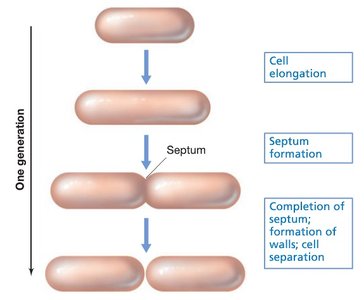
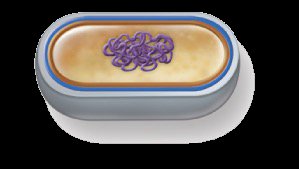
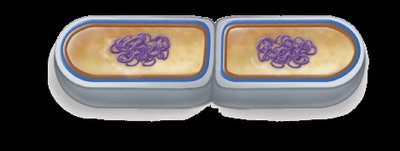
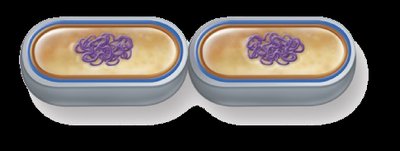
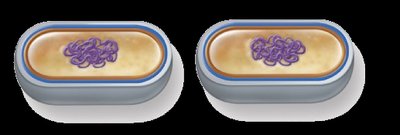
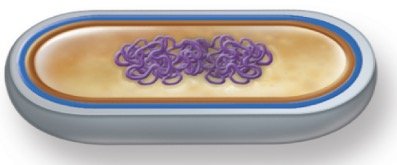
Binary fission is the primary method by which bacteria reproduce, resulting in two genetically identical daughter cells. The process involves several distinct steps:
Cell elongation: The cell grows in size and prepares for division.
Septum formation: A partition (septum) forms between the two halves of the cell.
Completion of septum and cell separation: The septum is completed, cell walls form, and the two cells separate.
Molecular Steps in Binary Fission
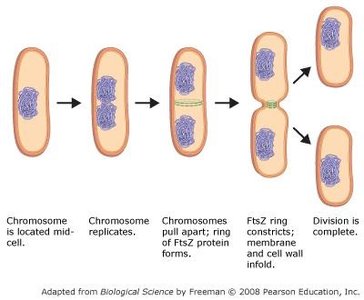
The molecular events of binary fission include chromosome replication, segregation, and the formation of a division ring (FtsZ protein) that constricts the cell.
Chromosome replication: DNA is duplicated.
Chromosome segregation: Chromosomes move to opposite ends of the cell.
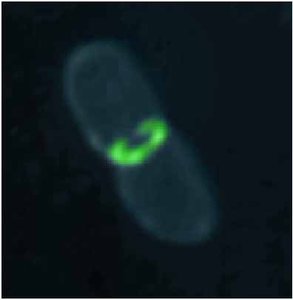
FtsZ ring formation: The FtsZ protein forms a ring at the division site, guiding cell wall synthesis.
Division: The cell membrane and wall infold, completing division.
Budding and Filamentous Growth
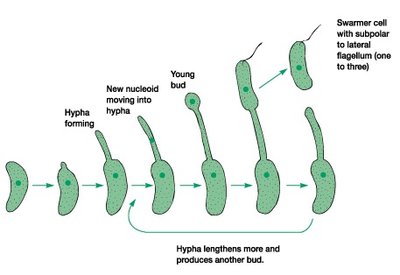
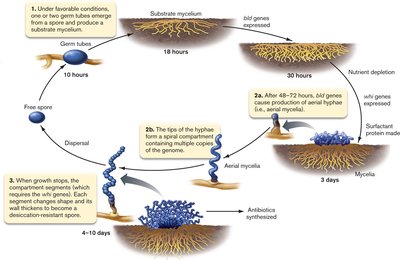
Some bacteria, such as Caulobacter, reproduce by budding, where a new cell forms as a protrusion from the parent cell. Filamentous bacteria grow by forming hyphae, similar to fungi, and can produce spores for dispersal.
Budding: Unequal cell division; new cell forms from a bud.
Filamentous growth: Cells grow as long filaments, producing spores under nutrient depletion.
Bacterial Growth in Laboratory Cultures
Batch Culture
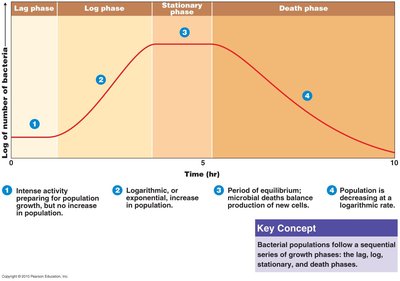
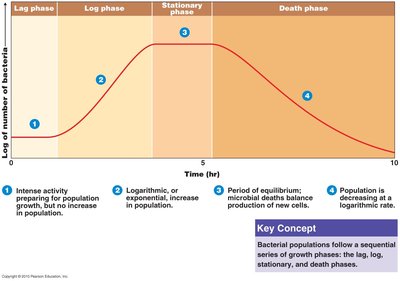
A batch culture is a closed system where nutrients are finite and waste accumulates. Growth follows a characteristic curve with four phases:
Lag phase: Cells adapt to new environment; no increase in cell number.
Exponential (log) phase: Rapid cell division; population doubles at regular intervals.
Stationary phase: Nutrient depletion and waste accumulation halt growth; cell division equals cell death.
Death phase: Cell death exceeds cell division; population declines.
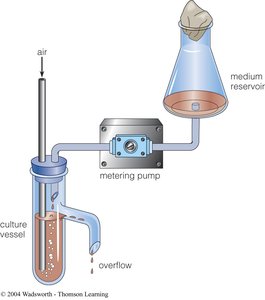
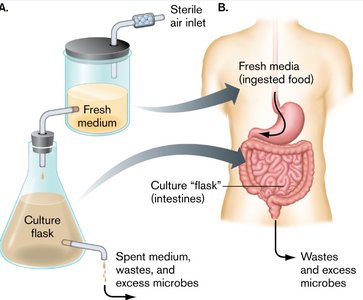
Continuous Culture (Chemostat)
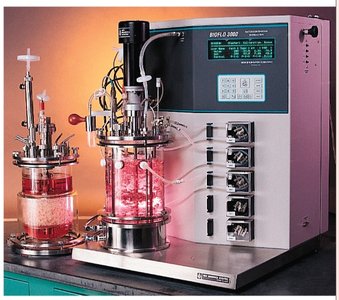
Continuous culture systems, such as chemostats, maintain bacterial populations in exponential growth by continuously adding nutrients and removing waste. This allows for constant cell density and study of growth kinetics.
Chemostat: Device for maintaining continuous culture.
Limiting nutrient: Controls growth rate and cell density.
Kinetics of Bacterial Growth
Exponential Growth and Mathematical Models
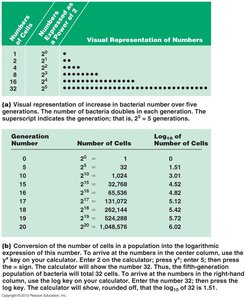
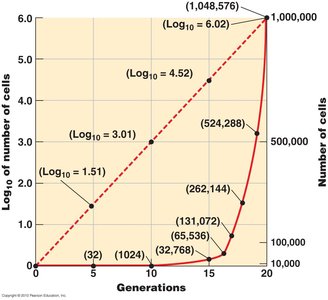
Bacterial populations grow exponentially, doubling each generation. The mathematics of exponential growth are essential for calculating cell numbers, generation time, and growth rate.
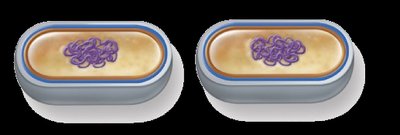
Exponential growth equation:
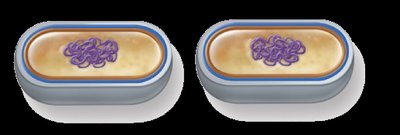
Logarithmic form:
Number of generations:
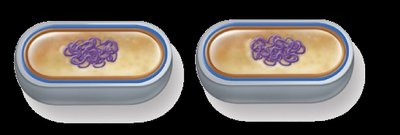
Generation time:
Growth rate:
Graphical Representation of Growth
Growth curves can be plotted on arithmetic or logarithmic scales to visualize population changes over time.
Logarithmic scale: Useful for visualizing exponential growth.
Arithmetic scale: Shows absolute cell numbers.

Environmental Factors Influencing Bacterial Growth
Temperature
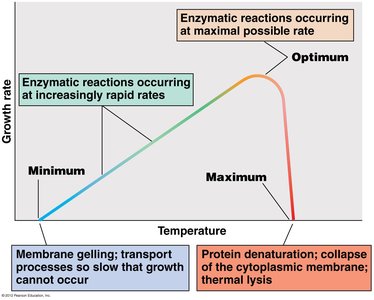
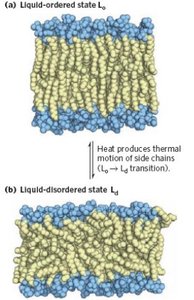
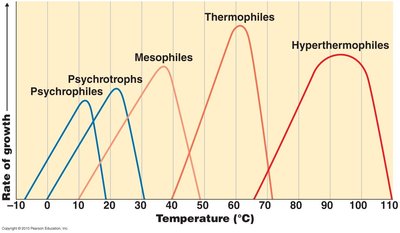
Temperature affects membrane fluidity, enzyme activity, and overall metabolism. Each microorganism has minimum, optimum, and maximum cardinal temperatures for growth.
Minimum temperature: Below this, growth ceases due to membrane gelling.
Optimum temperature: Enzymatic reactions occur at maximal rates.
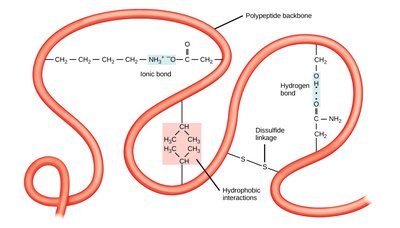
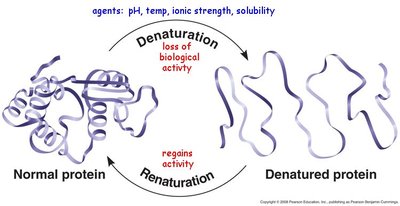
Maximum temperature: Above this, proteins denature and membranes collapse.
Classification by Temperature Preference
Microorganisms are classified based on their preferred growth temperatures:
Psychrophiles: Optimal growth at 15°C or lower; found in polar regions.
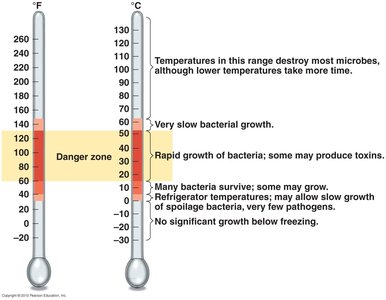
Psychrotrophs: Grow between 0°C and 30°C; cause food spoilage.
Mesophiles: Optimal growth at 32–37°C; most human pathogens.
Thermophiles: Optimal growth at 55°C or higher; found in hot environments.
Hyperthermophiles: Optimal growth at 100°C or higher; found in hot springs.

Molecular Adaptations
Psychrophiles: More unsaturated fatty acids, short chains, antifreeze proteins, fewer interdomain bonds for flexibility.
Thermophiles: Saturated fatty acids, lipid monolayers, more interdomain bonds, heat shock proteins for stability.
Pressure
Barophiles (piezophiles): Grow at very high pressures (up to 1,000 atm).
Barotolerant: Grow well at moderate pressures (1–50 MPa).
Barsensitive: Sensitive to pressure; growth decreases as pressure increases.
pH
Enzyme activities exhibit optima, minima, and maxima with respect to pH. Bacteria regulate internal pH (homeostasis) and are classified by their preferred pH range:
Acidophiles: Grow in acidic environments (volcanic soil, sulfur springs).
Alkalophiles: Grow in alkaline environments (soda lakes).
Neutralophiles: Grow at pH 5–8; includes most pathogens.
Osmotic Pressure
Hypertonic environments: Cause plasmolysis; cells lose water.
Halophiles: Require high salt concentrations (10–20% NaCl).
Facultative halophiles: Tolerate high salt but do not require it (e.g., Staphylococcus aureus).
Oxygen Requirements
Microorganisms are classified based on their oxygen requirements:
Obligate aerobes: Require oxygen; use oxidative phosphorylation; produce catalase and superoxide dismutase.
Obligate anaerobes: Killed by oxygen; use fermentation; lack enzymes to detoxify oxygen radicals.
Aerotolerant anaerobes: Grow anaerobically; not killed by oxygen; use fermentation; possess peroxidase/superoxide dismutase.
Facultative anaerobes: Can grow with or without oxygen; use both oxidative phosphorylation and fermentation.
Microaerophiles: Grow in low oxygen levels; killed by high oxygen levels; low catalase/superoxide dismutase.
Bacterial Growth in Nature
Biofilms
Biofilms are polysaccharide-encased communities of microorganisms with complex architectures. They form channels for nutrient and waste exchange and communicate via quorum sensing.
Quorum sensing: Mechanism for assessing population density and coordinating group behaviors.
Extracellular Polymeric Substance (EPS): Contains polysaccharides, proteins, DNA, and lipids.
Advantages: Stability, protection from environmental challenges, resistance to antibiotics and host defenses.
Implications of Biofilms
Medical: Dental plaque, chronic infections, bacterial endocarditis.
Industrial: Accumulation in pipes and drains.
Environmental: Bioremediation, wastewater treatment.
Summary Table: Temperature Adaptations
Type | Optimal Temp | Membrane Adaptations | Protein Adaptations | Example Environments |
|---|---|---|---|---|
Psychrophile | ≤15°C | More unsaturated fatty acids, short chains, antifreeze proteins | Fewer interdomain bonds, more flexibility | Polar regions, deep ocean |
Mesophile | 32–37°C | Standard membrane composition | Standard protein structure | Human body, soil |
Thermophile | ≥55°C | Saturated fatty acids, lipid monolayers | More interdomain bonds, less flexibility, heat shock proteins | Hot springs, compost |
Hyperthermophile | ≥100°C | Lipid monolayers, extreme stability | Extensive interdomain bonds | Hydrothermal vents |
Additional info: Academic context was added to clarify the molecular adaptations, environmental implications, and mathematical models of microbial growth. The notes are structured to provide a comprehensive overview suitable for exam preparation in a college microbiology course.
