 Back
Microbial Growth: Physical and Chemical Requirements, Culture Methods, and Quantification
Study Guide - Smart Notes
 Tailored notes based on your materials, expanded with key definitions, examples, and context.
Microbial Growth
Definition and Overview
Microbial growth refers to the increase in the number of cells, not the size of individual cells. This process is fundamental to microbiology, as it underpins the study of population dynamics, disease progression, and laboratory cultivation.
Cell division is the primary mechanism for microbial growth.
Growth is measured by the increase in cell number, not cell size.
Physical Requirements for Microbial Growth
Temperature
Temperature is a critical factor influencing microbial growth, with different species adapted to specific temperature ranges.
Minimum, optimum, and maximum growth temperatures vary by species.
Psychrophiles: Grow at very low temperatures (e.g., freezer, ice).
Psychrotrophs: Responsible for cold food spoilage.
Mesophiles: Most common; live in animals and are often pathogens; cause food spoilage.
Thermophiles: Grow at high temperatures.
Hyperthermophiles: Archaea that thrive in extremely hot environments (e.g., boiling water).
pH
Microbes have specific pH requirements for optimal growth.
Acidophiles: Thrive in acidic environments; some bacteria and fungi (pH 5–6).
Neutrophiles: Prefer neutral pH (6.5–7.5); most bacteria.
Alkaliphiles: Grow in alkaline conditions.
Buffers are used in laboratory cultures to maintain stable pH.
Osmotic Pressure and Salt
Osmotic pressure, determined by solute concentrations, affects microbial survival and growth.
Nonhalotolerant: Cannot tolerate high salt (<2% NaCl); most pathogens and food spoilage organisms.
Halotolerant/facultative halophiles: Can tolerate higher salt concentrations.
Obligate halophiles: Require high salt concentrations.
Extreme halophiles: Thrive in very high salt environments.
Saccharophiles: Prefer high sugar concentrations; many fungi.
Hypertonicity and Plasmolysis
Hypertonic solutions increase osmotic pressure, leading to plasmolysis (cell shrinkage), which inhibits bacterial growth.
High salt and sugar concentrations are used to preserve food (e.g., salted meat, honey).
Chemical Requirements for Microbial Growth
Essential Elements
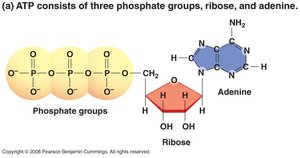
Microbes require various elements to synthesize macromolecules and ATP.
Carbon: Obtained from CO2 (carbon fixation) or organic sources.
Nitrogen: Obtained from N2 (nitrogen fixation) or organic/inorganic sources.
Sulfur and Phosphorus: Needed for proteins, nucleic acids, and ATP.
Trace Elements and Growth Factors
Trace elements: Inorganic elements (e.g., iron, copper, zinc) required in small amounts; often serve as cofactors for enzymes.
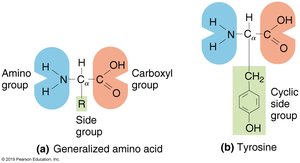
Organic growth factors: Organic molecules that a species cannot synthesize (e.g., vitamins, amino acids, nucleic acids).
Humans require vitamins as coenzymes; some bacteria can synthesize certain vitamins and amino acids.
Oxygen Requirements
Classification Based on Oxygen Use
Microbes are classified by their oxygen requirements, which affect their metabolism and growth.
Obligate aerobes: Require oxygen; use aerobic respiration.
Facultative anaerobes: Can use oxygen but also grow without it; capable of aerobic and anaerobic respiration.
Obligate anaerobes: Oxygen is toxic; use anaerobic respiration; lack catalase enzyme.
Aerotolerant anaerobes: Do not use oxygen but tolerate its presence; use fermentation.
Microaerophiles: Require oxygen at lower concentrations than atmospheric levels.
Biofilms
Structure and Function
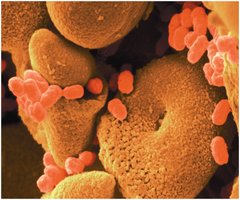
Biofilms are communities of microorganisms that adhere to surfaces and exhibit coordinated behaviors.
Can be composed of single or multiple species (bacteria or fungi).
Form thin, slimy layers on surfaces.
Benefits include sharing nutrients and protection from environmental threats (e.g., desiccation, antibiotics, immune system).
Quorum sensing: Cell-to-cell communication that regulates biofilm formation and behavior based on cell density.
Cells can disperse to establish new biofilms elsewhere.
Culture Methods
Growing Microbes in the Laboratory
Microbes are cultivated using various media and techniques to study their growth and properties.
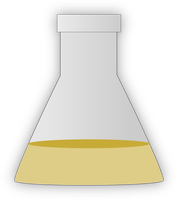
Culture medium: Contains all necessary factors for growth (water, nutrients, pH, salt, oxygen, temperature).
Liquid broth: Used in tubes.
Semisolid agar: Used in Petri plates or tubes (deep or slant).
Inoculum: Introduction of microbes into a culture medium.
Sterile, aseptic technique: Prevents contamination.
Nonfastidious: Do not require additional growth factors.
Fastidious: Require specific growth factors.
Types of Media
Chemically defined medium: Exact chemical composition is known.
Complex media: Contains extracts and digests of natural products; composition varies.
Nutrient broth/agar: Commonly used for general cultivation.
Enrichment media: Used for fastidious bacteria.
Selective and Differential Media
Selective media: Inhibits growth of some organisms while allowing others to grow.
Differential media: Allows all organisms to grow but distinguishes them based on appearance.
Selective & differential media: Combines both properties.
Blood agar: Differential only; hemolytic bacteria cause clear zones (hemolysis).
Mannitol salt agar: Selective for halotolerant/halophile species; differential for mannitol fermenters (yellow color indicates acid production).
Obtaining Pure Cultures
Streak Plate Method
The streak plate method is used to isolate pure cultures by spreading microbes across an agar surface.
Allows separation of individual colonies.
Essential for studying specific microbial species.
Special Culture Conditions
Anaerobic Chambers and Candle Jars
Anaerobic chambers: Maintain low oxygen (<1%) and high CO2 (18%) for obligate anaerobes.
Candle jars: Reduce oxygen to ~17% and increase CO2 to ~3%; suitable for microaerophiles and capnophiles.
Biosafety Levels
BSL-2: Moderate risk; used for species commonly found in humans.
BSL-4: Highest risk; used for deadly and easily spread microbes (e.g., Ebola, smallpox).
Cell Division
Binary Fission and Budding
Binary fission: Most bacteria divide by this process, resulting in two identical daughter cells.
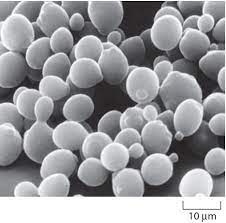
Budding: Used by yeast and some bacteria; a new cell forms as a protrusion from the parent cell.
Growth Phases
Generation Time
Generation time: Time required for a cell to divide and the population to double.
Varies by species and environmental conditions (typically 1–3 hours for bacteria; some take >24 hours).
Quantifying Microbial Growth
Direct and Indirect Measurement
Microbial populations can be quantified using several methods.
Direct measurement: Includes serial dilution, spread plate, and plate count methods; counts viable cells as colony forming units (CFU).
Petroff-Hausser cell counter: Used for direct microscopic counts.
Indirect measurement: Estimates cell numbers based on turbidity (cloudiness) of a culture.
Serial Dilution, Spread Plate, and Plate Counts
Serial dilution reduces cell concentration for accurate counting.
Spread plate technique distributes cells evenly for colony formation.
Valid plate count: 30–300 CFU.
Calculation:
Example:
Case Studies
Antibiotic Use and Yeast Infection
Normal vaginal flora includes bacteria and yeast.
Antibiotics can kill beneficial bacteria, lowering vaginal pH and allowing yeast to proliferate, resulting in a yeast infection.
Prevention: Use probiotics or avoid unnecessary antibiotics to maintain normal flora.
Salt Water Gargling
Salt water creates a hypertonic environment, increasing osmotic pressure and causing plasmolysis in bacteria.
This inhibits bacterial growth and can relieve sore throat symptoms.
