Back
BackMicrobial Growth: Physical and Chemical Requirements, Culture Methods, and Measurement
Study Guide - Smart Notes
 Tailored notes based on your materials, expanded with key definitions, examples, and context.
Microbial Growth
Introduction
Microbial growth refers to the increase in the number of microbial cells, not the size of individual cells. Understanding the requirements and methods for microbial growth is essential for microbiology, biotechnology, and medical applications.
Requirements for Microbial Growth
Physical Requirements
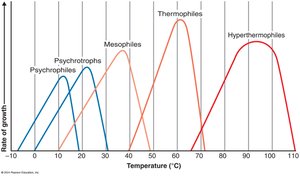
Temperature: Microorganisms have minimum, optimum, and maximum growth temperatures. These ranges define their ecological niches and applications in food safety and industry.
pH: Most bacteria grow best between pH 6.5 and 7.5, while molds and yeasts prefer slightly acidic conditions (pH 5–6). Acidophiles thrive in acidic environments.
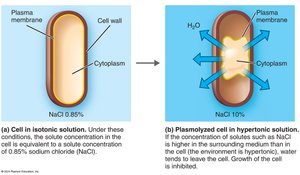
Osmotic Pressure: Microbes require water for growth. Hypertonic environments cause plasmolysis, inhibiting growth. Halophiles require or tolerate high salt concentrations.
Temperature Classifications
Psychrophiles: Cold-loving; optimal growth at low temperatures, found in deep oceans and polar regions.
Psychrotrophs: Grow at low temperatures but have higher optima than psychrophiles; responsible for food spoilage in refrigerators.
Mesophiles: Moderate-temperature-loving; include most human pathogens and normal microbiota.
Thermophiles: Heat-loving; found in hot springs and compost piles.
Hyperthermophiles: Extreme thermophiles; optimal growth above 80°C, often in volcanic or hydrothermal environments.
Food Safety and Temperature
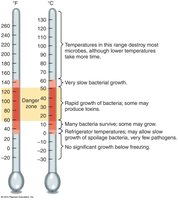
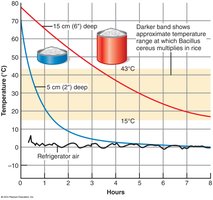
Rapid bacterial growth occurs in the 'danger zone' (approx. 15–50°C).
Refrigeration slows but does not stop microbial growth; some pathogens can still multiply.
Osmotic Pressure
Hypertonic solutions cause water to leave the cell, leading to plasmolysis and growth inhibition.
Extreme/obligate halophiles require high salt; facultative halophiles tolerate it (e.g., Staphylococcus on skin).
Chemical Requirements
Carbon: Backbone of organic molecules. Chemoheterotrophs use organic carbon; autotrophs use CO2.
Nitrogen: Needed for proteins, DNA, ATP. Obtained from protein decomposition, ammonium, or nitrogen fixation.
Sulfur: Used in amino acids and vitamins. Sourced from protein or sulfate ions.
Phosphorus: Essential for nucleic acids, ATP, and membranes. Provided as phosphate ions.
Trace Elements: Inorganic elements (e.g., Fe, Cu, Zn) required in small amounts as enzyme cofactors.
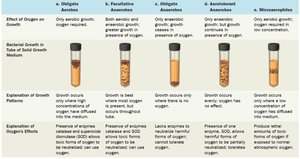
Oxygen: Requirement varies among microbes and determines their classification (see below).
Organic Growth Factors: Essential organic compounds (e.g., vitamins, amino acids) that microbes cannot synthesize.
Oxygen Requirements and Toxicity
Obligate aerobes: Require O2 for growth.
Facultative anaerobes: Can grow with or without O2; prefer O2.
Obligate anaerobes: Cannot tolerate O2.
Aerotolerant anaerobes: Tolerate but do not use O2.
Microaerophiles: Require low O2 concentrations.
Toxic Forms of Oxygen
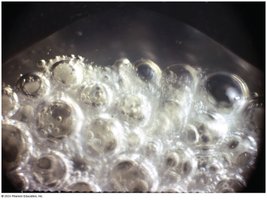
Singlet oxygen: Highly reactive, damages cells.
Superoxide radicals: Removed by superoxide dismutase (SOD):
Peroxide anion: Removed by catalase: and by peroxidase:
Hydroxyl radical: Most reactive, causes severe cellular damage.
Biofilms
Structure and Function
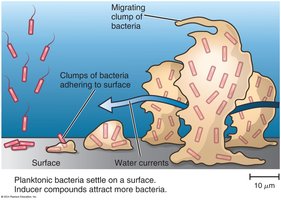
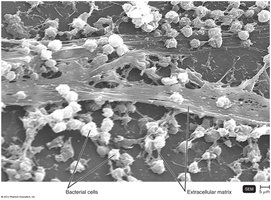
Biofilms are microbial communities that form slime or hydrogels adhering to surfaces.
Cells communicate via quorum sensing, secreting inducers to attract others.
Biofilms share nutrients and provide protection from environmental threats.
Medical and Environmental Importance
Biofilms are found in natural and artificial environments (e.g., digestive system, sewage, catheters).
They are highly resistant to microbicides and are implicated in 70% of infections.
Culture Media and Techniques
Types of Culture Media
Chemically defined media: Exact chemical composition is known; used for fastidious organisms.
Complex media: Contains extracts/digests of natural products; composition varies.
Agar: Solidifying agent, not metabolized by most microbes; liquefies at ~100°C, solidifies at ~40°C.
Anaerobic Growth Methods
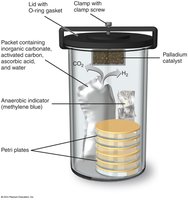
Reducing media: Contains chemicals (e.g., sodium thioglycolate) to remove O2.
Anaerobic jars: Used to cultivate anaerobes by generating an oxygen-free environment.
Special Culture Techniques
Some microbes require living hosts (e.g., Mycobacterium leprae in armadillos, Rickettsia in tissue culture).
Capnophiles require elevated CO2 levels, provided by CO2-generating packets or candle jars.
Selective and Differential Media
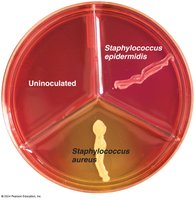
Selective media: Suppress unwanted microbes, encourage desired ones (e.g., bismuth sulfite agar for Salmonella typhi).
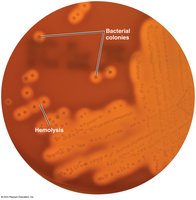
Differential media: Distinguish colonies based on metabolic differences (e.g., blood agar for hemolysis).
Some media are both selective and differential (e.g., mannitol salt agar).
Enrichment Culture
Used to increase the numbers of a desired microbe to detectable levels, often from environmental samples.
Biosafety Levels
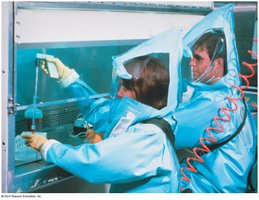
BSL-1: Basic teaching labs; no special precautions.
BSL-2: Lab coat, gloves, eye protection.
BSL-3: Biosafety cabinets, negative pressure, air filtration; for airborne pathogens.
BSL-4: Sealed, negative pressure, "space suits"; for highly dangerous pathogens.
Obtaining Pure Cultures
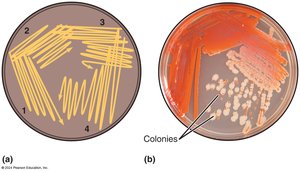
A pure culture contains only one species or strain.
A colony arises from a single cell or group of attached cells (colony-forming unit, CFU).
The streak plate method is used to isolate pure cultures.
Bacterial Division and Growth
Mechanisms of Division
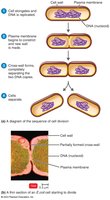
Binary fission: Most common method; cell divides into two identical daughter cells.
Budding, conidiospores, fragmentation: Alternative methods in some bacteria.
Generation Time and Growth Curves
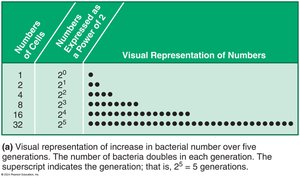
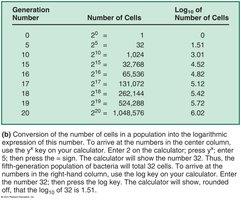
Generation time: Time required for a cell to divide; varies from 20 minutes to 24 hours.
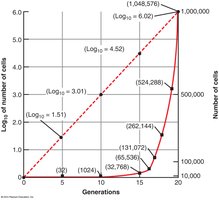
Population doubles each generation:
Growth is often plotted logarithmically for clarity.
Phases of Bacterial Growth
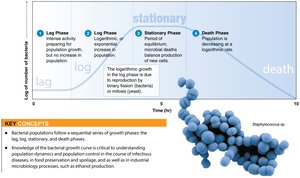
Lag phase: Little or no cell division; metabolic activity high.
Log (exponential) phase: Rapid cell division; population increases logarithmically.
Stationary phase: Growth rate slows; deaths balance new cells; nutrients deplete, wastes accumulate.
Death phase: Deaths exceed new cells; population declines logarithmically.
Measurement of Microbial Growth
Direct Measurement Methods
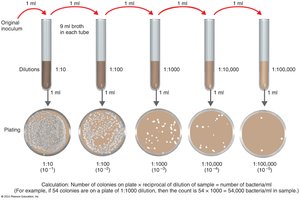
Plate count: Counts colonies (CFUs) on agar plates; requires serial dilution for accuracy.
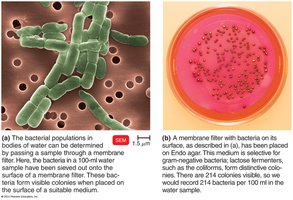
Filtration: Used for small numbers of bacteria in large volumes; bacteria are trapped on a filter and transferred to agar.
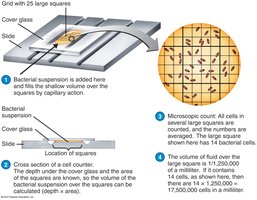
Direct microscopic count: Uses a cell counter (e.g., Petroff-Hausser chamber) to count cells in a defined volume.
Indirect Measurement Methods
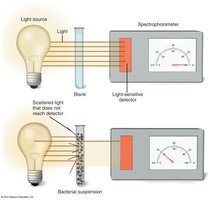
Turbidity: Measures cloudiness of a culture with a spectrophotometer; more turbid = more cells.
Metabolic activity: Measures products of metabolism (e.g., acid, CO2) as a proxy for cell number.
Dry weight: Cells are filtered, dried, and weighed; useful for filamentous organisms.