 Back
BackMicrobial Growth: Physical and Chemical Requirements, Culture Methods, and Measurement
Study Guide - Smart Notes
 Tailored notes based on your materials, expanded with key definitions, examples, and context.
Microbial Growth
Definition and Overview
Microbial growth refers to the increase in the number of cells, not the size of individual cells. Bacteria typically reproduce by binary fission, a process resulting in exponential population growth under optimal conditions.
Physical Requirements for Microbial Growth
Temperature
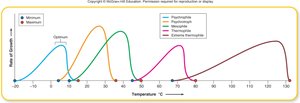
Microbes are classified into five groups based on their optimal temperature range. Temperature affects enzyme activity and cellular processes, thus influencing microbial survival and reproduction.
Psychrophiles: Grow best at 0–15°C; found in cold environments.
Psychrotrophs: Grow at 0–30°C; responsible for low-temperature food spoilage.
Mesophiles: Grow at 20–45°C; most common spoilage and disease organisms.
Thermophiles: Grow at 50–60°C; found in hot springs and compost heaps.
Hyperthermophiles: Grow at 80°C and above; found in extreme environments like hydrothermal vents.
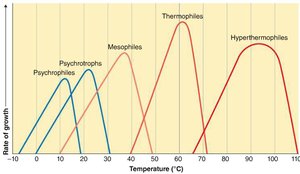
Below minimum growth temperature, microbial activity is limited due to decreased enzyme activity, often resulting in dormancy. Above maximum growth temperature, enzymes and nucleic acids denature, leading to cell death.
pH
Most bacteria are neutrophiles, growing best between pH 6.5 and 7.5. Acidophiles thrive at pH 1–5. Some neutrophiles, such as Helicobacter pylori, can colonize acidic environments like the stomach.
Osmotic Pressure
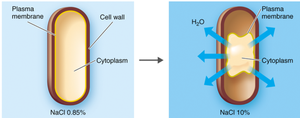
Most bacteria require isotonic or slightly hypotonic environments. Some, called halophiles, thrive in high-salt conditions:
Obligate halophiles: Require high salt for growth.
Facultative halophiles: Tolerate up to 2% salt.
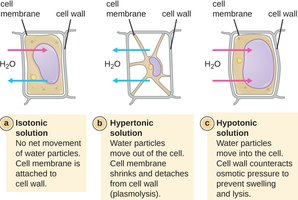
Bacteria not tolerant to salt undergo plasmolysis in hypertonic environments, where water leaves the cell, causing shrinkage and detachment of the plasma membrane from the cell wall.
Chemical Requirements for Microbial Growth
Major Elements: C, N, S, P
Carbon: Essential for all organic molecules; chemoheterotrophs use organic molecules (e.g., glucose) for both energy and carbon.
Nitrogen: Needed for amino acids, proteins, nucleotides (ATP, RNA, DNA).
Sulfur: Required for some amino acids, vitamins (thiamine, biotin).
Phosphorus: Needed for nucleic acids, ATP, and phospholipids in cell membranes.
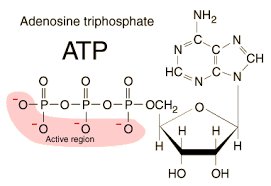
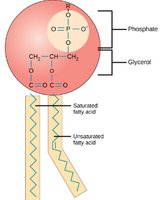
Other elements such as potassium, magnesium, calcium, and trace elements serve as enzyme cofactors.
Oxygen and Microbial Growth
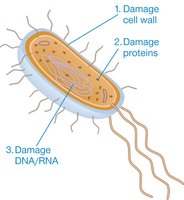
Oxygen requirements vary among microbes. Oxygen can be toxic due to the formation of reactive oxygen species (ROS), which damage lipids, DNA, and proteins.
Obligate aerobes: Require oxygen for growth.
Facultative anaerobes: Grow with or without oxygen but better with it.
Obligate anaerobes: Cannot tolerate oxygen.
Aerotolerant anaerobes: Do not use oxygen but can tolerate it.
Microaerophiles: Require low oxygen concentrations.
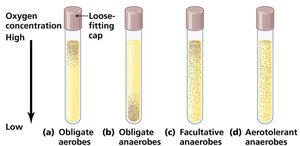
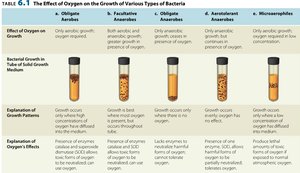
Enzymatic Detoxification of Oxygen
Microbes that use or tolerate oxygen produce enzymes to neutralize toxic forms:
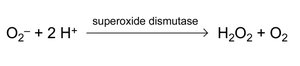
Superoxide dismutase (SOD): Converts superoxide radicals to hydrogen peroxide and oxygen.
Catalase: Converts hydrogen peroxide to water and oxygen.
Peroxidase: Converts hydrogen peroxide to water without producing oxygen.
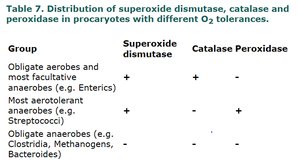
Group | Superoxide dismutase | Catalase/Peroxidase |
|---|---|---|
Obligate aerobes & most facultative anaerobes | + | + |
Most aerotolerant anaerobes | + | - |
Obligate anaerobes | - | - |
Biofilms
Formation and Significance
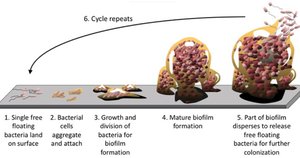
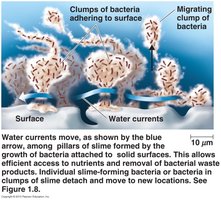
Biofilms are structured microbial communities attached to surfaces and embedded in a self-produced matrix. They begin with the attachment of planktonic cells, followed by aggregation, growth, and secretion of signaling molecules (inducers). Biofilms provide protection from environmental threats, facilitate nutrient sharing, and enhance genetic exchange.
Biofilms are responsible for many chronic and healthcare-associated infections.
Bacteria in biofilms are more resistant to disinfectants, antibiotics, and host immune responses.
Culturing Microorganisms
The Five I's
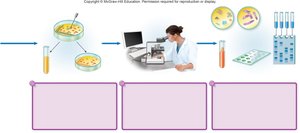
Microbiologists use a systematic approach to culture and identify microbes:
Inoculation: Introduction of microbes into culture media.
Incubation: Providing optimal growth conditions.
Isolation: Separating individual species.
Inspection: Observing colony and cell morphology.
Identification: Using biochemical, genetic, and immunological tests.
Culture Media
Culture media provide nutrients for microbial growth and must be sterile before inoculation. Agar is a common solidifying agent, not metabolized by most microbes, liquefying at 100°C and solidifying at ~40°C.
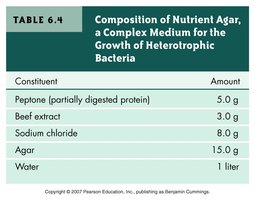
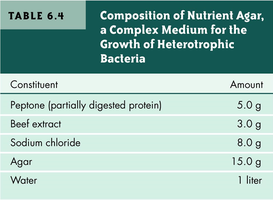
Constituent | Amount |
|---|---|
Peptone (partially digested protein) | 5.0 g |
Beef extract | 3.0 g |
Sodium chloride | 8.0 g |
Agar | 15.0 g |
Water | 1 liter |
Types of Media
Chemically defined media: Exact chemical composition is known; used for research.
Complex media: Contains extracts and digests of natural products; composition varies.
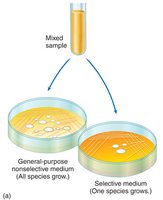
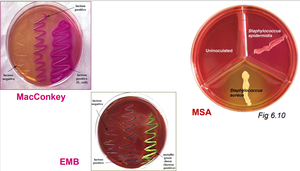
Selective media: Suppress unwanted microbes and encourage desired ones (e.g., EMB, mannitol salt agar).
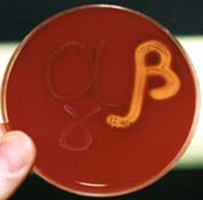
Differential media: Distinguish colonies based on metabolic reactions (e.g., MacConkey agar, blood agar).
Special Culture Techniques
Reducing media: Contain chemicals that remove oxygen for culturing obligate anaerobes.
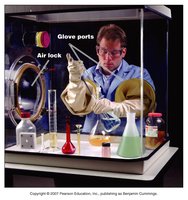
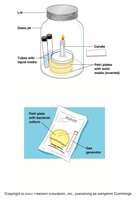
Anaerobic jars and chambers: Create oxygen-free environments for anaerobic growth.
Candle jars and CO2 incubators: Used for capnophiles, which require high CO2 and low O2.

Isolation and Preservation of Pure Cultures
Pure cultures contain only one species or strain. The streak-plate method is commonly used for isolation. Colony-forming units (CFUs) refer to populations arising from a single cell or group of attached cells. Long-term preservation methods include refrigeration, deep-freezing, and lyophilization (freeze-drying).
Bacterial Growth and Measurement
Binary Fission and Generation Time
Bacteria reproduce asexually by binary fission, leading to exponential growth. Generation time is the time required for a cell to divide, ranging from 20 minutes (e.g., E. coli) to over 24 hours (e.g., Mycobacterium tuberculosis).
Bacterial Growth Curve
The bacterial growth curve consists of four phases:
Lag phase: Little or no cell division; cells adjust to environment.
Log (exponential) phase: Maximum rate of cell division.
Stationary phase: Rate of cell division equals rate of cell death.
Death phase: More cells die than are produced; some remain dormant.
Measuring Microbial Growth
Direct Methods
Viable cell counts: Plate counts using serial dilutions and spread plate technique; countable plates have 25–250 colonies (USDA) or 30–300 (microbiologists).
Direct microscopic count: Counting cells using a microscope and special slides; no incubation required.
Filtration: Used for low cell numbers; cells are trapped on a filter and then cultured.
Indirect Methods
Spectrophotometry: Measures turbidity (optical density/absorbance) as a function of cell number.
Identification of Microbes
Microbes are identified by their microscopic and macroscopic morphology, biochemical tests (e.g., enzyme presence), and genetic/immunological methods (e.g., PCR, ELISA).
Additional info: These notes integrate foundational concepts from Chapter 6 of a standard microbiology textbook, covering all major physical and chemical requirements for microbial growth, culture techniques, and measurement methods, as outlined in the provided learning objectives.
