 Back
Back(Chapter 6) Microbial Growth: Physical and Chemical Requirements, Culture Methods, and Growth Measurement
Study Guide - Smart Notes
 Tailored notes based on your materials, expanded with key definitions, examples, and context.
Microbial Growth
Physical Requirements for Microbial Growth
Microbial growth is influenced by several physical factors, including temperature, pH, and osmotic pressure. Each microorganism has specific requirements for these factors, which determine its optimal growth conditions.
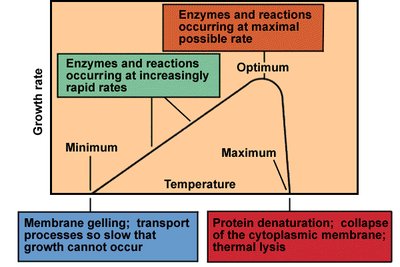
Temperature: Microorganisms exhibit distinct minimum, optimum, and maximum growth temperatures. Below the minimum, membrane gelling inhibits transport; above the maximum, protein denaturation and membrane collapse occur.
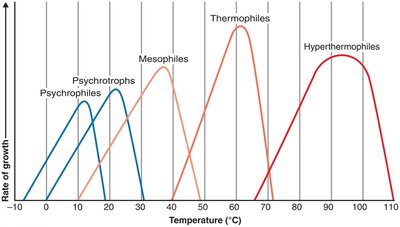
Temperature Ranges: Microbes are classified based on their preferred temperature ranges:
Psychrophiles: Grow at 0°C, optimum at 15°C; found in deep oceans and polar regions.
Psychrotrophs: Grow at 0°C, optimum 20–30°C; responsible for food spoilage in refrigerators.
Mesophiles: Optimum 25–40°C; includes most human pathogens.
Thermophiles: Optimum 50–60°C; found in hot springs and compost piles.
Hyperthermophiles: Optimum >80°C; inhabit extreme environments.
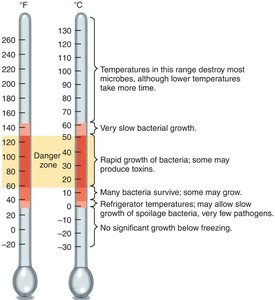
Food Safety: The 'danger zone' (20–50°C) allows rapid bacterial growth and toxin production, while refrigeration slows growth but does not eliminate all bacteria.
pH: Most bacteria grow best between pH 6.5 and 7.5. Molds and yeasts prefer slightly acidic conditions (pH 5–6). Acidophiles thrive in acidic environments.
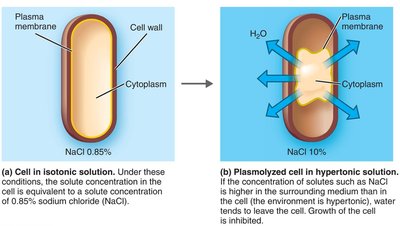
Osmotic Pressure: Hypertonic environments cause plasmolysis, inhibiting growth. Halophiles require or tolerate high salt concentrations.
Chemical Requirements for Microbial Growth
Microorganisms require various chemical elements for growth, including carbon, nitrogen, sulfur, phosphorus, trace elements, and organic growth factors.
Carbon: Backbone of organic molecules. Chemoheterotrophs use organic carbon; autotrophs use CO2.
Nitrogen: Needed for proteins, DNA, and ATP. Sources include protein decomposition, NH4+, NO3-, and nitrogen fixation.
Sulfur: Found in amino acids and vitamins; sourced from proteins, SO42-, or H2S.
Phosphorus: Essential for nucleic acids, ATP, and membranes; supplied as PO43-.
Trace Elements: Inorganic elements (e.g., iron, copper, zinc) required in small amounts as enzyme cofactors.
Organic Growth Factors: Compounds such as vitamins, amino acids, purines, and pyrimidines that must be obtained from the environment.
Oxygen Requirements and Toxicity
Microorganisms vary in their oxygen requirements and tolerance. Oxygen can be toxic due to reactive oxygen species, but some microbes possess enzymes to detoxify these forms.
Obligate aerobes: Require oxygen for growth.
Facultative anaerobes: Grow with or without oxygen; use fermentation or anaerobic respiration when oxygen is absent.
Anaerobes: Cannot use and are often harmed by oxygen.
Aerotolerant anaerobes: Tolerate but do not use oxygen.
Microaerophiles: Require low oxygen concentrations.
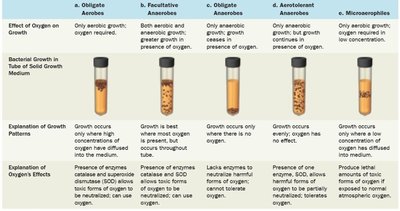
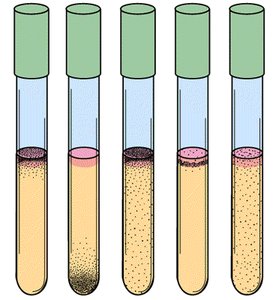
Toxic Forms of Oxygen: Include singlet oxygen, superoxide radicals, peroxide anion, and hydroxyl radical. Enzymes such as superoxide dismutase (SOD), catalase, and peroxidase neutralize these toxins.
Biofilms
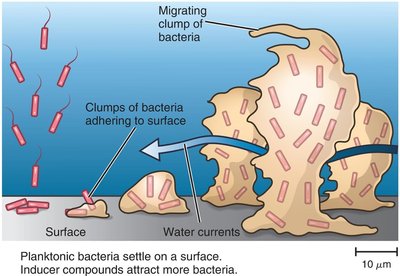
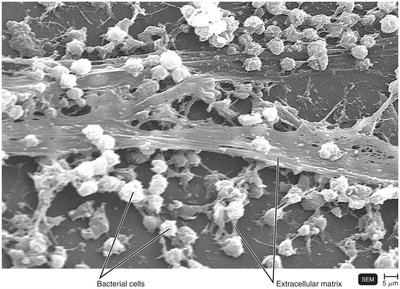
Biofilms are complex microbial communities that adhere to surfaces and are embedded in a self-produced matrix. They communicate via quorum sensing and are highly resistant to antimicrobial agents.
Formation: Planktonic bacteria settle, adhere, and attract others via signaling molecules.
Significance: Biofilms are found in natural, industrial, and clinical settings, contributing to persistent infections and equipment fouling.
Culture Media and Techniques
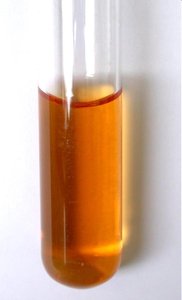
Microbes are grown in culture media that provide necessary nutrients. Media can be chemically defined or complex, and may be selective, differential, or enrichment types.
Chemically Defined Media: Exact composition is known; used for fastidious organisms.
Complex Media: Contains extracts of yeast, meat, or plants; composition varies.
Agar: A solidifying agent not metabolized by most microbes; used in Petri plates, slants, and deeps.
Selective Media: Suppress unwanted microbes and encourage desired ones.
Differential Media: Distinguish between different microbes based on colony appearance or biochemical reactions.
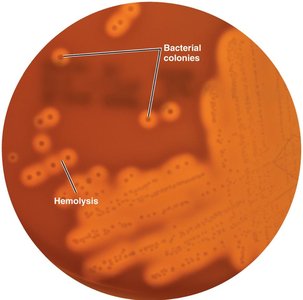
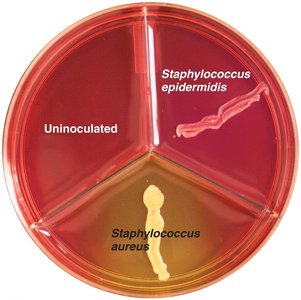
Enrichment Culture: Favors the growth of a particular microbe in low abundance.
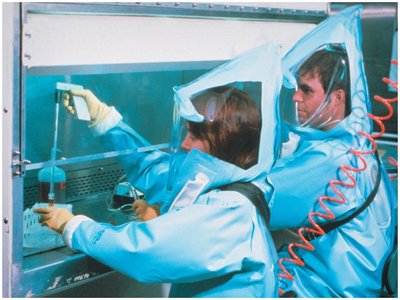
Biosafety Levels (BSL): Laboratory safety protocols range from BSL-1 (basic) to BSL-4 (maximum containment for dangerous pathogens).
Obtaining Pure Cultures
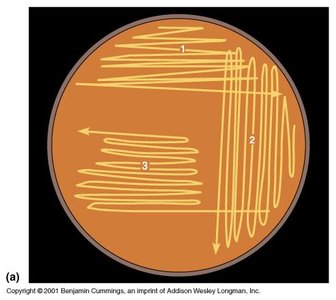
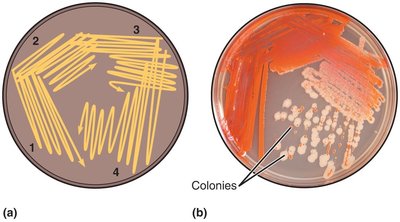
A pure culture contains only one microbial species. The streak plate method is commonly used to isolate pure colonies from a mixed sample.
Colony: A visible mass of microbial cells arising from a single cell or group.
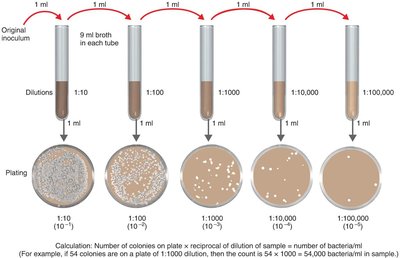
Colony-Forming Unit (CFU): The unit used to estimate the number of viable bacteria or fungal cells in a sample.
Bacterial Division and Growth
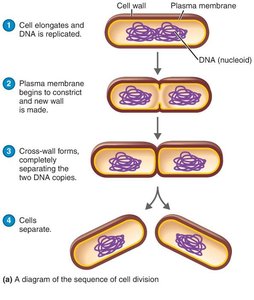
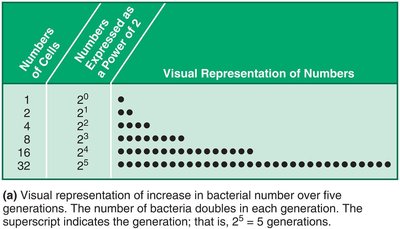
Bacteria reproduce primarily by binary fission, resulting in exponential population growth. Generation time is the time required for a cell to divide.
Binary Fission: The process by which a bacterial cell divides into two identical daughter cells.
Generation Time: Time required for the population to double; varies by species and conditions (e.g., E. coli divides every 20 minutes).
Phases of Microbial Growth
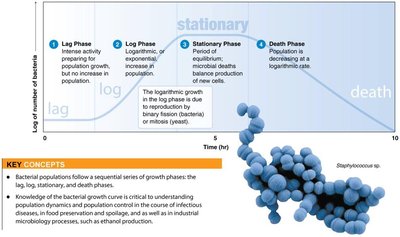
Bacterial populations in batch culture exhibit four distinct growth phases: lag, log (exponential), stationary, and death.
Lag Phase: Cells adapt to new environment; little or no cell division.
Log Phase: Rapid, exponential cell division; cells are most metabolically active and sensitive to adverse conditions.
Stationary Phase: Growth rate slows; nutrient depletion and waste accumulation balance cell division and death.
Death Phase: Cell deaths exceed new cell formation; population declines logarithmically.
Measuring Microbial Growth
Microbial growth can be measured directly by counting cells or indirectly by assessing turbidity or metabolic activity.
Direct Methods: Plate counts (CFUs), serial dilutions, and microscopic counts.
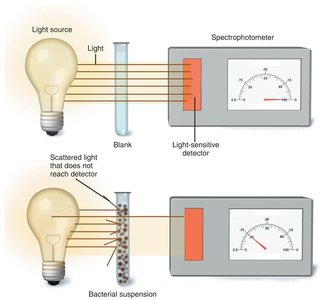
Indirect Methods: Turbidity measurement using a spectrophotometer, metabolic activity assays, and dry weight determination.
Additional info: Accurate measurement of microbial growth is essential for research, clinical diagnostics, and industrial microbiology applications.
