 Back
BackMicrobial Growth: Physical and Chemical Requirements, Culturing, and Measurement
Study Guide - Smart Notes
 Tailored notes based on your materials, expanded with key definitions, examples, and context.
Microbial Growth
Definition and Overview
Microbial growth refers to the increase in the number of cells, not cell size. Most bacteria reproduce by binary fission, resulting in exponential population growth under optimal conditions.
Binary fission: Asexual reproduction where a single cell divides into two identical daughter cells.
Budding: A less common method where a new cell develops from a parent cell.
Generation time: The time required for a cell to divide; varies from 20 minutes (e.g., E. coli) to over 24 hours (e.g., Mycobacterium tuberculosis).
Physical Requirements for Growth
Temperature
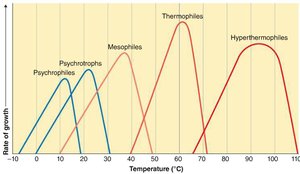
Temperature is a critical factor influencing microbial growth. Microbes are classified into five groups based on their optimal temperature range:
Psychrophiles: Grow best at 10–20°C; found in cold environments.
Psychrotrophs: Grow at 0–30°C; responsible for low-temperature food spoilage.
Mesophiles: Grow at 25–40°C; most common spoilage and disease organisms.
Thermophiles: Grow at 50–60°C; found in hot environments.
Hyperthermophiles: Grow at 80–110°C; found in extreme heat, such as hydrothermal vents.
pH
Most bacteria (neutrophiles) grow best between pH 6.5 and 7.5. Some bacteria, called acidophiles, prefer acidic environments (pH 1–5).
Neutrophiles: Optimal growth at neutral pH.
Acidophiles: Thrive in acidic conditions.
Example: Helicobacter pylori colonizes the stomach (low pH) but is a neutrophile.
Osmotic Pressure
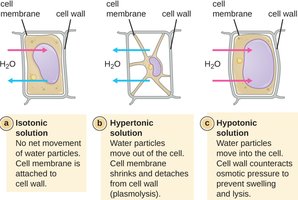
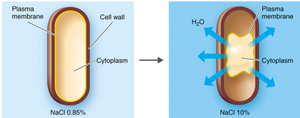
Osmotic pressure affects microbial growth by controlling water movement across cell membranes.
Isotonic environment: No net movement of water; optimal for most bacteria.
Hypertonic environment: Water leaves the cell, causing plasmolysis and inhibiting growth.
Hypotonic environment: Water enters the cell; cell wall prevents lysis.
Halophiles: Require high salt concentrations for growth.
Facultative halophiles: Tolerate salt concentrations up to 2%.
Chemical Requirements for Growth
Major Elements
Microbes require several elements in large amounts for growth:
Carbon: Essential for all organic molecules; chemoheterotrophs use organic carbon sources (e.g., glucose).
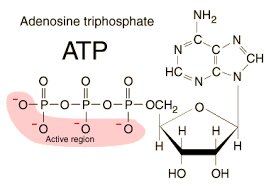
Nitrogen: Needed for amino acids, proteins, nucleotides (ATP, RNA, DNA).
Sulfur: Required for amino acids, vitamins (thiamine, biotin).
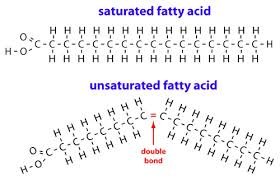
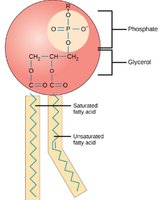
Phosphorus: Needed for nucleic acids, ATP, and phospholipids in cell membranes.
Potassium, Magnesium, Calcium: Serve as cofactors for enzymes.
Gases: Oxygen and Carbon Dioxide
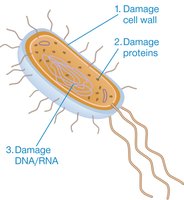
Oxygen is a major factor influencing microbial growth. Its presence can lead to the formation of toxic reactive oxygen species (ROS), which damage cellular components.
Aerobic respiration: Oxygen is the final electron acceptor in the electron transport chain.
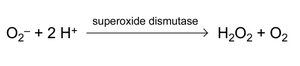
Reactive oxygen species: Include superoxide anion, hydrogen peroxide, hydroxyl radical.
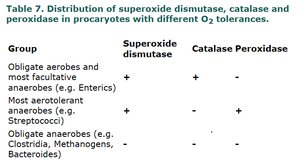
Enzymes for detoxification: Superoxide dismutase, catalase, and peroxidase neutralize toxic by-products.


Classification by Oxygen Requirements
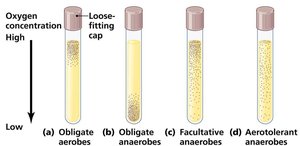
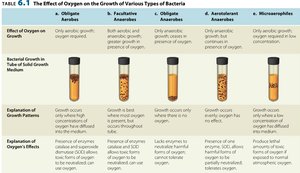
Microbes are classified based on their oxygen requirements:
Obligate aerobes: Require oxygen for growth.
Obligate anaerobes: Cannot tolerate oxygen; lack detoxifying enzymes.
Facultative anaerobes: Can grow with or without oxygen; grow better with oxygen.
Aerotolerant anaerobes: Do not use oxygen but can detoxify it.
Microaerophiles: Require oxygen at lower concentrations than atmospheric levels.
Group | Superoxide Dismutase | Catalase/Peroxidase |
|---|---|---|
Obligate aerobes & most facultative anaerobes | + | + |
Aerotolerant anaerobes | + | - |
Obligate anaerobes | - | - |
Biofilms
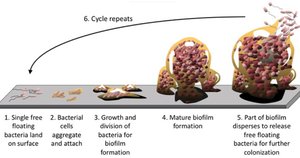
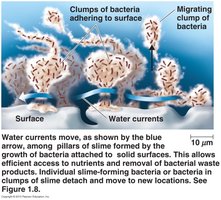
Biofilms are complex microbial communities attached to surfaces and encased in a self-produced matrix. They provide protection from environmental threats and facilitate nutrient sharing.
Formation: Begins with attachment of planktonic cells, followed by aggregation and secretion of extracellular polymeric substances.
Advantages: Protection from disinfectants, antibiotics, and host immune system; enhanced DNA transfer.
Clinical relevance: Cause of many chronic and nosocomial infections.
Culturing Microorganisms
The Five I's of Microbiology
Culturing microorganisms involves five key steps:
Inoculation: Introduction of microbes into culture medium.
Incubation: Providing optimal conditions for growth.
Isolation: Separating individual species.
Inspection: Observing colony and cell morphology.
Identification: Determining species using biochemical, genetic, and immunologic tests.

Culture Media
Culture media provide nutrients for microbial growth and can be classified as:
Chemically defined media: Exact chemical composition is known; used for research.
Complex media: Contains extracts and digests of meat, plants, or yeast; composition varies.
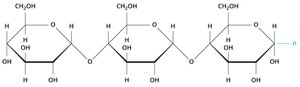
Agar: A polysaccharide used as a solidifying agent; not metabolized by microbes.
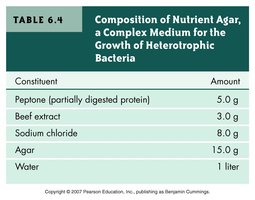
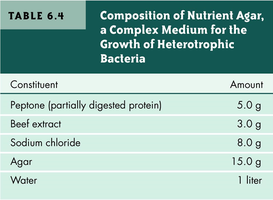
Constituent | Amount |
|---|---|
Peptone (partially digested protein) | 5.0 g |
Beef extract | 3.0 g |
Sodium chloride | 8.0 g |
Agar | 15.0 g |
Water | 1 liter |
Culture Methods for Obligate Anaerobes
Obligate anaerobes require special techniques to exclude oxygen:
Reducing media: Contains chemicals (e.g., thioglycolate) that remove oxygen.
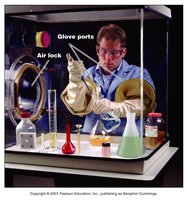
Anaerobic jars and chambers: Used for culturing anaerobes.
OxyPlate: Growth media with oxyrase to remove oxygen.

Capnophiles
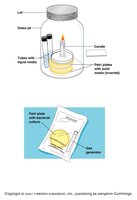
Capnophiles are bacteria that grow better in high CO2 and low O2 environments, such as the intestinal and respiratory tracts.
Examples: Campylobacter jejuni, a common cause of foodborne infection.
Methods: Candle jars, CO2-generator packets, CO2 incubators.

Selective and Differential Media
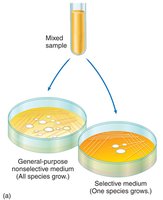
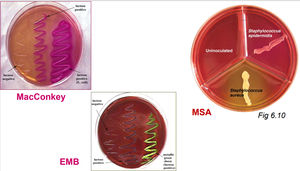
Selective media: Suppress growth of unwanted microbes and encourage desired microbes (e.g., EMB, mannitol salt agar).
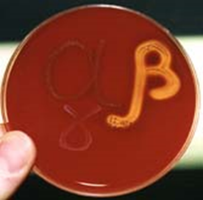
Differential media: Allow differentiation of colonies based on biochemical reactions (e.g., MacConkey agar, blood agar).
Examples: MacConkey and EMB select for Gram-negative bacteria and differentiate lactose fermenters; MSA selects for Staphylococci and differentiates mannitol fermenters.
Isolation of Pure Cultures
Pure cultures contain only one species or strain. The streak-plate method is commonly used for isolation.
Colony: A population of cells arising from a single cell or group of identical cells (colony forming units, CFU).
Aseptic technique: Critical for preventing contamination.
Preserving Bacterial Cultures
Refrigeration: Short-term storage.
Deep-freezing: Rapid cooling to –50° to –95°C; preserves cultures for years.
Lyophilization: Freeze-drying; cultures are frozen and dehydrated in a vacuum for long-term storage.
Measurement of Microbial Growth
Bacterial Growth Curve
The bacterial growth curve illustrates the dynamics of population growth:
Lag phase: Little to no growth; cells prepare for division.
Log phase: Maximum rate of cell division.
Stationary phase: Rate of cell division equals rate of cell death.
Death phase: More cells die than are formed; some remain dormant.
Direct Methods
Viable cell counts: Plate counts using serial dilutions and spread plate technique; count plates with 25–250 colonies.
Direct microscopic count: Counting chambers for microscope; no incubation required.
Filtration: Used for low cell counts (e.g., water samples).
Indirect Methods
Spectrophotometry: Measures turbidity; optical density (OD) correlates with cell number.
Inspection and Identification
Microscopic appearance: Cell morphology.
Macroscopic morphology: Colony appearance.
Biochemical testing: Presence of specific enzymes.
Genetic and immunologic testing: PCR, ELISA.
Additional info: Academic context was added to clarify definitions, examples, and applications for each topic. Tables were recreated and expanded for clarity. Only images directly relevant to the explanation were included.
