 Back
slides #6 - Microbial Growth: Principles, Environmental Factors, and Survival Strategies
Study Guide - Smart Notes
 Tailored notes based on your materials, expanded with key definitions, examples, and context.
slides 6 - Microbial Growth
Introduction to Microbial Growth
Microbial growth refers to the increase in the number of cells in a population, primarily through the process of binary fission. Understanding microbial growth is essential for microbiology, as it underpins infection, biotechnology, and environmental microbiology. The ability of microbes to thrive in diverse environments is due to their physiological and genetic adaptations.
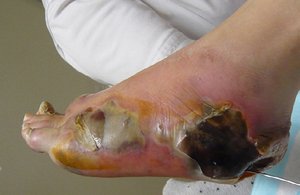
Gas Gangrene and Anaerobic Growth
Gas gangrene is a severe infection caused by Clostridium perfringens, a strict anaerobe. Dead tissue in diabetic ulcers provides an ideal anaerobic environment for this bacterium, leading to rapid tissue destruction and gas production.
Bacterial Growth Curve
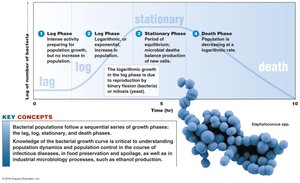
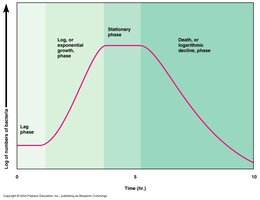
The bacterial growth curve in a closed system (batch culture) consists of four distinct phases, each reflecting changes in cell number and physiology over time:
Lag Phase: Cells adapt to new conditions, synthesize enzymes, and repair damage. No significant increase in cell number occurs.
Log (Exponential) Phase: Cells divide at a constant, maximum rate. Population increases exponentially, and cells are most sensitive to antibiotics targeting cell wall or protein synthesis.
Stationary Phase: Nutrient depletion and waste accumulation halt net population growth. Cell division rate equals cell death rate. Stress responses and sporulation may occur.
Death (Decline) Phase: Viable cell numbers decrease, often exponentially. Some cells may persist as dormant forms (persisters or VBNC).
Binary Fission and Cell Division
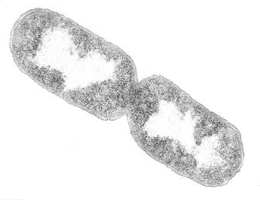
Bacteria reproduce primarily by binary fission, a process involving cell growth, DNA replication, and division into two genetically identical daughter cells.
Steps in Binary Fission: Cell growth, DNA duplication, DNA separation, septum formation, and cell division.
Mathematics of Growth: Generation Time, Growth Rate, and Growth Yield
Microbial growth can be quantified using several parameters:
Generation Time (Doubling Time): The time required for a population to double in number. It varies by species and environmental conditions.
Growth Rate: The number of doublings per hour, reflecting the speed of population increase during log phase.
Growth Yield: The maximum population size achieved, determined by nutrient availability and environmental factors.
Effects of Antimicrobials on Growth Phases
Antibiotics and enzymes affect bacteria differently depending on their growth phase and cell wall structure:
Penicillin: Inhibits peptidoglycan cross-linking, most effective during log phase when cells are actively dividing. Gram-positive bacteria are generally more susceptible due to exposed peptidoglycan.
Lysozyme: Cleaves β-1,4 bonds in peptidoglycan. Gram-positive bacteria are highly susceptible; Gram-negative bacteria are protected by their outer membrane.
Survival Strategies: Endospores, Persister Cells, and VBNC
Bacteria employ various strategies to survive harsh conditions:
Vegetative Cells: Metabolically active and dividing; sensitive to environmental stress.
Endospores: Dormant, highly resistant structures formed by Bacillus and Clostridium during nutrient depletion. Endospores withstand heat, UV, chemicals, and desiccation.
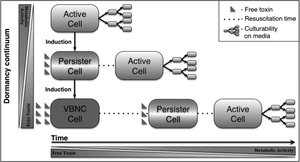
Persister Cells: Dormant variants of regular cells, tolerant to antibiotics but not genetically resistant. Can regrow when stress is removed.
VBNC (Viable But Nonculturable) Cells: Alive but unable to grow on standard media; may resuscitate under specific conditions. Important in clinical and environmental contexts.
Quorum Sensing
Quorum sensing is a cell-to-cell communication mechanism that allows bacteria to sense population density via autoinducers. When a threshold concentration is reached, gene expression changes collectively, coordinating behaviors such as biofilm formation, virulence, and bioluminescence.
Environmental Factors Affecting Growth
Microbial growth is influenced by temperature, pH, water activity, osmotic pressure, and radiation.
Temperature
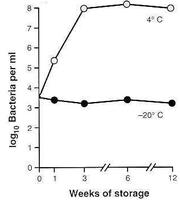
Psychrophiles: Grow best below 20°C; adapted to cold environments.
Mesophiles: Optimum 20–45°C; includes most human pathogens.
Thermophiles: Grow above 45°C; proteins and membranes adapted to heat.
Psychrotrophs: Grow at 0°C but optimum above 20°C; responsible for food spoilage in refrigeration.
pH
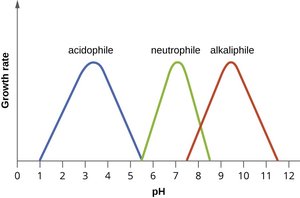
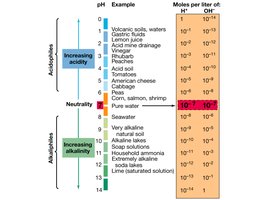
Acidophiles: Optimum pH 0–5.5; require acidic conditions.
Neutralophiles: Optimum pH 5.5–8.5; most bacteria, including pathogens.
Alkaliphiles: Optimum pH 8.5–11.5; thrive in basic environments.
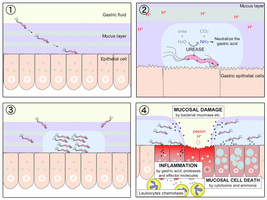
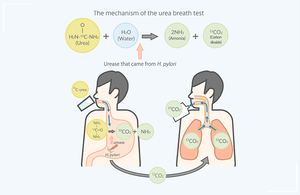
Adaptation to Acidic Environments: Helicobacter pylori
Helicobacter pylori survives stomach acidity by producing urease, which converts urea to ammonia and bicarbonate, neutralizing the local environment and allowing colonization of the gastric mucosa.
Water Activity and Osmotic Environment
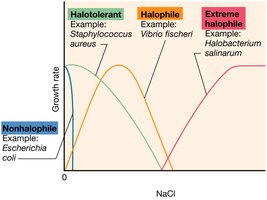
Water activity (aw) is crucial for microbial growth. Most bacteria require aw > 0.9. High solute concentrations (low aw) can inhibit growth by causing dehydration.
Halophiles: Require high salt concentrations; adapted to saline environments.
Halotolerant: Can tolerate high salt but do not require it.
Nonhalophiles: Grow best at low salt concentrations.
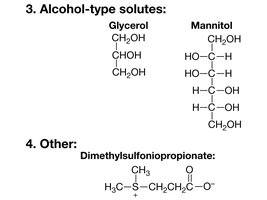
Compatible Solutes: Small molecules (e.g., proline, glycine betaine, trehalose) accumulated to balance osmotic pressure without disrupting cell function.
Oxygen Requirements and Toxicity
Obligate Aerobes: Require O2; possess catalase and superoxide dismutase (SOD) to detoxify reactive oxygen species (ROS).
Facultative Anaerobes: Grow with or without O2; use aerobic respiration when O2 is present.
Obligate Anaerobes: O2 is toxic; lack ROS detoxification enzymes.
Aerotolerant Anaerobes: Do not use O2 but tolerate it; have SOD and peroxidase.
Microaerophiles: Require low O2 levels; limited ROS defenses.
Radiation Resistance
Ionizing radiation causes DNA breaks; ultraviolet light induces DNA mutations. Some bacteria, such as Deinococcus radiodurans, are highly resistant due to efficient DNA repair systems and protective proteins (e.g., SASPs in endospores).
Key Vocabulary and Definitions
Binary Fission: Asexual reproduction in bacteria resulting in two identical daughter cells.
Generation Time: Time required for a population to double.
Lag Phase: Adaptation period with little or no cell division.
Log Phase: Period of maximum, constant cell division.
Stationary Phase: Equilibrium between cell division and death.
Death Phase: Decline in viable cell numbers.
Quorum Sensing: Cell-to-cell communication regulating group behaviors.
Persister Cells: Dormant cells tolerant to antibiotics.
VBNC Cells: Alive but nonculturable under standard conditions.
Endospores: Highly resistant, dormant structures formed by some bacteria.
SASPs: Small acid-soluble proteins protecting spore DNA.
Sporulation: Formation of endospores.
Germination: Return of endospore to vegetative state.
Psychrophile/Mesophile/Thermophile: Bacteria classified by temperature preference.
Acidophile/Neutralophile/Alkaliphile: Bacteria classified by pH preference.
Halophile/Halotolerant: Bacteria classified by salt tolerance.
Catalase/Peroxidase/SOD: Enzymes detoxifying reactive oxygen species.
