 Back
Microbial Growth: Requirements, Culture, and Measurement
Study Guide - Smart Notes
 Tailored notes based on your materials, expanded with key definitions, examples, and context.
Microbial Growth
Requirements for Microbial Growth
Microbial growth is influenced by both physical and chemical factors in the environment. Understanding these requirements is essential for culturing and controlling microorganisms.
Physical Requirements: Temperature, pH, and osmotic pressure.
Chemical Requirements: Carbon, nitrogen, sulfur, phosphorus, oxygen, trace elements, and organic growth factors.
Physical Requirements: Temperature
Microorganisms are classified based on their preferred temperature ranges, which affect their growth rates and ecological niches.
Psychrophiles: Cold-loving microbes, optimal growth at 15°C or lower.
Psychrotrophs: Grow at 0°C but have higher optimum temperatures (20–30°C); cause food spoilage.
Mesophiles: Moderate-temperature-loving microbes, optimal growth at 25–40°C; most common spoilage and disease organisms.
Thermophiles: Heat-loving microbes, optimal growth at 50–60°C; found in hot springs and compost.
Hyperthermophiles: Optimal growth above 80°C; often found in extreme environments.
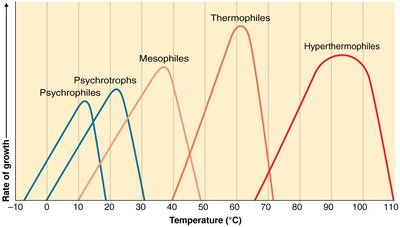
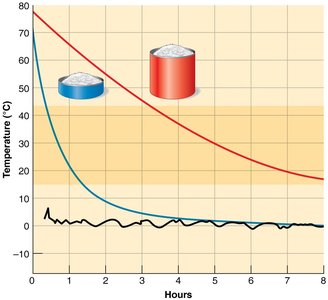
Minimum, optimum, and maximum growth temperatures define the range for each group. Food preservation relies on these principles to prevent microbial growth.
Physical Requirements: pH
Most bacteria grow best near neutral pH (6.5–7.5). Acid production during growth can inhibit further growth, so buffers are used in culture media to maintain optimal pH.
Buffers: Peptones, amino acids, and phosphate salts help stabilize pH.
Phosphate salts: Provide buffering and essential phosphorus.
Physical Requirements: Osmotic Pressure
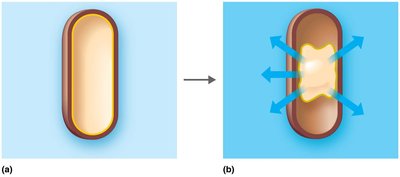
Osmotic pressure affects water movement across cell membranes. Most bacteria prefer isotonic environments, but hypertonic conditions cause plasmolysis and inhibit growth.
Isotonic solution: Solute concentration equal inside and outside the cell.
Hypertonic solution: Higher solute concentration outside; water leaves the cell, causing plasmolysis.
Chemical Requirements for Growth
Chemical nutrients are essential for microbial metabolism and cell structure.
Carbon: Backbone of organic molecules; chemoheterotrophs obtain carbon from organic sources.
Nitrogen: Needed for proteins, DNA, and ATP; obtained from protein decomposition, NH4+, NO3-, or nitrogen fixation.
Sulfur: Used in amino acids and vitamins; obtained from protein decomposition, SO42-, or H2S.
Phosphorus: Used in nucleic acids, ATP, and membranes; PO43- is a common source.
Trace Elements: Required in small amounts as enzyme cofactors (e.g., iron, copper, molybdenum, zinc).
Organic Growth Factors: Vitamins, amino acids, purines, and pyrimidines obtained from the environment.
Chemical Requirements: Oxygen
Oxygen is essential for some microbes but toxic for others. Microorganisms are classified based on their oxygen requirements and tolerance.
Obligate aerobes: Require oxygen for growth.
Facultative anaerobes: Can grow with or without oxygen, but grow better with oxygen.
Obligate anaerobes: Cannot tolerate oxygen; growth occurs only in its absence.
Aerotolerant anaerobes: Do not use oxygen but tolerate its presence.
Microaerophiles: Require oxygen at lower concentrations than atmospheric levels.
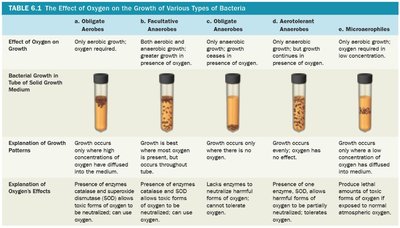
Enzymes such as superoxide dismutase (SOD), catalase, and peroxidase neutralize toxic forms of oxygen:
(SOD)
(catalase)
(peroxidase)
Biofilms
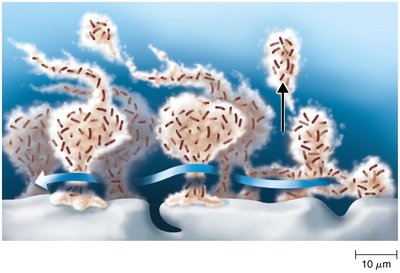
Biofilms are complex microbial communities that adhere to surfaces and are protected by a slime or hydrogel matrix. They facilitate nutrient sharing, shelter bacteria from environmental hazards, and are involved in many infections.
Quorum sensing: Cell-to-cell communication via signaling chemicals.
Resistance: Biofilms are up to 1000x more resistant to microbicides.
Medical relevance: Found on catheters, heart valves, contact lenses, and dental caries.
Culture Media
Types of Culture Media
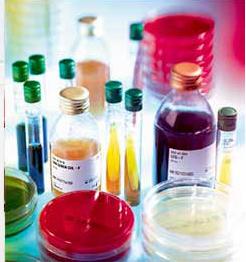
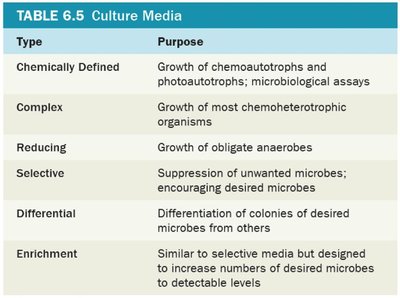
Culture media provide nutrients for microbial growth and are classified based on their composition and purpose.
Chemically defined media: Exact chemical composition is known; used for fastidious organisms.
Complex media: Contains extracts and digests of yeasts, meat, or plants; composition varies.
Reducing media: Used for cultivating anaerobic bacteria; contains chemicals to remove oxygen.
Selective media: Suppresses unwanted microbes and encourages desired ones.
Differential media: Distinguishes colonies of desired organisms from others.
Enrichment media: Similar to selective media but designed to increase numbers of desired microbes.
Agar as a Solidifying Agent
Agar is a complex polysaccharide used to solidify culture media. It is not metabolized by most microbes, liquefies at 100°C, and solidifies at ~40°C.
Examples of Media Composition
Different media are used for different microbial requirements.
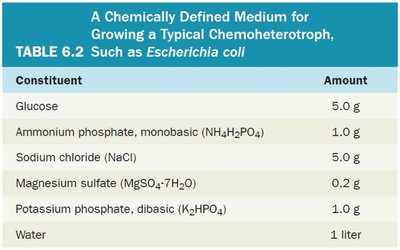
Chemically defined medium for Escherichia coli:
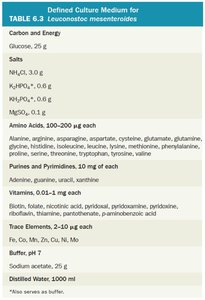
Defined culture medium for Leuconostoc mesenteroides:
Complex medium (nutrient agar):
Selective and Differential Media
Selective media inhibit unwanted microbes, while differential media distinguish between microbial species based on observable reactions.
Bismuth sulfite agar: Isolates Salmonella Typhi.
Sabouraud’s dextrose agar: Isolates fungi.
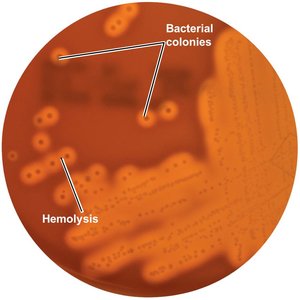
Blood agar: Identifies hemolytic bacteria.
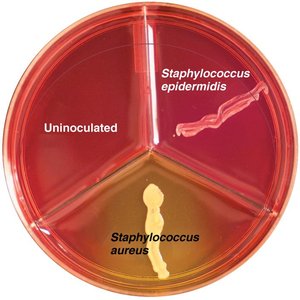
Mannitol salt agar: Selects for halophiles and differentiates Staphylococcus aureus from S. epidermidis.
Obtaining Pure Cultures
A pure culture contains only one species or strain. The streak plate method is commonly used to isolate pure cultures by spreading cells on an agar plate.
Colony-forming unit (CFU): A colony arises from a single cell or group of attached cells.
Dynamics of Microbial Growth
Bacterial Growth and Binary Fission
Bacterial growth refers to an increase in cell numbers, not cell size. Most bacteria reproduce by binary fission, a process in which one cell divides into two.
Generation time: Time required for a cell to divide and its population to double; varies by species and conditions.
Binary fission: Asexual reproduction; cell elongates, DNA replicates, cell wall and membrane constrict, cross-wall forms, cells separate.
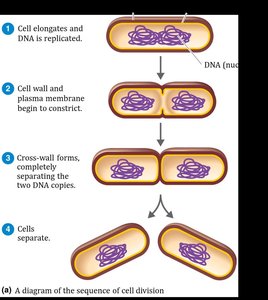
Growth is often represented on a logarithmic scale due to the rapid increase in cell numbers.
Bacterial Growth Curve
The bacterial growth curve describes population changes over time in a closed system. It consists of four phases:
Lag phase: Adaptation, no increase in cell number.
Log phase: Exponential growth.
Stationary phase: Growth rate slows, cell death equals cell division.
Death phase: Cell death exceeds cell division.
Measurement of Microbial Growth
Microbial populations are measured using direct and indirect methods.
Plate count: Most common method; measures viable cells.
Serial dilution: Used to ensure countable colony numbers.
Pour plate and spread plate methods: Techniques for plating bacteria.
Most Probable Number (MPN): Statistical estimation for samples where bacteria cannot grow on solid media.
Direct microscopic count: Uses a Petroff-Hausser cell counter to count cells in a known volume.
Formula for direct microscopic count:
