 Back
BackMicrobial Infection and Pathogenesis: Mechanisms, Virulence, and Host Interactions
Study Guide - Smart Notes
 Tailored notes based on your materials, expanded with key definitions, examples, and context.
Microbial Infection and Pathogenesis
Overview of Microbial Pathogenesis
Microbial pathogenesis refers to the process by which microorganisms cause disease in a host. This process involves several sequential steps, including exposure, adherence, invasion, multiplication, and the manifestation of disease through toxicity and invasiveness. Understanding these steps is crucial for comprehending how infections develop and progress.
Infection: The establishment and growth of a microorganism in a host.
Disease: The result of tissue or systemic damage caused by the infection process.
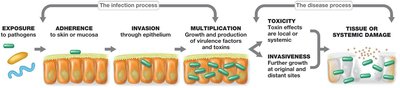
Adhesion: Bacterial Interactions with Mucous Membranes
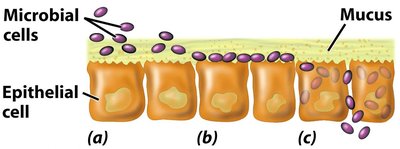
Adhesion is the initial step in microbial infection, where microbes attach to mucosal surfaces through specific interactions between microbial and host macromolecules. Mucous membranes are found throughout the body and serve as primary sites for microbial colonization.
Adhesion: The process by which microbes attach to host tissues, often mediated by specialized structures or molecules.
Biofilm formation: After adhesion, microbes may form biofilms, which are structured communities that enhance colonization and resistance to host defenses.
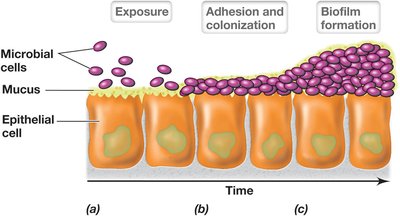
Mechanisms of Microbial Adherence
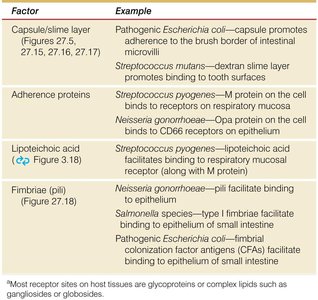
Microbial adherence is facilitated by various factors, including capsules, slime layers, adherence proteins, lipoteichoic acids, and fimbriae (pili). These structures enable pathogens to bind specifically to host cell receptors, promoting colonization and infection.
Factor | Example |
|---|---|
Capsule/slime layer | Escherichia coli (intestinal adherence), Streptococcus mutans (tooth surfaces) |
Adherence proteins | Streptococcus pyogenes M protein, Neisseria gonorrhoeae Opa protein |
Lipoteichoic acid | Streptococcus pyogenes (respiratory mucosa) |
Fimbriae (pili) | Neisseria gonorrhoeae, Salmonella spp., Escherichia coli |
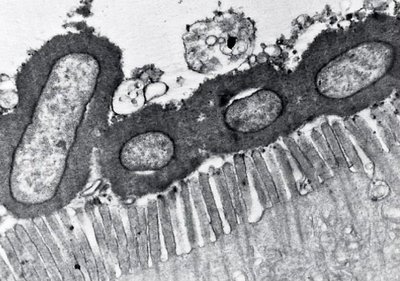
Microscopic View of Bacterial Adherence
Electron microscopy reveals the close association between bacterial cells and host epithelial surfaces, highlighting the importance of adherence in the infection process.
Colonization and Biofilm Development
Following adhesion, microbes may colonize the host surface and form biofilms. Biofilms provide protection from the host immune system and enhance microbial survival.
Colonization: Substantial microbial growth at the site of adherence.
Biofilm: A structured community of microbial cells enclosed in a self-produced polymeric matrix.
Invasion: Penetration of Host Tissues
Invasion is the process by which pathogens penetrate the epithelial barrier and enter deeper tissues. Successful invasion requires the pathogen to overcome host defenses and find suitable growth conditions.
Localized infection: Microbial growth remains at the site of invasion.
Systemic infection: Microorganisms spread throughout the body via blood or lymphatic systems, often resulting in more severe disease.
Tissue Specificity in Infectious Disease
Many pathogens exhibit tissue specificity, infecting particular cell types or tissues. This specificity is determined by the presence of appropriate receptors and environmental conditions in the host.
Disease | Tissue/Cell Type Infected | Pathogen |
|---|---|---|
AIDS | T-helper lymphocytes | HIV |
Botulism | Motor end plate | Clostridium botulinum |
Cholera | Small intestine epithelium | Vibrio cholerae |
Dental caries | Oral epithelium | Streptococcus mutans, etc. |
Diphtheria | Throat epithelium | Corynebacterium diphtheriae |
Gonorrhea | Mucosal epithelium | Neisseria gonorrhoeae |
Influenza | Respiratory epithelium | Influenza viruses |
Malaria | Blood (erythrocytes) | Plasmodium spp. |
Pyelonephritis | Kidney medulla | Proteus spp. |
Spontaneous abortion (cattle) | Placenta | Brucella abortus |
Tetanus | Inhibitory interneuron | Clostridium tetani |
Pathogens and Opportunistic Pathogens
A pathogen is any microorganism that causes disease. Some pathogens are highly virulent, while others only cause disease when the host's defenses are compromised (opportunistic pathogens).
Opportunistic pathogen: Causes disease only when host defenses are absent or compromised (e.g., Staphylococcus, Candida).
Microbial Virulence and LD50
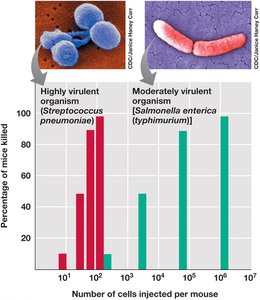
Virulence is the ability of a pathogen to cause disease. It is often measured by the LD50 (lethal dose 50), which is the number of cells required to kill 50% of a test population. Highly virulent organisms have a low LD50.
Virulence Factors
Virulence factors are molecules produced by pathogens that contribute to their ability to cause disease. These include adherence factors, cell surface structures, invasive factors, and toxins.
Adherence factors: Enable attachment to host cells (e.g., fimbriae, adhesins).
Cell surface structures: Help evade phagocytosis (e.g., capsules, binding to host proteins).
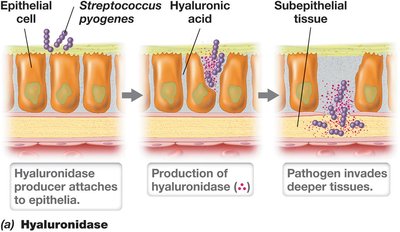
Invasive factors: Facilitate invasion of host tissues (e.g., hyaluronidase, coagulase, streptokinase).
Toxins: Cause direct damage to host cells (exotoxins, endotoxins).
Mechanisms of Invasion
Pathogens use various enzymes to invade host tissues. For example, Streptococcus pyogenes produces hyaluronidase, which breaks down hyaluronic acid in connective tissue, facilitating deeper tissue invasion. Staphylococcus aureus produces coagulase to form protective clots, while Streptococcus pyogenes produces streptokinase to dissolve clots and spread infection.
Toxins: Exotoxins and Endotoxins
Toxins are key virulence factors that damage host tissues. Exotoxins are secreted proteins with specific targets, while endotoxins are structural components of Gram-negative bacteria released upon cell death.
Exotoxins: Soluble proteins secreted by bacteria; include cytolytic toxins, A-B toxins, neurotoxins, enterotoxins, and superantigen toxins.
Endotoxins: Lipopolysaccharide (LPS) components of the outer membrane of Gram-negative bacteria; released during cell lysis.
Exotoxins: Types and Examples
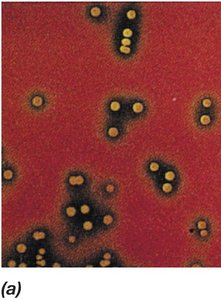
Cytolytic toxins: Cause cell lysis (e.g., streptococcal leukocidin, staphylococcal hemolysin).
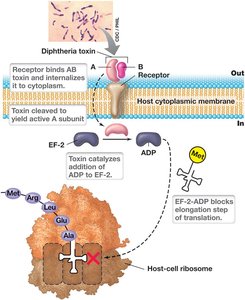
A-B toxins: Consist of two subunits; B binds to host cell, A causes damage (e.g., diphtheria toxin, cholera toxin, tetanus toxin, botulinum toxin).
Neurotoxins: Interfere with nerve transmission (e.g., tetanus and botulinum toxins).
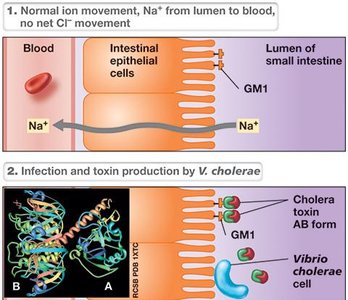
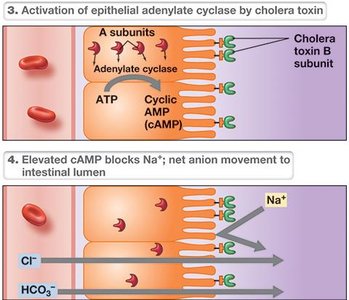
Enterotoxins: Affect the intestines, causing diarrhea (e.g., cholera toxin).
Superantigen toxins: Stimulate excessive immune responses (e.g., Staphylococcus aureus TSST-1).
Mechanism of Botulinum and Tetanus Toxins
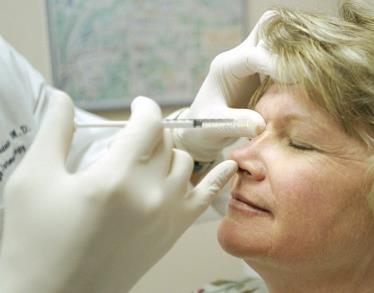
Botulinum toxin inhibits muscle contraction by blocking acetylcholine release, causing flaccid paralysis. Tetanus toxin prevents muscle relaxation by blocking inhibitory neurotransmitter release, causing spastic paralysis.
Mechanism of Diphtheria and Cholera Toxins
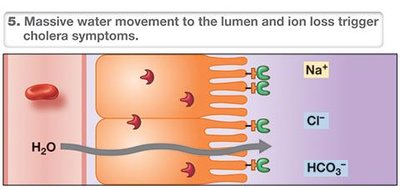
Diphtheria toxin inhibits protein synthesis in host cells, while cholera toxin increases cAMP in intestinal cells, leading to massive water loss and diarrhea.

Properties of Exotoxins and Endotoxins
Property | Exotoxins | Endotoxins |
|---|---|---|
Chemistry | Proteins, secreted by Gram-positive or Gram-negative bacteria; heat-labile | Lipopolysaccharide–lipoprotein complexes; heat-stable |
Mode of action | Specific; bind to specific cell receptors; cytotoxin, enterotoxin, or neurotoxin | General; fever, diarrhea, vomiting |
Toxicity | Highly toxic, sometimes fatal | Moderately toxic, rarely fatal |
Immune response | Highly immunogenic; stimulate antitoxin production | Poor immunogens |
Toxoid potential | Can be inactivated to form toxoids | None |
Fever potential | Nonpyrogenic | Pyrogenic |
Genetic origin | Often on plasmids or phages | Chromosomal genes |
Attenuation and Vaccine Development
Attenuation is the loss of virulence, often due to genetic mutations or nonoptimal growth conditions. Attenuated strains are used in vaccines to elicit immune responses without causing disease.
Genetically engineered attenuated strains are safe and effective for vaccine production.
Host Factors Affecting Susceptibility to Infection
Several host factors influence susceptibility to infection, including age, stress, diet, lifestyle, general health, and physical, chemical, and anatomical barriers.
Age: Very young and elderly are more susceptible.
Stress: High stress increases susceptibility.
Diet: Poor nutrition impairs immune function.
Lifestyle: Smoking, alcohol, and drug use increase risk.
General health: Sleep deprivation, concurrent diseases, and genetic conditions affect resistance.
Barriers: Skin, mucous membranes, and other anatomical features provide defense against infection.
