 Back
Microbial Infection, Disease, and Genetics: Core Concepts and Mechanisms
Study Guide - Smart Notes
 Tailored notes based on your materials, expanded with key definitions, examples, and context.
Infection, Disease, and Microbial Relationships
Definitions and Overview
Understanding the distinction between infection and disease is fundamental in microbiology. Infection refers to the colonization of the body by microbes, while disease occurs when this colonization leads to damage or harm, disrupting normal body functions. The human body is host to a vast number of microbes, collectively known as the normal microbiota, which typically do not cause disease under normal conditions.
Infection: The invasion and colonization of the body by pathogenic microorganisms.
Disease: The result of infection when the pathogen multiplies and causes harm to the host.
Normal microbiota: Microbes that reside on or within the human body without causing disease under normal circumstances.
Symbiosis describes the relationship between the host and its microbiota, which can be classified into several types based on the interaction between organisms.
Types of Symbiotic Relationships
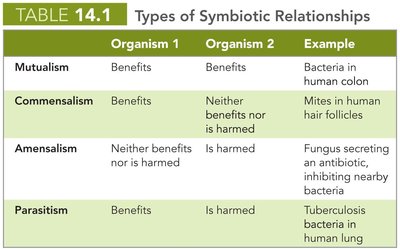
Symbiotic relationships are categorized based on the benefits or harm to the organisms involved. These relationships are crucial for understanding how microbes interact with their hosts and each other.
Type | Organism 1 | Organism 2 | Example |
|---|---|---|---|
Mutualism | Benefits | Benefits | Bacteria in human colon |
Commensalism | Benefits | Neither benefits nor is harmed | Mites in human hair follicles |
Amensalism | Neither benefits nor is harmed | Is harmed | Fungus secreting antibiotic, inhibiting nearby bacteria |
Parasitism | Benefits | Is harmed | Tuberculosis bacteria in human lung |
Normal Microbiota and Opportunistic Pathogens
Normal microbiota can become opportunistic pathogens under certain conditions, such as when introduced to unusual body sites, when the immune system is suppressed, or when the balance of microbiota is disturbed. For example, Escherichia coli is harmless in the colon but can cause urinary tract infections if it enters the urethra.
Suppressed immunity (e.g., AIDS, chemotherapy)
Changes in microbiota abundance (e.g., after antibiotics)
Introduction to new body sites
Reservoirs and Zoonoses
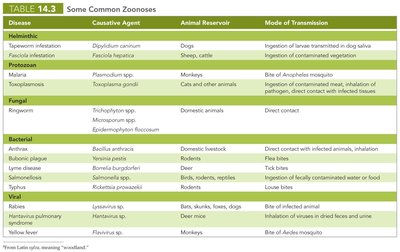
Reservoirs are sites where pathogens are maintained as sources of infection. These include animals, humans, and nonliving environments (soil, water, food). Zoonoses are diseases that spread naturally from animal hosts to humans, such as rabies and anthrax.
Disease | Causative Agent | Animal Reservoir | Mode of Transmission |
|---|---|---|---|
Anthrax | Bacillus anthracis | Domestic livestock | Direct contact with infected animals, inhalation |
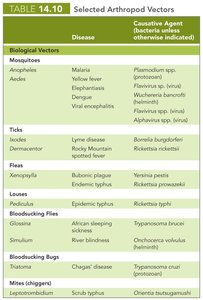
Bubonic plague | Yersinia pestis | Rodents, fleas | Flea bites |
Rabies | Lyssavirus | Bats, skunks, foxes, dogs | Bite of infected animal |
Portals of Entry and Pathogen Adhesion
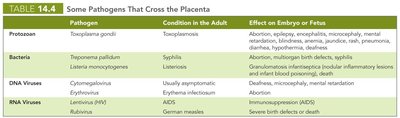
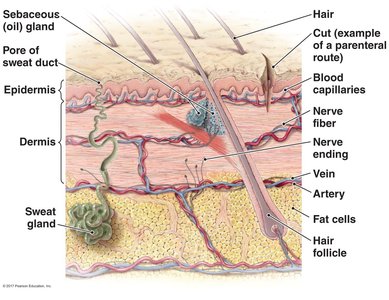
Pathogens enter the body through specific portals of entry, such as the skin, mucous membranes, and placenta. Successful infection often requires the pathogen to adhere to host cells using specialized adhesion factors (e.g., fimbriae, capsules, viral attachment proteins).
Skin (including parenteral route via cuts or bites)
Mucous membranes (respiratory, gastrointestinal, urogenital tracts)
Placenta (vertical transmission)
Pathogen | Condition in Adult | Effect on Embryo or Fetus |
|---|---|---|
Toxoplasma gondii | Toxoplasmosis | Abortion, epilepsy, encephalitis, microcephaly, mental retardation, etc. |
Treponema pallidum | Syphilis | Abortion, birth defects, syphilis |
Cytomegalovirus | Usually asymptomatic | Deafness, microcephaly, mental retardation |
Rubivirus | German measles | Severe birth defects or death |
Mechanisms of Adhesion
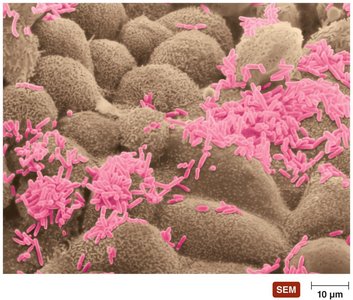
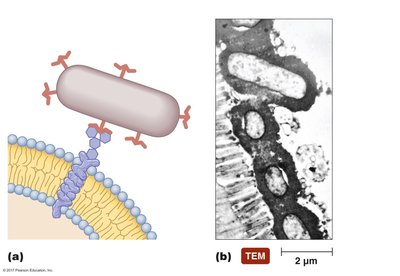
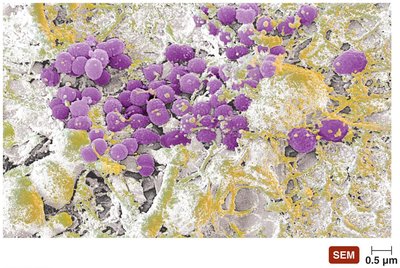
Adhesion is critical for establishing infection. Microbes use structures such as fimbriae, capsules, and adhesion proteins (adhesins) to bind to specific receptors on host cells. Some bacteria form biofilms for indirect attachment.
Microbial Disease: Symptoms, Signs, and Koch’s Postulates
Symptoms, Signs, and Syndromes
Symptoms are subjective characteristics felt only by the patient (e.g., pain, fatigue). Signs are objective and measurable (e.g., fever, rash). A syndrome is a group of symptoms and signs that collectively characterize a disease.
Koch’s Postulates
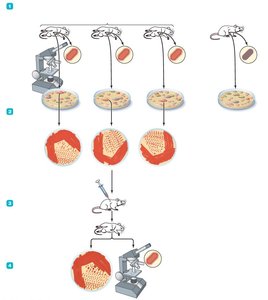
Robert Koch established a series of criteria to prove that a specific microbe causes a specific disease:
The suspected agent must be present in every case of the disease.
The agent must be isolated and grown in pure culture.
The cultured agent must cause the disease when inoculated into a healthy, susceptible host.
The same agent must be reisolated from the diseased experimental host.
Exceptions exist, such as when pathogens cannot be cultured or when multiple pathogens are involved.
Virulence Factors and Pathogenicity
Virulence Factors
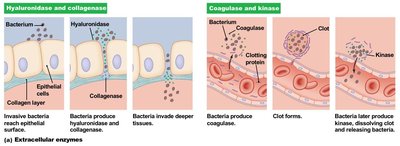
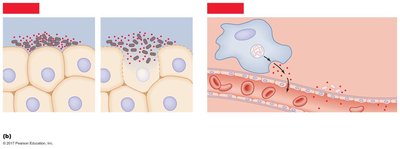
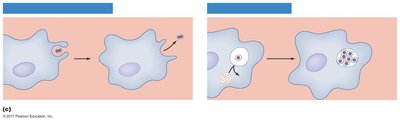
Pathogenicity is the ability to cause disease, while virulence is the degree of pathogenicity. Virulence factors include adhesion factors, biofilm formation, extracellular enzymes, toxins, and antiphagocytic factors.
Extracellular enzymes: Hyaluronidase, collagenase, coagulase, kinases, keratinase
Toxins: Exotoxins (e.g., diphtheria, cholera, botulism, tetanus toxins), endotoxins (lipid A from Gram-negative bacteria)
Antiphagocytic factors: Capsules, antiphagocytic chemicals
Classification and Transmission of Infectious Diseases
Terminology
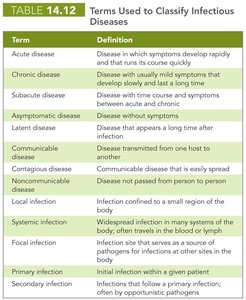
Infectious diseases are classified based on their characteristics and modes of transmission. Key terms include:
Term | Definition |
|---|---|
Acute disease | Symptoms develop rapidly and run a short course |
Chronic disease | Symptoms develop slowly and last a long time |
Asymptomatic disease | No noticeable symptoms |
Communicable disease | Transmitted from one host to another |
Noncommunicable disease | Not passed from person to person |
Systemic infection | Infection spreads throughout the body |
Focal infection | Site that serves as a source for infections at other sites |
Transmission of Infectious Diseases
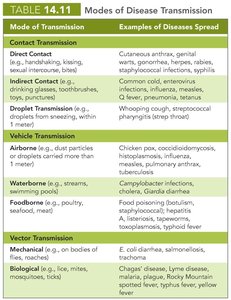
Pathogens are transmitted via various routes:
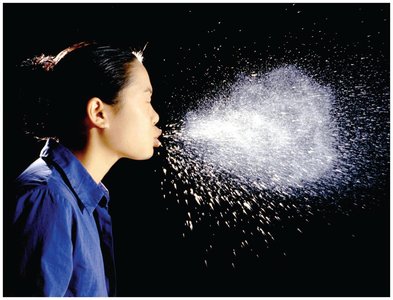
Contact transmission: Direct (person-to-person), indirect (fomites), droplet (respiratory droplets)
Vehicle transmission: Airborne, waterborne, foodborne
Vector transmission: Biological (biting arthropods), mechanical (passive carriers)
Mode of Transmission | Examples of Diseases Spread |
|---|---|
Direct Contact | Cutaneous anthrax, genital warts, gonorrhea, herpes, rabies |
Indirect Contact | Common cold, enterovirus infections, influenza, measles |
Droplet Transmission | Whooping cough, streptococcal pharyngitis (strep throat) |
Airborne | Chicken pox, coccidioidomycosis, influenza, measles, tuberculosis |
Waterborne | Cholera, cryptosporidiosis, giardiasis |
Foodborne | Food poisoning, hepatitis A, listeriosis, tapeworms, typhoid fever |
Mechanical (vector) | E. coli diarrhea, salmonellosis, trachoma |
Biological (vector) | Chagas' disease, Lyme disease, malaria, plague, Rocky Mountain spotted fever, typhus fever, yellow fever |
Microbial Genetics: Structure and Function
Genetic Terminology
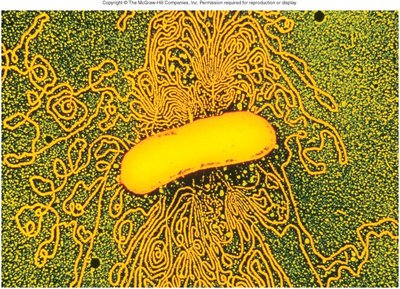
Genetics is the study of heredity. The genome is the total genetic information in a cell, organized into chromosomes that carry genes. The genetic code determines how nucleotide sequences are translated into proteins. Genotype refers to the genetic makeup, while phenotype is the expressed traits. Genomics is the study of genomes.
Gene: A sequence of DNA that codes for a functional product.
Genome sizes: Smallest virus (4-5 genes), E. coli (4,288 genes), human cell (31,000 genes).
The Flow of Genetic Information
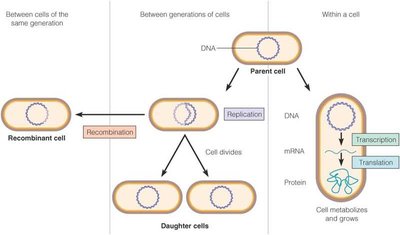
Genetic information flows from DNA to RNA to protein, a process known as the central dogma of molecular biology. This involves replication, transcription, and translation.
DNA Structure and Replication
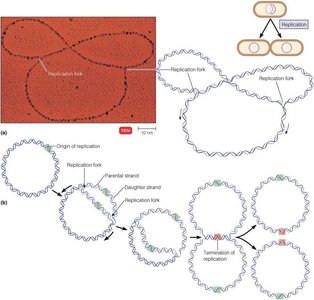
DNA consists of two antiparallel strands forming a double helix, with a sugar-phosphate backbone and nitrogenous bases (A, T, C, G). Replication is semiconservative, producing two identical daughter molecules, each with one old and one new strand.
Replication begins at the origin, with helicase unwinding the DNA.
DNA polymerase synthesizes new strands in the 5' to 3' direction.
Leading strand: synthesized continuously; lagging strand: synthesized in short fragments (Okazaki fragments).
RNA and Protein Synthesis
Three types of RNA are involved in protein synthesis:
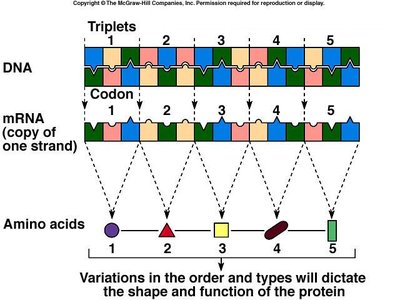
mRNA: Carries genetic code from DNA to ribosomes.
tRNA: Brings amino acids to the ribosome during translation.
rRNA: Forms the core of ribosome structure and catalyzes protein synthesis.
Transcription and Translation
Transcription is the synthesis of RNA from a DNA template, catalyzed by RNA polymerase. Translation is the process by which ribosomes decode mRNA into a specific sequence of amino acids, forming a protein. The genetic code is read in codons (triplets of nucleotides), each specifying an amino acid.
Start codon: AUG (methionine)
Stop codons: UAA, UAG, UGA
Eukaryotic vs. Prokaryotic Gene Expression
In eukaryotes, transcription occurs in the nucleus and translation in the cytoplasm, and mRNA must be processed (splicing out introns) before translation. In prokaryotes, these processes can occur simultaneously, and mRNA often encodes multiple proteins.
