 Back
BackMicrobial Infection, Disease, and Genetics: Core Concepts and Mechanisms
Study Guide - Smart Notes
 Tailored notes based on your materials, expanded with key definitions, examples, and context.
Infection, Disease, and Normal Microbiota
Definitions and Overview
Understanding the distinction between infection and disease is fundamental in microbiology. The human body is colonized by a vast number of microbes, many of which form the normal microbiota. These organisms can interact with the host in various ways, ranging from harmless coexistence to causing disease under certain conditions.
Infection: The invasion and colonization of the body by pathogenic microorganisms.
Disease: A condition in which infection leads to damage or impairment of body function (morbidity).
Normal Microbiota: Microorganisms that colonize the body without causing disease under normal conditions.
The human body contains approximately 10 trillion human cells and is colonized by about 100 trillion microbial cells.
Symbiosis and Types of Symbiotic Relationships
Symbiosis refers to the close association between two different species living together. The relationship can be classified based on the effects on each organism involved.
Mutualism: Both organisms benefit (e.g., bacteria in the human colon).
Commensalism: One organism benefits, the other is neither helped nor harmed (e.g., Staphylococcus on the skin).
Parasitism: One organism benefits at the expense of the other (e.g., Mycobacterium tuberculosis in the human lung).
Amensalism: One organism is inhibited or destroyed while the other is unaffected (e.g., fungus secreting antibiotics inhibiting bacteria).
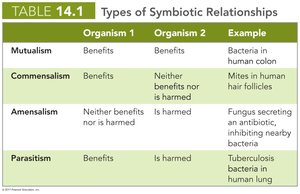
Many normal microbiota are mutualistic or commensal symbionts. Some are resident (permanent), while others are transient (temporary).
Normal Microbiota as Opportunistic Pathogens
Normal microbiota can become opportunistic pathogens under certain conditions:
Introduction into unusual body sites (e.g., E. coli from colon to urethra causing UTI).
Suppressed immunity (e.g., AIDS, chemotherapy, malnutrition).
Changes in microbiota abundance (e.g., Candida albicans causing yeast infection when bacterial numbers decrease).
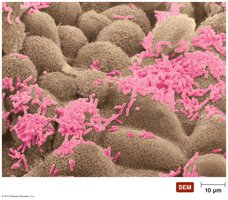
Normal microbiota protect the host by competing with pathogens for nutrients, altering pH, and producing antimicrobial substances.
Reservoirs, Zoonoses, and Portals of Entry
Reservoirs of Infection
Reservoirs are sites where pathogens are maintained as sources of infection. These include:
Animals
Humans
Nonliving things (soil, water, food)
Zoonoses
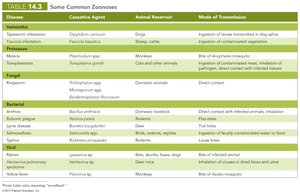
Zoonoses are diseases that naturally spread from animal hosts to humans (e.g., yellow fever, anthrax, rabies).
Portals of Entry
Pathogens enter the body through specific portals:
Skin
Mucous membranes (respiratory, gastrointestinal, urinary, reproductive tracts)
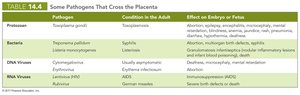
Placenta
Parenteral route (breaks in the skin: cuts, bites, injections)
Adhesion and Biofilm Formation
Role of Adhesion in Infection
After entry, microbes must attach to host tissues using adhesion factors:
Specialized structures (e.g., fimbriae, capsules, adhesion disks, suckers)
Attachment proteins (adhesins in bacteria, viral attachment proteins)
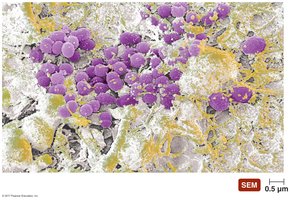
Ligands bind to specific host cell receptors (e.g., Neisseria gonorrhoeae adheres to urethral cells)
Biofilm formation (indirect attachment)
Disease, Symptoms, Signs, and Koch’s Postulates
Definitions
Symptoms: Subjective characteristics felt by the patient (e.g., pain, fatigue).
Signs: Objective manifestations observed or measured by others (e.g., fever, rash).
Syndrome: A group of symptoms and signs that collectively characterize a disease (e.g., AIDS).
Etiology: The study of the cause of disease.
Koch’s Postulates
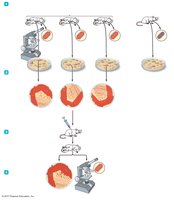
Koch’s postulates are criteria to establish a causative relationship between a microbe and a disease:
The suspected agent must be present in every case of the disease.
The agent must be isolated and grown in pure culture.
The cultured agent must cause the disease when inoculated into a healthy host.
The same agent must be reisolated from the diseased experimental host.
Exceptions: Some pathogens cannot be cultured, some diseases are caused by multiple agents, and some require statistical association (epidemiology).
Virulence Factors and Pathogenicity
Virulence and Pathogenicity
Pathogenicity: The ability of a microorganism to cause disease.
Virulence: The degree of pathogenicity.
Virulence factors include:
Adhesion factors
Biofilm formation
Extracellular enzymes (e.g., hyaluronidase, collagenase, coagulase, kinases)
Toxins (exotoxins, endotoxins)
Antiphagocytic factors (capsules, antiphagocytic chemicals)
Major Bacterial Toxins
Endotoxins: Lipid A component of LPS in Gram-negative bacteria; released upon cell death.
Exotoxins: Secreted proteins with specific targets (e.g., diphtheria toxin, cholera toxin, botulinum toxin, tetanus toxin).
Examples:
Diphtheria toxin: Inhibits protein synthesis, causing cell death.
Cholera toxin: Increases cAMP, causing massive fluid loss (diarrhea).
Botulinum toxin: Blocks acetylcholine release, causing flaccid paralysis.
Tetanus toxin: Blocks inhibitory neurotransmitters, causing spastic paralysis.
Transmission of Infectious Diseases
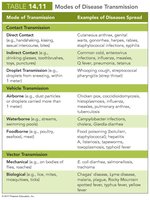
Modes of Transmission
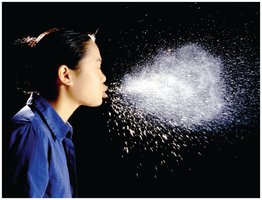
Contact Transmission: Direct (person-to-person), indirect (fomites), or droplet (respiratory droplets).
Vehicle Transmission: Airborne (aerosols), waterborne, or foodborne.
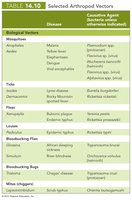
Vector Transmission: Biological (biting arthropods) or mechanical (passive carriers like flies).
Microbial Genetics
Key Definitions
Genetics: The science of heredity.
Genome: The total genetic information in a cell.
Chromosome: Structure containing DNA that carries hereditary information.
Gene: Segment of DNA that codes for a functional product.
Genetic Code: Set of rules for converting nucleotide sequences into amino acid sequences.
Genotype: The genetic makeup of an organism.
Phenotype: The expressed properties of an organism.
Genomics: The sequencing and molecular characterization of genomes.
DNA Structure and Replication
DNA is a double helix with antiparallel strands (3’ to 5’ and 5’ to 3’).
Base pairing: A-T (2 hydrogen bonds), G-C (3 hydrogen bonds).
Replication is semiconservative: each new DNA molecule has one old and one new strand.
Key Steps in DNA Replication:
Begins at the origin of replication.
Helicase unwinds DNA; RNA primer is synthesized.
DNA polymerase III adds nucleotides in the 5’ to 3’ direction.
Leading strand: synthesized continuously; Lagging strand: synthesized in Okazaki fragments.
RNA and Protein Synthesis
Transcription: Synthesis of RNA from a DNA template by RNA polymerase.
Translation: Decoding mRNA into a protein sequence at the ribosome.
Three types of RNA: mRNA (messenger), tRNA (transfer), rRNA (ribosomal).
In eukaryotes, transcription occurs in the nucleus and translation in the cytoplasm. Eukaryotic genes contain introns that must be spliced out.
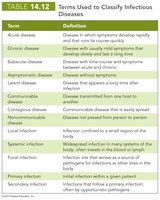
Summary Table: Terms Used to Classify Infectious Diseases
Term | Definition |
|---|---|
Acute disease | Disease in which symptoms develop rapidly and that runs its course quickly |
Chronic disease | Disease with usually mild symptoms that develop slowly and last a long time |
Subacute disease | Disease with time course and symptoms between acute and chronic |
Asymptomatic disease | Disease without symptoms |
Latent disease | Disease that appears a long time after infection |
Communicable disease | Disease transmitted from one host to another |
Contagious disease | Communicable disease that is easily spread |
Noncommunicable disease | Disease not passed from person to person |
Local infection | Infection confined to a small region of the body |
Systemic infection | Widespread infection in many systems of the body |
Focal infection | Infection that serves as a source for infections at other sites |
Primary infection | Initial infection within a given patient |
Secondary infection | Infections that follow a primary infection |
Additional info: This guide covers core concepts from microbial infection and disease to microbial genetics, providing definitions, mechanisms, and examples relevant for exam preparation in a college-level microbiology course.
