 Back
BackMicrobial Infections of the Skin: Bacterial, Viral, and Fungal Diseases
Study Guide - Smart Notes
 Tailored notes based on your materials, expanded with key definitions, examples, and context.
Skin Infections
Overview
Skin infections are caused by a variety of microorganisms, including bacteria, viruses, and fungi. These infections can range from mild to life-threatening and often present with characteristic lesions or rashes. Understanding the causative agents, pathogenesis, clinical manifestations, and treatments is essential for effective management and prevention.
Bacterial Infections of the Skin
Hair Follicle Infections
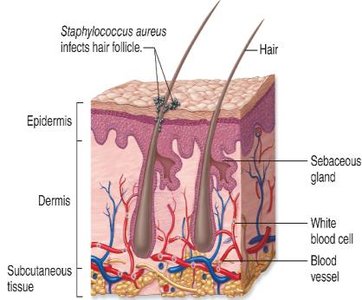
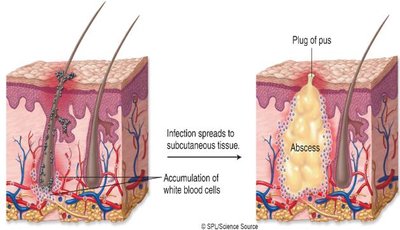
Hair follicle infections are most commonly caused by Staphylococcus aureus. This bacterium possesses several virulence factors that contribute to its pathogenicity.
Coagulase: An exoenzyme that promotes fibrin clot formation, protecting bacteria from immune cells.
Protein A: Binds to the Fc region of antibodies, inhibiting opsonization and phagocytosis.
Hyaluronidase and Collagenase: Degrade connective tissue components, facilitating bacterial spread.
Leukocidin: Destroys leukocytes, especially neutrophils.
α-toxin: Forms pores in host cell membranes, leading to cell lysis.
Additional Virulence Factors
Some S. aureus strains produce:
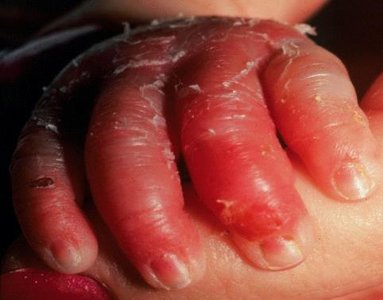
Exfoliatin: An exotoxin causing separation of skin layers, leading to scalded skin syndrome, especially in newborns. Transmission occurs via direct or indirect contact and is a concern in hospital nurseries. Prevention includes the use of hexachlorophene.
Toxic Shock Syndrome Toxin (TSST-1): Acts as a superantigen, causing toxic shock syndrome with symptoms such as fever, rash, vomiting, shock, organ failure, and potentially death. Often associated with tampon use.
Enterotoxins: Produced in foods stored at room temperature, leading to food poisoning.
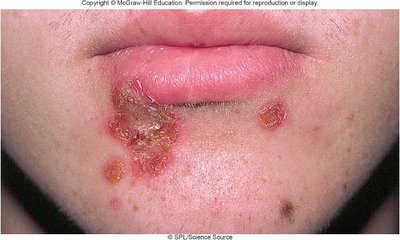
Impetigo
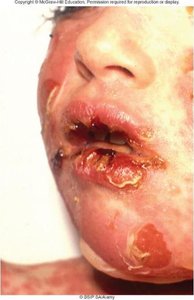
Impetigo is a superficial skin infection most commonly caused by Streptococcus pyogenes and sometimes by Staphylococcus aureus.
Requires a break in the skin (cuts, bites, scratches) for entry.
Characterized by inflammation of the epidermis, thin-walled blisters that rupture and ooze plasma, facilitating spread.
Transmitted by direct or indirect contact.
Treated with antibiotics.
Acne Vulgaris
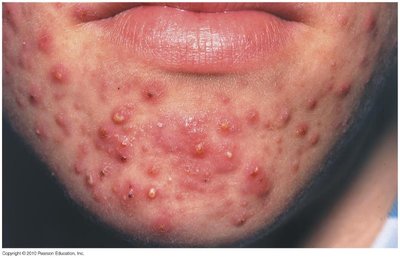
Acne vulgaris is an inflammatory condition caused by Propionibacterium acnes, a normal skin microbiota member.
Grows anaerobically in hair follicles, utilizing sebum as a nutrient.
Overproduction of sebum can block follicles, leading to bacterial overgrowth and inflammation.
Treatment options include antibiotics, benzoyl peroxide, and isoretinoin (Accutane), which reduces sebum production but has significant side effects.
Lyme Disease
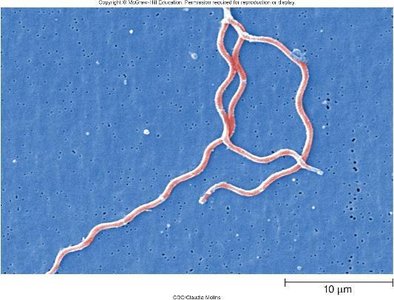
Lyme disease is caused by the spirochete Borrelia burgdorferi.
Reservoirs: Deer and mice.
Vector: Ticks transmit the bacterium to humans.
Symptoms progress in stages:
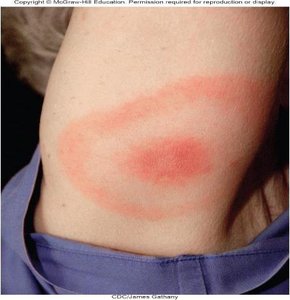
First stage: Bullseye rash at the bite site, fever, muscle pain, headache (lasts ~2 weeks).
Second stage: Weeks to months later, arthritis, facial paralysis, irregular heart rhythms.
Third stage: Months to years later, chronic arthritis, neurological changes (memory/mood disturbances, sleep issues).
Early treatment with antibiotics is effective; later stages are likely due to autoimmunity and do not respond to antibiotics.
Viral Infections of the Skin
Varicella (Chickenpox and Shingles)
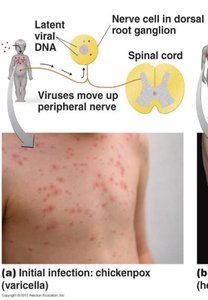
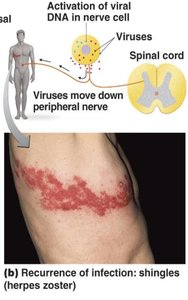
Caused by the Varicella-Zoster Virus (VZV).
Highly contagious, transmitted by respiratory droplets.
Incubation: 10–21 days, followed by a characteristic itchy, raised rash.
VZV becomes latent in nerve cells; reactivation causes shingles (herpes zoster), presenting as painful lesions.
Treatment: Acyclovir.
Prevention: Attenuated whole-agent vaccine (part of MMRV).
Rubeola (Measles)
Caused by the measles virus; highly contagious via respiratory droplets.
Incubation: 10–12 days.
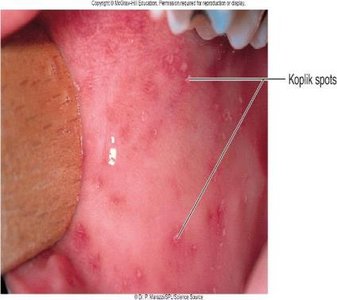
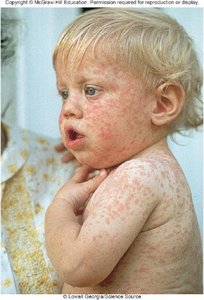
Symptoms: Cold-like symptoms, Koplik spots (oral mucosa), macular rash.
Complications: Viral pneumonia, encephalitis, brain damage, subacute sclerosing panencephalitis (SSPE).
No specific treatment; prevention via attenuated vaccine (MMR/MMRV).
Humans are the only reservoir; eradication is possible.
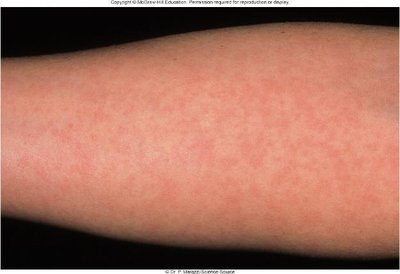
Rubella (German Measles)
Caused by the Rubella virus; milder than measles.
Symptoms: Faint pink rash.
Serious complications if infection occurs during pregnancy: congenital rubella syndrome (birth defects such as cataracts, deafness, heart defects, mental deficits, stillbirth).
No treatment; prevention via attenuated vaccine (MMR/MMRV).
Human Papillomavirus (HPV)
Causes warts (benign tumors) on skin and mucous membranes.
Transmitted by direct or indirect contact; different strains cause different types of warts (plantar, dermal, genital).
Some strains are oncogenic (cervical, mouth, throat cancers).
Treatment: Removal of infected cells (freezing, salicylic acid, surgical removal).
Prevention: HPV vaccine (protects against 9 strains, including types 16 & 18 associated with cervical cancer).
Fungal Infections of the Skin
Cutaneous Mycoses
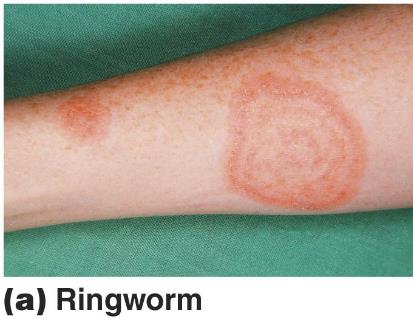
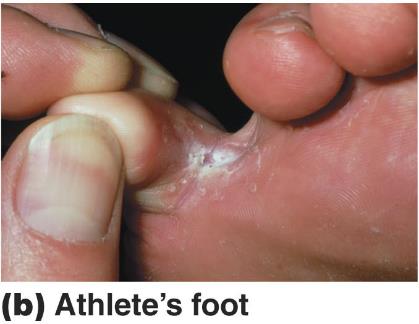
Fungi grow on hair, nails, and outer skin layers, using keratin as a nutrient.
Examples: Ringworm (ring-shaped rash), Athlete’s foot, Jock itch.
Common in moist areas of the body.
Treatment: Topical azole creams for skin; oral griseofulvin for hair/nail infections.
Candidiasis
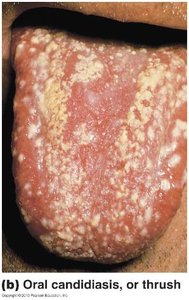
Caused by Candida albicans (yeast).
Manifests as thrush (oral) or vaginitis.
Opportunistic pathogen; infection occurs when normal microbiota are disrupted (e.g., after antibiotics).
Treatment: Topical azoles or nystatin mouthwash.
Summary Table: Major Microbial Skin Infections
Infection | Agent | Key Features | Treatment/Prevention |
|---|---|---|---|
Hair follicle infections | Staphylococcus aureus | Pus, abscess, virulence factors | Antibiotics, hygiene |
Impetigo | Streptococcus pyogenes, S. aureus | Blisters, oozing plasma | Antibiotics |
Acne vulgaris | Propionibacterium acnes | Pustules, inflammation | Antibiotics, benzoyl peroxide, isoretinoin |
Lyme disease | Borrelia burgdorferi | Bullseye rash, arthritis, neurological symptoms | Early antibiotics |
Chickenpox/Shingles | Varicella-Zoster Virus | Itchy rash, latent infection | Acyclovir, vaccine |
Measles (Rubeola) | Measles virus | Koplik spots, macular rash | Vaccine |
Rubella | Rubella virus | Faint pink rash, congenital syndrome | Vaccine |
HPV (warts) | Human papillomavirus | Warts, oncogenic strains | Removal, vaccine |
Ringworm, Athlete’s foot | Dermatophyte fungi | Ring-shaped rash, moist areas | Topical/oral antifungals |
Candidiasis | Candida albicans | Thrush, vaginitis | Topical/oral antifungals |
