 Back
BackMicrobial Infections of the Urinary and Reproductive Systems: Key Pathogens and Clinical Features
Study Guide - Smart Notes
 Tailored notes based on your materials, expanded with key definitions, examples, and context.
Microbial Infections of the Urinary and Reproductive Systems
Overview
The urinary and reproductive systems are susceptible to a variety of microbial infections caused by bacteria, viruses, fungi, and protozoa. These infections can lead to significant morbidity and, if untreated, may result in severe complications. Understanding the causative agents, epidemiology, transmission, clinical manifestations, and treatment options is essential for effective diagnosis and management.
Urinary Tract Infections (UTIs)
Bacterial UTIs
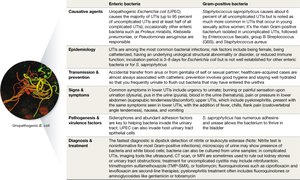
Bacterial urinary tract infections are among the most common bacterial infections, affecting both community and healthcare settings. They are primarily caused by enteric bacteria and, less commonly, by Gram-positive bacteria.
Causative Agents:
Enteric bacteria: Escherichia coli (UPEC), Proteus mirabilis, Klebsiella pneumoniae, Pseudomonas aeruginosa
Gram-positive bacteria: Staphylococcus saprophyticus, Enterococcus faecalis
Epidemiology:
UTIs are more common in females due to anatomical differences.
Risk factors include sexual activity, pregnancy, urinary catheterization, and underlying urological abnormalities.
Transmission & Prevention:
Often due to accidental transfer from the gastrointestinal tract or sexual partner.
Prevention includes proper hygiene, urination after intercourse, and avoiding unnecessary catheterization.
Signs & Symptoms:
Dysuria (painful urination), urgency, frequency, suprapubic pain, and sometimes hematuria.
Severe cases may progress to pyelonephritis (kidney infection) with fever and flank pain.
Diagnosis & Treatment:
Diagnosis is based on dipstick detection of nitrite or leukocyte esterase, urine culture, and clinical symptoms.
Treatment involves antibiotics; choice depends on local resistance patterns.
Sexually Transmitted Infections (STIs) of the Reproductive System
Genital Herpes
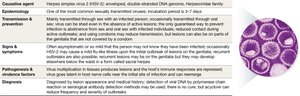
Genital herpes is a common viral STI caused by herpes simplex viruses, leading to recurrent painful lesions.
Causative Agent: Herpes simplex virus 2 (HSV-2) (most common), HSV-1 (less common)
Epidemiology:
One of the most common sexually transmitted viruses worldwide.
Incubation period: 3–7 days.
Transmission & Prevention:
Transmitted via sexual contact or from mother to neonate during delivery.
Prevention includes condom use and antiviral prophylaxis in pregnancy.
Signs & Symptoms:
Painful vesicular lesions, itching, dysuria, and systemic symptoms during primary infection.
Recurrent outbreaks are common due to viral latency.
Diagnosis & Treatment:
Diagnosis by PCR, viral culture, or serology.
Antivirals (e.g., acyclovir) reduce severity and frequency of outbreaks.
Human Papilloma Viruses (HPVs)
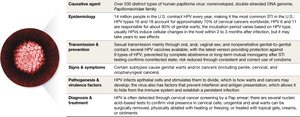
HPVs are a diverse group of DNA viruses responsible for genital warts and are associated with several cancers, including cervical cancer.
Causative Agent: Over 200 types of human papilloma virus (HPV)
Epidemiology:
HPV is the most common STI globally; most sexually active individuals are exposed at some point.
High-risk types (e.g., HPV 16, 18) are oncogenic.
Transmission & Prevention:
Transmitted via sexual contact and skin-to-skin contact.
Vaccination (e.g., Gardasil) is effective in preventing infection by high-risk types.
Signs & Symptoms:
Genital warts, cervical dysplasia, and, in some cases, progression to cancer.
Diagnosis & Treatment:
Diagnosis by clinical exam, Pap smear, and HPV DNA testing.
Treatment includes removal of warts and monitoring for dysplasia.
Bacterial Vaginosis
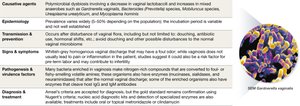
Bacterial vaginosis is a common vaginal infection resulting from an imbalance in the normal vaginal microbiota.
Causative Agents: Polymicrobial, including Gardnerella vaginalis, Bacteroides species, Mobiluncus species, and others.
Epidemiology:
Prevalence varies (5–60%) depending on population.
Transmission & Prevention:
Not strictly sexually transmitted; associated with changes in vaginal flora.
Risk factors include new or multiple sexual partners, douching, and antibiotic use.
Signs & Symptoms:
Thin, grayish-white vaginal discharge with a fishy odor; itching and irritation may occur.
Diagnosis & Treatment:
Diagnosis by clinical criteria (Amsel’s) and Gram stain.
Treatment with metronidazole or clindamycin.
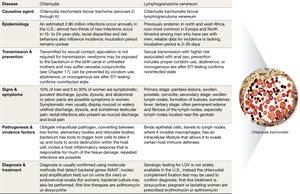
Chlamydia
Chlamydia is a prevalent bacterial STI that can cause serious reproductive complications if untreated.
Causative Agent: Chlamydia trachomatis (serovars D–K)
Epidemiology:
Most common reportable bacterial STI in the U.S.
Often asymptomatic, especially in women.
Transmission & Prevention:
Transmitted via sexual contact; vertical transmission can cause neonatal conjunctivitis or pneumonia.
Signs & Symptoms:
Urethritis, cervicitis, pelvic inflammatory disease (PID), and infertility.
Diagnosis & Treatment:
Diagnosis by nucleic acid amplification tests (NAATs).
Treatment with azithromycin or doxycycline.
Gonorrhea
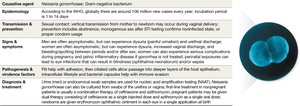
Gonorrhea is a common STI caused by Neisseria gonorrhoeae, with increasing antibiotic resistance posing a public health challenge.
Causative Agent: Neisseria gonorrhoeae (Gram-negative diplococcus)
Epidemiology:
Over 130 million new cases globally each year.
Transmission & Prevention:
Transmitted via sexual contact; can be passed from mother to child during delivery.
Signs & Symptoms:
Often asymptomatic; may cause urethritis, cervicitis, PID, and neonatal conjunctivitis.
Diagnosis & Treatment:
Diagnosis by NAATs.
Treatment with dual antibiotic therapy due to resistance concerns.
Syphilis
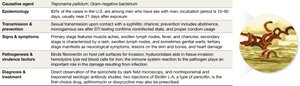
Syphilis is a multistage STI caused by the spirochete Treponema pallidum, with varied clinical manifestations.
Causative Agent: Treponema pallidum (spirochete bacterium)
Epidemiology:
Most cases in men who have sex with men.
Transmission & Prevention:
Transmitted via sexual contact or vertically during pregnancy.
Signs & Symptoms:
Primary: painless chancre; Secondary: rash, mucous patches; Tertiary: gummas, neurological symptoms.
Diagnosis & Treatment:
Diagnosis by serology (nontreponemal and treponemal tests).
Treatment with penicillin.
Candidiasis
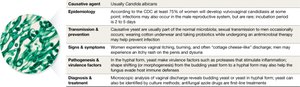
Candidiasis is a fungal infection of the reproductive tract, most commonly caused by Candida albicans.
Causative Agent: Candida albicans (yeast)
Epidemiology:
At least 75% of women will experience vulvovaginal candidiasis in their lifetime.
Transmission & Prevention:
Not strictly sexually transmitted; associated with antibiotic use, diabetes, and immunosuppression.
Signs & Symptoms:
Itching, burning, thick "cottage cheese-like" discharge.
Diagnosis & Treatment:
Diagnosis by microscopy and culture.
Treatment with antifungal agents (e.g., fluconazole).
Trichomoniasis
Trichomoniasis is a protozoan STI caused by Trichomonas vaginalis, often asymptomatic but associated with adverse pregnancy outcomes.
Causative Agent: Trichomonas vaginalis (flagellated protozoan)
Epidemiology:
Estimated 217 million cases globally each year.
Transmission & Prevention:
Sexually transmitted; prevention includes condom use and screening.
Signs & Symptoms:
Itching, burning, frothy greenish discharge, and dysuria; often asymptomatic in men.
Diagnosis & Treatment:
Diagnosis by wet mount microscopy, antigen detection, or nucleic acid testing.
Treatment with metronidazole or tinidazole.

Additional info: The above notes synthesize the main pathogens, clinical features, and management strategies for urinary and reproductive system infections, as presented in the provided textbook slides. For each infection, understanding the causative agent, epidemiology, transmission, clinical presentation, and treatment is essential for microbiology students preparing for exams or clinical practice.
