Back
BackMicrobial Mechanisms of Pathogenicity and Disease Processes
Study Guide - Smart Notes
 Tailored notes based on your materials, expanded with key definitions, examples, and context.
Disease Processes: Microbial Mechanisms of Pathogenicity
Overview of Pathogenic Mechanisms
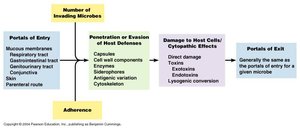
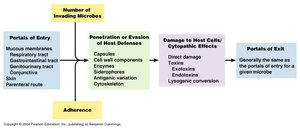
Pathogenic microorganisms cause disease through a series of well-defined steps, including entry into the host, adherence to host tissues, evasion of host defenses, and damage to host cells. Understanding these mechanisms is essential for the study of infectious diseases and their control.
Portals of Entry: Microbes enter the host through specific routes such as the mucous membranes, skin, or parenteral routes (e.g., punctures, injections).
Adherence: Pathogens attach to host cells using adhesion factors, which are often proteins or glycoproteins on their surface.
Penetration/Evasion of Host Defenses: Microbes use capsules, cell wall components, and enzymes to evade immune responses.
Damage to Host Cells: Pathogens may cause direct damage, produce toxins, or induce cytopathic effects.
Portals of Exit: Microbes leave the host via routes similar to their entry, facilitating transmission to new hosts.
Portals of Entry and Exit
Major Routes of Entry and Exit
Microorganisms gain access to the body through several portals, which are also commonly used as exit routes to spread infection.
Mucous membranes: Respiratory, gastrointestinal, and genitourinary tracts are common entry points.
Skin: Although an effective barrier, some pathogens can enter through cuts or abrasions.
Parenteral route: Direct deposition beneath the skin or mucous membranes, such as via punctures or injections.
Adhesion Factors
Mechanisms of Microbial Attachment
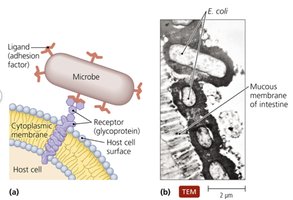
Adhesion is a critical step in the establishment of infection. Microbes use specialized structures or molecules called adhesins to bind to host cell receptors.
Adhesins: Surface proteins or glycoproteins that recognize and bind to specific host cell receptors.
Host Receptors: Usually glycoproteins or glycolipids on the host cell surface.
Example: Escherichia coli uses fimbriae to attach to intestinal mucosa.
Virulence Factors: Extracellular Enzymes
Role of Enzymes in Pathogenicity
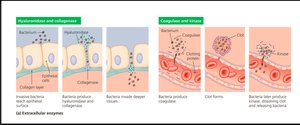
Many bacteria secrete enzymes that facilitate invasion and spread by breaking down host tissues or evading immune responses.
Hyaluronidase and Collagenase: Degrade connective tissue, allowing deeper penetration of bacteria.
Coagulase and Kinase: Coagulase forms clots to protect bacteria; kinase dissolves clots to release bacteria.
Example: Staphylococcus aureus produces coagulase to evade immune detection.
Bacterial Toxins: Exotoxins and Endotoxins
Types and Actions of Bacterial Toxins
Bacterial toxins are major contributors to disease symptoms. They are classified as exotoxins or endotoxins based on their origin and properties.
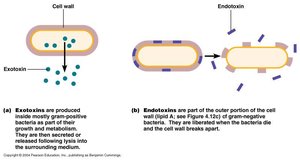
Exotoxins: Proteins secreted by bacteria, often highly toxic and specific in action.
Endotoxins: Lipopolysaccharide (LPS) components of the outer membrane of Gram-negative bacteria, released upon cell death.
Comparison of Exotoxins and Endotoxins
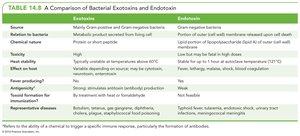
The following table summarizes the key differences between exotoxins and endotoxins:
Feature | Exotoxins | Endotoxins |
|---|---|---|
Source | Mainly Gram-positive and some Gram-negative bacteria | Gram-negative bacteria |
Chemical Nature | Protein, usually with enzymatic activity | Lipid A portion of lipopolysaccharide (LPS) |
Toxicity | High | Low (but can be fatal in high doses) |
Heat Stability | Unstable (inactivated above 60°C) | Stable (can withstand autoclaving) |
Fever Producing | No | Yes |
Antigenicity | Strong, stimulates antibody production | Weak |
Representative Diseases | Diphtheria, tetanus, botulism, cholera | Typhoid fever, meningococcemia |
Action of Gram-negative Endotoxin (LPS)
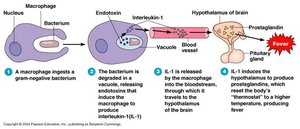
Endotoxins trigger immune responses that can lead to fever and shock. The process involves the release of cytokines such as interleukin-1 (IL-1) from macrophages, which act on the hypothalamus to induce fever.
Step 1: Macrophage ingests Gram-negative bacterium.
Step 2: Bacterium is degraded, releasing endotoxin.
Step 3: Endotoxin stimulates macrophage to release IL-1.
Step 4: IL-1 travels to the hypothalamus, inducing fever.
Types of Exotoxins
Classification and Examples
Exotoxins are classified based on their target tissues and effects:
Neurotoxins: Affect nerve cells (e.g., Clostridium botulinum and C. tetani neurotoxins).
Enterotoxins: Affect the gastrointestinal tract (e.g., Staphylococcus aureus enterotoxin, Vibrio cholerae enterotoxin).
Cytotoxins: Kill or damage host cells (e.g., Corynebacterium diphtheriae cytotoxin, Bacillus anthracis cytotoxin).
Exotoxin genes may be located on the bacterial chromosome, plasmids, or lysogenic bacteriophages.
Infection versus Intoxication
Key Differences
It is important to distinguish between infection (multiplication of microbes in the host) and intoxication (ingestion of pre-formed toxins).
Infection: Pathogen invades and multiplies in the host; incubation period is usually longer (≥12 hours); immune response is present; toxins may or may not be involved.
Intoxication: Disease results from ingestion of toxins; shorter incubation period (≤6 hours); no microbial multiplication in host; no immune response; exotoxin is always involved.
Examples of Diseases Caused by Neurotoxins
Tetanus (Infection)
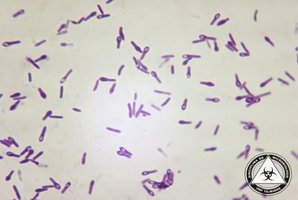
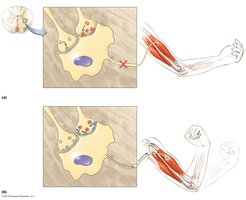
Clostridium tetani produces tetanospasmin, a neurotoxin that blocks inhibitory neurotransmitter release, causing spastic paralysis. Infection typically occurs via deep puncture wounds in anaerobic conditions.
Mechanism: Neurotoxin travels to the spinal cord, preventing muscle relaxation.
Botulism (Intoxication)
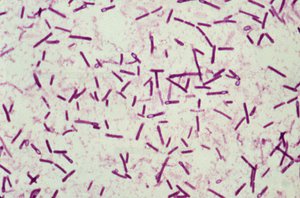
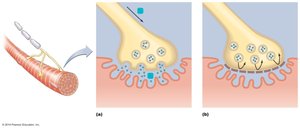
Clostridium botulinum produces botulinum toxin in anaerobic environments (e.g., canned foods). Ingestion of the toxin leads to flaccid paralysis by blocking acetylcholine release at neuromuscular junctions.
Mechanism: Toxin prevents muscle contraction, resulting in paralysis.
Examples of Diseases Caused by Enterotoxins
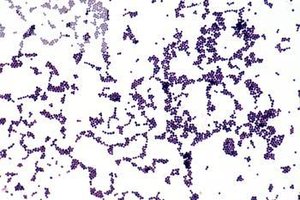
Staphylococcal Foodborne Illness (Intoxication)
Staphylococcus aureus can contaminate food, producing enterotoxins that cause rapid-onset vomiting and gastrointestinal distress after ingestion.
Key Steps: Food is inoculated, bacteria multiply, enterotoxin is produced, and ingestion leads to illness.

Cholera (Infection)
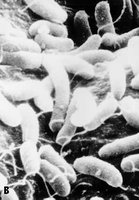
Vibrio cholerae produces cholera toxin in the intestine, leading to massive electrolyte and water loss through diarrhea.
Mechanism: Toxin binds to intestinal cells, activates adenylate cyclase, increases cAMP, and causes secretion of Cl− and water into the lumen.
Cytopathic Effects (CPE) of Viruses
Structural Changes in Host Cells
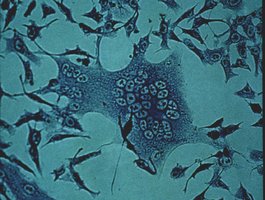
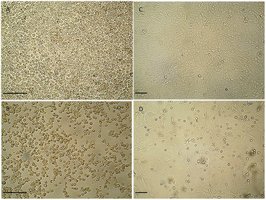
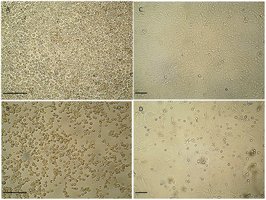
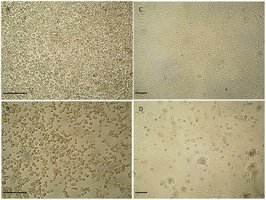
Viruses can induce visible changes in host cells, known as cytopathic effects, which are useful for diagnosis.
Syncytia Formation: Fusion of neighboring cells into multinucleated giant cells (e.g., measles virus).
Inclusion Bodies: Aggregates of viral particles or altered host cell components (e.g., Negri bodies in rabies).
Cell Rounding and Lysis: Loss of cell structure and death due to viral infection.
Other Effects of Viral Infection
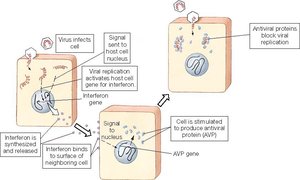
Interferon Production: Infected cells produce interferons, which protect neighboring cells from viral replication.
Antigenic Changes: Viral proteins are presented on the host cell surface, marking them for immune recognition.
Host-Pathogen Co-evolution and Disease Outcomes
Adaptation and Virulence
Viruses and their hosts often co-evolve, leading to reduced virulence in the natural host. Introduction into a new host species can result in severe disease outbreaks, as seen with the myxoma virus in European rabbits in Australia.
Example: Myxoma virus is relatively benign in South American rabbits but highly lethal in European rabbits.