 Back
Microbial Metabolism: An Overview for Health Professionals
Study Guide - Smart Notes
 Tailored notes based on your materials, expanded with key definitions, examples, and context.
Microbial Metabolism
Overview of Metabolism
Metabolism encompasses all the chemical reactions that occur within a cell, enabling the buildup and breakdown of nutrients. These reactions provide energy and generate substances essential for sustaining life. Microbial metabolism is central to both beneficial and pathogenic processes, including disease, food spoilage, and industrial applications.
Metabolism: The sum of all chemical reactions in a cell.
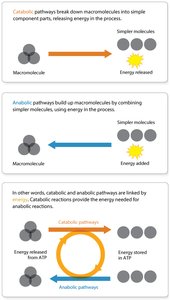
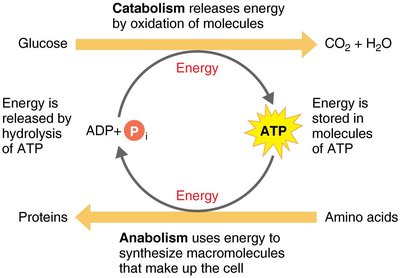
Anabolism: The synthesis of complex molecules from simpler ones, requiring energy input.
Catabolism: The breakdown of complex molecules into simpler ones, releasing energy.
ATP: The Energy Currency of the Cell
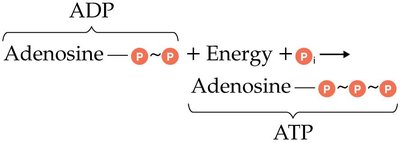
ATP (adenosine triphosphate) is the primary molecule for storing and transferring energy in cells. It is generated by the phosphorylation of ADP (adenosine diphosphate) with the input of energy. ATP links catabolic and anabolic reactions, providing energy for biosynthetic processes and storing energy released from catabolic reactions.
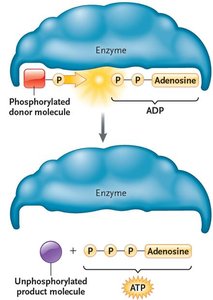
ATP Generation: Occurs via substrate-level phosphorylation and oxidative phosphorylation.
Substrate-Level Phosphorylation: Direct transfer of a phosphate group to ADP from a phosphorylated substrate.
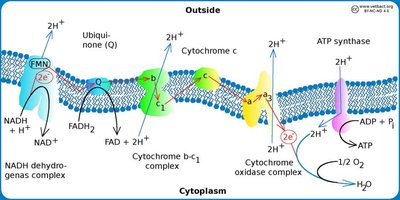
Oxidative Phosphorylation: Energy from electron transport is used to generate ATP via chemiosmosis.
Redox Reactions in Metabolism
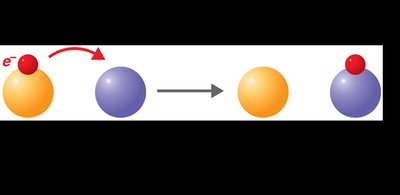
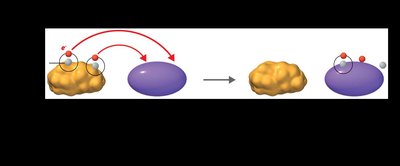
Redox reactions involve the transfer of electrons between molecules, playing a critical role in energy production. In cells, electrons are transferred as molecules are broken down, and the energy released is stored in electron shuttle molecules such as NAD+.
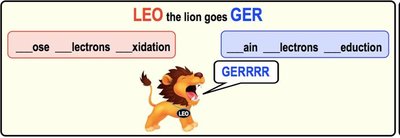
Oxidation: Loss of electrons (LEO).
Reduction: Gain of electrons (GER).
NAD+: An electron carrier that becomes NADH when reduced.
Carbohydrate Metabolism
Metabolic Pathways of Energy Production
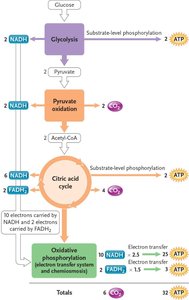
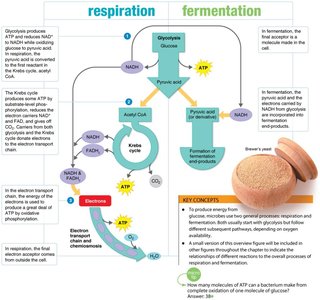
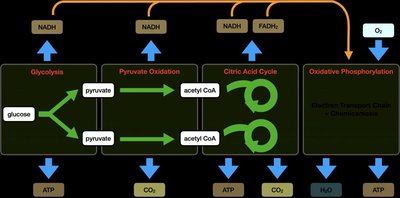
Microorganisms extract energy from organic compounds through a series of enzymatically catalyzed reactions. The breakdown of carbohydrates to release energy typically occurs in four stages: glycolysis, pyruvate oxidation, Krebs cycle (TCA or citric acid cycle), and the electron transport chain.
Glycolysis: The breakdown of glucose into pyruvate, generating ATP and NADH.
Pyruvate Oxidation: Conversion of pyruvate to acetyl-CoA, producing NADH and CO2.
Krebs Cycle: Further oxidation of acetyl-CoA, generating NADH, FADH2, ATP, and CO2.
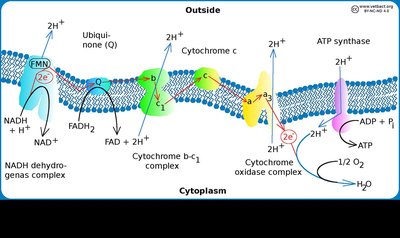
Electron Transport Chain (ETC): Electrons from NADH and FADH2 are transferred through a series of carriers, releasing energy to generate ATP.

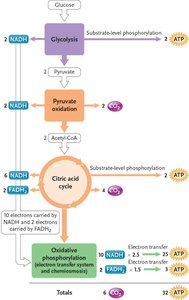
Oxidative Phosphorylation and Chemiosmosis
Oxidative phosphorylation is the process by which ATP is generated from ADP using energy derived from the electron transport chain. Chemiosmosis refers to the movement of protons across a membrane, creating a proton gradient that drives ATP synthesis via ATP synthase.
Electron Transport Chain: Transfers electrons, releases energy, and pumps protons across the membrane.
ATP Synthase: Enzyme that synthesizes ATP as protons flow back across the membrane.
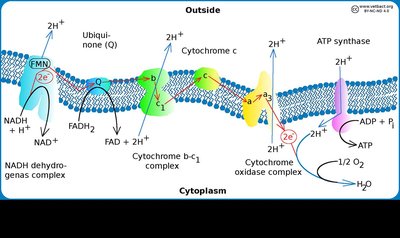
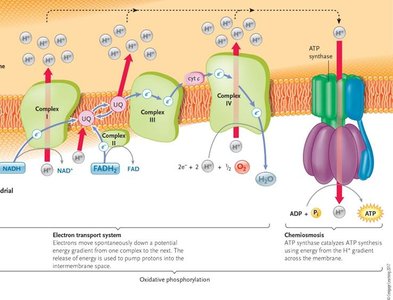
Cellular Respiration
Cellular respiration is the oxidation of molecules (such as glucose) to liberate electrons for the electron transport chain. The final electron acceptor is inorganic and comes from outside the cell. Aerobic respiration uses oxygen as the final electron acceptor, generating most ATP via oxidative phosphorylation.
Aerobic Respiration: Oxygen is the final electron acceptor.
Anaerobic Respiration: Other inorganic molecules serve as final electron acceptors.
Fermentation
Purpose and Process of Fermentation
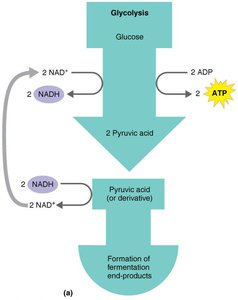
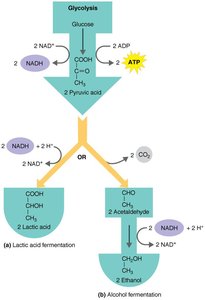
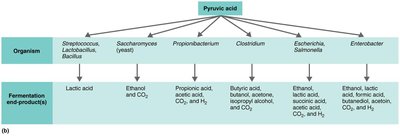
Fermentation is a metabolic process that recycles NADH back into NAD+ without the use of oxygen, the Krebs cycle, or the electron transport chain. It uses an organic molecule as the final electron acceptor and produces little or no ATP.
Lactic Acid Fermentation: Produces lactic acid; can be homolactic (only lactic acid) or heterolactic (lactic acid and other compounds).
Alcohol Fermentation: Produces ethanol and CO2; glucose is oxidized to pyruvic acid, which is converted to acetaldehyde and CO2, then reduced to ethanol.

Industrial Uses of Fermentation
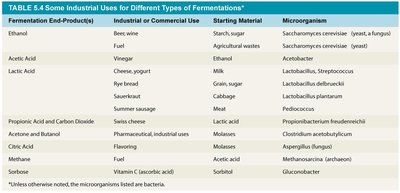
Fermentation is widely used in industry for the production of various end-products, including ethanol, lactic acid, acetic acid, and more. Different microorganisms and starting materials are used depending on the desired product.
Fermentation End-Product(s) | Industrial or Commercial Use | Starting Material | Microorganism |
|---|---|---|---|
Ethanol | Beer, wine | Starch, sugar | Saccharomyces cerevisiae (yeast, a fungus) |
Acetic Acid | Vinegar | Ethanol | Acetobacter |
Lactic Acid | Cheese, yogurt | Milk | Lactobacillus, Streptococcus |
Propionic Acid and CO2 | Swiss cheese | Lactic acid | Propionibacterium freudenreichii |
Acetone and Butanol | Pharmaceutical, industrial uses | Molasses | Clostridium acetobutylicum |
Citric Acid | Flavoring | Sucrose | Aspergillus (fungus) |
Methane | Fuel | Acetic acid | Methanobacterium (archaeon) |
Sorbose | Vitamin C (ascorbic acid) | Sorbitol | Gluconobacter |
Practice and Application
Both lactic acid fermentation and alcohol fermentation serve the primary function of oxidizing NADH to NAD+, allowing glycolysis to continue in the absence of oxygen.
Key Function: Oxidation of NADH to NAD+ (Answer: C).
Summary Table: Metabolic Pathways
Pathway | Key Steps | ATP Yield | Final Electron Acceptor |
|---|---|---|---|
Aerobic Respiration | Glycolysis, Pyruvate Oxidation, Krebs Cycle, ETC | ~32 ATP | Oxygen |
Anaerobic Respiration | Same as aerobic, but different final electron acceptor | Variable, less than aerobic | Inorganic molecule (not O2) |
Fermentation | Glycolysis, fermentation pathway | 2 ATP | Organic molecule |
Additional info: These notes expand on the original lecture slides and textbook images, providing definitions, examples, and context for each metabolic pathway. All images included directly reinforce the explanations and are essential for visualizing the processes described.
