 Back
BackMicrobial Metabolism: An Overview of Biochemical Pathways and Enzyme Function
Study Guide - Smart Notes
 Tailored notes based on your materials, expanded with key definitions, examples, and context.
Microbial Metabolism
Introduction to Metabolism
Metabolism encompasses all the chemical reactions that occur within a microorganism, enabling it to grow, reproduce, maintain its structures, and respond to environments. These reactions are broadly classified into catabolic (energy-releasing) and anabolic (energy-consuming) processes.
Catabolism: The breakdown of complex molecules into simpler ones, releasing energy.
Anabolism: The synthesis of complex molecules from simpler ones, requiring energy input.
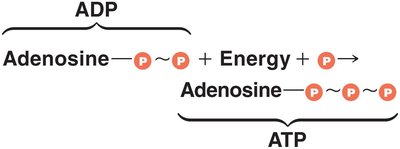
ATP (Adenosine Triphosphate): Serves as the energy currency, coupling catabolic and anabolic reactions.
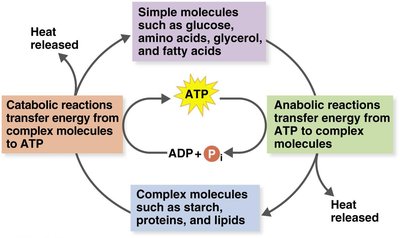
Catabolic and Anabolic Reactions
Energy Flow and ATP
Catabolic reactions transfer energy from complex molecules to ATP, while anabolic reactions transfer energy from ATP to build complex molecules. Heat is released in both processes, and ATP is regenerated from ADP and inorganic phosphate (Pi).
Enzymes and Metabolic Pathways
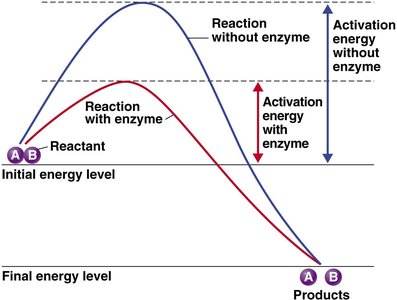
Enzyme Function and Activation Energy
Enzymes are biological catalysts that speed up chemical reactions by lowering the activation energy required. They are highly specific for their substrates and are not consumed in the reaction.
Activation Energy: The minimum energy required to initiate a chemical reaction.
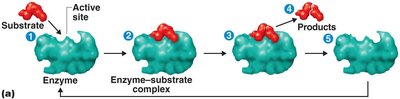
Enzyme-Substrate Complex: Temporary association between enzyme and substrate during catalysis.
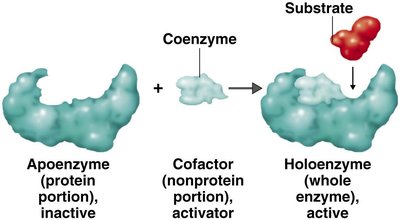
Enzyme Structure and Components
Enzymes often consist of a protein portion (apoenzyme) and a non-protein component (cofactor or coenzyme). The active enzyme, or holoenzyme, is formed when these components combine.
Apoenzyme: Inactive protein portion.
Cofactor: Non-protein activator (e.g., metal ions).
Coenzyme: Organic cofactor (e.g., NAD+, FAD).
Holoenzyme: Complete, active enzyme.
Mechanism of Enzymatic Action
The catalytic cycle involves substrate binding, formation of the enzyme-substrate complex, conversion to products, and release of products, leaving the enzyme unchanged.
Factors Influencing Enzyme Activity
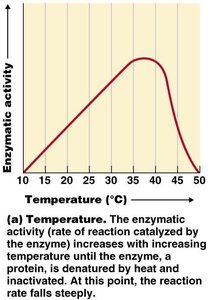
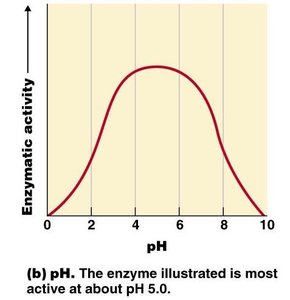
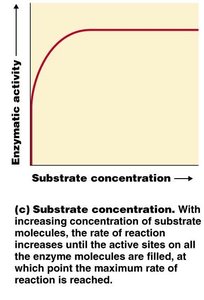
Enzyme activity is affected by temperature, pH, substrate concentration, and inhibitors.
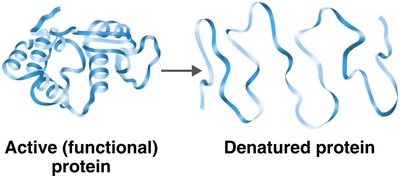
Temperature: Enzyme activity increases with temperature up to an optimum, after which denaturation occurs.
pH: Each enzyme has an optimal pH; deviations can denature the enzyme.
Substrate Concentration: Activity increases with substrate concentration until saturation is reached.
Enzyme Inhibition
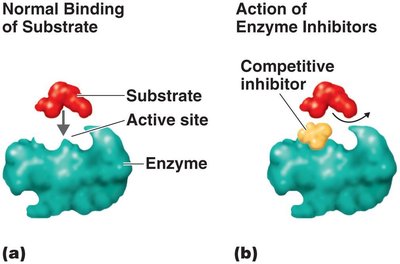
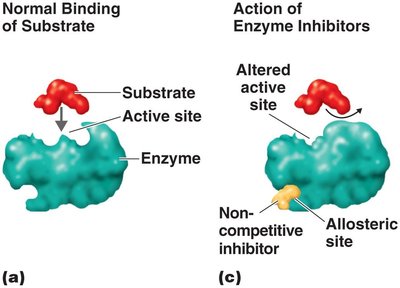
Enzyme inhibitors can decrease or halt enzyme activity. There are two main types:
Competitive Inhibitors: Compete with the substrate for the active site.
Noncompetitive Inhibitors: Bind to an allosteric site, altering the enzyme's shape and function.
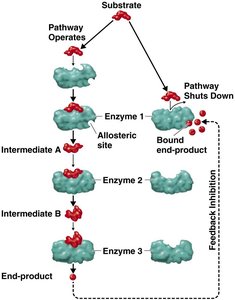
Feedback Inhibition: The end-product of a pathway inhibits an earlier step, regulating metabolic flux.
Oxidation-Reduction (Redox) Reactions
Redox Basics
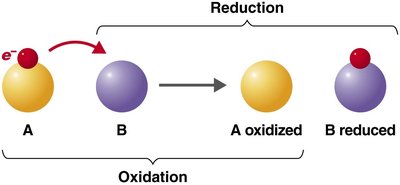
Oxidation is the loss of electrons, while reduction is the gain of electrons. In biological systems, these reactions often involve the transfer of hydrogen atoms.
ATP Generation Mechanisms
Phosphorylation Methods
ATP is generated by adding a phosphate group to ADP through three main mechanisms:
Substrate-Level Phosphorylation: Direct transfer of phosphate to ADP from a phosphorylated intermediate.
Oxidative Phosphorylation: Energy from electron transport is used to generate ATP via chemiosmosis.
Photophosphorylation: Light energy drives ATP synthesis in photosynthetic organisms.
Carbohydrate Catabolism
Glycolysis
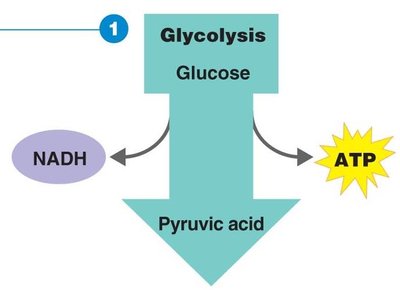
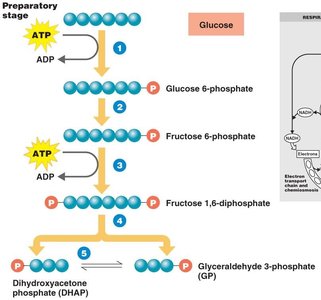
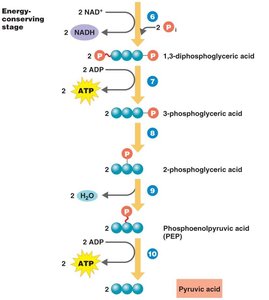
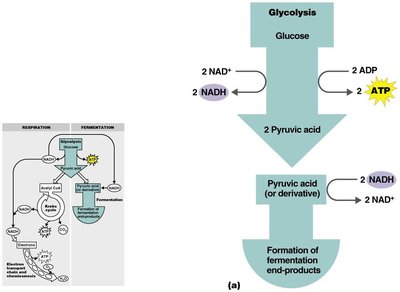
Glycolysis is the oxidation of glucose to pyruvic acid, producing ATP and NADH. It consists of a preparatory stage (using ATP) and an energy-conserving stage (producing ATP and NADH).
Intermediate Step and Krebs Cycle
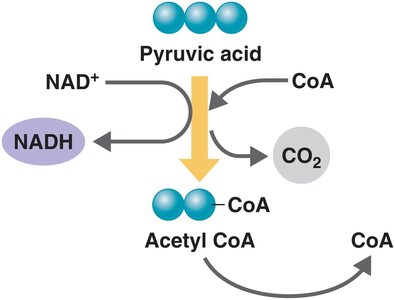
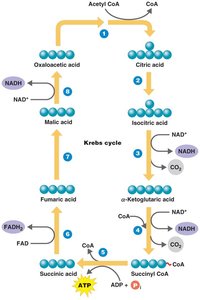
Pyruvic acid is converted to acetyl CoA, which enters the Krebs cycle. The cycle produces NADH, FADH2, and ATP, and releases CO2.
Electron Transport Chain and Chemiosmosis
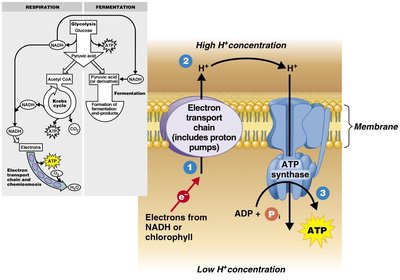
The electron transport chain (ETC) consists of carrier molecules that transfer electrons, releasing energy used to pump protons and generate ATP via ATP synthase (chemiosmosis).
Respiration vs. Fermentation
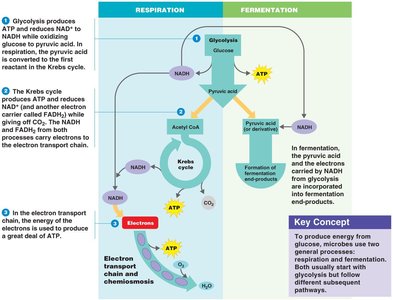
Respiration uses the ETC and produces more ATP, while fermentation does not use the ETC and yields less ATP. Fermentation uses an organic molecule as the final electron acceptor.
Types of Fermentation
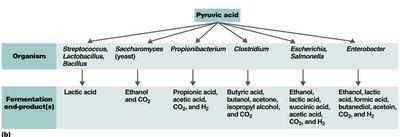
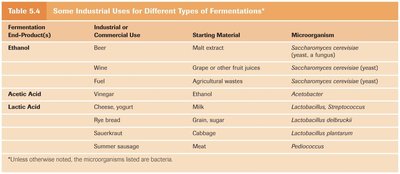
Different microorganisms produce various end-products during fermentation, such as lactic acid, ethanol, and other organic acids.
Organism | Fermentation End-Product(s) |
|---|---|
Streptococcus, Lactobacillus, Bacillus | Lactic acid |
Saccharomyces (yeast) | Ethanol and CO2 |
Propionibacterium | Propionic acid, acetic acid, CO2, H2 |
Clostridium | Butyric acid, butanol, acetone, isopropyl alcohol, CO2 |
Escherichia, Salmonella | Ethanol, lactic acid, acetic acid, CO2, H2 |
Enterobacter | Ethanol, lactic acid, formic acid, butanediol, acetoin, CO2, H2 |
Lipid and Protein Catabolism
Lipid Catabolism
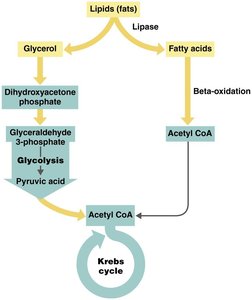
Lipids are broken down by lipases into glycerol and fatty acids. Glycerol enters glycolysis, while fatty acids undergo beta-oxidation to form acetyl CoA, which enters the Krebs cycle.
Protein Catabolism
Proteins are degraded by proteases into amino acids, which are deaminated and converted into intermediates that enter the Krebs cycle.
Integration and Regulation of Metabolism
Amphibolic Pathways
Amphibolic pathways serve both catabolic and anabolic functions, allowing cells to efficiently regulate and integrate their metabolic needs.
Summary Table: Nutritional Classification of Organisms
Nutritional Type | Energy Source | Carbon Source | Example |
|---|---|---|---|
Photoautotroph | Light | CO2 | Cyanobacteria, plants |
Photoheterotroph | Light | Organic compounds | Green, purple nonsulfur bacteria |
Chemoautotroph | Chemical | CO2 | Iron-oxidizing bacteria |
Chemoheterotroph | Chemical | Organic compounds | Animals, protozoa, fungi, bacteria |
