 Back
BackMicrobial Metabolism: An Overview of Catabolic and Anabolic Pathways
Study Guide - Smart Notes
 Tailored notes based on your materials, expanded with key definitions, examples, and context.
Microbial Metabolism
Introduction to Metabolism
Metabolism encompasses all the controlled biochemical reactions that occur within a microbe. The ultimate function of metabolism is to enable the organism to reproduce by acquiring nutrients, generating energy, and synthesizing cellular components.
Metabolism is divided into two main classes: catabolism (breakdown of molecules) and anabolism (synthesis of molecules).
Energy is stored in adenosine triphosphate (ATP) and used to drive anabolic reactions.
Cells grow and reproduce by assembling macromolecules from smaller building blocks.
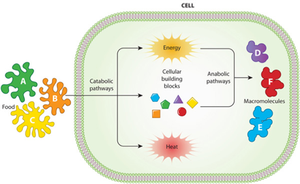
Catabolism and Anabolism
Definitions and Energy Flow
Catabolic and anabolic pathways are the two major types of metabolic reactions in cells, each with distinct roles in energy transformation and molecular synthesis.
Catabolic pathways: Break down larger molecules into smaller products, releasing energy (exergonic).
Anabolic pathways: Synthesize large molecules from smaller products of catabolism, requiring energy input (endergonic).
Energy released from catabolism is used to drive anabolic reactions.
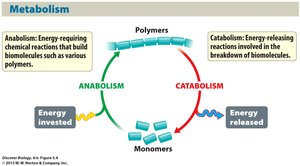
ATP Production and Energy Storage
ATP: The Energy Currency of the Cell
Organisms release energy from nutrients and store it in the high-energy phosphate bonds of ATP. ATP is generated by phosphorylation of ADP, and its hydrolysis provides energy for cellular processes.
Phosphorylation: The addition of a phosphate group to a molecule, such as ADP to form ATP.
Three main mechanisms of ATP production: substrate-level phosphorylation, oxidative phosphorylation, and photophosphorylation.
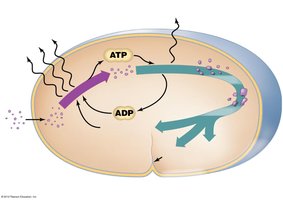
Oxidation and Reduction Reactions
Redox Reactions in Metabolism
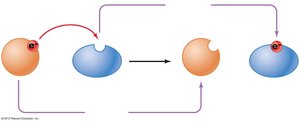
Oxidation and reduction (redox) reactions are central to energy transfer in cells. Electrons are transferred from electron donors to electron acceptors, often via electron carriers such as NAD+, NADP+, and FAD.
Oxidation: Loss of electrons (LEO: Lose Electrons = Oxidation).
Reduction: Gain of electrons (GER: Gain Electrons = Reduction).
Redox reactions always occur in pairs, and cells use electron carriers to shuttle electrons.
The Structure and Function of ATP
ATP Molecule
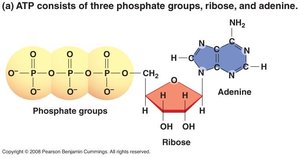
ATP consists of three phosphate groups, ribose (a five-carbon sugar), and adenine (a nitrogenous base). The high-energy bonds between phosphate groups are the source of energy for cellular work.
Hydrolysis of ATP to ADP and inorganic phosphate releases energy.
ATP is regenerated from ADP by phosphorylation during catabolic reactions.
The Roles of Enzymes in Metabolism
Enzyme Function and Specificity
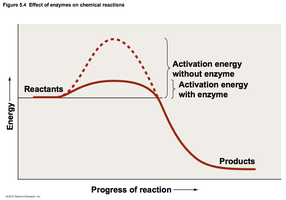
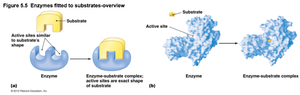
Enzymes are biological catalysts that increase the likelihood of chemical reactions by lowering the activation energy required. They are highly specific for their substrates due to the unique shape of their active sites.
Active site: The region of the enzyme where the substrate binds and the reaction occurs.
Enzyme-substrate specificity is often described by the "lock and key" or "induced fit" models.
Enzyme-Substrate Interaction
Enzymes bind to substrates to form an enzyme-substrate complex, facilitating the conversion to products and releasing the enzyme for reuse.
Enzyme Components
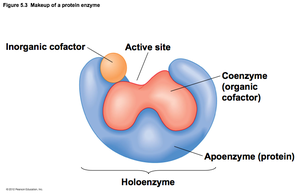
Many enzymes require non-protein components to function:
Apoenzyme: The protein portion of an enzyme.
Cofactor: Non-protein component (inorganic ions or organic molecules called coenzymes).
Holoenzyme: The complete, active enzyme with its cofactor.
Factors Influencing Enzyme Activity
Environmental and Chemical Factors
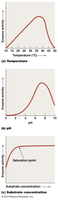
Enzyme activity is affected by several factors, including temperature, pH, substrate concentration, and the presence of inhibitors.
Optimal temperature and pH maximize enzyme activity; extremes can denature enzymes.
Increasing substrate concentration increases activity up to a saturation point.
Inhibitors can block enzyme activity without denaturing the enzyme.
Enzyme Inhibition
Enzyme inhibitors are substances that decrease or block enzyme activity. There are three main types:
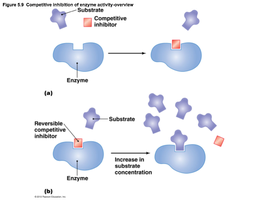
Competitive inhibitors: Compete with the substrate for binding to the active site.
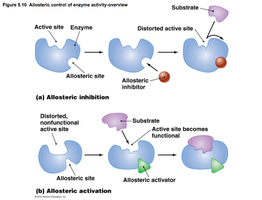
Noncompetitive (allosteric) inhibitors: Bind to a site other than the active site, causing a conformational change that reduces activity.
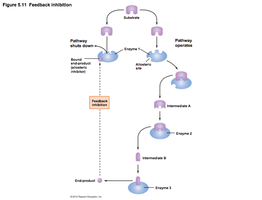
Feedback inhibition: The end product of a metabolic pathway inhibits an earlier step, regulating pathway activity.
Overview of Metabolic Pathways
Major Pathways in Microbial Metabolism
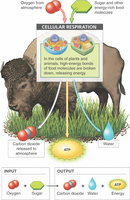
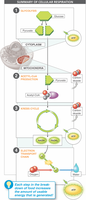
Microbial metabolism includes the catabolism of carbohydrates, lipids, and proteins, as well as anabolic pathways for biosynthesis. Carbohydrate catabolism is a primary energy source and includes glycolysis, the Krebs cycle, and the electron transport chain.
Glycolysis: Oxidation of glucose to pyruvic acid, producing ATP and NADH.
Krebs cycle: Oxidation of acetyl-CoA, generating NADH, FADH2, ATP, and CO2.
Electron transport chain: Series of redox reactions that produce most of the cell's ATP via chemiosmosis.
Fermentation: Partial oxidation of sugar to regenerate NAD+ when respiration is not possible.
Summary Table: Key Steps in Carbohydrate Catabolism
Pathway | Starting Material | End Products | ATP Produced | NADH/FADH2 Produced | CO2 Released |
|---|---|---|---|---|---|
Glycolysis | Glucose | 2 Pyruvic Acid | 2 (net) | 2 NADH | 0 |
Acetyl-CoA Formation | 2 Pyruvic Acid | 2 Acetyl-CoA, 2 CO2 | 0 | 2 NADH | 2 |
Krebs Cycle | 2 Acetyl-CoA | 4 CO2 | 2 | 6 NADH, 2 FADH2 | 4 |
Electron Transport Chain | 10 NADH, 2 FADH2 | H2O | ~34 | 0 | 0 |
Additional info: This summary table is inferred from standard knowledge of microbial metabolism and the provided notes.
