 Back
Microbial Metabolism and Biofilms: Foundations for Microbiology
Study Guide - Smart Notes
 Tailored notes based on your materials, expanded with key definitions, examples, and context.
Biofilms and Microbial Communities
Biofilm Formation and Significance
Biofilms are structured communities of microorganisms encased within a self-produced polymeric matrix that adhere to surfaces. These complex microbial assemblies are found in a variety of natural and artificial environments and play a critical role in microbial ecology, pathogenesis, and industrial processes.
Definition: A biofilm is a community of microorganisms attached to a surface and embedded in a matrix of extracellular polymeric substances (EPS).
Development: Biofilm formation involves initial attachment, microcolony formation, maturation, and eventual dispersal of cells.
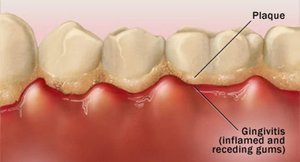
Examples: Dental plaque, slippery rocks in streams, and toilet bowl scum are all common biofilms.
Importance: Biofilms protect microbes from environmental stress, antibiotics, and the immune system, and facilitate nutrient exchange and genetic material transfer.
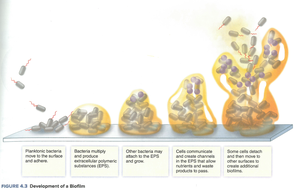
Stages of Biofilm Development:
Planktonic bacteria adhere to a surface.
Bacteria multiply and produce EPS.
Other bacteria may join and grow.
Cells communicate and exchange nutrients/waste.
Some cells detach and colonize new surfaces.
Applications: Understanding biofilms is crucial for controlling infections (e.g., dental plaque leading to gingivitis) and managing industrial fouling.

Microbial Metabolism: Overview and Key Concepts
Catabolism and Anabolism
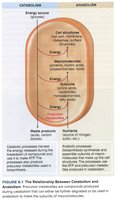
Microbial metabolism encompasses all biochemical reactions within a cell, divided into two main categories: catabolism (energy-yielding breakdown) and anabolism (energy-consuming synthesis).
Catabolism: Breakdown of organic or inorganic compounds to harvest energy.
Anabolism: Synthesis of cellular components from simpler molecules, requiring energy.
Energy Currency: ATP (adenosine triphosphate) is the primary molecule for storing and transferring energy in cells.
ATP: The Energy Currency
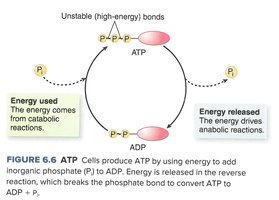
ATP is generated by catabolic reactions and used to power anabolic reactions. The hydrolysis of ATP releases energy that drives cellular processes.
ATP Structure: Contains high-energy phosphate bonds.
ATP Cycle: ATP is synthesized from ADP and inorganic phosphate (Pi) and broken down to release energy.
Pathways of ATP Generation
Substrate-Level Phosphorylation
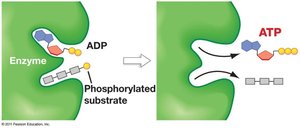
ATP is formed directly by transferring a phosphate group from a phosphorylated substrate to ADP. This process occurs in glycolysis and the Krebs cycle.
Direct ATP Formation: Enzyme-mediated transfer of phosphate.
Key Pathways: Glycolysis, Krebs cycle.
Oxidative Phosphorylation
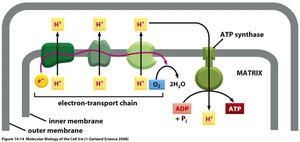
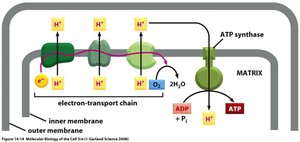
ATP is generated indirectly through the electron transport chain (ETC) and chemiosmosis. Electrons from NADH and FADH2 are transferred through a series of carriers, creating a proton gradient that drives ATP synthesis via ATP synthase.
Electron Transport Chain: Series of membrane-bound carriers transfer electrons to a terminal electron acceptor (often O2).
Proton Motive Force: The ETC pumps protons across the membrane, generating a gradient used by ATP synthase.
Central Metabolic Pathways
Glycolysis
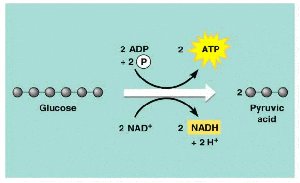
Glycolysis is the breakdown of glucose to pyruvate, producing ATP and NADH. It is a universal pathway found in nearly all organisms.
Inputs: Glucose, 2 NAD+, 2 ADP, 2 Pi
Outputs: 2 Pyruvate, 2 NADH, 2 ATP (net gain)
Krebs Cycle (Citric Acid Cycle, TCA Cycle)
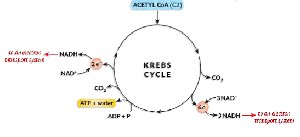
The Krebs cycle oxidizes acetyl-CoA to CO2, generating NADH, FADH2, and ATP (or GTP). It is a key source of reducing power for the electron transport chain.
Inputs: Acetyl-CoA, NAD+, FAD, ADP, Pi
Outputs: CO2, NADH, FADH2, ATP
Electron Transport Chain and Chemiosmosis
Electrons from NADH and FADH2 are transferred through the ETC, ultimately reducing a terminal electron acceptor. The energy released is used to pump protons, generating a proton motive force for ATP synthesis.
Terminal Electron Acceptor: In aerobic respiration, O2; in anaerobic respiration, other molecules (e.g., NO3-, SO42-).
ATP Synthase: Enzyme that synthesizes ATP using the proton gradient.
Alternative Metabolic Pathways
Fermentation
Fermentation is an anaerobic process where organic molecules serve as both electron donors and acceptors. It yields less ATP than respiration and produces characteristic end products (e.g., ethanol, lactic acid).
Final Electron Acceptor: Organic compound (not O2).
ATP Yield: Lower than aerobic respiration.
Examples: Ethanol and CO2 (yeast), lactic acid (Streptococcus).
Anaerobic Respiration
Some microbes use molecules other than O2 as terminal electron acceptors (e.g., nitrate, sulfate), allowing respiration in anaerobic environments.
Terminal Electron Acceptors: NO3-, SO42-, CO2, etc.
ATP Yield: Generally less than aerobic respiration but more than fermentation.
Microbial Diversity in Energy and Carbon Acquisition
Categories of Energy and Carbon Sources
Microbes exhibit remarkable diversity in their metabolic strategies, classified by their energy and carbon sources.
Type | Energy Source | Carbon Source |
|---|---|---|
Chemoorganotroph | Organic chemicals | Organic compounds |
Chemolithotroph | Inorganic chemicals | CO2 or organic compounds |
Phototroph | Light | CO2 (autotroph) or organic compounds (heterotroph) |
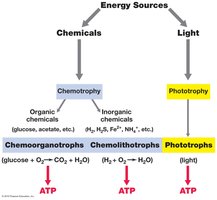
Autotrophs: Use CO2 as their carbon source.
Heterotrophs: Use organic compounds as their carbon source.
Redox Reactions and Energy Yield
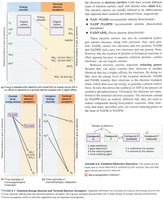
Energy is released when electrons move from a donor with low electron affinity to an acceptor with higher affinity. The greater the difference in redox potential, the more energy is available for ATP synthesis.
Glucose and O2: The large difference in redox potential explains the high ATP yield in aerobic respiration.
Alternative Electron Acceptors: Microbes can use a variety of electron donors and acceptors, enabling survival in diverse environments.
Summary Table: Microbial Energy Pathways
Pathway | Electron Donor | Electron Acceptor | ATP Yield | Example |
|---|---|---|---|---|
Aerobic Respiration | Organic (e.g., glucose) | O2 | High | Most bacteria, mitochondria |
Anaerobic Respiration | Organic/Inorganic | NO3-, SO42-, etc. | Moderate | Denitrifying bacteria |
Fermentation | Organic | Organic | Low | Yeast, lactic acid bacteria |
Chemolithotrophy | Inorganic (e.g., H2, Fe2+) | O2 or other | Variable | Nitrifying bacteria |
Phototrophy | Light | CO2 or organic | Variable | Cyanobacteria |
Additional info: These foundational concepts in microbial metabolism and biofilm formation are essential for understanding microbial physiology, ecology, and their roles in health and disease. Mastery of these topics prepares students for advanced study in microbial diversity, genetics, and biotechnology.
