 Back
Microbial Metabolism and Its Impact on Human Health
Study Guide - Smart Notes
 Tailored notes based on your materials, expanded with key definitions, examples, and context.
Microbial Metabolism: Acquiring Energy and Carbon for Growth
Overview of Microbial Metabolism
Microorganisms possess diverse metabolic capabilities, enabling them to utilize a wide range of substances for energy and carbon. These metabolic processes are fundamental to microbial growth, survival, and their interactions with hosts and environments.
Metabolism: The sum of all chemical reactions in a cell, including catabolism (breakdown) and anabolism (synthesis).
Microbial diversity: There is no known natural substance that some microorganism or community of microbes cannot metabolize.
Artificial chemicals: Some synthetic compounds may be resistant (recalcitrant) to microbial degradation.
Classification of Microorganisms by Energy and Carbon Sources
Microbes are classified based on their sources of energy and carbon, which determines their ecological roles and metabolic pathways.
Phototrophs: Use light as an energy source.
Chemotrophs: Obtain energy from chemical compounds.
Chemoorganotrophs: Use organic compounds for energy.
Chemolithotrophs: Use inorganic compounds for energy.
Autotrophs: Use CO2 as a carbon source, synthesizing organic molecules.
Heterotrophs: Require organic carbon precursors.
ATP: The Cellular Energy Currency
ATP Synthesis and Phosphorylation Mechanisms
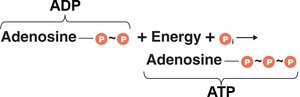
ATP (adenosine triphosphate) is the primary energy storage molecule in cells. It is synthesized from ADP (adenosine diphosphate) and inorganic phosphate (Pi) through three main mechanisms:
Substrate-level phosphorylation: Direct transfer of phosphate from a high-energy substrate to ADP.
Oxidative phosphorylation: Energy from electron transport is used to add phosphate to ADP.
Photophosphorylation: Light energy drives ATP synthesis in phototrophs.
Metabolic Pathways for Energy Production
Respiration vs. Fermentation
Microbes utilize different pathways to extract energy from glucose, depending on environmental conditions and available electron acceptors.
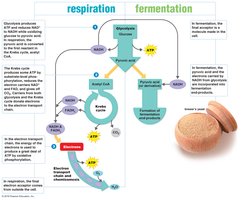
Respiration: Complete breakdown of glucose to CO2 via glycolysis, Krebs cycle, and electron transport system (ETS).
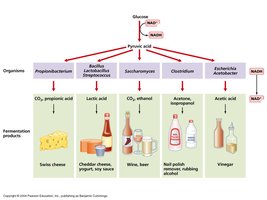
Fermentation: Partial breakdown of glucose, resulting in organic waste products; does not use Krebs cycle or ETS.
Glycolysis: First stage in both processes, yielding 2 ATP, 2 NADH, and 2 pyruvate per glucose.
Electron Transport System and Proton Motive Force
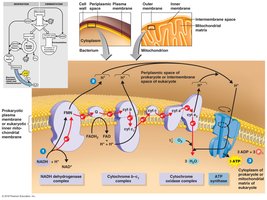
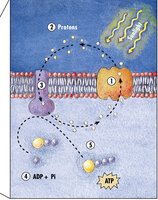
The electron transport system (ETS) is a series of membrane-bound proteins that transfer electrons, creating a proton gradient (proton motive force, PMF) used to synthesize ATP.
ETS location: Plasma membrane in prokaryotes; mitochondrial inner membrane in eukaryotes.
Proton pumps: Move H+ across the membrane, generating PMF.
ATP synthase: Enzyme channel that uses PMF to produce ATP.
Terminal electron acceptor: Oxygen in aerobic respiration; other compounds in anaerobic respiration.
ATP Yield in Aerobic Respiration
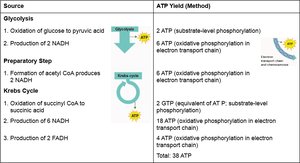
Aerobic respiration is highly efficient, yielding up to 36-38 ATP per glucose molecule through substrate-level and oxidative phosphorylation.
Glycolysis: 2 ATP (substrate-level), 6 ATP (oxidative, from NADH).
Krebs cycle: 2 GTP (substrate-level), 22 ATP (oxidative, from NADH and FADH2).
Total yield: 38 ATP in prokaryotes, 36 ATP in eukaryotes.
Anaerobic Respiration and Fermentation
Anaerobic respiration uses electron acceptors other than oxygen, resulting in lower ATP yield. Fermentation regenerates NAD+ by transferring electrons to pyruvate or its derivatives, producing organic waste products.
Anaerobic respiration: Final electron acceptor is inorganic/organic compound other than O2; less efficient.
Fermentation: Yields 2 ATP per glucose (all from glycolysis); end products vary by microbe.
Microbial Metabolism and Human Health
The Human Gut Microbiome
The human gut microbiome consists of over 1,000 microbial species, with more than 100 trillion bacteria. These microbes play essential roles in health and disease.
Protection: Block pathogen attachment.
Metabolic activities: Produce absorbable compounds (e.g., short chain fatty acids).
Communication: Influence brain and immune system via small molecules.
Variation: Microbiome composition varies with age, gender, diet, exercise, drugs, and stress.
Microbes and Obesity
Differences in gut microbiome composition are linked to obesity. Fecal transplant experiments in rats and mice have shown that changing the microbiome can affect weight and cognitive function.
Fecal transplants: Used to treat Clostridium difficile infections and reverse cognitive impairments.
Microbial genes: Outnumber human genes, contributing to metabolic diversity.
Alcohol-Producing Gut Bacteria and Liver Disease
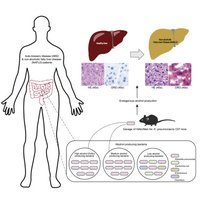
Certain strains of Klebsiella pneumoniae produce high levels of alcohol in the gut, contributing to nonalcoholic fatty liver disease (NAFLD).
Auto-brewery syndrome: Gut bacteria produce alcohol, leading to intoxication and liver damage.
HiAlc Kpn: Associated with NAFLD; transplantation into mice causes disease.
Microbial Interactions and Oral Health
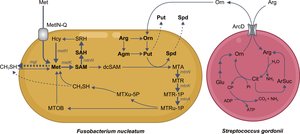
Microbial communities often depend on each other. For example, Streptococcus gordonii activates Fusobacterium nucleatum to produce methyl mercaptan, causing bad breath and potentially contributing to gum disease.
Disrupting interactions: May help treat halitosis and prevent oral diseases.
Specialized Metabolic Pathways
Phototrophy and Chemolithotrophy
Phototrophs and chemolithotrophs utilize unique mechanisms to generate energy and fix carbon.
Phototrophs: Use light to drive electron transport and ATP synthesis; oxygenic (cyanobacteria) and anoxygenic (photosynthetic bacteria).
Chemolithoautotrophs: Oxidize inorganic compounds for energy and reduce CO2 for carbon; primary producers in many ecosystems.
Bioremediation: Microbial Metabolism in Environmental Cleanup
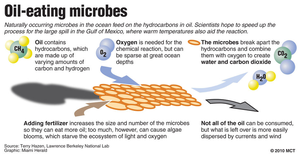
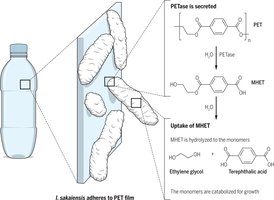
Microbes are used to eliminate toxic materials from the environment through bioremediation.
Strategies: Add nutrients, introduce new microbes, or genetically engineer bacteria.
Applications: Oil spill cleanup, plastic degradation.
Microbial Influence on Human Metabolism and Disease
Microbial Enzymes and Cardiovascular Disease
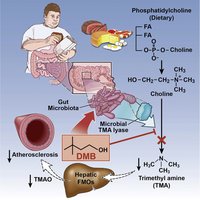
Gut microbes can convert dietary phosphatidylcholine to choline, which is further metabolized to trimethylamine (TMA) by microbial TMA lyase. TMA is converted to TMAO in the liver, contributing to atherosclerosis. DMB, found in red wine and olive oil, inhibits TMA lyase and reduces risk.
Diet-microbe interaction: Influences cardiovascular health.
Potential interventions: Dietary modifications and enzyme inhibitors.
Microbial Impact on Drug Metabolism
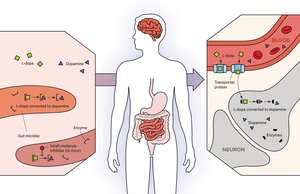
Gut bacteria can alter the effectiveness of medications by metabolizing them before they reach their target. For example, some bacteria convert L-dopa to dopamine in the intestine, preventing it from crossing the blood-brain barrier and reducing its efficacy in treating Parkinson's disease.
Drug-microbe interaction: May require higher doses or alternative treatments.
Personalized medicine: Understanding microbiome influence can improve therapy.
Summary Table: Key Metabolic Pathways and Their Features
Pathway | Energy Source | Carbon Source | ATP Yield | Key Features |
|---|---|---|---|---|
Fermentation | Organic compounds | Organic compounds | 2 ATP/glucose | No ETS or Krebs cycle; organic waste products |
Aerobic Respiration | Organic compounds | Organic compounds | 36-38 ATP/glucose | ETS, Krebs cycle, O2 as final electron acceptor |
Anaerobic Respiration | Organic compounds | Organic compounds | <38 ATP/glucose | ETS, Krebs cycle, non-O2 electron acceptor |
Phototrophy | Light | CO2 or organic compounds | Variable | Photophosphorylation, pigments, PMF |
Chemolithotrophy | Inorganic compounds | CO2 | Variable | ETS, PMF, primary production |
Conclusion
Microbial metabolism is central to both environmental processes and human health. Understanding these pathways enables us to harness microbes for bioremediation, improve medical treatments, and appreciate their profound influence on our physiology and disease states.
