 Back
BackMicrobial Metabolism and Its Impact on the Physical Microenvironment
Study Guide - Smart Notes
 Tailored notes based on your materials, expanded with key definitions, examples, and context.
Theme: Microbial Metabolism Can Transform the Physical Microenvironment
Introduction to Microbial Diversity and Metabolism
Microbial diversity encompasses the vast array of microorganisms and their metabolic capabilities, which play a crucial role in shaping their environments. One central theme in microbial ecology is that microbial metabolism can actively transform the physical microenvironment, affecting factors such as pH, nutrient availability, and the structure of biological surfaces.
Primary Colonizers in the Oral Cavity
Primary colonizers are the first microorganisms to adhere directly to a surface, such as tooth enamel, in the oral cavity. These bacteria initiate the formation of biofilms, which are structured microbial communities encased in a self-produced matrix.
Definition: Primary colonizers are microbes capable of direct attachment to host surfaces, often through specific adhesins.
Role: They create a foundation for subsequent microbial colonization and biofilm development.
Example: "Oral cocci" such as Streptococcus species are common primary colonizers of teeth.
Microbial Metabolism and pH Buffering in Saliva
Saliva maintains a near-neutral pH and possesses buffering capacity, which helps protect tooth enamel from acid-induced demineralization. The buffering system involves the equilibrium between carbonic acid, bicarbonate, and carbon dioxide, catalyzed by the enzyme carbonic anhydrase.
Key Reaction: The conversion between bicarbonate and carbon dioxide helps neutralize acids.
Equation:

Dental Caries: Microbial Transformation of Tooth Surfaces
Despite the buffering action of saliva, dental caries (tooth decay) occurs due to the metabolic activities of oral bacteria. These bacteria ferment dietary carbohydrates, producing acidic byproducts that lower the local pH and demineralize tooth enamel.
Dental Caries: The destruction of tooth enamel by acid produced from bacterial fermentation.
Biofilm Formation: Primary colonizers secrete substances to form a biofilm matrix, which shelters bacteria from saliva and promotes acid accumulation.
Key Bacteria: Streptococcus mutans and other acidogenic species are major contributors.
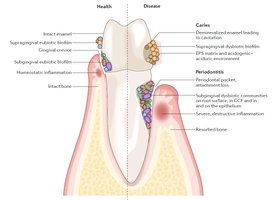
Biofilm Development and Sucrose Metabolism
Primary colonizers utilize sucrose to construct the biofilm matrix and produce acidic byproducts through fermentation. This process enables other species to adhere and thrive within the biofilm, further enhancing its complexity and pathogenic potential.
Sucrose Hydrolysis: Sucrose is split into glucose and fructose.
Biofilm Matrix: Glucose is polymerized to form the extracellular matrix.
Acid Production: Fructose is fermented, generating acids that lower pH.
Selective Growth: Biofilms act similarly to selective media, favoring aciduric and acidogenic bacteria.
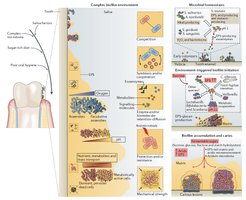
Microbial Community Shifts in Cariogenic Biofilms
Frequent exposure to fermentable carbohydrates and poor oral hygiene lead to an increase in acidogenic and aciduric bacteria within biofilms. These communities differ from those in early biofilms and are more capable of surviving in acidic environments, perpetuating dental caries.
Acidogenic Bacteria: Bacteria that produce acid as a metabolic byproduct.
Aciduric Bacteria: Bacteria that can survive and grow in acidic conditions.
Physical Protection: Biofilms shield bacteria from saliva's buffering effects, maintaining localized acidification.
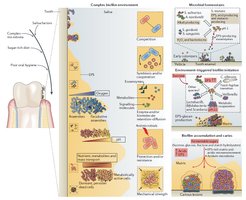
Aerotolerance in Oral Microbiota
Most oral bacteria are facultative or obligate anaerobes, thriving in low-oxygen environments such as gingival crevices, tongue pits, and within dental plaque. This adaptation allows them to persist and contribute to biofilm formation and disease progression.
Facultative Anaerobes: Can grow with or without oxygen.
Obligate Anaerobes: Require the absence of oxygen for growth.
Microenvironments: Anaerobic niches are common in the oral cavity.
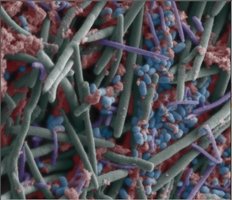
Microbial Metabolism and Elemental Cycling in the Macroenvironment
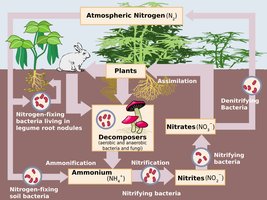
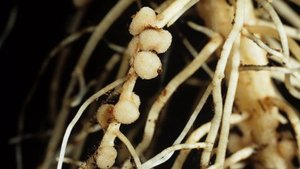
Beyond the oral cavity, microbial metabolism is essential for the cycling of elements such as nitrogen, sulfur, and carbon in the environment. Microorganisms mediate key transformations that sustain ecosystem function and nutrient availability.
Nitrogen Cycle: Includes nitrogen fixation, nitrification, and denitrification, all driven by microbial activity.
Carbon Cycle: Microbes decompose organic matter, releasing carbon dioxide and recycling nutrients.
Sulfur Cycle: Bacteria oxidize and reduce sulfur compounds, impacting soil and water chemistry.
Summary Table: Key Features of Microbial Transformation of Environments
Feature | Oral Microenvironment | Macroenvironment |
|---|---|---|
Primary Colonizers | Adhere to tooth enamel, initiate biofilm | Colonize soil, water, plant roots |
Metabolic Activity | Fermentation of sugars, acid production | Nutrient cycling (N, C, S) |
Environmental Impact | Demineralization, caries, altered pH | Soil fertility, atmospheric gas balance |
Community Structure | Biofilm, anaerobic niches | Microbial consortia, symbiosis |
Conclusion
Microbial metabolism is a powerful force that shapes both micro- and macroenvironments. In the oral cavity, it drives biofilm formation and dental caries, while in the broader environment, it sustains essential nutrient cycles. Understanding these processes is fundamental to microbiology and has direct implications for health, ecology, and biotechnology.
