 Back
Microbial Metabolism: Catabolic and Anabolic Pathways
Study Guide - Smart Notes
 Tailored notes based on your materials, expanded with key definitions, examples, and context.
Microbial Metabolism
Overview of Metabolism
Microbial metabolism encompasses all controlled biochemical reactions within cells, ultimately supporting cell reproduction. These reactions are divided into catabolic (breaking down molecules) and anabolic (building molecules) pathways, which are interconnected and regulated by enzymes and energy carriers.
Metabolism: The sum of all biochemical reactions in a cell.
Catabolic pathways: Break down macromolecules, release energy, and generate precursor metabolites.
Anabolic pathways: Synthesize macromolecules, require energy, and use precursor metabolites as building blocks.
Energy storage: Energy from catabolism is stored in ATP, which is then used in anabolic reactions.
Metabolic Pathways
Metabolic pathways are series of reactions that transform substrates into products. Catabolic pathways are exergonic (release energy), while anabolic pathways are endergonic (require energy).
Catabolic pathways: Generate smaller molecules and precursor metabolites.
Anabolic pathways: Use precursor metabolites and ATP to build larger molecules.
Oxidation & Reduction Reactions
Redox Reactions
Oxidation and reduction reactions involve the transfer of electrons between molecules. These reactions are fundamental to energy production in cells.
Oxidation: Loss of electrons (often to oxygen).
Reduction: Gain of electrons (becomes less positive).
Redox reactions: Always occur simultaneously; electron donor is oxidized, electron acceptor is reduced.
Mnemonic: OILRIG (Oxidation Involves Loss, Reduction Involves Gain).
Electron Carriers
Electron carriers transport electrons during redox reactions, often in the form of hydrogen atoms.
NAD+ → NADH
NADP+ → NADPH
FAD → FADH2
ATP Production & Energy Storage
ATP Synthesis
ATP is the primary energy currency in cells, produced by phosphorylation of ADP. There are three main mechanisms for ATP synthesis:
Substrate-level phosphorylation: Direct transfer of phosphate to ADP.
Oxidative phosphorylation: Energy from redox reactions in the electron transport chain drives ATP synthesis.
Photophosphorylation: Energy from light is used to phosphorylate ADP (in photosynthetic organisms).
Roles of Enzymes in Metabolism
Enzyme Function
Enzymes are organic catalysts that increase the likelihood of reactions without being permanently changed. They lower activation energy and are highly specific to their substrates.
Categories of enzymes:
Hydrolases (catabolic, add water)
Isomerases (rearrange molecules)
Ligases/polymerases (anabolic)
Lyases (catabolic, no water)
Oxidoreductases (redox reactions)
Transferases (transfer functional groups)
Apoenzyme: Inactive protein portion.
Cofactor: Non-protein component (inorganic ions or coenzymes).
Holoenzyme: Active enzyme formed by apoenzyme and cofactors.
Ribozymes: RNA molecules with catalytic activity.
Enzyme Activity
Enzyme activity is influenced by temperature, pH, substrate concentration, and inhibitors. Enzymes operate via a lock-and-key mechanism with induced fit.
Temperature: Increases activity up to an optimum; extreme heat causes denaturation.
pH: Alters hydrogen bonding and enzyme shape.
Inhibitors: Block enzyme activity (competitive, noncompetitive, feedback inhibitors).
Regulation of Metabolic Pathways
Feedback Inhibition
Feedback inhibition regulates metabolic pathways by slowing or stopping anabolic reactions when products are abundant.
Simple feedback inhibition: End product inhibits the first enzyme in the pathway.
Complex feedback inhibition: Multiple products regulate multiple enzymes.
Allosteric Regulation
Enzyme activity can be controlled by allosteric sites, which bind regulatory molecules and alter enzyme function.
Allosteric regulation: Changes enzyme activity or specificity.
Gene expression control: Regulates amount and timing of enzyme production.
Metabolic expression control: Regulates activity of enzymes once produced.
Carbohydrate Catabolism
Overview
Carbohydrate catabolism is the primary energy source for many organisms, with glucose being the most commonly used substrate. Glucose is catabolized by cellular respiration or fermentation.
Cellular respiration: Complete breakdown of glucose to CO2 and H2O.
Fermentation: Partial breakdown of glucose, producing organic waste products.
Glycolysis
Glycolysis occurs in the cytoplasm and splits glucose into two pyruvate molecules, yielding ATP and NADH.
Stages:
Energy-Investment Stage
Lysis Stage
Energy-Conserving Stage
Net gain: 2 ATP, 2 NADH, 2 pyruvate
Alternative Pathways
Some microbes use alternative pathways to glycolysis, yielding different metabolites and less ATP.
Pentose phosphate pathway: Net gain of 2 NADPH, 1 ATP, precursor metabolites.
Entner-Doudoroff pathway: Net gain of 1 ATP, 2 NADPH, precursor metabolites.
Cellular Respiration
Synthesis of Acetyl-CoA (Transition Step)
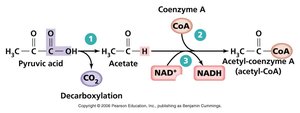
Pyruvate is converted to acetyl-CoA, CO2, and NADH, preparing for entry into the Krebs cycle.
Products: 2 acetyl-CoA, 2 CO2, 2 NADH per glucose
The Krebs Cycle
The Krebs cycle (Citric Acid Cycle) further oxidizes acetyl-CoA, transferring energy to NAD+ and FAD.
Location: Cytoplasm (prokaryotes), mitochondrial matrix (eukaryotes)
Reactions: Anabolism, isomerization, hydration, redox, decarboxylation, substrate-level phosphorylation
Products per glucose: 2 ATP, 2 FADH2, 6 NADH, 4 CO2
Electron Transport Chain (ETC) & Chemiosmosis
The ETC is a series of membrane-bound electron carriers that transfer electrons, pump protons, and generate a proton gradient used for ATP synthesis.
Location: Cytoplasmic membrane (prokaryotes), cristae (eukaryotes)
Electron carriers: Flavoproteins, ubiquinones, metal-containing proteins, cytochromes
Aerobic respiration: Final electron acceptor is oxygen (produces water)
Anaerobic respiration: Final electron acceptor is not oxygen (produces other compounds)
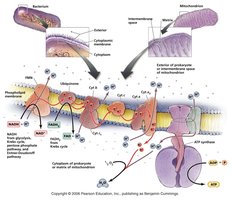
ATP is synthesized by oxidative phosphorylation as protons flow through ATP synthase, driven by the proton motive force.
Total ATP yield: ~34 ATP from one glucose via ETC
Fermentation
Fermentation Pathways
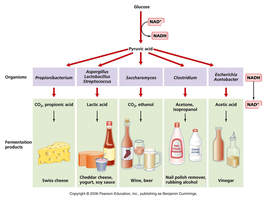
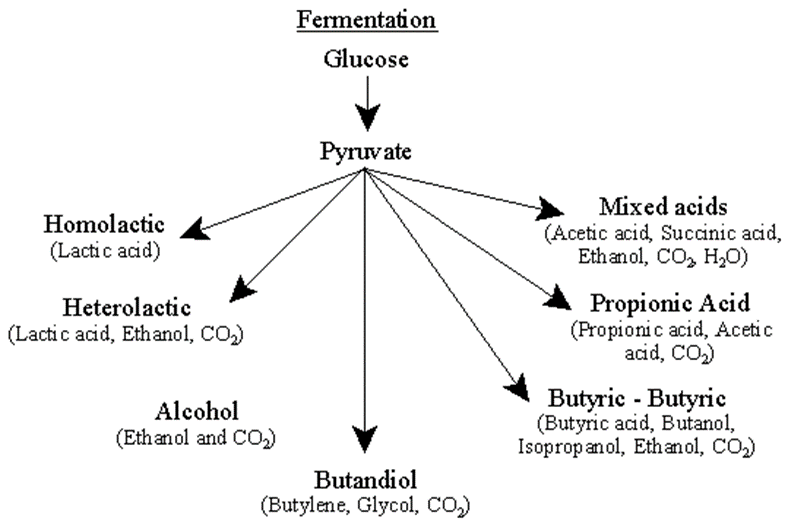
Fermentation provides an alternative to respiration when cells cannot use the ETC. It regenerates NAD+ for glycolysis and produces organic waste products.
Function: Regeneration of NAD+ for glycolysis
Efficiency: Less efficient than respiration; most energy remains in fermentation products
Products: Ethanol, acetic acid, lactic acid, etc.
Other Catabolic Pathways
Lipid and Protein Catabolism
Microbes can also catabolize lipids and proteins for energy and precursor metabolites. Lipids are broken down into fatty acids and glycerol, while proteins are hydrolyzed into amino acids.
Lipid catabolism: Fatty acids enter beta-oxidation; glycerol enters glycolysis.
Protein catabolism: Amino acids are deaminated and enter metabolic pathways.
Anabolic Pathways
Biosynthesis of Macromolecules
Anabolic pathways synthesize carbohydrates, lipids, amino acids, and nucleotides using energy from ATP and precursor metabolites from catabolic pathways.
Carbohydrate biosynthesis: Reverse of glycolysis and other pathways.
Lipid biosynthesis: Uses acetyl-CoA and other metabolites.
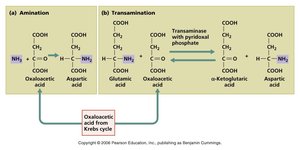
Amino acid biosynthesis: Involves amination and transamination reactions.
Nucleotide biosynthesis: Uses pentose phosphate pathway intermediates.
Integrating Metabolic Functions
Metabolic Regulation and Integration
Cells regulate metabolism based on need, availability of substrates, and energy efficiency. Enzymes and transport proteins are synthesized or degraded as required, and feedback inhibition ensures efficient use of resources.
Regulatory mechanisms: Isolation of enzymes, allosteric regulation, feedback inhibition, gene expression control, metabolic expression control.
Amphibolic pathways: Pathways that can function in both catabolic and anabolic directions.
Example: Channel proteins are made and degraded as needed; enzymes for catabolizing a substrate are produced only when the substrate is available.
