 Back
Microbial Metabolism: Central Pathways and Energy Conservation
Study Guide - Smart Notes
 Tailored notes based on your materials, expanded with key definitions, examples, and context.
Microbial Metabolism
Requirements for Cell Growth
Microbial cell growth requires the synthesis of all cellular components from available substrates. This process involves both the breakdown of nutrients (catabolism) and the construction of new molecules (anabolism).
Substrates: Molecules taken up by the cell to be used in metabolic reactions.
Waste products: Byproducts of metabolism that must be removed.
Energy conservation: Energy is conserved in chemical bonds and reduced cofactors.
Anabolic intermediates: Precursors for biosynthesis of macromolecules.
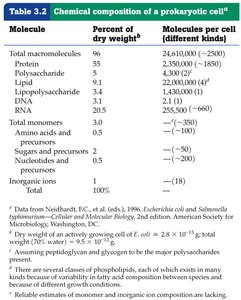
Bacterial Metabolism: Catabolism and Anabolism
The sum of all chemical reactions in an organism is called metabolism. Metabolism relies on electron donors and acceptors to drive reactions. Catabolism breaks down substrates to release energy and generate intermediates, while anabolism uses these intermediates to build new cell components.
Catabolism: Breakdown of molecules to release energy.
Anabolism: Synthesis of cellular components such as proteins, DNA, RNA, cell membrane, and cell wall.
Central Metabolism
Central metabolism refers to the core pathways that process organic substrates, including glycolysis, the citric acid cycle (CAC), and the pentose phosphate pathway. These pathways are essential for energy extraction, conservation, and production of anabolic intermediates.
Glycolysis: Oxidizes glucose to pyruvate.
CAC (Krebs cycle): Completes oxidation of pyruvate to CO2.
Pentose phosphate pathway: Generates NADPH and pentoses.
Energy Conservation Mechanisms
Cells conserve energy from substrate catabolism via two main mechanisms: substrate-level phosphorylation and oxidative phosphorylation.
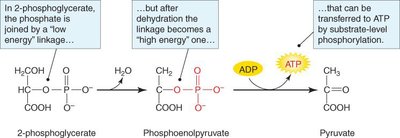
Substrate-level phosphorylation: Direct transfer of phosphate from a phosphorylated substrate to ADP, forming ATP. Occurs in glycolysis.
Oxidative phosphorylation: Involves electron transport chain and proton motive force in the cytoplasmic membrane.
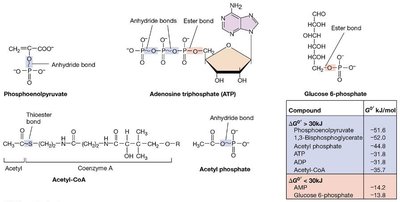
Redox Reactions and Reduced Cofactors
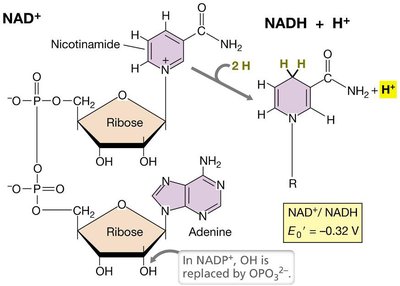
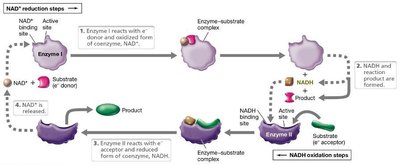
Redox reactions are central to metabolism, involving the transfer of electrons. Oxidation is the removal of electrons, while reduction is the addition of electrons. Cofactors such as NAD+ and NADH shuttle electrons between reactions, facilitating energy conservation.
NAD+: Accepts electrons and becomes NADH.
NADH: Donates electrons in subsequent reactions.
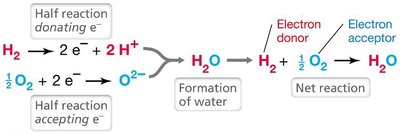
Transport of Substrates into Bacterial Cells
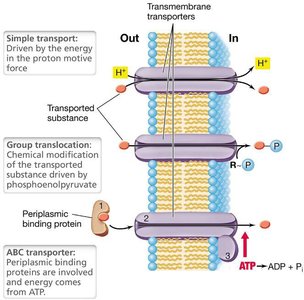
Bacteria use various mechanisms to transport substrates across the cell membrane, including simple transport, group translocation, and ABC transporters.
Simple transport: Driven by proton motive force.
Group translocation: Chemical modification of the transported substance.
ABC transporter: Uses ATP and periplasmic binding proteins.
Glycolysis: Glucose Metabolism
Pathway Overview
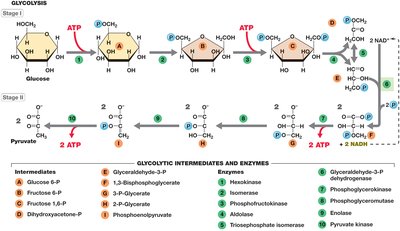
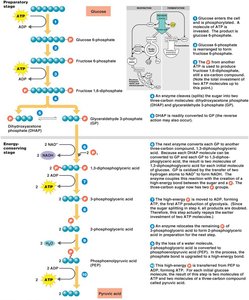
Glycolysis, also known as the Embden–Meyerhof–Parnas pathway, is a central pathway for glucose catabolism. It oxidizes glucose to pyruvate and can participate in fermentation, aerobic, and anaerobic respiration.
Preparatory stage: Glucose is split into two molecules of glyceraldehyde 3-phosphate; 2 ATP are used.
Energy-conserving stage: Glyceraldehyde 3-phosphate is oxidized to pyruvate; 4 ATP and 2 NADH are produced.
Fate of Pyruvate and NADH
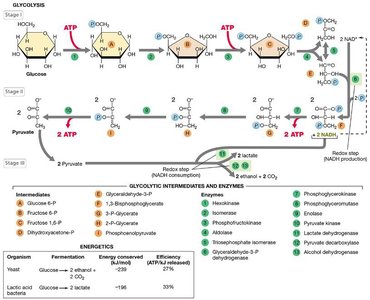
The fate of pyruvate and NADH depends on the metabolic pathway chosen by the cell:
Fermentation: Incomplete oxidation; electrons transferred to organic compounds derived from pyruvate.
Respiration: Complete oxidation to CO2 via the citric acid cycle; electrons transferred to inorganic terminal electron acceptors (e.g., O2, NO3-, SO42-).
Citric Acid Cycle (CAC)
Pathway Steps and Intermediates
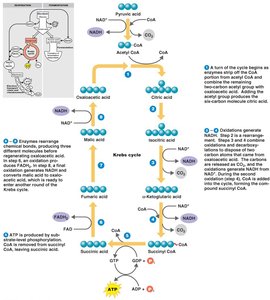
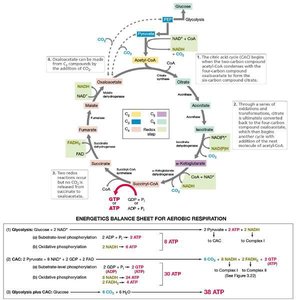
The citric acid cycle is a pathway in which pyruvate is completely oxidized to CO2, yielding a much greater ATP output than fermentation.
Step 1: Decarboxylation of pyruvate to CO2, NADH, and acetyl-CoA.
Step 2: Acetyl-CoA combines with oxaloacetate to form citric acid.
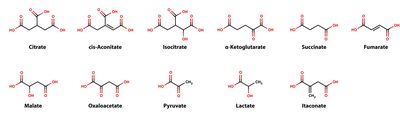
Subsequent steps: Series of decarboxylations and redox reactions regenerate oxaloacetate and produce NADH, FADH2, and CO2.
Summary of CAC and Respiration
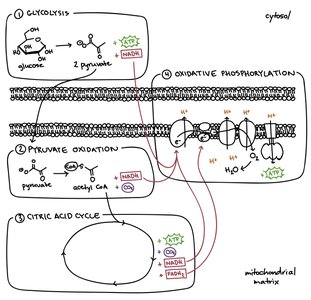
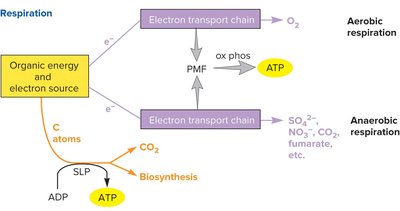
Respiration yields much more ATP than fermentation. NADH and FADH2 produced in the CAC are oxidized in the electron transport chain, generating a proton motive force for ATP synthesis.
Aerobic respiration: Final electron acceptor is oxygen.
Anaerobic respiration: Final electron acceptor is an inorganic molecule other than oxygen.
Fermentation: No electron transport chain; organic compounds as terminal electron acceptors.
Energetics of Microbial Metabolism
ATP Yield Comparison
The efficiency of energy conservation varies by pathway:
Fermentation: 2 ATP per glucose.
Aerobic respiration: Up to 38 ATP per glucose.
Anaerobic respiration: Variable ATP yield, depending on the electron acceptor.
Key Terms and Concepts
Substrate-level phosphorylation: ATP synthesis by direct transfer of phosphate.
Oxidative phosphorylation: ATP synthesis via electron transport chain and proton motive force.
Redox reactions: Electron transfer processes central to energy conservation.
Electron transport chain: Series of membrane-bound carriers that transfer electrons and generate PMF.
Example: Energetics Balance Sheet for Aerobic Respiration
For one molecule of glucose:
Glycolysis: 2 ATP (substrate-level), 2 NADH
CAC: 2 ATP (substrate-level), 6 NADH, 2 FADH2
Oxidative phosphorylation: 34 ATP (from NADH and FADH2)
Total: 38 ATP
Additional info: The notes and images provide a comprehensive overview of microbial metabolism, central metabolic pathways, energy conservation mechanisms, and the role of redox reactions and cofactors. The included images directly reinforce the explanations of metabolic pathways, substrate transport, and energy conservation.
----------------------------------------
