 Back
BackMicrobial Metabolism: Chapter 5 Study Guide
Study Guide - Smart Notes
 Tailored notes based on your materials, expanded with key definitions, examples, and context.
Metabolism: An Overview
Definition and Types of Metabolic Pathways
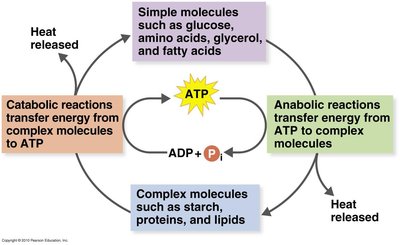
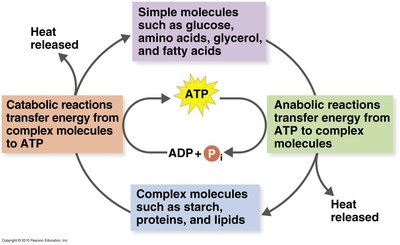
Metabolism is the sum of all chemical reactions occurring within a cell or organism. It consists of two main types: catabolism (breakdown of complex molecules to release energy) and anabolism (synthesis of complex molecules using energy). These processes are interconnected through the molecule ATP, which acts as an energy shuttle between catabolic and anabolic reactions.
Catabolic reactions: Transfer energy from complex molecules to ATP; heat is released.
Anabolic reactions: Transfer energy from ATP to complex molecules; heat is released.
Metabolic pathway: A sequence of enzymatically catalyzed chemical reactions in a cell.
Enzymes and Their Function
Structure and Mechanism
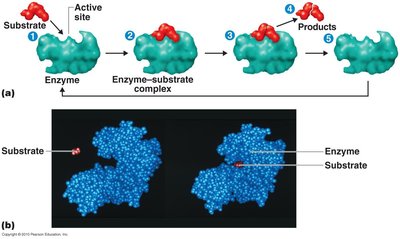
Enzymes are biological catalysts, usually proteins, that speed up chemical reactions without being consumed. They are highly specific for their substrates and operate via the formation of an enzyme-substrate complex.
Substrate: The reactant that an enzyme acts upon.
Active site: The region of the enzyme where the substrate binds.
Enzyme-substrate complex: Temporary association during the reaction.
Collision Theory and Activation Energy
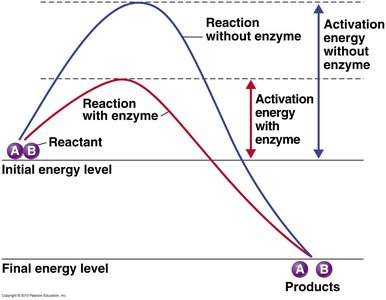
Chemical reactions occur when molecules collide with sufficient energy. Enzymes lower the activation energy required, increasing the reaction rate.
Activation energy: Minimum energy needed to initiate a reaction.
Reaction rate: Frequency of effective collisions.
Factors Affecting Enzyme Activity
Several factors influence enzyme activity, including temperature, pH, substrate concentration, and inhibitors.
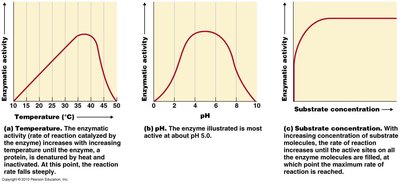
Temperature: Enzyme activity increases with temperature up to an optimum, then declines due to denaturation.
pH: Each enzyme has an optimal pH; extremes cause denaturation.
Substrate concentration: Activity increases with substrate concentration until saturation is reached.
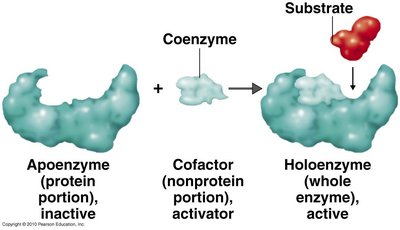
Apoenzymes, Cofactors, and Holoenzymes
Enzymes may require non-protein helpers for activity.
Apoenzyme: Inactive protein portion.
Cofactor: Non-protein component (e.g., ions, minerals).
Coenzyme: Organic cofactor (e.g., NAD+, FAD).
Holoenzyme: Active enzyme (apoenzyme + cofactor).
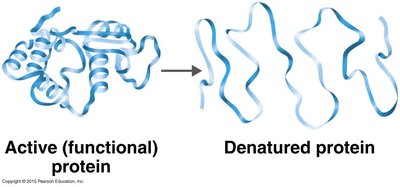
Denaturation
Denaturation is the loss of protein structure and function due to changes in pH, salt concentration, or temperature.
Active protein: Maintains functional 3D structure.
Denatured protein: Loses structure and function.
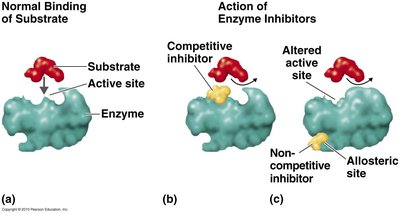
Enzyme Inhibition
Enzyme activity can be regulated by inhibitors.
Competitive inhibitors: Bind to the active site, blocking substrate.
Non-competitive inhibitors: Bind to an allosteric site, altering enzyme shape and function.
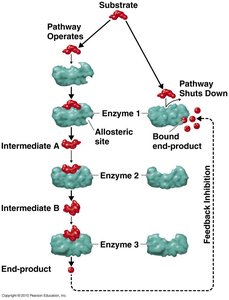
Feedback Inhibition
Feedback inhibition is a regulatory mechanism where the end product of a pathway inhibits an early enzyme, preventing overproduction and conserving resources.
Allosteric regulation: End product binds to allosteric site, shutting down pathway.
Redox Reactions and Energy Transfer
Oxidation and Reduction
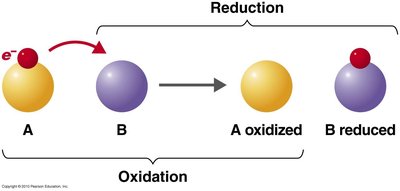
Redox reactions involve the transfer of electrons between molecules.
Oxidation: Loss of electrons.
Reduction: Gain of electrons.
Redox pair: One molecule is oxidized, another is reduced.
Dehydrogenation and Electron Carriers
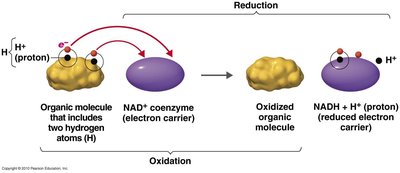
Dehydrogenation is the removal of hydrogen atoms (and electrons) from a substrate, often involving electron carriers like NAD+.
NAD+: Accepts hydrogen atoms, becoming NADH.
ATP and Phosphorylation
ATP Generation and Types of Phosphorylation
ATP is generated by phosphorylation of ADP. There are three main types:
Substrate-level phosphorylation: Direct transfer of phosphate to ADP by an enzyme.
Oxidative phosphorylation: Energy from electron transfer in the electron transport chain is used to generate ATP.
Photophosphorylation: Light energy drives ATP synthesis in photosynthetic organisms.
Carbohydrate Metabolism
Overview of Catabolic Pathways
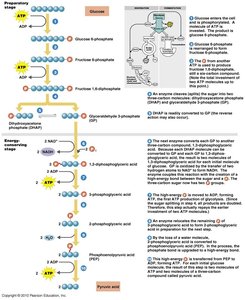
Microbes primarily use carbohydrates, especially glucose, as energy sources. The main catabolic pathways are glycolysis, the intermediate reaction, the citric acid (Krebs) cycle, and oxidative phosphorylation.
Glycolysis: Glucose is split into two pyruvate molecules; net gain of 2 ATP.
Intermediate reaction: Pyruvate is converted to Acetyl-CoA.
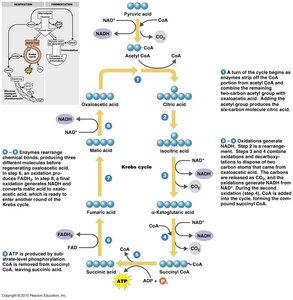
Krebs cycle: Acetyl-CoA is oxidized, producing ATP, NADH, and FADH2.
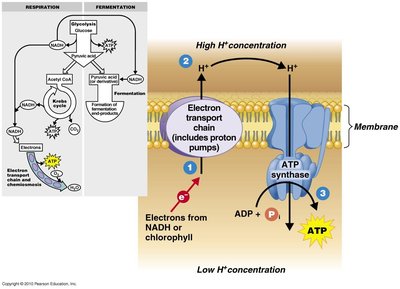
Oxidative phosphorylation: Electron transport chain and chemiosmosis generate most ATP.
Electron Transport Chain and Chemiosmosis
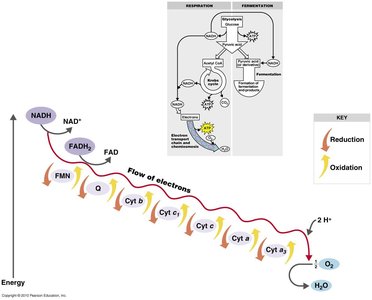
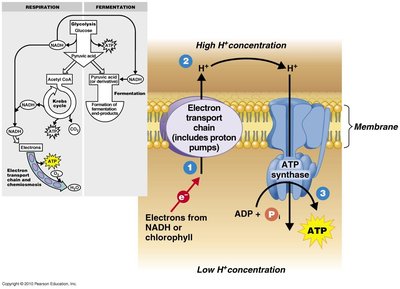
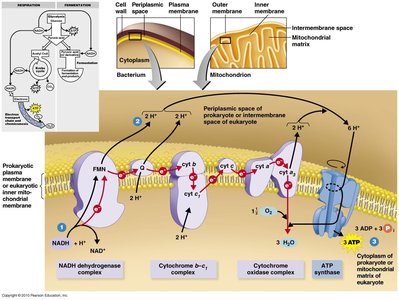
NADH and FADH2 donate electrons to the electron transport chain, which powers ATP synthesis via chemiosmosis.
Electron transport chain: Series of proteins that transfer electrons, releasing energy.
Chemiosmosis: H+ gradient drives ATP synthase to produce ATP.
Fermentation
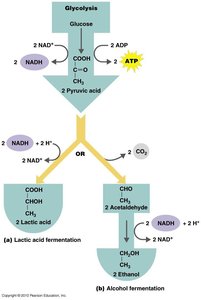
Fermentation is an anaerobic process that generates ATP without the electron transport chain. It uses organic molecules as final electron acceptors.
Lactic acid fermentation: Pyruvate is reduced to lactic acid.
Alcohol fermentation: Pyruvate is converted to ethanol and CO2.
Other Catabolic Pathways
Lipid Catabolism
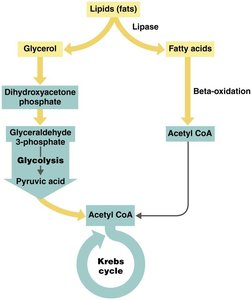
Lipids are broken down by lipases into fatty acids and glycerol. Fatty acids undergo beta-oxidation to form Acetyl-CoA, which enters the Krebs cycle.
Glycerol: Converted to glycolysis intermediates.
Fatty acids: Converted to Acetyl-CoA.
Protein Catabolism
Proteins are degraded by proteases and peptidases into amino acids, which are deaminated and converted to Krebs cycle intermediates.
Deamination: Removal of amino group, forming ammonium ion.
Organic acid: Enters Krebs cycle.
Metabolic Diversity Among Organisms
Classification by Energy and Carbon Sources
Organisms are categorized based on their energy and carbon sources:
Photoautotrophs: Use light energy and CO2 as carbon source.
Photoheterotrophs: Use light energy, organic compounds as carbon source.
Chemoautotrophs: Use inorganic compounds for energy, CO2 for carbon.
Chemoheterotrophs: Use organic compounds for both energy and carbon.
Anabolic Pathways and Biosynthesis
Biosynthesis of Cellular Components
Anabolic pathways synthesize carbohydrates, lipids, amino acids, and nucleic acids from simpler precursors. These processes require energy input, usually from ATP.
Polysaccharide biosynthesis: Glycogen, peptidoglycan.
Lipid biosynthesis: Phospholipids, toxins.
Amino acid biosynthesis: Enzymes, toxins.
Nucleic acid biosynthesis: Purines, pyrimidines.
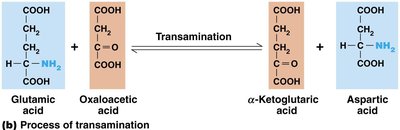
Amino Acid Biosynthesis
Amination: Addition of amine group to organic acid.
Transamination: Transfer of amine group from one amino acid to another.
Amphibolic Pathways
Amphibolic pathways serve dual roles in both catabolism and anabolism, bridging breakdown and synthesis of carbohydrates, lipids, proteins, and nucleotides.
Dual-purpose pathways: Allow flexibility in metabolism.
Summary Table: Products of Cellular Respiration
Metabolic Pathway | Products per Glucose | ATP Yield |
|---|---|---|
Glycolysis | 2 ATP used, 4 ATP produced, 2 NADH, 2 Pyruvate | 2 Net ATP |
Intermediate Reaction | 2 Acetyl-CoA | - |
Krebs Cycle | 2 ATP, 6 CO2, 6 NADH, 2 FADH2 | 2 ATP |
Oxidative Phosphorylation | 6 H2O | 34 ATP |
Key Terms and Concepts
Metabolism, catabolism, anabolism, metabolic pathway
Enzyme, substrate, active site, enzyme-substrate complex
Apoenzyme, cofactor, coenzyme, holoenzyme
Denaturation, competitive/non-competitive inhibition, feedback inhibition
Redox reactions, oxidation, reduction, dehydrogenation
ATP, phosphorylation (substrate-level, oxidative, photophosphorylation)
Glycolysis, Krebs cycle, electron transport chain, chemiosmosis
Fermentation (lactic acid, alcohol), lipid and protein catabolism
Metabolic diversity, biosynthesis, amphibolic pathways
----------------------------------------
