 Back
BackMicrobial Metabolism: Core Concepts and Pathways
Study Guide - Smart Notes
 Tailored notes based on your materials, expanded with key definitions, examples, and context.
Microbial Metabolism
Overview of Metabolism
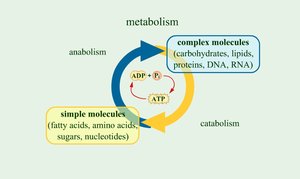
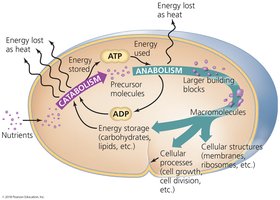
Metabolism encompasses all controlled biochemical reactions occurring within a microbe, with the ultimate function of supporting growth and reproduction. It is divided into two major classes: catabolism (breakdown of molecules to release energy) and anabolism (synthesis of complex molecules using energy).
Catabolism: Degradation of complex molecules into simpler ones, releasing energy (exergonic).
Anabolism: Synthesis of complex molecules from simpler ones, requiring energy input (endergonic).
ATP: Adenosine triphosphate acts as the main energy currency, linking catabolic and anabolic reactions.
Eight Elementary Statements Guiding Metabolic Processes
Every cell acquires nutrients.
Metabolism requires energy from light or catabolism of nutrients.
Energy is stored in ATP.
Cells catabolize nutrients to form precursor metabolites.
Precursor metabolites, ATP, and enzymes are used in anabolic reactions.
Enzymes plus ATP form macromolecules.
Cells grow by assembling macromolecules.
Cells reproduce once they have doubled in size.
Basic Chemical Reactions Underlying Metabolism
Oxidation and Reduction Reactions
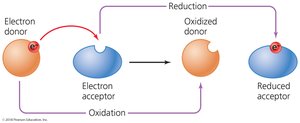
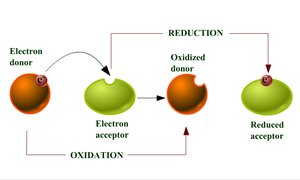
Oxidation-reduction (redox) reactions involve the transfer of electrons from an electron donor to an electron acceptor. These reactions are always coupled and are essential for energy transfer in cells.
Electron carriers: NAD+, NADP+, and FAD are key molecules that shuttle electrons during metabolic reactions.
Oxidation: Loss of electrons.
Reduction: Gain of electrons.
ATP Production and Energy Storage
Organisms release energy from nutrients and store it in the high-energy phosphate bonds of ATP. ATP is generated by phosphorylation of ADP in three main ways:
Substrate-level phosphorylation
Oxidative phosphorylation
Photophosphorylation
Anabolic pathways use the energy stored in ATP by breaking a phosphate bond.
The Roles of Enzymes in Metabolism
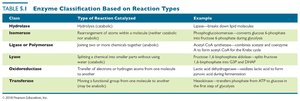
Enzymes are organic catalysts that increase the likelihood of chemical reactions by lowering activation energy. They are highly specific for their substrates and are classified based on the reactions they catalyze.
Hydrolases: Catalyze hydrolysis reactions.
Isomerases: Rearrange atoms within a molecule.
Ligases/Polymerases: Join molecules together.
Lyases: Split molecules without water.
Oxidoreductases: Catalyze redox reactions.
Transferases: Transfer functional groups between molecules.
Class | Type of Reaction Catalyzed | Example |
|---|---|---|
Hydrolase | Hydrolysis (catabolic) | Lipase—breakdown of lipid molecules |
Isomerase | Rearrangement of atoms within a molecule | Phosphoglucoisomerase—conversion of glucose-6-phosphate to fructose-6-phosphate during glycolysis |
Ligase/Polymerase | Joining two molecules together (anabolic) | Acetyl-CoA synthetase—combines acetate and CoA to form acetyl-CoA during Krebs cycle |
Lyase | Splitting a chemical into smaller parts without water | Aldolase—splits fructose 1,6-bisphosphate during glycolysis |
Oxidoreductase | Transfer of electrons or hydrogen atoms from one molecule to another | Lactic acid dehydrogenase—oxidizes lactic acid to form pyruvic acid during fermentation |
Transferase | Moving a functional group from one molecule to another | Hexokinase—transfers phosphate from ATP to glucose in glycolysis |
Enzyme Structure and Function
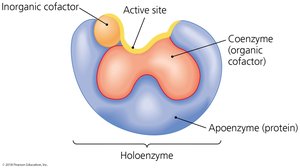
Many enzymes are proteins that require nonprotein cofactors (inorganic ions or organic coenzymes) to be active. The combination of an apoenzyme (protein part) and its cofactor forms a holoenzyme. Some enzymes are RNA molecules called ribozymes.
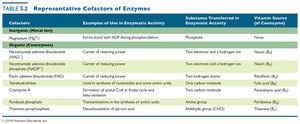
Cofactor | Example of Use in Enzymatic Activity | Substance Transferred | Vitamin Source |
|---|---|---|---|
Magnesium (Mg2+) | Forms bond with ADP during phosphorylation | Phosphate | — |
NAD+ | Center of reducing power | Two electrons and a hydrogen ion | Niacin (B3) |
FAD | Center of reducing power | Two hydrogen atoms | Riboflavin (B2) |
Coenzyme A | Transfers acetyl groups | Acetyl group | Pantothenic acid (B5) |
Enzyme Activity and Regulation
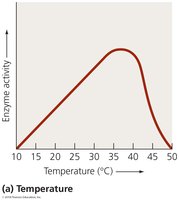
The rate of enzymatic reactions is influenced by several factors:
Temperature
pH
Enzyme and substrate concentrations
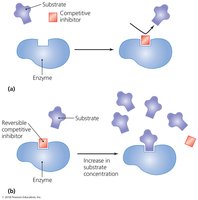
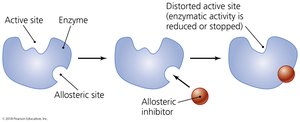
Presence of inhibitors (competitive and noncompetitive)
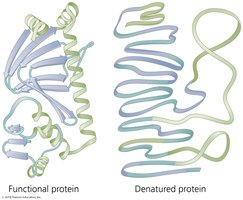
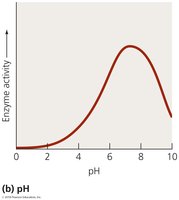
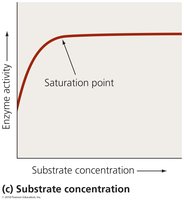
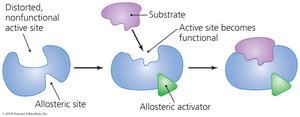
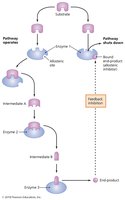
Enzyme activity can be regulated by activators (allosteric activation) or inhibitors (competitive and noncompetitive). Feedback inhibition is a common regulatory mechanism in metabolic pathways.
Carbohydrate Catabolism
Glycolysis
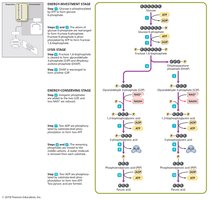
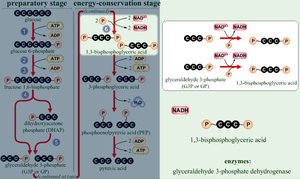
Glycolysis is the metabolic pathway that converts glucose into pyruvic acid, generating ATP and NADH. It occurs in the cytoplasm and consists of three stages: energy-investment, lysis, and energy-conserving.
Net gain: 2 ATP, 2 NADH, and 2 pyruvic acid molecules per glucose.
Cellular Respiration
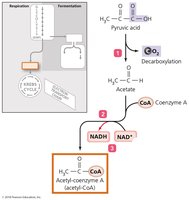
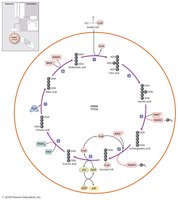
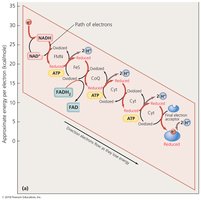
Cellular respiration is the complete oxidation of pyruvic acid to produce ATP via three stages: synthesis of acetyl-CoA, Krebs cycle, and electron transport chain (ETC).
Synthesis of acetyl-CoA: Produces acetyl-CoA, CO2, and NADH.
Krebs cycle: Occurs in the cytosol (prokaryotes) or mitochondrial matrix (eukaryotes), generating ATP, NADH, FADH2, and CO2.
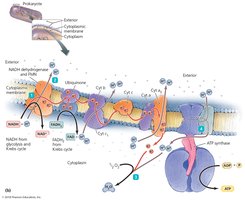
Electron transport chain: Series of redox reactions that produce the majority of ATP via oxidative phosphorylation.
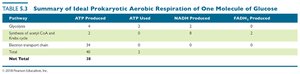
Pathway | ATP Produced | ATP Used | NADH Produced | FADH2 Produced |
|---|---|---|---|---|
Glycolysis | 4 | 2 | 2 | 0 |
Synthesis of acetyl-CoA and Krebs cycle | 2 | 0 | 8 | 2 |
Electron transport chain | 34 | 0 | — | — |
Total | 38 | 2 | 10 | 2 |
Fermentation
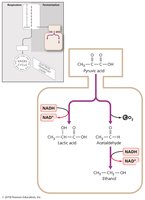
Fermentation is an alternative pathway for ATP production when oxygen or other final electron acceptors are unavailable. It regenerates NAD+ by transferring electrons to organic molecules, producing various end products such as lactic acid, ethanol, and others.
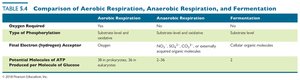
Aerobic Respiration | Anaerobic Respiration | Fermentation | |
|---|---|---|---|
Oxygen Required? | Yes | No | No |
Type of Phosphorylation | Substrate-level and oxidative | Substrate-level and oxidative | Substrate-level |
Final Electron Acceptor | O2 | NO3-, SO42-, CO32-, or other inorganic molecules | Cellular organic molecules |
ATP Yield (per glucose) | ~38 | 2–36 | 2 |
Other Catabolic Pathways
Lipid and Protein Catabolism
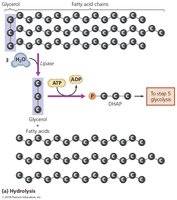
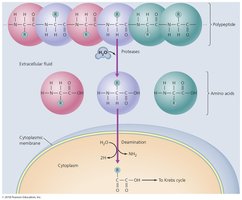
Lipids and proteins can be catabolized to generate energy and precursor metabolites. Lipids are broken down by hydrolysis and beta-oxidation, while proteins are degraded by proteases and deamination.
Photosynthesis
Overview and Structures
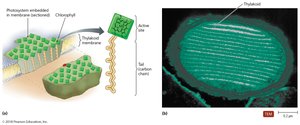
Photosynthesis is the process by which organisms synthesize organic molecules from CO2 using light energy. Chlorophylls and photosystems are essential for capturing light energy and converting it into chemical energy.
Light-Dependent and Light-Independent Reactions
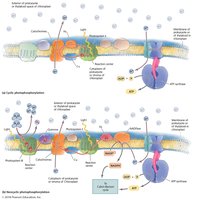
Light-dependent reactions use light energy to generate ATP and NADPH via cyclic and noncyclic photophosphorylation. Light-independent reactions (Calvin-Benson cycle) use ATP and NADPH to fix CO2 into glucose.
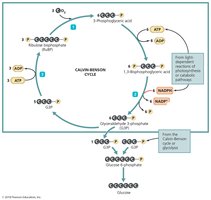
Other Anabolic Pathways
Anabolic reactions synthesize complex molecules from simpler ones, often using ATP generated from catabolic pathways. Many anabolic pathways are the reverse of catabolic pathways and are termed amphibolic.
Precursor Metabolite | Pathway That Generates the Metabolite | Examples of Macromolecules Synthesized | Examples of Functional Use |
|---|---|---|---|
Glucose 6-Phosphate | Glycolysis | Polysaccharides | Energy storage |
Pyruvic Acid | Glycolysis | Amino acids, fatty acids | Protein, lipid synthesis |
Acetyl-CoA | Krebs cycle | Fatty acids, isoprenoids | Lipid synthesis |
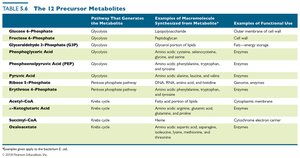
Integration and Regulation of Metabolic Function
Cells regulate metabolism by controlling enzyme synthesis and activity, using mechanisms such as feedback inhibition, allosteric regulation, and compartmentalization of pathways. This ensures efficient use of resources and adaptation to environmental changes.
