 Back
BackMicrobial Metabolism: Enzymes, ATP, and Regulation
Study Guide - Smart Notes
 Tailored notes based on your materials, expanded with key definitions, examples, and context.
Microbial Metabolism
Overview of Metabolism
Metabolism encompasses all the chemical reactions that occur within a cell, enabling the buildup and breakdown of nutrients. These reactions provide energy and generate substances essential for sustaining life. The two primary components of metabolism are enzymes and ATP (adenosine triphosphate).
Catabolism: The breakdown of complex molecules into simpler ones, releasing energy (exergonic reactions).
Anabolism: The synthesis of complex molecules from simpler ones, requiring energy input (endergonic reactions).
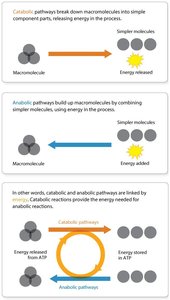
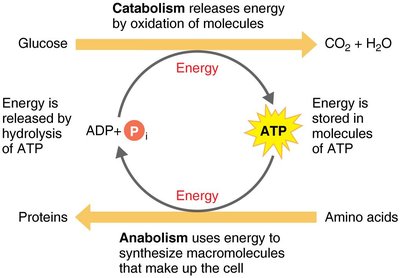
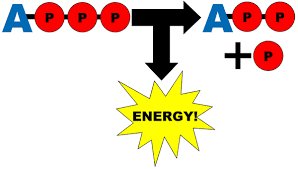
ATP acts as the energy currency of the cell, linking catabolic and anabolic pathways by storing and releasing energy as needed.
Types of Chemical Reactions in Metabolism
Synthesis (Anabolic) Reactions: Atoms, ions, or molecules combine to form new, larger molecules. Example: A + B → AB.
Decomposition (Catabolic) Reactions: Molecules are split into smaller molecules, ions, or atoms. Example: AB → A + B.
Exchange Reactions: Involve both synthesis and decomposition, where components are rearranged between molecules. Example: AC + BD → AB + CD.
Reversible Reactions: Can proceed in either direction under suitable conditions.
Metabolic Pathways and Enzymes
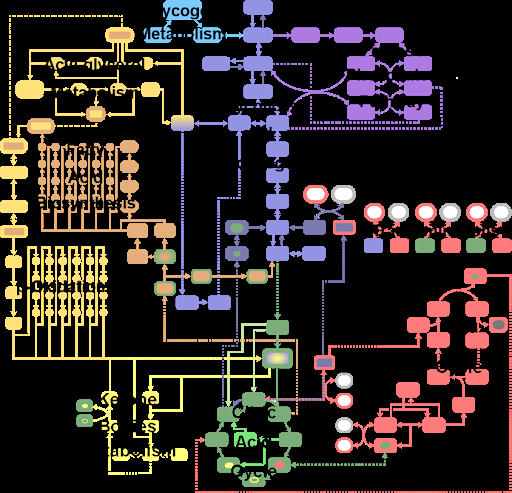
Metabolic pathways are sequences of enzymatically catalyzed chemical reactions within a cell. The specific sequence of reactions is determined by the enzymes present, which are encoded by genes.
Enzymes: Biological Catalysts
Nature and Function of Enzymes
Enzymes are generally proteins that act as organic catalysts, speeding up the rate of chemical reactions without being consumed in the process. They lower the activation energy required for reactions and are highly specific for their substrates.
Activation Energy: The minimum energy required to initiate a chemical reaction.
Specificity: Each enzyme acts on a specific substrate, forming an enzyme-substrate complex.
Collision Theory
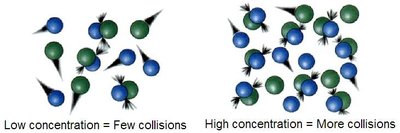
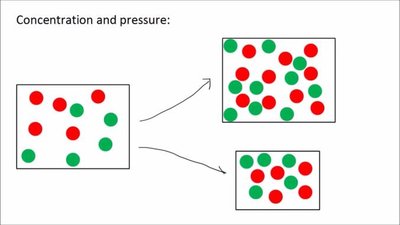
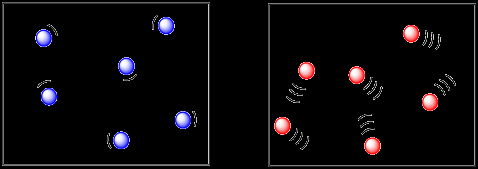
The collision theory states that chemical reactions occur when atoms, ions, or molecules collide with sufficient energy (activation energy). The reaction rate can be increased by enzymes, temperature, pressure, or concentration.
Enzyme Mechanism of Action
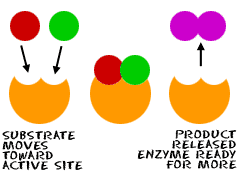
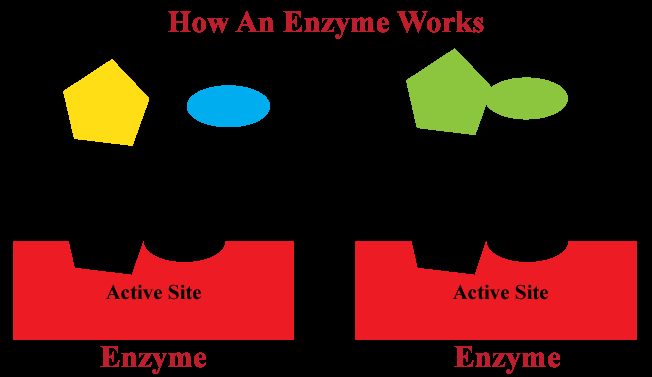
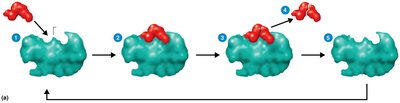
Enzymes function by binding substrates at their active sites, forming an enzyme-substrate complex. The substrate is then converted into product(s), which are released, leaving the enzyme unchanged and ready to catalyze additional reactions.
Naming and Classification of Enzymes
Enzymes are typically named with the suffix -ase and are classified based on the type of reaction they catalyze:
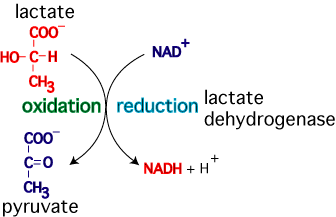
Oxidoreductase: Catalyzes oxidation-reduction reactions.
Transferase: Transfers functional groups between molecules.
Hydrolase: Catalyzes hydrolysis reactions.
Lyase: Removes atoms without hydrolysis.
Isomerase: Rearranges atoms within a molecule.
Ligase: Joins molecules together, often using ATP.
Electron Carriers
Some enzymes require the assistance of electron carriers such as NAD+, NADP+, and FAD to facilitate redox reactions in metabolism.
Factors Influencing Enzyme Activity
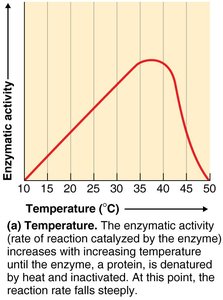
Temperature
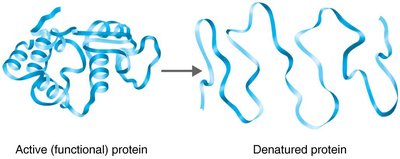
Enzyme activity increases with temperature up to an optimum point, after which high temperatures denature the protein, reducing activity.
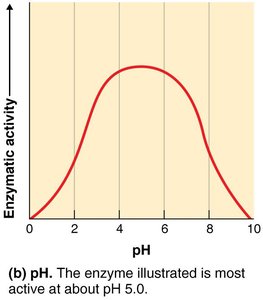
pH
Each enzyme has an optimal pH range. Deviations from this range can denature the enzyme or alter its activity.
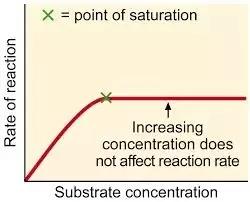
Substrate and Enzyme Concentration
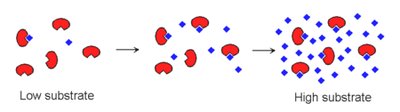
Increasing substrate or enzyme concentration increases reaction rate up to a saturation point, beyond which the rate plateaus as all active sites are occupied.
Enzyme Inhibition and Regulation
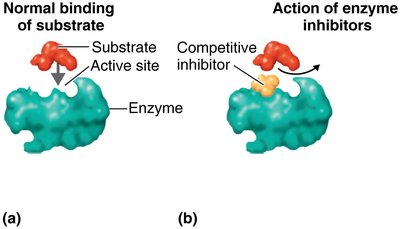
Competitive Inhibition
Competitive inhibitors resemble the substrate and bind to the enzyme's active site, blocking substrate access and reducing enzyme activity.
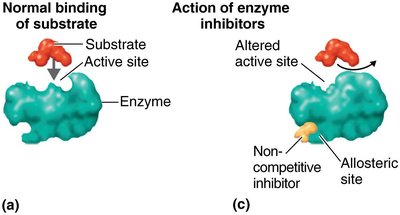
Noncompetitive (Allosteric) Inhibition
Noncompetitive inhibitors bind to an allosteric site (not the active site), causing a conformational change that reduces or abolishes enzyme activity. This inhibition can be reversible or irreversible.
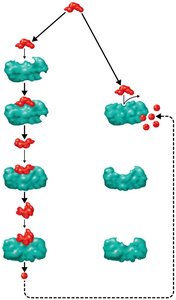
Feedback Inhibition
Feedback inhibition is a regulatory mechanism where the end-product of a metabolic pathway allosterically inhibits an enzyme involved earlier in the pathway, thus preventing overproduction of the end-product.
Summary Table: Types of Enzyme Inhibition
Type of Inhibition | Binding Site | Effect on Enzyme | Reversibility |
|---|---|---|---|
Competitive | Active site | Blocks substrate binding | Usually reversible |
Noncompetitive (Allosteric) | Allosteric site | Changes enzyme shape, reduces activity | Reversible or irreversible |
Feedback | Allosteric site (by end-product) | Shuts down pathway | Reversible |
Additional info: Enzyme regulation is crucial for cellular homeostasis, ensuring that metabolic pathways are responsive to the cell's needs and environmental conditions.
