 Back
BackMicrobial Metabolism: Enzymes, Energy, and Biochemical Pathways
Study Guide - Smart Notes
 Tailored notes based on your materials, expanded with key definitions, examples, and context.
Microbial Metabolism
Background and Overview
Microbial metabolism encompasses all chemical and energy transformations within microorganisms, enabling them to grow, reproduce, and maintain homeostasis. Metabolism is divided into two main types: anabolism (building up molecules) and catabolism (breaking down molecules). These processes are essential for energy production, biosynthesis, and cellular regulation.
Endothermic reactions: Absorb energy into the system.
Exothermic reactions: Release energy from the system.
Activation Energy, Catalysts, and Enzymes
Activation Energy
All chemical reactions require an initial input of energy, known as activation energy, to break existing bonds and form new ones. This energy barrier determines the rate at which reactions proceed.
Catalysts
Catalysts are substances that lower the activation energy of a reaction, allowing it to proceed more rapidly. In biological systems, most catalysts are proteins called enzymes. Catalysts are not consumed in the reaction and can be reused.

Enzymes: Structure and Function
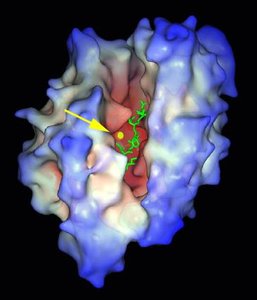
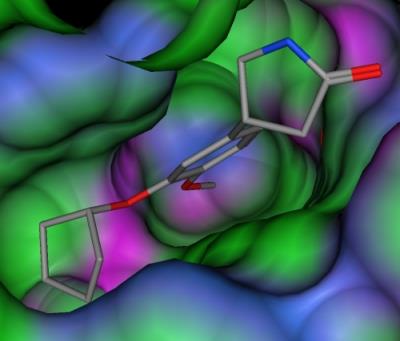
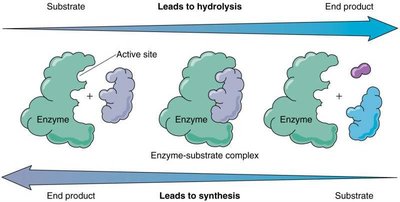
Enzymes are highly specific biological catalysts, usually proteins, whose three-dimensional structure determines their function. The active site is a pocket where the substrate binds and the reaction occurs. Enzyme specificity is due to the precise fit between the enzyme and its substrate.
Substrate: The reactant molecule upon which the enzyme acts.
Active site: The region of the enzyme where substrate binding and catalysis occur.
Naming Enzymes
Enzymes are typically named by combining the substrate, the type of reaction, and the suffix -ase (e.g., DNA polymerase, ATP synthase, transferase).
Coenzymes and Cofactors
Many enzymes require non-protein helpers called cofactors (inorganic ions like Zn2+, Mg2+, Fe2+) or coenzymes (organic molecules, often derived from vitamins or nucleotides). These assist in substrate binding or product release and are not consumed in the reaction.
Environmental Effects on Enzyme Activity
Turnover Number and Rate
The turnover number is the total number of substrate molecules an enzyme can convert per unit time. The turnover rate is the number of substrate molecules processed per minute, often 103–1016 times faster than uncatalyzed reactions.
Optimum Conditions
Temperature: Each enzyme has an optimum temperature for maximal activity. Lower temperatures slow reactions; higher temperatures can denature enzymes, irreversibly inactivating them.
pH: Each enzyme has an optimum pH. Most function best at neutral pH (7.0), but some (e.g., stomach enzymes) work best at acidic pH, while others (e.g., liver enzymes) prefer basic pH.
Cellular Control of Enzyme Activity
Coordination and Regulation
Cells regulate enzyme production and activity to ensure metabolic reactions occur in the correct sequence and at the proper rate. This involves:
Coordination: Producing the right enzymes in the right order and at the right time.
Regulation: Adjusting the amount of enzyme produced based on substrate availability.
Homeostasis and Inhibition
Enzyme activity is controlled by slow (gene expression) and fast (inhibition) mechanisms:
Product inhibition: Product accumulates and blocks the active site, reducing enzyme activity.
Competitive inhibition: A molecule similar to the substrate binds the active site, preventing normal substrate binding.
Allosteric inhibition: An inhibitor binds to a site other than the active site, changing the enzyme's shape and inactivating it.
Feedback inhibition: The end product of a pathway inhibits an early enzyme in the pathway, preventing overproduction.
Biological Impact and Applications
Enzyme inhibition is a key strategy in controlling microbial growth and treating diseases. However, microbes can develop resistance through various mechanisms, such as modifying the target enzyme or inactivating the drug.
Metabolism: Anabolism and Catabolism
Definitions
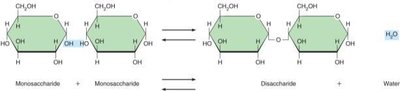
Anabolism: The synthesis of complex molecules from simpler ones, requiring energy (e.g., dehydration synthesis).
Catabolism: The breakdown of complex molecules into simpler ones, releasing energy (e.g., hydrolysis).
Energy Carriers
Cells use molecules such as ATP (adenosine triphosphate), NADH, NADPH, and FADH2 to store and transfer energy.


Energy Generation (Phosphorylation)
Types of Phosphorylation
Substrate-Level Phosphorylation (SLP): Direct transfer of a phosphate group to ADP from a phosphorylated substrate.
Electron Transport Level Phosphorylation (ETLP/Oxidative Phosphorylation): Electrons are transferred through a chain of carriers, generating a proton gradient used to synthesize ATP via ATP synthase.
Photophosphorylation: Light energy is used to generate ATP in photosynthetic organisms.

Catabolic Pathways
Glycolysis
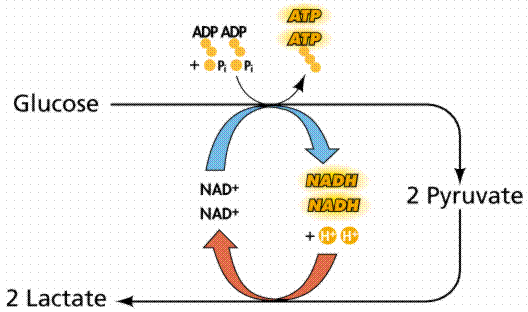
Glycolysis is the breakdown of glucose (6C) into two pyruvate (3C) molecules, generating ATP and NADH. It occurs in the cytoplasm and does not require oxygen.
Reactants | Products |
|---|---|
Glucose (1) | Pyruvate (2) |
ATP (2) | ATP (4) |
NAD+ (2) | NADH (2) |
Fermentation
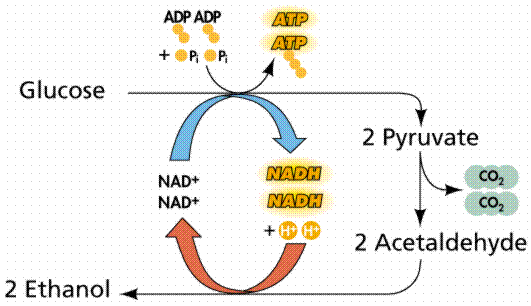
Fermentation allows cells to regenerate NAD+ from NADH in the absence of oxygen, converting pyruvate into less toxic compounds such as lactate or ethanol. This process occurs in the cytoplasm and is essential for anaerobic energy production.
Reactants | Products |
|---|---|
Pyruvate (1) | Less toxic compound (1) |
NADH (1) | NAD+ (1) |
CO2 (1, sometimes) |
Respiration
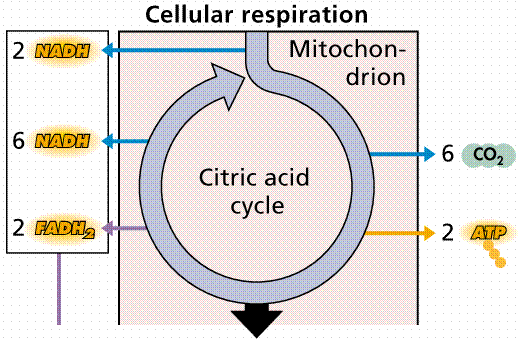
Respiration is a two-step process involving the Krebs cycle and the electron transport chain (ETC). It completes the oxidation of pyruvate, generating large amounts of ATP, NADH, and FADH2.
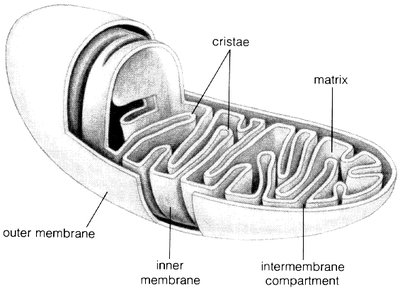
Krebs Cycle: Occurs in the mitochondria (eukaryotes) or plasma membrane (prokaryotes). Pyruvate is fully oxidized to CO2, generating NADH, FADH2, and ATP.
Electron Transport Chain: NADH and FADH2 donate electrons to the ETC, creating a proton gradient that drives ATP synthesis via ATP synthase. Oxygen (or another terminal electron acceptor) is required.
Alternative Catabolic Pathways
Pentose Phosphate Pathway
This pathway generates precursor metabolites (ribulose, xylulose, ribose) for nucleotide and amino acid synthesis, as well as NADPH for biosynthetic reactions. It produces less energy than glycolysis but is essential for anabolic processes.
Entner-Doudoroff Pathway
Primarily found in some prokaryotes, this pathway yields precursor metabolites and NADPH, but less ATP than glycolysis.
Catabolism of Fats and Proteins
Fat Catabolism
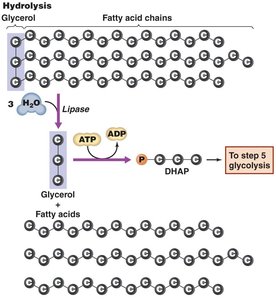
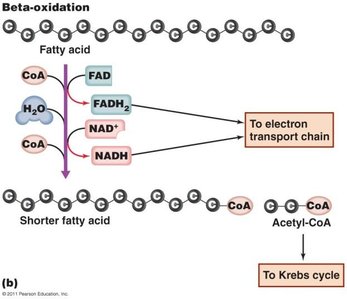
Fats are hydrolyzed by lipases into glycerol and fatty acids. Glycerol enters glycolysis, while fatty acids undergo beta-oxidation to produce acetyl-CoA, NADH, and FADH2 for the Krebs cycle.
Protein Catabolism
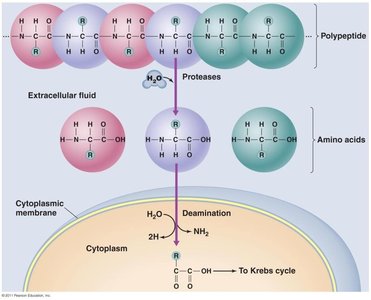
Proteins are broken down by proteases into amino acids, which are deaminated. The resulting carbon skeletons enter the Krebs cycle, while the amine groups are converted to ammonia or other nitrogenous wastes.
Anabolism: Biosynthetic Pathways
Photosynthesis and Chloroplasts
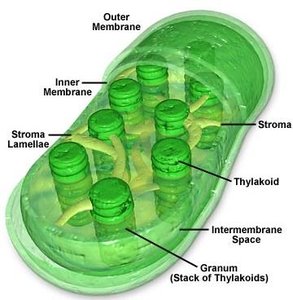
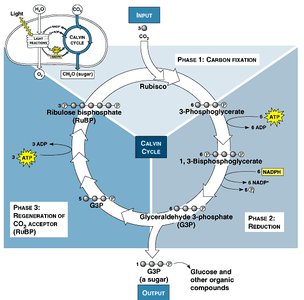
Photosynthesis occurs in the chloroplasts of plants and protists, involving two main stages: light reactions and dark reactions (Calvin cycle).
Light reactions: Occur in the thylakoid membranes, using light energy to produce ATP and NADPH, and releasing O2.
Dark reactions (Calvin cycle): Occur in the stroma, using ATP and NADPH to fix CO2 into glucose.
Summary Table: Key Pathways in Microbial Metabolism
Pathway | Main Purpose | Location | Key Products |
|---|---|---|---|
Glycolysis | Breakdown of glucose to pyruvate | Cytoplasm | ATP, NADH, Pyruvate |
Fermentation | Regenerate NAD+ anaerobically | Cytoplasm | NAD+, Lactate/Ethanol, CO2 |
Krebs Cycle | Oxidation of pyruvate | Mitochondria/PM | CO2, NADH, FADH2, ATP |
ETC | ATP synthesis via oxidative phosphorylation | Mitochondria/PM | ATP, H2O |
Pentose Phosphate | Precursor metabolites, NADPH | Cytoplasm | NADPH, Ribose, Xylulose |
Photosynthesis | ATP, NADPH, Glucose synthesis | Chloroplast | ATP, NADPH, O2, Glucose |
