 Back
Microbial Metabolism: Enzymes, Energy Production, and Carbohydrate Catabolism
Study Guide - Smart Notes
 Tailored notes based on your materials, expanded with key definitions, examples, and context.
Microbial Metabolism
Overview of Metabolism
Microbial metabolism encompasses all biochemical reactions occurring within a microorganism. These reactions are divided into two main categories: catabolism and anabolism. Catabolic reactions break down complex molecules, releasing energy, while anabolic reactions build complex molecules, consuming energy. The molecule ATP (adenosine triphosphate) plays a central role in energy transfer between these processes.
Catabolism: Breakdown of complex organic compounds into simpler ones, releasing energy (often as ATP).
Anabolism: Synthesis of complex molecules from simpler ones, requiring energy input.
ATP: The energy currency of the cell, linking catabolic and anabolic reactions.
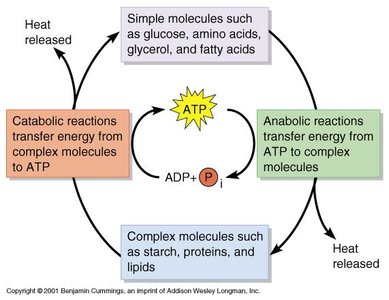
Additional info: Catabolic reactions are typically hydrolysis reactions, while anabolic reactions are dehydration synthesis reactions.
Enzymes and Their Function
Nature and Mechanism of Enzymes
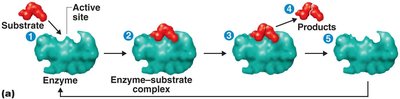
Enzymes are biological catalysts, usually proteins, that accelerate chemical reactions by lowering the activation energy required. They are highly specific, acting on only one substrate, and are not consumed in the reaction. The specificity is explained by the "lock and key" model, where the enzyme's active site fits only a particular substrate.
Activation Energy: The minimum energy required to initiate a chemical reaction.
Enzyme-Substrate Complex: Temporary association between enzyme and substrate during catalysis.
Reaction Rate: Frequency of effective collisions between molecules; increased by enzymes, temperature, or pressure.
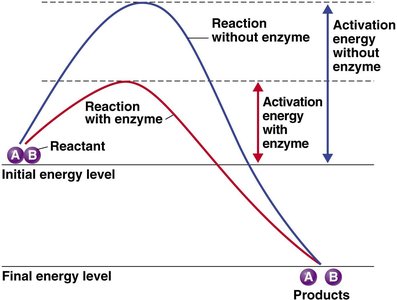
Additional info: Enzymes are named by adding the suffix "-ase" to the substrate or reaction type (e.g., sucrase, oxidase).
Enzyme Structure and Components
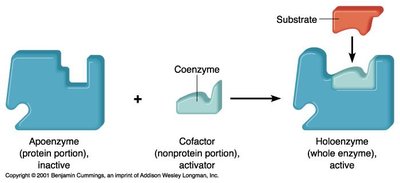
Enzymes often consist of a protein part (apoenzyme) and a non-protein component (cofactor). The cofactor may be a metal ion or an organic molecule (coenzyme). The active, complete enzyme is called a holoenzyme.
Apoenzyme: Protein portion, inactive without cofactor.
Cofactor: Non-protein component; can be a metal ion or coenzyme.
Coenzyme: Organic cofactor, often derived from vitamins (e.g., NAD+, NADP+, FMN, CoA).
Holoenzyme: Apoenzyme plus cofactor; catalytically active.
Mechanism of Enzyme Action
The catalytic cycle of an enzyme involves several steps:
Substrate binds to the enzyme's active site.
Formation of the enzyme-substrate complex.
Transformation of the substrate into products.
Release of products from the enzyme.
Enzyme is free to catalyze another reaction.
Factors Affecting Enzyme Activity
Temperature
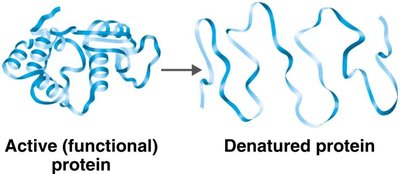
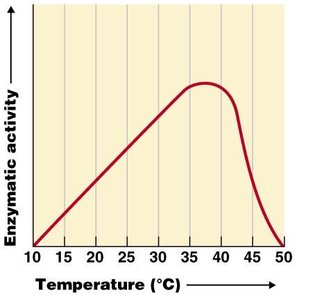
Enzyme activity increases with temperature up to an optimum (usually around 37°C for human pathogens). Beyond this, enzymes denature, losing their functional three-dimensional structure and activity.
pH
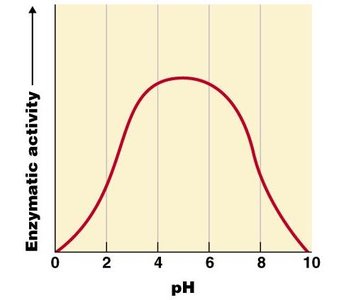
Each enzyme has an optimal pH range (commonly between 5 and 9). Deviations from this range can lead to denaturation and loss of activity.
Substrate Concentration
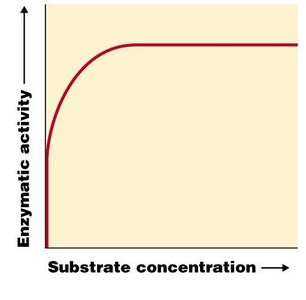
As substrate concentration increases, enzyme activity rises until the enzyme becomes saturated. Beyond this point, increasing substrate does not increase the rate further.
Enzyme Inhibitors
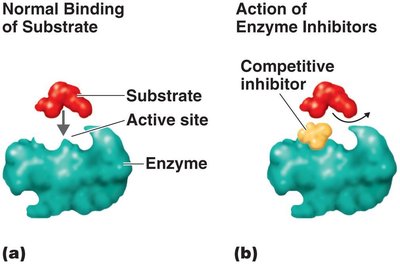
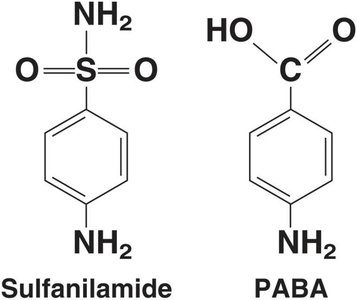
Competitive Inhibitors: Resemble the substrate and compete for the active site, blocking substrate binding.
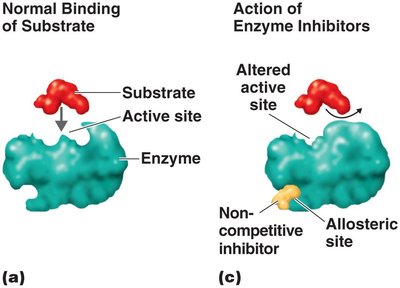
Non-competitive (Allosteric) Inhibitors: Bind to a site other than the active site, altering enzyme shape and reducing activity.
Feedback Inhibition
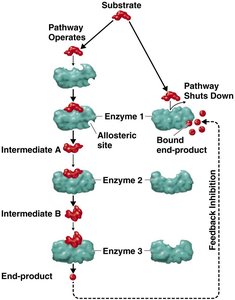
Feedback inhibition is a regulatory mechanism where the end product of a metabolic pathway inhibits an early enzyme in the pathway, preventing overproduction of the product. This often involves allosteric inhibition.
Energy Production in the Cell
Redox Reactions
Energy is extracted from nutrients through oxidation-reduction (redox) reactions. In these reactions, one molecule is oxidized (loses electrons or hydrogen), and another is reduced (gains electrons or hydrogen). These coupled reactions are central to cellular energy production.
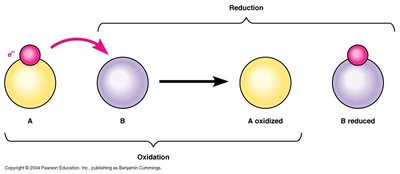
Example: The oxidation of glucose during aerobic respiration:
ATP Generation and Phosphorylation
ATP is generated by the addition of a phosphate group to ADP, a process called phosphorylation. The energy for this process comes from catabolic reactions, such as the breakdown of glucose.
Carbohydrate Catabolism
Cellular Respiration
Cellular respiration is the process by which cells extract energy from nutrients. It can be aerobic (using oxygen as the final electron acceptor) or anaerobic (using other inorganic molecules). The main stages of aerobic respiration are:
Glycolysis: Oxidation of glucose to pyruvic acid.
Krebs Cycle: Series of reactions that generate electron carriers (NADH, FADH2).
Electron Transport Chain (ETC): Electrons are transferred through a series of carriers, generating ATP.
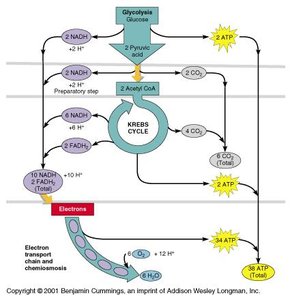
Overall equation for aerobic respiration:
Additional info: In eukaryotes, the net ATP yield is typically 36 due to differences in mitochondrial transport.
Anaerobic Respiration
In anaerobic respiration, the final electron acceptor is an inorganic molecule other than oxygen (e.g., nitrate, sulfate). Less energy is produced compared to aerobic respiration.
Fermentation
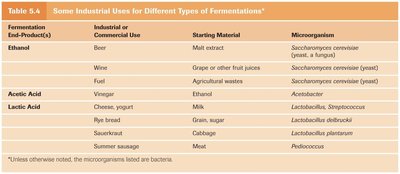
Fermentation is an anaerobic process that releases energy from organic molecules without using the Krebs cycle or ETC. An organic molecule serves as the final electron acceptor. Fermentation produces small amounts of ATP and various end products, such as acids, gases, and alcohols.
Key products: Lactic acid, ethanol, CO2, H2
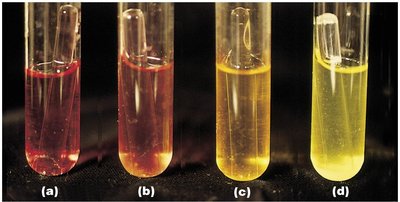
Detection: Fermentation can be detected in the lab by changes in pH and gas production in culture media.
Sources of Energy and Nutritional Classification
Energy and Carbon Sources
Microorganisms are classified based on their energy and carbon sources:
Phototrophs: Use light as an energy source.
Chemotrophs: Use chemical compounds for energy.
Autotrophs: Use CO2 as a carbon source.
Heterotrophs: Use organic compounds as a carbon source.
Examples: Cyanobacteria (photoautotrophs), iron-oxidizing bacteria (chemoautotrophs), animals and most pathogens (chemoheterotrophs).
Additional info: Saphrophytes live on dead organic matter; parasites live on living hosts.
Summary
Metabolism includes all biochemical reactions in a cell, divided into catabolism and anabolism.
Enzymes are biological catalysts affected by temperature, pH, substrate concentration, and inhibitors.
Energy is produced via redox reactions, primarily through cellular respiration and fermentation.
Microorganisms are classified by their energy and carbon sources, influencing their ecological roles and industrial applications.
