 Back
BackMicrobial Metabolism: Foundations and Applications
Study Guide - Smart Notes
 Tailored notes based on your materials, expanded with key definitions, examples, and context.
Microbial Metabolism
Introduction to Metabolism
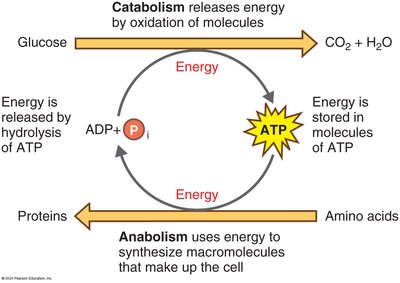
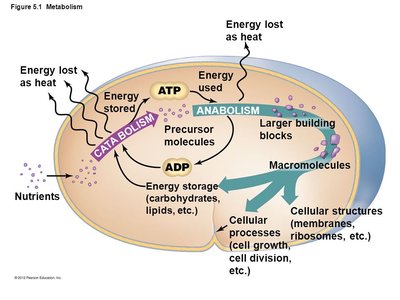
Metabolism encompasses all chemical reactions that occur within a microorganism, enabling it to acquire nutrients, generate energy, and synthesize cellular components. These reactions are organized into metabolic pathways, which are sequences of enzyme-catalyzed steps. Metabolism is divided into two main types: catabolism (energy-releasing breakdown of molecules) and anabolism (energy-consuming synthesis of macromolecules).
Catabolism: Degradation of complex molecules into simpler ones, releasing energy.
Anabolism: Synthesis of complex molecules from simpler ones, requiring energy input.
Absorptive Acquisition of Nutrients
Mechanisms of Nutrient Uptake
Bacteria acquire nutrients through passive and active transport mechanisms. Many bacteria secrete exoenzymes into their periplasmic space to break down macromolecules into monomers, which are then transported across the plasma membrane for metabolic use.
Passive Transport: Movement of molecules down their concentration gradient without energy input.
Active Transport: Movement of molecules against their concentration gradient, requiring energy.
Metabolic Pathways
Organization and Regulation
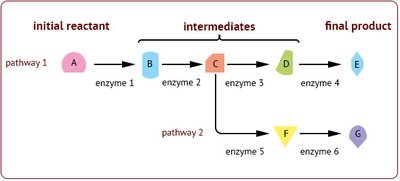
A metabolic pathway is a series of enzyme-catalyzed reactions transforming an initial substrate into a final product through intermediates. The specific enzymes present in a cell, encoded by its genes, determine which pathways are functional.
Enzymes: Biological catalysts that accelerate reactions without being consumed.
Genetic Control: Enzyme presence and activity are determined by the organism's genotype.
Chemical Reactions and Enzymes
Enzyme Structure and Function
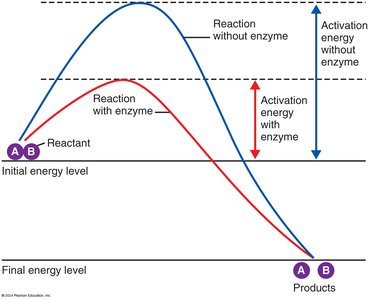
Enzymes lower the activation energy required for chemical reactions, increasing reaction rates. They are highly specific for their substrates and can be regulated by various factors.
Apoenzyme: The protein portion of an enzyme.
Cofactor: Non-protein component (e.g., metal ions).
Coenzyme: Organic cofactor (e.g., vitamins, NAD+, FAD).
Holoenzyme: Apoenzyme plus its cofactor or coenzyme.
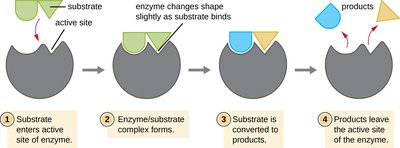
Active Site: Region where substrate binds and reaction occurs.
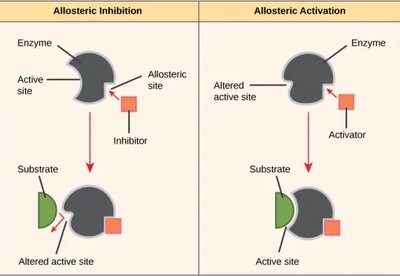
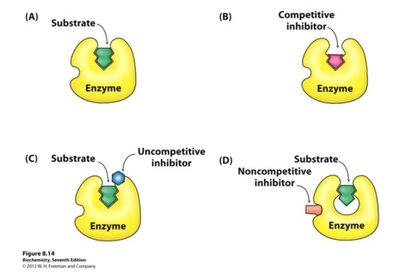
Allosteric Site: Regulatory site where molecules can bind to alter enzyme activity.
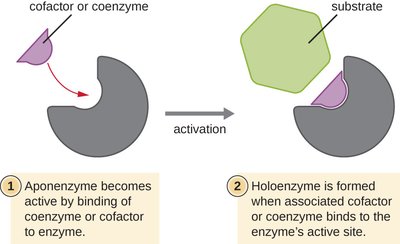
Mechanism of Enzyme Action
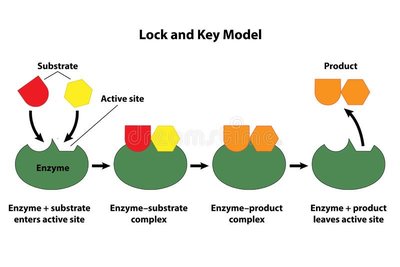
Enzymes bind substrates at their active sites, forming an enzyme-substrate complex. The substrate is converted to product, which is then released, leaving the enzyme unchanged.
Enzyme Regulation
Enzyme activity can be regulated by molecules binding to the allosteric site, causing inhibition or activation. Feedback inhibition is a common regulatory mechanism where the end product of a pathway inhibits an early enzyme, preventing overproduction.
Factors Influencing Enzyme Activity
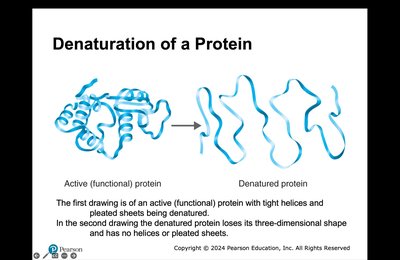
Temperature and pH: Extreme values can denature enzymes, rendering them inactive.
Substrate Concentration: High substrate levels can saturate enzymes, maximizing reaction rate.
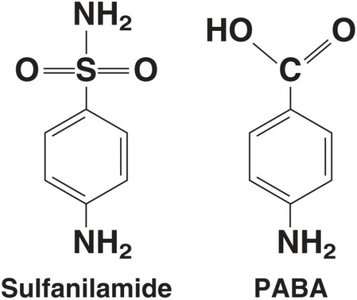
Inhibitors: Molecules that decrease enzyme activity, either competitively or non-competitively.
ATP Production and Energy Storage
Phosphorylation Mechanisms
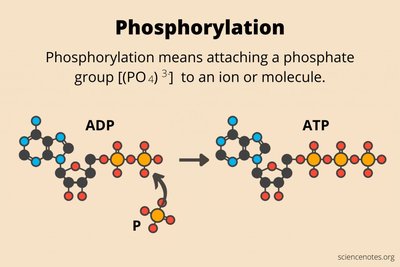
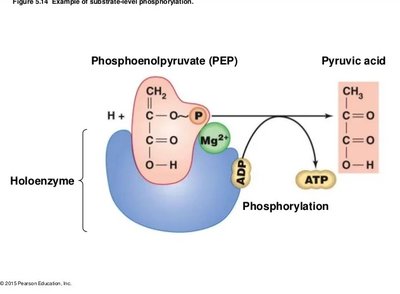
ATP is the primary energy currency in cells. Energy is stored in the high-energy phosphate bonds of ATP, which is generated by phosphorylation of ADP through three main mechanisms:
Substrate-Level Phosphorylation: Direct transfer of a phosphate group from a substrate to ADP.
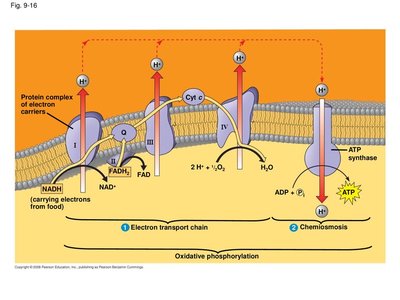
Oxidative Phosphorylation: ATP synthesis driven by the electron transport chain and chemiosmosis.
Photophosphorylation: Light-driven ATP synthesis in photosynthetic organisms.
Oxidation-Reduction (Redox) Reactions
Energy Transfer in Metabolism
Redox reactions involve the transfer of electrons (often with protons) between molecules. Oxidation is the loss of electrons, while reduction is the gain of electrons. These reactions are essential for energy transfer in catabolic pathways.
Carbohydrate Catabolism
Overview of Pathways
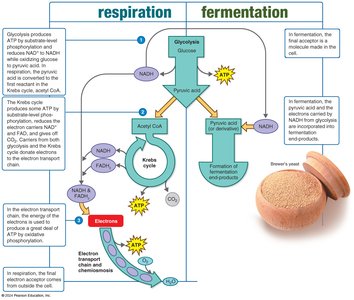
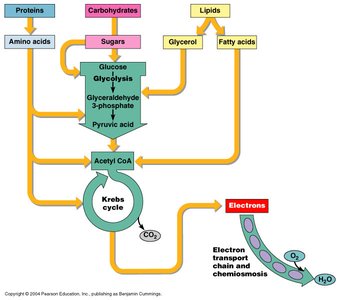
Microorganisms primarily catabolize carbohydrates, especially glucose, for energy. The two main processes are cellular respiration and fermentation.
Cellular Respiration: Complete oxidation of glucose to CO2 and H2O, generating ATP.
Fermentation: Incomplete oxidation of glucose, producing organic end products and less ATP.
Stages of Cellular Respiration
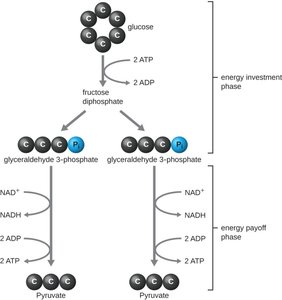
Glycolysis: Occurs in the cytoplasm; glucose is split into two pyruvate molecules, yielding a net gain of 2 ATP and 2 NADH.
Synthesis of Acetyl-CoA: Pyruvate is decarboxylated to acetyl-CoA, producing NADH and CO2.
Krebs Cycle (Citric Acid Cycle): Acetyl-CoA is oxidized, generating ATP, NADH, and FADH2.
Electron Transport Chain (ETC): Electrons from NADH and FADH2 are transferred through membrane proteins, creating a proton gradient that drives ATP synthesis via chemiosmosis.
Aerobic vs. Anaerobic Respiration
Aerobic Respiration: Final electron acceptor is O2; produces the most ATP.
Anaerobic Respiration: Final electron acceptor is an inorganic molecule other than O2 (e.g., NO3-, SO42-, CO32-); yields less ATP.
Fermentation
Types and Functions
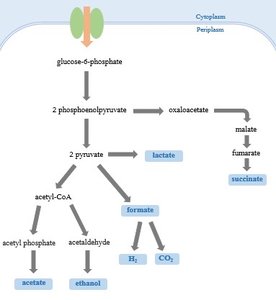
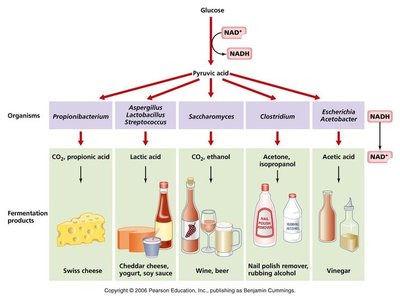
Fermentation allows cells to regenerate NAD+ from NADH, enabling glycolysis to continue in the absence of oxygen. The end products depend on the organism and pathway used.
Homolactic Fermentation: Produces only lactic acid.
Heterolactic Fermentation: Produces lactic acid and other compounds (e.g., ethanol, CO2).
Alcoholic Fermentation: Produces ethanol and CO2.
Biochemical Identification of Microorganisms
Use of Metabolic Pathways in Microbial ID
Microorganisms can be identified based on their metabolic capabilities, such as the ability to ferment specific sugars, produce certain enzymes, or utilize particular substrates. Biochemical assays and rapid tests are essential tools in diagnostic microbiology.
Phenotypic Identification: Includes analysis of lipids, proteins, and glycoproteins.
Lancefield Group Testing: Identifies Streptococci based on surface glycoprotein antigens.
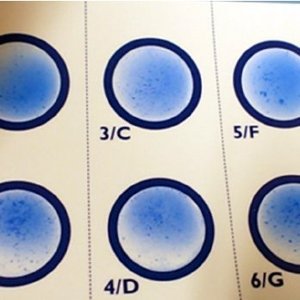
Biochemical Assays: Use of agar plates and tube media to test for metabolic reactions (e.g., catalase, oxidase, fermentation tests).
Key Terms and Concepts
Term | Definition |
|---|---|
Catabolism | Breakdown of complex molecules to release energy |
Anabolism | Synthesis of complex molecules from simpler ones, requiring energy |
Enzyme | Biological catalyst that speeds up chemical reactions |
ATP | Adenosine triphosphate, main energy carrier in cells |
Glycolysis | Pathway that breaks down glucose to pyruvate, generating ATP and NADH |
Krebs Cycle | Series of reactions that oxidize acetyl-CoA to CO2, producing NADH and FADH2 |
Electron Transport Chain | Membrane-associated series of electron carriers that generate a proton gradient for ATP synthesis |
Fermentation | Metabolic process that regenerates NAD+ and produces organic end products in the absence of oxygen |
Feedback Inhibition | Regulation of a pathway by its end product inhibiting an early enzyme |
Sample Review Questions
What is the difference between the active site and the allosteric site on an enzyme?
What is the difference between competitive and non-competitive inhibition of enzymes?
What is feedback inhibition and what advantage is it for cells?
What are the two ways ADP is phosphorylated into ATP in non-photosynthetic cells?
What products are produced during glycolysis?
The synthesis of acetyl-CoA plays what role in aerobic respiration?
What are the three functions of the Krebs Cycle?
What is chemiosmosis? Where does it occur in a bacterial cell?
What is the difference between aerobic and anaerobic respiration?
List several of the final electron acceptors used in anaerobic respiration.
What is the function of fermentation?
What is the difference between homolactic, heterolactic, mixed acid, and alcoholic types of fermentation?
Define: chemoautotroph, chemoheterotroph, photoautotroph, photoheterotroph.
Describe some of the ways biochemistry is used to ID microorganisms.
Additional info: This guide covers the essential concepts of microbial metabolism, including the structure and regulation of metabolic pathways, the role of enzymes, mechanisms of energy production, and the application of biochemical tests in microbial identification. Understanding these principles is foundational for advanced studies in microbiology, biotechnology, and clinical diagnostics.
